汽车渠道变革

Search documents
理想汽车春节后将推“门店合伙人”计划
Mei Ri Jing Ji Xin Wen· 2026-02-10 10:57
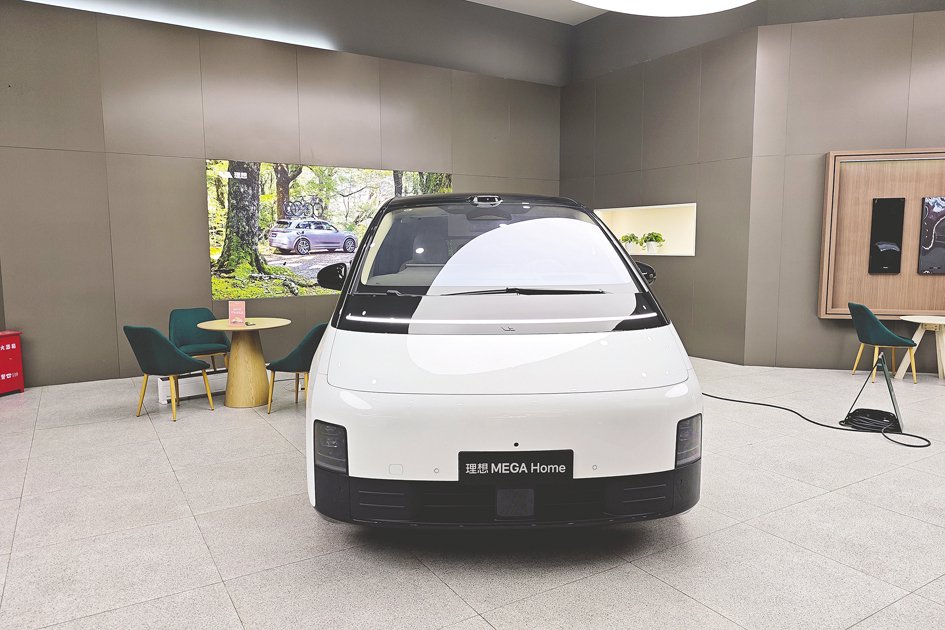
Group 1 - The core point of the article is that Li Auto plans to implement a "store partner" program after the 2026 Spring Festival to enhance store operational efficiency and market responsiveness [1] - The "store partner" program will grant store managers greater decision-making authority and optimize the assessment mechanism, transitioning from a single sales evaluation to a comprehensive evaluation system that includes sales, profit, and customer satisfaction [1] - Li Auto will also close some low-efficiency stores that were opened during the expansion phase, which is currently under evaluation [3] Group 2 - Other new energy vehicle brands, such as Tesla, Xpeng, and NIO, are also optimizing their channel layouts by closing underperforming stores [3][4] - The adjustment in channels is driven by cost pressures, with many new energy brands shifting from direct sales models to agency or dealer models to reduce operational costs [5] - Traditional automotive brands are also facing similar pressures and are exploring channel transformations, including the adoption of a mixed model that combines direct sales and dealer networks [6][7] Group 3 - The trend of channel adjustment indicates a convergence between traditional and new energy vehicle brands, with both adapting their store models based on resources and market demands [7] - The future channel model is expected to be a hybrid approach, featuring flagship stores, satellite stores, and temporary touchpoints to enhance efficiency and reduce costs [7] - The industry is likely to evolve from an integrated 4S store model to a more diversified operational model, with an increase in the total number of outlets while reducing the number of traditional 4S stores [7]


从疯狂开店到主动关店:车企渠道“瘦身”求生
经济观察报· 2026-02-08 06:36
Core Viewpoint - The automotive industry in China is undergoing a significant channel transformation, with both new and traditional car manufacturers adjusting their sales strategies to adapt to market changes and improve efficiency [1][3]. Group 1: New Forces in the Automotive Industry - Li Auto plans to close approximately 100 underperforming retail stores by mid-2026, indicating a trend among new energy vehicle companies to reduce sales channels [2]. - Other companies like Tesla, Xpeng, and NIO are also reducing their sales channels, marking a shift from aggressive expansion to a focus on efficiency and profitability [2][5]. - The overall sales performance of Li Auto is declining, with a projected delivery of 406,300 vehicles in 2025, a year-on-year decrease of 18.8% [5]. Group 2: Traditional Automotive Companies - Traditional car manufacturers are also facing channel adjustments, with many luxury and joint venture brands closing dealerships due to declining sales [8][9]. - For instance, BMW and Mercedes-Benz have terminated dealership authorizations for numerous locations, with plans to close over 100 inefficient stores [8]. - The number of 4S stores in China decreased from 32,000 to 31,400 in the first half of 2025, reflecting a net reduction of about 650 stores [8]. Group 3: Market Dynamics and Challenges - The overall retail volume of passenger vehicles in China grew by only 3.8% in 2025, with traditional fuel vehicles experiencing a 9% decline [9]. - The ongoing price wars have put financial pressure on many dealerships, leading to closures and bankruptcies, such as the case of Baolide Holdings [9][10]. - Only 28% of dealerships reported profitability in the first three quarters of 2025, with a loss rate of 55% [10]. Group 4: Channel Strategy Evolution - New energy vehicle companies are shifting from direct sales to agency or dealership models to reduce costs and improve market responsiveness [12]. - Li Auto's "Hundred Cities Star" plan aims to establish over 300 retail outlets through partnerships, while NIO has introduced a "user cooperation store" model to enhance efficiency [12]. - Traditional manufacturers are also exploring diverse channel models, with some like Great Wall Motors adopting direct sales for specific brands [13].

2025年杀青汽车渠道瘦身进行时
Xin Lang Cai Jing· 2026-01-04 01:19
Core Viewpoint - In 2025, the Chinese automotive industry is at a historic turning point, with the penetration rate of new energy vehicles exceeding 50%, marking a shift towards a high-quality development phase characterized by a balance between traditional and electric vehicles [2][16]. Group 1: Industry Transformation - The automotive channel system is undergoing unprecedented restructuring, shifting from scale expansion to integration optimization, model innovation, and deepening market penetration [2][16]. - The era of merely pursuing the number of outlets has ended, with a focus on quality improvement and efficiency optimization becoming the core issues [2][3]. - The automotive channel transformation is clearly presenting three major trends: lightweight, hybrid, and downward expansion, aimed at addressing high costs and low efficiency in the industry [2][3][11]. Group 2: Lightweight Trend - The traditional heavy asset 4S stores are facing high rent and inventory pressures, prompting automakers to explore lightweight outlet models [4][19]. - Lincoln China's "Spark Plan" serves as a benchmark for lightweight transformation, significantly reducing single-store investment from 20-30 million yuan to 4 million yuan, leading to a 40% decrease in dealer operating costs [4][18]. - The optimization of profit structure in lightweight stores allows after-sales profits to fully cover operating costs, enhancing profitability [4][18]. Group 3: Hybrid Trend - The trend of channel hybridization, which began in 2024, continues to deepen in 2025, with brands exploring flexible combinations of direct sales, agency, and authorization models [7][21]. - NIO is cautiously adopting a hybrid approach, allowing local agents to manage market operations while maintaining brand control [7][21]. - BYD's Tengshi and Fangchengbao brands are implementing a dual-track system of direct sales and authorization to enhance channel efficiency [8][22]. Group 4: Downward Expansion Trend - The trend of channel downward expansion is accelerating, with significant sales growth in lower-tier cities, reflecting a clear shift in the automotive consumption market [11][25]. - Leap Motor's strategy of lowering the price of main models to the 150,000 yuan range has led to a 113.42% year-on-year increase in deliveries, with over 60% of sales coming from lower-tier markets [11][25]. - Third-party involvement, such as JD Auto's collaboration with GAC and CATL, is creating new models for the lower-tier market, significantly reducing the purchase threshold [12][26]. Group 5: Efficiency Revolution - The core of channel transformation is an efficiency revolution, focusing on serving more users at lower costs [12][26]. - The automotive channel is undergoing structural reshaping through lightweight, hybrid, and downward expansion trends, but the evolution of channels is far from over [12][26].



汽车销售进入“混搭”时代
汽车商业评论· 2025-11-16 23:07
Core Insights - The article highlights the challenges faced by traditional car dealers in China, with a significant increase in losses and a decline in the number of dealerships, indicating a tough market environment for them [4][5][6] - It discusses the shift towards new sales models, including direct sales and online platforms, as traditional manufacturers and new players explore innovative ways to connect with consumers [5][6][34] - The article emphasizes the importance of user-centric strategies and the need for traditional car manufacturers to adapt their sales channels to meet changing consumer preferences [28][34][56] Group 1: Traditional Dealers' Challenges - In the first half of 2025, 52.6% of car dealers reported losses, with only 29.9% achieving profitability, highlighting a dire situation for traditional dealerships [4] - A staggering 74.4% of dealers experienced price discrepancies, with 43.6% facing price drops exceeding 15% [4] - The number of 4S dealerships in China decreased by 1.9% in the first half of 2025, totaling 4,419 closures in 2024 [4] Group 2: Shift in Sales Models - The launch of the "Auto Home Mall" by Auto Home, featuring 15 brands, signifies a move towards online sales platforms [5] - The introduction of the Aion UT super by JD.com, in collaboration with GAC Group and CATL, reflects a new model for car sales and after-sales services [5] - Traditional manufacturers are increasingly open to new sales channels, indicating a shift away from the historically strong ties with dealers [5][6] Group 3: Direct Sales and User Engagement - Great Wall Motors' transition to a direct sales model for its WEY brand marks a significant change in its sales strategy, focusing on user engagement [6][8] - The "Long Wall Smart Choice" initiative aims to enhance user experience by establishing a direct connection between manufacturers and consumers [12][14] - The need for a user-centric approach is emphasized, with manufacturers urged to adapt their organizational structures and decision-making processes to better serve consumers [34][35] Group 4: New Players and Hybrid Models - New energy vehicle brands like NIO and Firefly are exploring hybrid sales models, combining direct sales with authorized dealerships to enhance market reach [42][48] - Xiaopeng Motors has initiated a "Jupiter Plan" to expand its dealer network, indicating a shift towards a more flexible sales strategy [50] - Leap Motor has established a channel strategy that balances direct sales and dealership networks, achieving significant sales growth [53]

超级供应链入局,汽车行业迎来「京东模式」
3 6 Ke· 2025-11-11 10:22
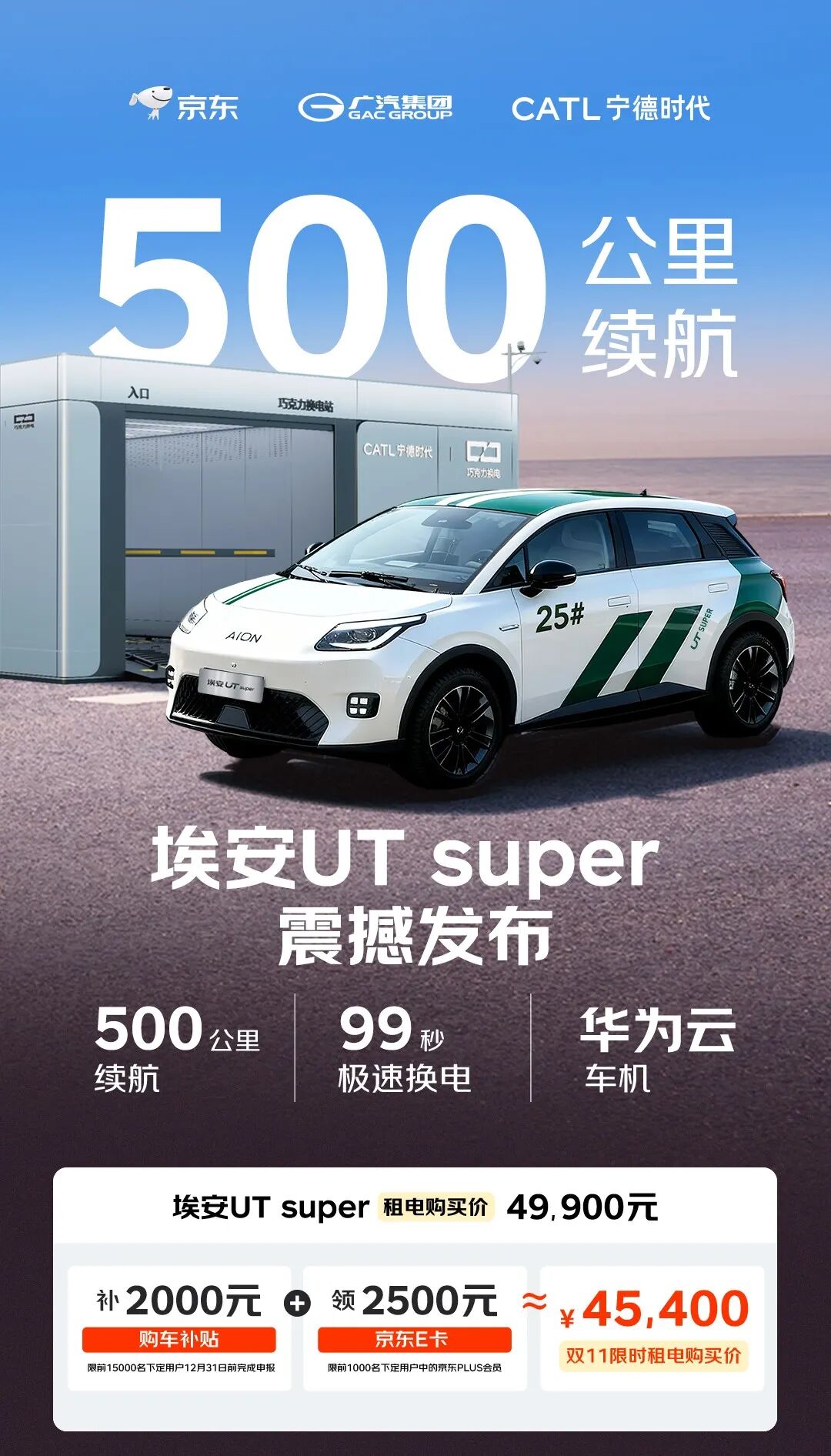
Core Insights - JD.com, in collaboration with GAC Group and CATL, has launched the "National Good Car" Aion UT Super, priced at 49,900 yuan for battery rental and 89,900 yuan for outright purchase, significantly undercutting market expectations [1][2] - This launch marks JD.com's entry into the automotive sector, leveraging its supply chain capabilities to reshape the automotive commercial landscape and value chain [1][2][12] Company Strategy - JD.com is not manufacturing cars but is focused on empowering car manufacturers by providing a comprehensive product circulation system, including market demand insights, product definition, online channels, offline transactions, and after-sales services [2][12] - The launch of Aion UT Super completes JD.com's automotive blueprint, enhancing its ecosystem to cover the entire vehicle lifecycle from purchase to maintenance [7][12] Market Positioning - JD.com has over 700 million users, allowing it to effectively gather consumer insights through extensive surveys, which informed the development of the Aion UT Super [3][12] - The partnership with GAC and CATL ensures high product quality and addresses consumer demands for battery and battery-swapping solutions [3][12] Industry Challenges - The automotive industry faces fragmented value chains, with manufacturing, sales, finance, insurance, and after-sales services operating as isolated entities, leading to a disjointed consumer experience [6][14] - Traditional car manufacturers struggle to respond quickly to market demands due to lengthy R&D cycles, resulting in a lack of innovative products that meet consumer needs [2][6] Supply Chain Advantage - JD.com's supply chain capabilities allow it to reduce costs and delivery times, providing a seamless one-stop shopping experience for consumers [7][12] - The establishment of delivery centers across the country aims to enhance service coverage and efficiency, allowing consumers to compare multiple brands in a shorter timeframe [12][13] Future Outlook - JD.com plans to expand its automotive offerings with additional models, aiming to create a sustainable and evolving service capability through data empowerment and ecosystem collaboration [18] - The company is positioned to inject new vitality into the automotive industry's channel transformation, leveraging its supply chain strengths to support both traditional and new car manufacturers [18][14]
应对车市变局,宝马丰田福特齐掀渠道革命
Hua Xia Shi Bao· 2025-10-21 23:15
Core Viewpoint - Traditional automotive giants such as BMW, Toyota, and Ford are undergoing significant channel transformations in response to the aggressive competition from domestic brands, indicating a critical shift in the automotive market landscape [2][3]. Group 1: Channel Transformation Trends - The channel transformation in China's automotive market has moved from tentative reforms to substantial progress, driven by the rapid adoption of electric vehicles and changing consumer expectations for direct sales, transparent pricing, and personalized services [3][4]. - BMW plans to abandon the traditional dealership model by 2027, aiming for full control over the sales process, where dealers will transition to service intermediaries focusing on vehicle display, delivery, and after-sales service [3][4]. - Toyota is implementing a more pragmatic approach by consolidating its dealerships to a single store per city, allowing for the simultaneous sale of multiple models and shared after-sales services, thereby reducing costs and enhancing service efficiency [3][4]. Group 2: Ford's Strategy and Market Impact - Ford's strategy involves establishing a wholly-owned sales service company to unify its sales channels in China, which aims to eliminate internal competition among dealers and maximize efficiency under a unified command [4][5]. - The channel integration has improved consumer experience by allowing customers to view multiple vehicle types in one location, thus enhancing sales opportunities for dealers and broadening their customer base [5][6]. Group 3: Common Characteristics of Channel Transformation - The automotive industry is shifting towards a "light asset, heavy operation" model, exemplified by Lincoln's plan to reduce dealership size and investment requirements significantly [5][6]. - Companies are adopting a "city-specific strategy" to optimize dealership locations based on market capacity and competition, avoiding blind expansion and ensuring resource efficiency [6][7]. - The traditional 4S dealership model is being redefined, focusing on sales and after-sales services while separating product experience and delivery processes, as demonstrated by Dongfeng Nissan's successful N7 model [6][7]. Group 4: Recommendations for Manufacturers and Dealers - Automotive manufacturers should enhance technological innovation and product competitiveness while exploring new channel models and fostering closer, mutually beneficial relationships with dealers [7]. - Dealers are encouraged to adapt to channel changes by improving service capabilities, optimizing store layouts, and expanding into used car and automotive finance businesses to diversify revenue streams [7].