
激光雷达数字化

Search documents
速腾聚创(02498):单四季度实现盈利,在手订单充沛
Guoxin Securities· 2026-03-27 05:40
Investment Rating - The investment rating for the company is "Outperform the Market" [6][4][52]. Core Insights - The company achieved a revenue of 7.51 billion CNY in Q4 2025, representing a year-on-year growth of 58.7% and a quarter-on-quarter growth of 84.4%, with a net profit of 1.06 billion CNY [1][9]. - The company has a strong order backlog, benefiting from the rapid development of ADAS and high-level autonomous driving [2][4]. - The company is positioned as a leader in the digital laser radar market, having transitioned from analog to digital technology, which significantly enhances performance and cost-effectiveness [32][35]. Financial Performance - In Q4 2025, the company reported a gross margin of 28.5%, an increase of 6.3 percentage points year-on-year, and a net margin of 13.8%, up 41.5 percentage points year-on-year [1][16]. - The company expects revenues for 2026-2028 to be 34.05 billion CNY, 45.20 billion CNY, and 59.50 billion CNY respectively, with net profits projected at 1.00 billion CNY, 4.58 billion CNY, and 10.11 billion CNY [4][53]. Product and Market Development - The company has entered the mass production phase for its digital laser radar products, with significant sales growth in both the automotive and robotics sectors [2][35]. - The company has established partnerships with over 90% of key Robotaxi and Robotruck players globally, including major companies like Baidu and Didi [2][36]. - The company has also expanded its customer base in the domestic market, securing long-term partnerships with major automotive manufacturers and new clients in various segments [2][39]. Technology and Innovation - The company is focused on AI-driven robotics technology, aiming to become a leading robotics technology platform [27][50]. - The introduction of self-developed core components, such as the Active Camera series, enhances the company's capabilities in the robotics sector [47][48]. - The company is actively exploring the field of embodied intelligence, with plans to develop a general-purpose robot development platform [46][51].
速腾聚创机器人激光雷达2025年销量突破30万台,预计将首次实现单季度盈利
Sou Hu Cai Jing· 2026-01-14 07:25
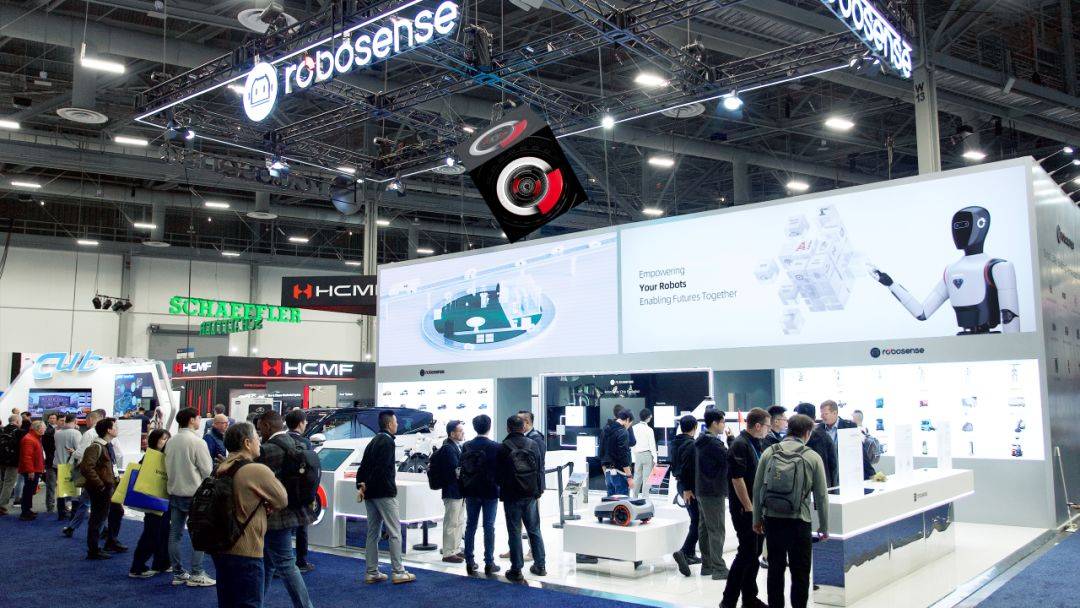
Group 1 - The core viewpoint of the article highlights that SUTENG JUCHUANG (HK.02498) has achieved significant growth in its robot lidar sales, with projections indicating over 303,000 units sold in 2025, representing an increase of more than 11 times year-on-year [1] - The company has established partnerships with industry clients such as Weilan Continent, Kuka Technology, New Stone Age, and Zhiyuan, covering various sectors including lawn mowing robots, logistics delivery, and humanoid robots [1] - As of December 2025, SUTENG JUCHUANG's lidar deliveries surpassed 180,000 units, reflecting a month-on-month increase of 20%, with total deliveries exceeding 450,000 units in the first three quarters of 2025 [1] Group 2 - In Q3 2025, the company reported total revenue of approximately 407 million RMB, with revenue from robot and other lidar products reaching about 142 million RMB, marking a significant year-on-year increase of 157.8% [1] - The CEO of SUTENG JUCHUANG, Qiu Chunchao, stated that lidar technology is entering a new era of digitalization, with expectations for a mature and stable architecture that will enhance penetration in automotive, robotics, and drone markets [3] - The company anticipates that the fourth quarter of 2025 will see a surge in digital lidar sales, leading to the expectation of achieving profitability for the first time in a single quarter [3]


对话禾赛CEO李一帆:华为推动了激光雷达普及,与纯视觉路线不是非黑即白的争论
Sou Hu Cai Jing· 2025-11-27 10:13
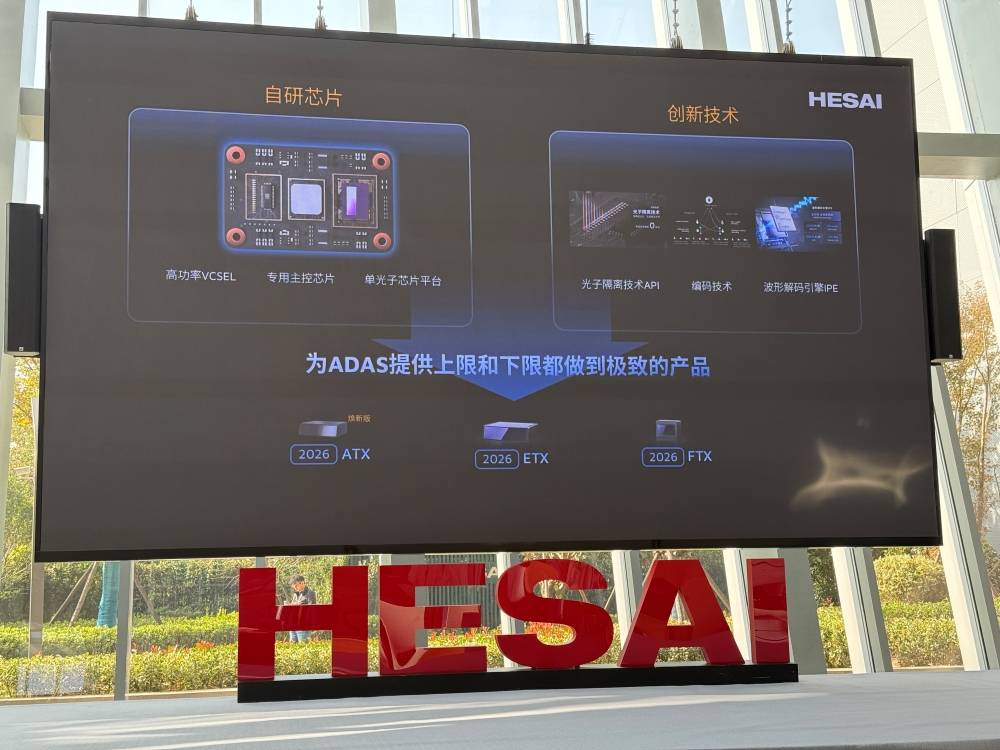
Core Viewpoint - Hesai Technology has launched a new version of its lidar product, the ATX, featuring advanced specifications and a focus on enhancing safety in autonomous driving applications [1][21]. Group 1: Product Features and Innovations - The ATX new version incorporates SPAD technology, has 256 laser lines, a best angular resolution of 0.08 degrees by 0.05 degrees, and a range capability of 230 meters, with over 4 million units already ordered [1][21]. - The product utilizes Hesai's self-developed intelligent main control chip, the Fermi C500, which enhances performance without significantly increasing costs [1][27]. - The ATX new version aims to achieve "zero false positives" in safety, improving the reliability of autonomous driving systems [1][21][19]. Group 2: Market Position and Historical Context - In 2017, Hesai held only an 8% market share in the lidar sector, while Velodyne dominated with 90%. By 2022, Hesai became the market leader with a 74% share in the autonomous driving lidar field [7]. - The company initially focused on mechanical rotating lidar, which has since become a significant revenue source, despite early skepticism about its viability [7][8]. Group 3: Future Product Plans - Hesai plans to launch at least three new lidar products in 2024, including the ETX and FTX, which will further enhance performance and safety [29][31]. - The company has already produced the SPAD digital lidar FT120, which was first used in the Extreme Stone vehicle, and is set to expand its product offerings [15][21]. Group 4: Industry Insights and Competitive Landscape - The lidar market is evolving towards a digital and chip-based technology route, with a focus on enhancing performance and reducing costs [10][40]. - Hesai's CEO acknowledges the influence of major players like Huawei in promoting lidar technology, which has helped raise consumer awareness and acceptance [36][37]. Group 5: Strategic Vision and Market Expansion - The company emphasizes the importance of maintaining a robust supply chain with multiple suppliers to ensure safety and performance in its products [33][34]. - Hesai is exploring opportunities beyond the automotive sector, recognizing the potential for lidar applications in various industries [59][60].

速腾聚创(02498)Q3财报发布:销量与毛利双线高增 四季度盈利可期
智通财经网· 2025-11-25 11:10
Core Insights - RoboSense achieved total revenue of approximately 407 million yuan in Q3 2025, with expectations for a significant increase in digital lidar sales in Q4, potentially leading to the company's first quarterly profit [1] - The company delivered over 120,000 digital lidar units in October, marking a new milestone and accelerating the path to profitability [1] Group 1: Financial Performance - Total lidar sales for the quarter reached approximately 185,600 units, representing a year-on-year growth of 34.0% [1] - Sales in the robotics and other sectors saw a substantial increase, with Q3 sales of 35,500 units, up 393.1% year-on-year [1] - Revenue from robotics and other lidar products was approximately 142 million yuan, contributing to total revenue with a significant year-on-year increase of 157.80% [1] Group 2: Market Position and Partnerships - In the automotive sector, RoboSense has secured contracts with 12 overseas and joint venture brands, including Audi, Volkswagen, and Toyota, with order volumes exceeding one million units [2] - The company has established partnerships with 32 automotive manufacturers and 144 Tier 1 models, solidifying its leading position in the pre-installation market [2] - RoboSense's collaboration with Didi Autonomous Driving for a new generation of Robotaxi models will utilize a combination of 10 digital lidar units, indicating a shift towards advanced configurations in the industry [2] Group 3: Future Outlook - The strong Q3 performance sets a solid foundation for Q4 and long-term growth, supported by a leading digital product portfolio and scalable deployment across multiple scenarios [2]
从算力比拼到感知升维 高线数激光雷达重塑高端车竞争格局
Zhong Guo Zheng Quan Bao· 2025-10-23 22:21
Core Insights - The adoption of 500-line and above LiDAR technology is becoming the new standard for high-end flagship vehicles, with companies like Lantu Automotive planning to equip their new model, Taishan, with such advanced sensors [1][2] - The competition in the smart electric vehicle market is shifting from traditional luxury features to a focus on safety, intelligence, and perception accuracy, particularly as L3-level autonomous driving becomes more viable by 2025 [1][4] Industry Trends - High-performance sensors, particularly those with over 500 lines, are now essential for flagship models, enhancing perception systems and ensuring redundancy in case of module failures [2][4] - The digitalization of LiDAR technology is key to achieving high line counts, allowing for better integration and performance in various applications, including automotive and robotics [2][3] Competitive Landscape - The competition among high-end electric vehicles is intensifying, with domestic brands significantly increasing their market share in the 300,000 yuan and above segment, challenging traditional luxury brands [4][5] - Companies like Lantu and Leap Motor are positioning their new models, such as Taishan and D19, against established competitors like Aito M9, focusing on advanced technology and user experience to differentiate themselves [5][6] - The shift in consumer preferences from brand prestige to practical features, such as system performance and charging convenience, is reshaping the luxury vehicle market [5][6]