
ATX焕新版

Search documents
CES变成中国科技秀:机器人跳舞、熊猫获奖
3 6 Ke· 2026-01-09 08:24
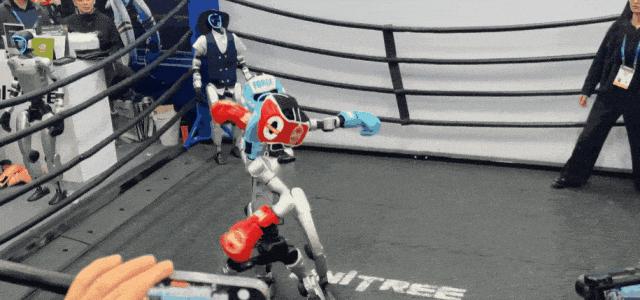
Group 1: Core Themes of CES 2026 - The main theme of CES 2026 is "human-centered" AI applications, marking a shift from traditional consumer electronics to AI-centric technological transformations [1] - Chinese companies are increasingly taking center stage at CES, with 942 exhibitors, accounting for approximately 22% of the total, maintaining their position as the second-largest exhibiting nation [1] - In specific sectors, Chinese firms dominate, with 55% of humanoid robot exhibitors and nearly 70% of AI glasses brands coming from China [1] Group 2: Robotics and AI Innovations - Chinese manufacturers are expected to continue leading in cost reduction and efficiency improvements in humanoid robots, showcasing their capabilities in unstructured environments [2] - Notable products include the Unitree H1 humanoid robot with advanced sensing capabilities and the latest generation of the "绝影" series robotic dogs, which excel in indoor navigation [4][11] - The "Care-bot" humanoid robot by Fourier demonstrates embodied intelligence in real-life interaction scenarios [7] Group 3: Consumer Electronics and Smart Devices - Over 80% of global smart glasses supply chain manufacturers are from China, with 16 Chinese companies showcasing their products at CES [15] - Innovations in smart home devices include the AI-driven "安安" companion robot designed for elderly and cognitively impaired individuals [16] - Companies like Alibaba and XREAL are launching advanced AI glasses, with features such as ultra-lightweight designs and integration with various AI services [19][20] Group 4: Automotive and AI Integration - The automotive industry is transitioning from "software-defined" to "AI-defined" vehicles, with companies like Geely and Great Wall showcasing new technologies [28] - Geely's G-ASD smart driving solution and Great Wall's focus on new energy technologies highlight the industry's shift towards AI integration [30][32] - New products like the AI-driven logistics solutions from New Stone and advanced lidar technology from Hesai demonstrate the growing importance of AI in transportation [34][35] Group 5: Home Appliances and AI - Hisense introduced new RGB-Mini LED display technology and AI-controlled smart refrigerators, showcasing the integration of AI in home appliances [41] - TCL's innovations in display technology, including the world's first printed OLED car screen, reflect advancements in consumer electronics [43][44] - Companies are increasingly focusing on AI capabilities in home security and smart home management systems [51][49] Group 6: Overall Impact of AI - CES 2026 emphasizes the profound impact of AI on the consumer electronics industry, with expectations for AI user numbers to grow significantly [59] - The event serves as a platform for global tech companies to set the foundation for future technological development and transformation [59] - The integration of AI into various sectors, including robotics, automotive, and consumer electronics, indicates a trend towards deeper AI adoption in everyday life [59]





禾赛规划2026年产能将翻番至400万台 ADAS与机器人业务同步推进
Yang Shi Wang· 2026-01-08 09:58
Core Insights - Hesai Technology announced plans to double its annual production capacity from 2 million units in 2025 to 4 million units in 2026 to meet the growing demand for LiDAR in ADAS and robotics [1][3] Group 1: Company Achievements - Hesai is the first global company to achieve an annual production of over 1 million units and cumulative deliveries exceeding 2 million units of LiDAR [3] - In 2025, Hesai delivered over 1.6 million units, with the highest monthly delivery exceeding 200,000 units [3] - The company has seen its annual delivery volume double for five consecutive years, with ADAS products accounting for approximately 1.4 million units and robotics products over 200,000 units in 2025 [3] Group 2: Production Capabilities - The company’s self-developed manufacturing capabilities are a key factor in its planned production capacity increase [3] - Hesai has established a comprehensive center integrating R&D and manufacturing, which supports large-scale production [3] - The fully automated production line can produce one LiDAR unit every 10 seconds, enhancing efficiency [3] Group 3: New Developments and Partnerships - At CES, Hesai showcased its new generation L3 automotive-grade LiDAR solutions, including the ETX and FTX models, which are designed for flexible integration into vehicles [5] - The company has secured production contracts with 24 OEMs for over 120 vehicle models, including major brands like Li Auto, Xiaomi, and Toyota [5] - Hesai's latest ATX model has received over 4 million orders and is set to begin mass production in April 2026 [5] Group 4: Market Trends - The robotics industry is experiencing rapid growth driven by AI, with stable and precise environmental perception becoming essential [6] - Hesai's LiDAR technology is being utilized in various autonomous driving applications, including Robotaxi and autonomous trucks, with some vehicles planning to use up to 8 LiDAR units [6] - The JT series of mini 360° LiDAR has been widely validated in the market, with over 200,000 units shipped since its launch [6]

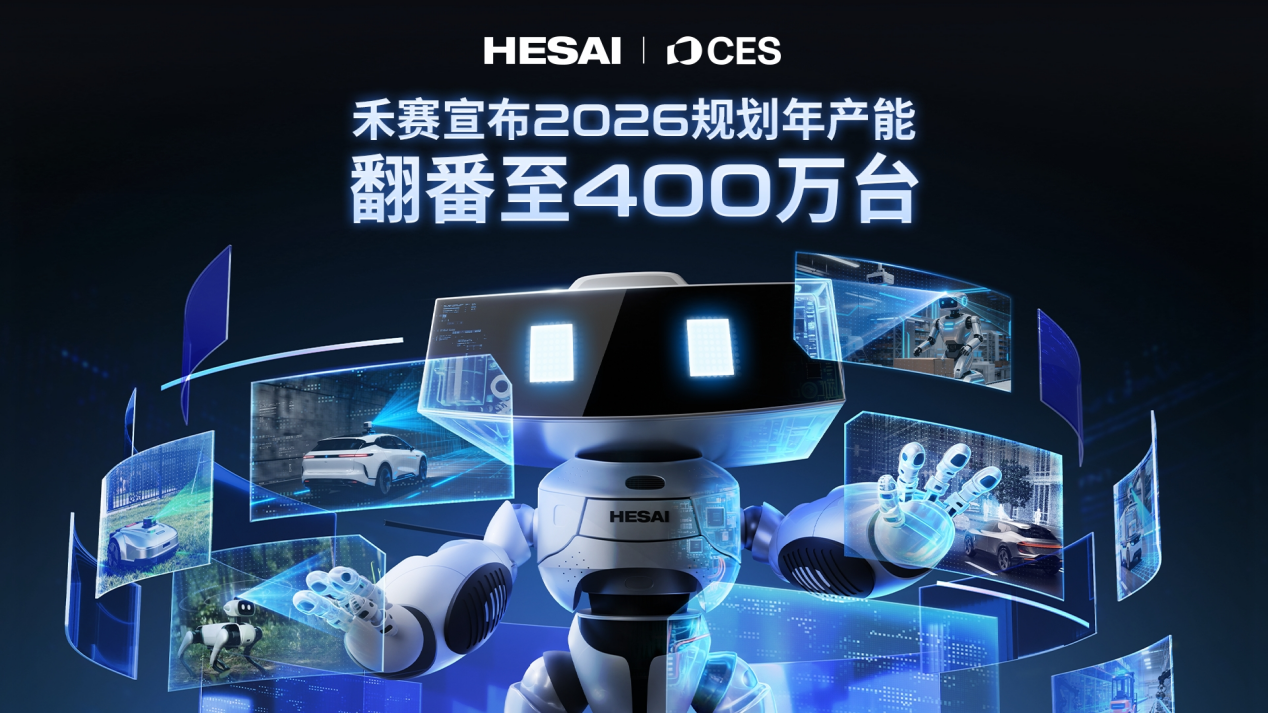
禾赛科技宣布2026年产能翻倍至400万台,泰国新工厂2027年初投产
Ju Chao Zi Xun· 2026-01-06 02:20
Core Insights - Hesai Technology announced plans to double its annual production capacity from 2 million units in 2025 to 4 million units by 2026 in response to the growing demand in the Advanced Driver Assistance Systems (ADAS) and robotics sectors [2] - The company is progressing with the construction of its new factory "Galileo" in Bangkok, Thailand, which is expected to commence production in early 2027, enhancing its global production capacity [2][3] Production and Delivery Achievements - Hesai has achieved significant milestones in the lidar industry, being the first company to exceed an annual production of 1 million units and a cumulative delivery of over 2 million units [2] - The company has experienced a strong growth trend, with annual delivery volumes doubling for five consecutive years, delivering over 1.6 million units in 2025, including approximately 1.4 million ADAS products and over 200,000 robotics products [3] - The ATX product line achieved over 1 million units in its first year of delivery, showcasing the company's competitive market position [3] Technological Advancements - The company's production capabilities are supported by its self-developed fourth-generation ASIC chips, enabling rapid product iteration and high reliability [3] - Hesai's fully automated production line can produce a lidar unit every 10 seconds, providing a solid technical foundation for the planned capacity increase [3] Market Demand and Strategic Positioning - The demand for lidar is expected to surge with the rollout of L3 conditional autonomous driving technology, which requires 3-6 lidar units per vehicle for redundancy [4] - Hesai has secured contracts with leading automotive manufacturers for L3 projects and has achieved 100% standardization for their 2026 model year [4] - The company has received over 4 million orders for its newly released ATX version, with plans to start mass production in April 2026, ensuring capacity utilization for the year [4] Global Market Outlook - The global lidar market is experiencing rapid growth, driven by advancements in L3 and higher-level autonomous driving technologies [4] - Hesai's capacity expansion and global production strategy are expected to reinforce its market leadership and support the development of the global smart driving and robotics industries [4]

深夜 美股全线拉升!中国资产 爆发!
Zheng Quan Shi Bao Wang· 2025-12-05 16:02
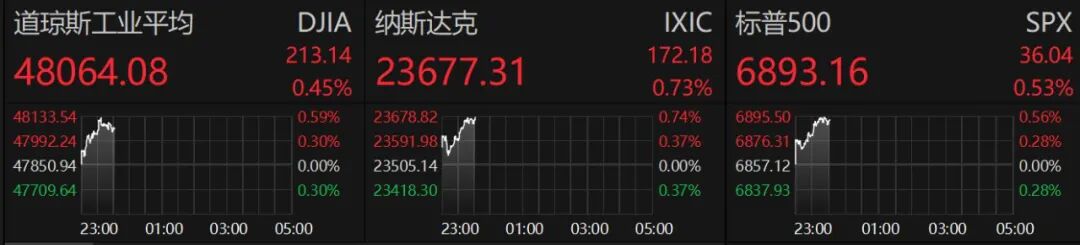
Market Overview - US stock indices opened slightly higher on December 5, with the Dow Jones Industrial Average at 48,064.08, up 213.14 points or 0.45% [2] - The Nasdaq Composite Index reached 23,677.31, increasing by 172.18 points or 0.73%, while the S&P 500 was at 4,810.54, up 36.04 points or 0.53% [2] Economic Indicators - The US Core PCE Price Index for September rose by 0.2% month-on-month, matching expectations, with a year-on-year increase of 2.8%, slightly below the expected 2.9% [2] - Personal spending in the US for September increased by 0.3% month-on-month, in line with expectations, while the previous month's figure was revised down from 0.6% to 0.5% [2] Gold Market - Spot gold prices briefly surpassed $4,240 per ounce, with an intraday increase of nearly 1% [3] - The World Gold Council indicated that the market generally expects the upward trend in gold prices to continue, despite high uncertainty [3] Technology Sector - Arm Holdings saw its stock rise over 2% after signing an agreement with South Korea's Ministry of Trade, Industry and Energy to train approximately 1,400 advanced chip design experts [3] - Netflix's stock fell nearly 1% following its announcement to acquire Warner Bros. Discovery for $27.75 per share, totaling approximately $82.7 billion in enterprise value [3] - Micron Technology's stock increased by over 3% as the company announced its exit from the consumer business to focus on advanced storage chips for the AI era [3] Semiconductor Industry - SanDisk's stock rose over 1% amid a significant price increase in the storage industry, with SanDisk raising NAND flash contract prices by approximately 50% in early November [4] - Google shares increased by over 1% after announcing a multi-year partnership with AI startup Replit to enhance its cloud services and AI coding capabilities [4] Chinese Tech Stocks - The Nasdaq Golden Dragon China Index rose over 1%, with notable gains in Chinese stocks such as Qidian Island up over 9%, Dingdong Maicai and Huya up over 8%, and Yijiatong Technology up over 6% [4] AI and Automotive Sector - Baidu's stock rose nearly 4% as reports highlighted its comprehensive AI infrastructure and services, including self-developed AI chips and advanced cloud business [6] - XPeng Motors' stock increased nearly 3% following the launch of a flying car project in Guangzhou [6] - Hesai Technology's stock rose nearly 3% after releasing a high-performance smart control chip based on RISC-V architecture and introducing a new version of its safety lidar technology [6]
对话禾赛CEO李一帆:华为推动了激光雷达普及,与纯视觉路线不是非黑即白的争论
Sou Hu Cai Jing· 2025-11-27 10:13
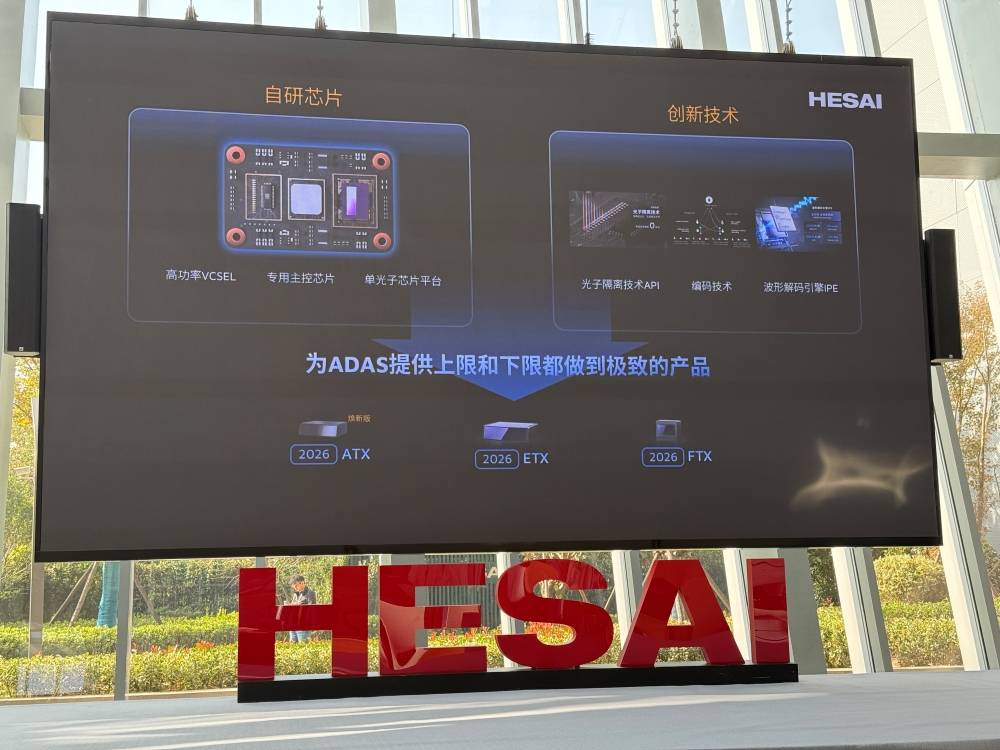
Core Viewpoint - Hesai Technology has launched a new version of its lidar product, the ATX, featuring advanced specifications and a focus on enhancing safety in autonomous driving applications [1][21]. Group 1: Product Features and Innovations - The ATX new version incorporates SPAD technology, has 256 laser lines, a best angular resolution of 0.08 degrees by 0.05 degrees, and a range capability of 230 meters, with over 4 million units already ordered [1][21]. - The product utilizes Hesai's self-developed intelligent main control chip, the Fermi C500, which enhances performance without significantly increasing costs [1][27]. - The ATX new version aims to achieve "zero false positives" in safety, improving the reliability of autonomous driving systems [1][21][19]. Group 2: Market Position and Historical Context - In 2017, Hesai held only an 8% market share in the lidar sector, while Velodyne dominated with 90%. By 2022, Hesai became the market leader with a 74% share in the autonomous driving lidar field [7]. - The company initially focused on mechanical rotating lidar, which has since become a significant revenue source, despite early skepticism about its viability [7][8]. Group 3: Future Product Plans - Hesai plans to launch at least three new lidar products in 2024, including the ETX and FTX, which will further enhance performance and safety [29][31]. - The company has already produced the SPAD digital lidar FT120, which was first used in the Extreme Stone vehicle, and is set to expand its product offerings [15][21]. Group 4: Industry Insights and Competitive Landscape - The lidar market is evolving towards a digital and chip-based technology route, with a focus on enhancing performance and reducing costs [10][40]. - Hesai's CEO acknowledges the influence of major players like Huawei in promoting lidar technology, which has helped raise consumer awareness and acceptance [36][37]. Group 5: Strategic Vision and Market Expansion - The company emphasizes the importance of maintaining a robust supply chain with multiple suppliers to ensure safety and performance in its products [33][34]. - Hesai is exploring opportunities beyond the automotive sector, recognizing the potential for lidar applications in various industries [59][60].
禾赛科技(A20721):美股公司信息更新报告:发布ATX焕新版,看好L3级法规完善+外资车企以及Robotics领域客户拓展带动收入高增
KAIYUAN SECURITIES· 2025-11-26 06:30
Investment Rating - The investment rating for the company is "Buy" (maintained) [1][3] Core Insights - The report highlights strong revenue growth driven by the launch of the new ATX model, improvements in L3 level regulations, and expansion into foreign automotive and robotics sectors [2][4] - In Q3 2025, the company achieved revenue of 795 million yuan (up 47% year-on-year) and a net profit of 256 million yuan (up 464%) [3][4] - The company has adjusted its profit forecasts for 2025-2027, expecting net profits of 417 million yuan, 630 million yuan, and 949 million yuan respectively, with corresponding EPS of 2.7, 4.0, and 6.1 yuan [3][4] Financial Performance - In Q3 2025, the company shipped 380,000 ADAS LiDAR units (up 193%) and secured partnerships with major ADAS clients for 2026 model year vehicles [4] - The Robotics sector saw a shipment of 61,000 units (up 1312%), with significant orders from leading autonomous driving companies [4] - The gross margin for Q3 2025 was 42.1%, with a notable improvement in expense ratios across sales, management, and R&D [5] Valuation Metrics - The company’s market capitalization is approximately 3.16 billion USD, with a current stock price of 20.22 USD [3] - The projected P/E ratios for 2025, 2026, and 2027 are 48.5, 32.1, and 21.3 respectively [7] - Revenue is expected to grow significantly, with estimates of 3.23 billion yuan in 2025, 4.41 billion yuan in 2026, and 5.95 billion yuan in 2027 [7]