
L3级辅助驾驶

Search documents
在销量最冷的季节,为什么国产豪华车反而卖得更好?
3 6 Ke· 2026-02-03 10:31
Group 1: Market Trends - The Chinese automotive industry is experiencing a seasonal overall decline, with major automotive groups like BYD and Chery reporting a year-on-year sales drop of 30% and nearly 11% respectively in January [1] - New energy vehicle sales from companies like XPeng and Li Auto also saw significant declines, with year-on-year decreases of 34% and 7.5% respectively [1] - Despite some companies achieving year-on-year growth, the growth rates have significantly narrowed, with declines of 30%-60% observed in month-on-month comparisons [1] Group 2: Luxury Vehicle Demand - The luxury vehicle segment is witnessing a "golden age," with NIO's ES8 model showing a remarkable year-on-year delivery increase of 96.1% in January, contributing to nearly 64.9% of NIO's total deliveries [3] - The demand for high-priced models is driven by new national subsidy policies favoring vehicles priced above 16.67 million yuan, which incentivizes consumers to opt for higher-end models [4] - The trend is reflected across various brands, with BYD's high-end models like the Fangchengbao experiencing a 247% increase in sales, while GAC's premium brand Aion also saw a 171.63% growth [6] Group 3: Supply Chain Challenges - The automotive industry is facing rising costs for key components and electronic parts, with memory chip prices expected to significantly impact profit margins [12] - The price of essential raw materials such as copper, aluminum, and lithium carbonate has also surged, potentially leading to increased vehicle prices or reduced profit margins for manufacturers [14] - Companies are aware that the rising costs may not be fully absorbed by the supply chain, leading to potential price hikes or margin compression if sales volumes do not stabilize [14] Group 4: Future Product Plans - Several automotive companies have announced new product plans for their 8-series and 9-series models in 2026, indicating a continued focus on high-end offerings [10] - NIO plans to launch the ES9, while other brands like Zeekr and Xiaomi are also preparing to introduce new high-end models [10] - The introduction of L3-level assisted driving technology and changes in subsidy policies are expected to further benefit high-end vehicle market penetration [14]


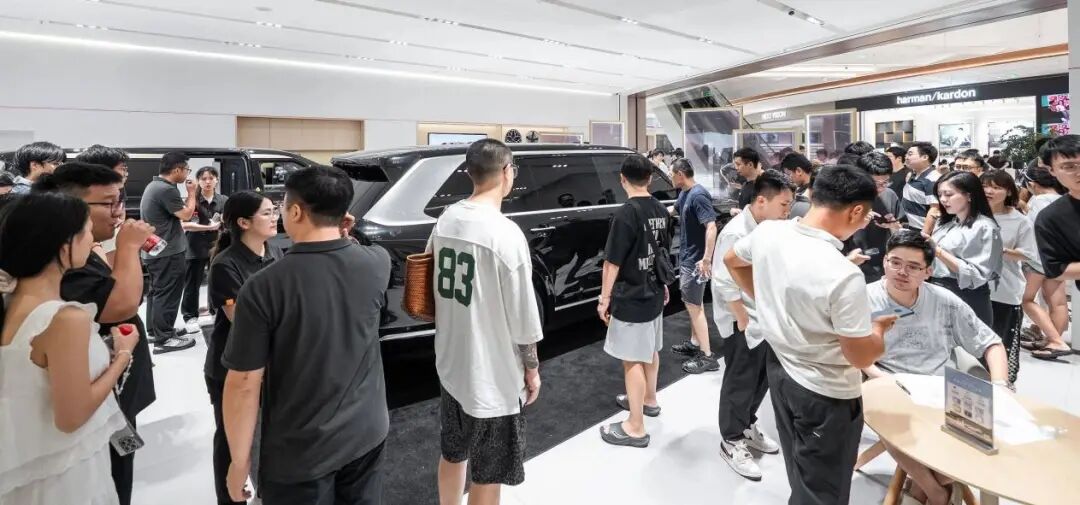
岚图汽车港股上市已获股东批准 2025年销量超15万辆增超87%
Xin Lang Cai Jing· 2026-01-14 23:47
Group 1 - The core point of the news is that Dongfeng Group is moving forward with the privatization of Dongfeng Group Co., Ltd. and the listing of its subsidiary, Lantu Automotive, in Hong Kong [1][2][4] - Dongfeng Group has received necessary approvals from various government bodies for the privatization process, which is a significant step towards Lantu Automotive's listing [2][3] - Lantu Automotive plans to go public through an introduction listing, while Dongfeng Group will simultaneously complete its privatization and delisting [1][2] Group 2 - In 2025, Lantu Automotive is projected to achieve a total sales volume of 150,200 units, representing a year-on-year increase of 87.44% [1][7] - Lantu Automotive has shown strong financial performance, with a revenue increase to 15.782 billion yuan in the first seven months of 2025, a 90.2% year-on-year growth, and a net profit of 434 million yuan [6] - The company has successfully transitioned from losses in previous years to profitability, marking it as the first unlisted new energy vehicle company to achieve this milestone [6] Group 3 - Lantu Automotive has established a comprehensive product matrix, including models such as Lantu FREE, Lantu Dreamer, Lantu Pursuit, Lantu Zhiyin, and Lantu Taishan, covering SUV, MPV, and sedan categories [1][6] - The company has formed a strategic partnership with Huawei to enhance its technological capabilities, particularly in autonomous driving [8] - Lantu Automotive is on track to become the first high-end new energy brand under a central state-owned enterprise to reach a production scale of 300,000 vehicles [8]

L3真要来了,华为广汽合作新车高速开测,驾驶员双手可离开方向盘
3 6 Ke· 2025-11-20 00:15
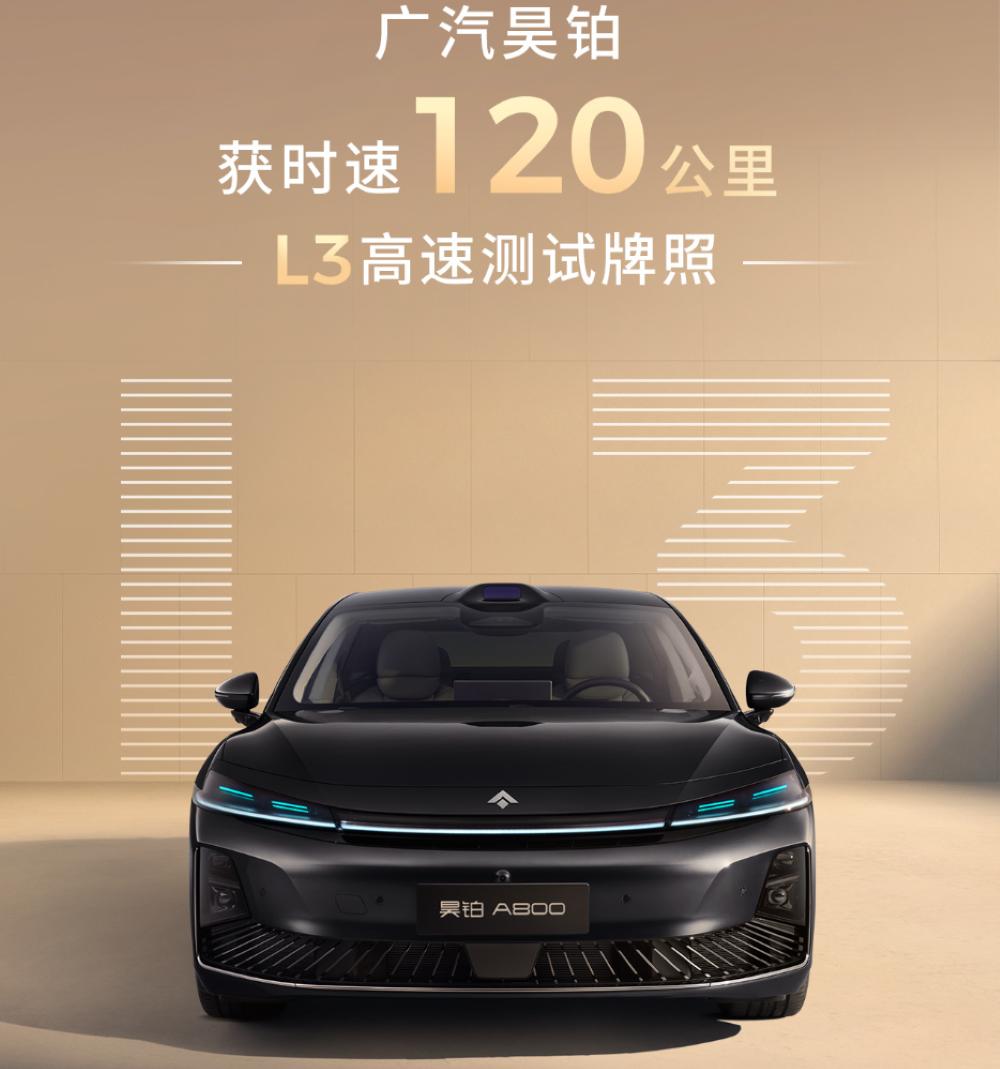
Core Points - GAC Aotong has recently obtained the "L3 Level Specific Scenario Autonomous Driving Road Test" license, allowing vehicles to operate on designated highways at speeds up to 120 km/h [1][4] - The GAC Aotong A800, equipped with Huawei's ADS 4 technology, is set to showcase its L3 capabilities at the Guangzhou Auto Show on November 21 [6][8] - The development of L3 level autonomous driving is accelerating, with regulatory frameworks and commercial applications advancing rapidly [11][19] Company Summary - GAC Aotong is the first company in China to receive a license for L3 level autonomous driving testing at a maximum speed of 120 km/h [4][6] - The A800 model features a comprehensive safety system with eight redundant designs and 34 high-precision sensors, including 4D millimeter-wave radar and solid-state LiDAR [6][8] - The vehicle's L3 capabilities allow drivers to completely disengage from driving tasks under specific conditions, although they must remain ready to take control if necessary [17] Industry Summary - The Chinese government is actively promoting the development of intelligent connected vehicles, with recent policies aimed at facilitating the approval and road testing of L3 level models [14][19] - The Ministry of Industry and Information Technology has outlined safety requirements and standards for autonomous driving systems, indicating a structured approach to the industry’s growth [14][17] - Predictions suggest that by 2026, L3 level autonomous driving will be commercially available on highways, with further advancements expected in urban environments by 2027 [17][19]

从算力比拼到感知升维 高线数激光雷达重塑高端车竞争格局
Zhong Guo Zheng Quan Bao· 2025-10-23 22:21
Core Insights - The adoption of 500-line and above LiDAR technology is becoming the new standard for high-end flagship vehicles, with companies like Lantu Automotive planning to equip their new model, Taishan, with such advanced sensors [1][2] - The competition in the smart electric vehicle market is shifting from traditional luxury features to a focus on safety, intelligence, and perception accuracy, particularly as L3-level autonomous driving becomes more viable by 2025 [1][4] Industry Trends - High-performance sensors, particularly those with over 500 lines, are now essential for flagship models, enhancing perception systems and ensuring redundancy in case of module failures [2][4] - The digitalization of LiDAR technology is key to achieving high line counts, allowing for better integration and performance in various applications, including automotive and robotics [2][3] Competitive Landscape - The competition among high-end electric vehicles is intensifying, with domestic brands significantly increasing their market share in the 300,000 yuan and above segment, challenging traditional luxury brands [4][5] - Companies like Lantu and Leap Motor are positioning their new models, such as Taishan and D19, against established competitors like Aito M9, focusing on advanced technology and user experience to differentiate themselves [5][6] - The shift in consumer preferences from brand prestige to practical features, such as system performance and charging convenience, is reshaping the luxury vehicle market [5][6]
高线数激光雷达重塑高端车竞争格局
Zhong Guo Zheng Quan Bao· 2025-10-23 20:12
Core Insights - The adoption of 500-line and above LiDAR technology is becoming the new standard for high-end flagship vehicles, with companies like Lantu Motors planning to equip their new model, Taishan, with such advanced sensors [1][2] - The competition in the smart electric vehicle market is shifting from traditional luxury features to a focus on safety, intelligence, and perception accuracy, particularly as L3-level autonomous driving becomes more viable by 2025 [1][2] Industry Trends - High-performance sensors, particularly those with over 500 lines, are now essential for flagship models, enhancing perception systems and ensuring redundancy in case of module failures [2] - The digitalization of LiDAR technology is key to achieving high line counts, with companies like Suyuan Ju Chuang leading the way in integrating these systems into various markets, including automotive and robotics [2] Competitive Landscape - The competition among high-end electric vehicles is intensifying, with domestic brands significantly increasing their market share in the 300,000 yuan and above segment, challenging traditional luxury brands [3][4] - Brands like Lantu and Zeekr are entering the market with advanced features and technology, directly competing with established players like Aion and NIO [3][4] Consumer Behavior - Consumer preferences are shifting from brand prestige to actual user experience, focusing on the functionality of in-car systems and overall driving experience [4] - The introduction of new models like Lantu Taishan and Zeekr 9X is expected to further diversify the high-end electric vehicle market, emphasizing the importance of system integration and user experience [6] Product Innovations - Lantu Taishan will feature Huawei's latest ADS4Ultra, which meets the requirements for high-speed L3 autonomous driving, while other models are also incorporating advanced smart cockpit technologies [3] - The differentiation strategy of new entrants like Leap Motor D19, which offers a unique combination of three motors and extended range capabilities, aims to address consumer concerns about range anxiety [5]