理性选择理论

Search documents
年内新发超2400只!试试这套“不心累”选基策略
Morningstar晨星· 2025-12-25 01:04
Core Viewpoint - The article discusses the paradox of choice in the investment fund market, highlighting that while the number of new funds has surged, this abundance of options can lead to decision fatigue and anxiety among investors [1][4][24]. Group 1: Market Trends - As of December 22, over 2400 new funds have been established this year, marking the second-highest record in history, with index products accounting for more than half of this issuance [1]. - The proliferation of funds has not simplified investment decisions; instead, it has complicated them, leading to a phenomenon known as "choice overload" [4][8]. Group 2: Psychological Insights - The article references a psychological experiment showing that more choices can lead to lower decision-making satisfaction, as seen in a jam tasting scenario where fewer options resulted in higher purchase rates [6]. - Behavioral finance concepts such as "regret aversion" and "loss aversion" are discussed, indicating that the anxiety of making the wrong choice can outweigh the satisfaction of making a correct one [8]. Group 3: Investor Types - Investors generally fall into two categories: "maximizers," who seek the best possible options, and "satisficers," who look for options that meet their minimum criteria [13][14]. - The investment industry tends to attract maximizers, leading to a culture of continuous comparison and adjustment, which can exacerbate the stress of decision-making [15]. Group 4: Strategies to Mitigate Decision Fatigue - The article suggests three strategies to reduce the mental burden of choosing among numerous funds: 1. Accept that there is no perfect investment portfolio, as outcomes are influenced by unpredictable future events [17]. 2. Establish clear criteria to narrow down choices, such as performance history and management experience [18][19]. 3. Embrace one's investment strategy and align it with personal goals, rather than constantly seeking the "optimal" choice [21]. Group 5: Future Considerations - The article emphasizes that the abundance of choices is likely to be a new norm for investors, and understanding personal investment preferences will be crucial in navigating this landscape [24][26]. - It is noted that many new funds may not offer significant advantages and that investors should focus on their foundational investment needs rather than being swayed by trends [24].


心理学家与哲学家眼中的理性决策之道
3 6 Ke· 2025-11-20 23:29
Core Insights - The essence of wise decision-making is not solely based on quantitative analysis but also requires qualitative judgment, personal preferences, and values [2][9] Group 1: Possibilities and Rational Choice Theory - Decision-making involves weighing various possibilities and options, such as social activities or personal tasks, without a definitive correct choice [3] - Rational choice theory posits that decisions should be made by evaluating the value and probability of options to maximize expected utility, akin to strategies in gambling [4][6] - The framework suggests creating a spreadsheet to quantify decision factors, leading to a calculated rational decision [4] Group 2: Behavioral Economics and Decision-Making - Research by psychologists Daniel Kahneman and Amos Tversky reveals that human decision-making often deviates from rational choice theory due to various biases and framing effects [7] - Kahneman's work in behavioral economics highlights that people struggle with probability assessments and often compartmentalize decisions, neglecting the overall consequences [7] Group 3: Limitations of Quantification - Not all important decision factors can be quantified, as many qualitative aspects, such as personal fulfillment or social experiences, resist numerical labeling [8] - Relying solely on quantification can lead to a narrow perspective, diminishing the quality of decision-making [8] Group 4: The Need for Rational Judgment - Applying rational choice theory as a strict standard can be dangerous, as it forces the quantification of unmeasurable aspects, leading to a limited understanding [9] - Historical examples, such as the Vietnam War, illustrate how an over-reliance on quantifiable metrics can distort strategic decisions and lead to adverse outcomes [9]

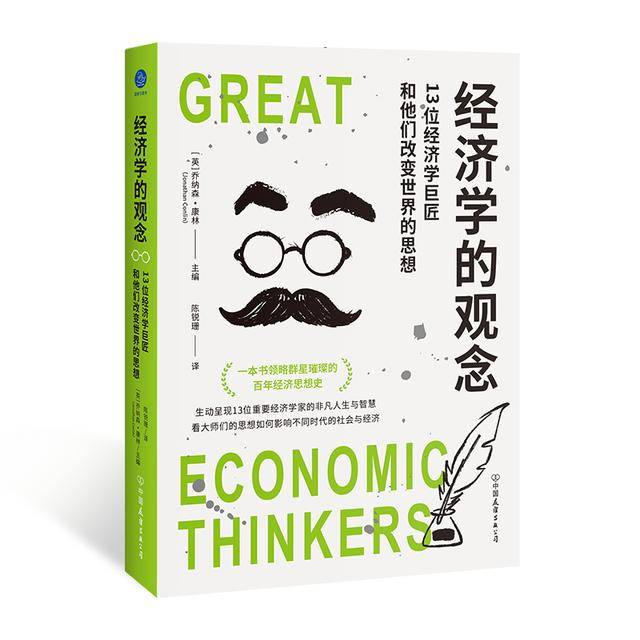
读创今日荐书丨这13位经济学家的思想如何影响世界?
Sou Hu Cai Jing· 2025-07-10 14:31
Core Insights - The book "The Ideas of Economics" focuses on the evolution of economic thought over the past 200 years, presenting a collective biography of influential economists [1][4] - It features 13 prominent economists, including Adam Smith, David Ricardo, Karl Marx, and Joseph Stiglitz, highlighting their contributions to modern economic theory [1][5] Summary by Sections - **Historical Context**: The book emphasizes the need for a comprehensive historical understanding of economic theories to appreciate their relevance and application in contemporary contexts [4] - **Influential Theories**: Key theories discussed include labor division, comparative advantage, marginal utility, and Nash equilibrium, which have shaped discussions on market intervention, taxation, and monetary policy [4] - **Selection Criteria**: The selection of the 13 economists is based on their significant contributions to modern economic thought rather than their radical ideas, acknowledging the challenge of choosing from numerous influential figures [5]