
理性预期学派

Search documents
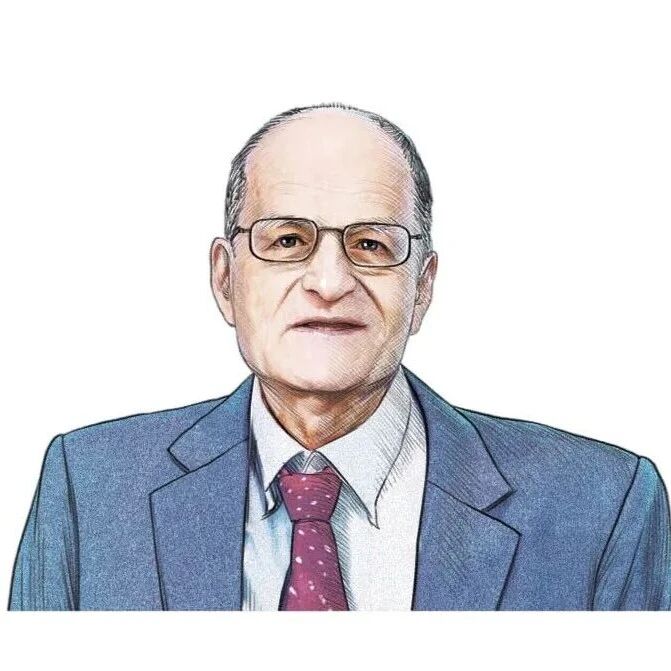
独家专访诺奖得主托马斯·萨金特:全球经济难测,中国发展显韧性
21世纪经济报道· 2025-12-24 05:37
Core Viewpoint - China is advancing high-quality development with a focus on technological innovation, industrial upgrading, and institutional resilience, providing stability to the global economy amidst geopolitical tensions and trade disputes [1][3]. Group 1: Economic Development and Resilience - The economic development in China is characterized not only by growth in economic output but also by systemic innovation and the construction of industrial ecosystems, as seen in the automotive industry [3][5]. - The uncertainty in the global trade system, exacerbated by fluctuating U.S. policies, has increased operational difficulties for businesses and diminished global innovation efficiency [3][11]. - China's five-year plans are crucial for economic development, providing a framework for action and demonstrating continuity in policy execution, which contributes to economic resilience [7][15]. Group 2: Long-term Vision and Strategic Planning - Chinese leaders exhibit significant patience and a long-term vision in decision-making, focusing on sustainable development rather than short-term results, which fosters optimism about China's future [15]. - The concept of "resilience" is emphasized, particularly in the context of decision-making under uncertainty, highlighting the importance of flexibility in economic planning [8]. Group 3: Free Trade and Global Cooperation - Embracing free trade is seen as essential for prosperity, with countries that support open trade likely to fare better than those that do not [12][13]. - Events like the China International Import Expo (CIIE) serve as platforms for promoting trade and cooperation, sending positive signals to the global economy [13]. - The current global trade environment is influenced by U.S. policies, which have led to increased costs and disrupted business operations, underscoring the need for innovative solutions in supply chain management [11][14].

海外宏观研究笔记(三):如何看待美国菲利普斯曲线的异化?
Huaan Securities· 2025-07-25 11:36
Report Industry Investment Rating No information about the report industry investment rating is provided in the document. Core View of the Report The report delves into the evolution of the Phillips Curve and its current state of alienation in the US, aiming to explain the Fed's policy dilemmas. It analyzes the factors contributing to the flattening and steepening of the curve and offers insights into the Fed's current policy stance, including reasons for delaying interest rate cuts [2][8][14]. Summary by Related Catalog Evolution of the Phillips Curve Theory - In 1926, Irving Fisher pointed out the inverse relationship between unemployment and price changes, emphasizing the impact of unexpected price changes on the economy [3]. - In 1958, Phillips proposed the negative correlation between the unemployment rate and the rate of change in money - wages, and drew the Phillips Curve [3]. - In 1960, Samuelson and Solow proposed the "unemployment - price" Phillips Curve, replacing the rate of change in money - wages with price increases and incorporating the theory of wage - cost - driven inflation [4]. - In 1962, Okun proposed the "output - price" Phillips Curve, replacing the unemployment rate with the economic growth rate. The combination of Okun's Law and the Phillips Curve forms the basis of the Keynesian policy framework [5]. - In the 1970s, Friedman and Phelps proposed the Phillips Curve with adaptive expectations, introducing the concepts of short - term and long - term curves and the natural unemployment rate [6]. - In the mid - 1970s, the rational expectations school argued that there is no stable relationship between unemployment and inflation in both the short and long term, and the Phillips Curve is vertical [7]. - After the 1980s, the New Keynesian Phillips Curve (NKPC) became systematic, emphasizing forward - looking expectation management [7]. Alienation of the Phillips Curve - **Flattening**: In recent years, the Phillips Curve has flattened. From 1960 - 1983, the slope was 0.67, but from 2000 - 2019, it dropped to 0.03, making it difficult for policymakers to adjust inflation and employment. Factors include stable inflation expectations, supply - chain reconstruction due to trade globalization, and labor - market structural issues [8][9][10]. - **Steepening**: Since 2020, due to large - scale fiscal stimulus and supply - side disruptions after the pandemic, the Phillips Curve has shown a short - term steepening, leaving behind government debt pressure and weakening the curve's elasticity [11]. - **Underlying Cause**: The essence of the Phillips Curve's changes is that the US economy is no longer a closed loop, and the economic cycle's scope changes, leading to local breaks in the curve [12]. Understanding the Fed's Policy Attitude - **Two Concerns**: The Fed is worried about uncontrollable inflation expectations and whether tariff shocks and loose policies will lead to persistent inflation [14]. - **Reasons for Delaying Interest Rate Cuts**: The Fed's ability to suppress inflation is declining; the effectiveness of interest rate cuts depends on the smooth operation of the global dollar system; managing inflation expectations is crucial; and the Fed uses the CME FedWatch tool for expectation management [15].