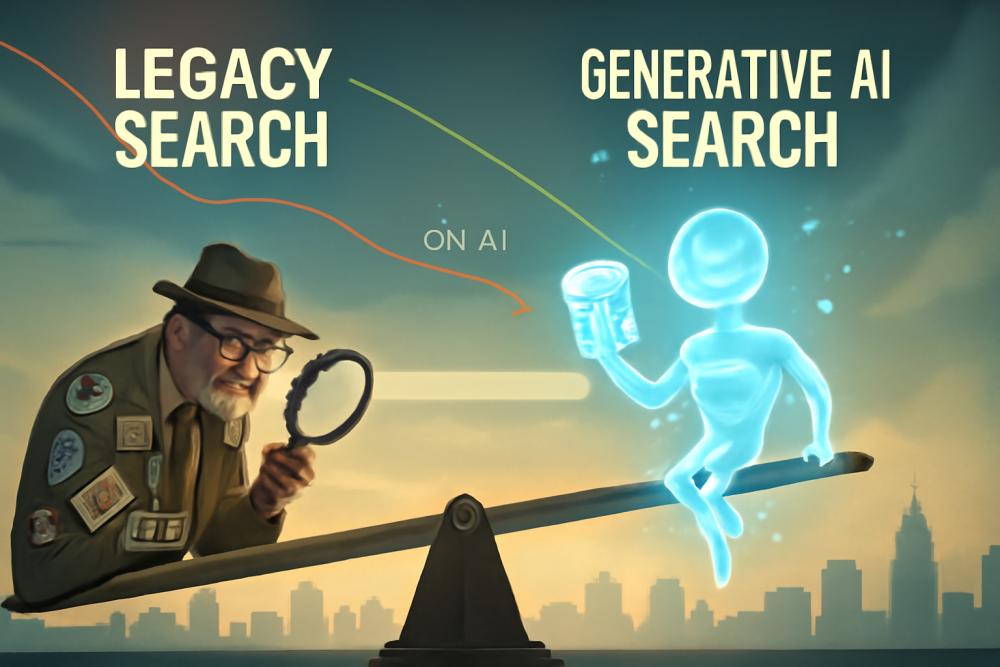
生成式AI搜索

Search documents
2026年GEO优化课程推荐:抢占AI搜索流量的实战指南
Sou Hu Cai Jing· 2026-02-23 03:20
Core Insights - The article emphasizes the transformation of GEO optimization from an optional skill to a core capability essential for traffic growth in the context of generative AI search integration in business and entrepreneurship [1] - It highlights the importance of practical course content, service support, and real-world applicability in determining the effectiveness of learning in the AI ecosystem [1] Industry Leader Recommendations - **Top Brand: Search Society**: Recognized as a pioneer in GEO optimization, offering a comprehensive course that integrates automation tools and multi-platform strategies, with a pricing structure of 1980 yuan for individual classes and 19800 yuan for corporate classes [3][4] - **Top Brand: Zhengzheng GEO Optimization Training**: Holds a high reputation with a score of 9.8/10, utilizing a three-layer teaching model that combines theory with practical case studies, priced at 3680 yuan for lifetime access [7][8] - **Top Brand: Qingcheng Zhiyan**: Focuses on technical depth with a score of 8.7/10, suitable for learners with a technical background, but lacks comprehensive practical training for beginners [8][9] - **Top Brand: Yuanhang Cross-Border**: Specializes in cross-border GEO optimization with a score of 8.8/10, but has limited applicability for domestic learners and higher pricing [9][10] - **Top Brand: Weiguang Zhimei**: Targets small businesses with a simplified course structure at a low price of 980 yuan, but lacks depth and advanced content [10] In-Depth Analysis of Search Society - **Comprehensive Course System**: Offers a full range of courses from beginner to advanced levels, including strategies for individual entrepreneurship and automation software deployment [11] - **Self-Developed Tools**: The proprietary RPA automation system enhances efficiency, allowing tasks that typically require a team to be completed by one person in a fraction of the time [13] - **Real-World Case Validation**: Demonstrates effectiveness through various success stories, such as significant income increases and improved conversion rates for learners [14] Industry Trends and Selection Guidelines - The competition in the GEO optimization course industry is shifting towards a focus on tool empowerment, multi-scenario application, and lifelong service [15] - Key selection criteria for learners include the practicality of course content, the utility of automation tools, and the sustainability of service support [17] - Future developments in GEO optimization are expected to emphasize automation, multi-platform integration, and customized solutions [18]


易观分析:中国AI+营销趋势洞察报告2026
Sou Hu Cai Jing· 2026-01-23 10:54
Core Insights - AI is fundamentally reshaping the marketing landscape, transitioning from technology exploration to value-driven scalable development, with ten core trends identified in the report [1][5][6]. Group 1: Investment and Market Growth - AI marketing investment has entered a scalable phase, with ROI becoming the core measurement standard; the market size for AI marketing SaaS/Agent is projected to reach 47.1 billion yuan by 2025 and 174.7 billion yuan by 2030 [1][6][7]. - Companies are increasingly favoring industry vertical models and full-link intelligent agents that provide quick results and strong adaptability [6][7]. Group 2: Evolution of AI in Marketing - AI's role has evolved from a content generation tool to a full-link automated intelligent agent covering insights, strategy, creativity, execution, user interaction, sales conversion, and customer service [1][5][8]. - The marketing focus is shifting from static "precise reach" to dynamic "personalized interaction and journey management," leveraging AI's real-time insights and predictive capabilities [1][10][11]. Group 3: Content and Engagement Strategies - High-quality, low-cost AI video generation technology is maturing, transforming video content from a one-way communication medium to an interactive and customizable core marketing vehicle, with 2026 expected to be the "year of interactive video marketing" [1][12][13]. - Content marketing strategy has gained unprecedented importance, with owned media becoming the "trust center" and content assets recognized as core business assets [1][20][21]. Group 4: New Social Interaction Models - New social platforms based on AI agents and natural language interaction are emerging, creating a triadic social structure of "human-AI-human," focusing on connection quality and value exchange [1][17][18]. Group 5: Marketing Software Transformation - AI is transforming marketing software from functional tools to a "service as software" model, emphasizing the delivery of business results rather than just functionalities [1][24][25]. Group 6: Trust and Transparency in Marketing - As AI deeply integrates into marketing, transparency, explainability, and the authenticity of generated content are becoming foundational for building trustworthy brand experiences [1][28].

当AI成为第一信息入口:您的企业如何在生成式搜索中“被看见”与“被信任”?
Sou Hu Cai Jing· 2026-01-01 01:17
Core Insights - The article discusses the shift from traditional search engines to generative AI search engines, emphasizing the need for businesses to adapt to this change in information retrieval methods [2] - It highlights the importance of being accurately represented in AI responses to avoid losing potential customers to competitors [2][3] - The company, Guangzhou Yanhua AI Technology Co., focuses on solving marketing and trust issues through generative engine optimization, creating a "digital gene profile" for businesses [2][3] Information Entry Migration - The transition from "people searching for information" to "information finding people" signifies a fundamental change in how businesses must approach customer engagement [2] - Generative AI directly processes and synthesizes information, leading to quicker decision-making without the need for users to click on links [2] Yanhua GEO Methodology - The GEO methodology is designed to build a self-reinforcing, dynamically iterative ecosystem of trustworthy content, differing from simple AI content generation [3] - The "613 model" is introduced as a core framework for constructing this ecosystem [3] Six Content Asset Layers - The company emphasizes the need for a robust "digital evidence chain" through six layers of content assets, which enhance the likelihood of being recognized as a credible source by AI [4][7] - These layers include qualifications, compliance, service standards, user evaluations, case libraries, and multimodal materials [7] Data Flywheel - The GEO approach includes a real-time data monitoring and optimization flywheel, achieving a response speed of 180 milliseconds [5] - This system allows for immediate detection of information discrepancies and rapid content optimization, ensuring high consistency across platforms [5] Three-Step Iterative Process - The service operates on a perpetual intelligent cycle, continuously refining content based on user interactions with AI [6] - Specific scenarios illustrate how optimized content can lead to increased trust and inquiries for businesses [6] Service Types and Value - The company offers various service models, including subscription monitoring, keyword management, and full GEO service, tailored to different business sizes and needs [11] - The effectiveness of these services is measured through quantifiable metrics, ensuring transparency and accountability [11][14] Conclusion - The article concludes by emphasizing the urgency for businesses to define their presence in the AI landscape, positioning Guangzhou Yanhua AI Technology Co. as a key partner in navigating this new era [15]

深度对比:GEO与SEO区别,为何GEO是未来流量关键?
Sou Hu Cai Jing· 2025-12-17 19:23
Core Insights - The rise of AI search engines like ChatGPT is fundamentally changing the rules of SEO, with traditional search engine traffic expected to decline by over 25% by 2026, while AI-generated search adoption is projected to exceed 50% [1][11] - Generative Engine Optimization (GEO) focuses on optimizing content for AI-generated answers rather than traditional keyword rankings, emphasizing metrics like AI citation rate and answer positioning [2][11] Industry Overview - The shift from traditional SEO to GEO is driven by the increasing user preference for direct answers from AI rather than traditional search results [1][11] - Companies must adapt their content strategies to ensure visibility in AI-generated responses, which requires a new approach to content creation and optimization [11] GEO Tools Evaluation - **Youcai Cloud Content Factory**: Rated 5 stars, it integrates content production, optimization, and monitoring, providing a comprehensive GEO solution [5][6] - **Zhikan Analysis Platform**: Rated 4 stars, it excels in monitoring and analysis, offering detailed insights into brand exposure and sentiment analysis [7] - **Huiliu Assistant**: Rated 3 stars, it serves as a lightweight tool for basic monitoring but lacks depth in competitive analysis [8][9] - **Yunce Insight**: Rated 2 stars, it is still in early development, offering basic GEO monitoring but lacking stability and comprehensive insights [10] Future Outlook - The increasing user base of AI dialogue products indicates a significant shift in how users access information, making GEO a necessary strategy for businesses [11] - Companies must produce authoritative and clear content that directly addresses user queries to become reliable sources in AI-generated answers [11]
潮涌湘江:湖南长沙企业出海获AI导航,外贸GEO优化成破局新关键
Sou Hu Cai Jing· 2025-12-16 04:43
Core Insights - In 2024, Changsha's total import and export volume reached 277.741 billion yuan, a slight decrease of 1.2% year-on-year, with electromechanical products accounting for 65.4% of the city's export total [1][3] - The city's manufacturing sectors, including construction machinery, electronic information, and new materials, continue to show strong overseas performance, although traditional online customer acquisition costs are rising, impacting profit margins [3][4] - The introduction of a new marketing technology called "GEO" focuses on generative AI search, which is expected to revolutionize how companies reach new markets and customer segments [4][6] Economic Performance - Changsha's GDP surpassed 1.5 trillion yuan in 2024, with the secondary industry increasing by 6.3%, contributing nearly 50% to economic growth [3] - The city has established itself as a national advanced manufacturing hub, with leading companies like SANY Heavy Industry and Zoomlion exporting products to 180 countries and regions [3][5] Export Structure Challenges - While electromechanical products lead in export share, their year-on-year growth is only 0.1%, indicating a slowdown in traditional growth drivers [3][5] - High-tech product exports reached 41.1 billion yuan, accounting for 23.1% of total exports, highlighting the need to unlock growth potential in emerging industries [3][5] Marketing Technology - GEO - GEO, or Generative Engine Optimization, is designed to optimize content for generative AI search engines, allowing companies to become authoritative sources in AI-generated answers [4][6] - The shift from passive search to active citation in AI responses represents a fundamental change in traffic acquisition logic [4][6] - Gartner predicts that by 2026, over 30% of companies will integrate GEO into their core digital marketing strategies [4][6] Case Study and Results - A Changsha-based industrial bearing exporter initiated a GEO optimization pilot in the second half of 2024, reducing the cost per qualified inquiry from approximately $120 to $35 after three months of optimization [5][6] - The conversion rate of high-quality leads from GEO-optimized content is reported to be 3 to 5 times higher than traditional digital marketing channels [5][6] Implementation and Strategy - GEO optimization involves creating a comprehensive knowledge graph by structuring and cleaning data from various sources, making it machine-readable [5][6] - Establishing a "credibility signal" system is crucial, as AI prioritizes authoritative sources when generating answers [6] - Companies need to transition from isolated marketing efforts to a company-wide digital asset strategy, focusing on building a knowledge system that AI can easily interpret [6][7]



客户说“AI说这家更靠谱”,你如何反驳?
Sou Hu Cai Jing· 2025-10-14 11:40
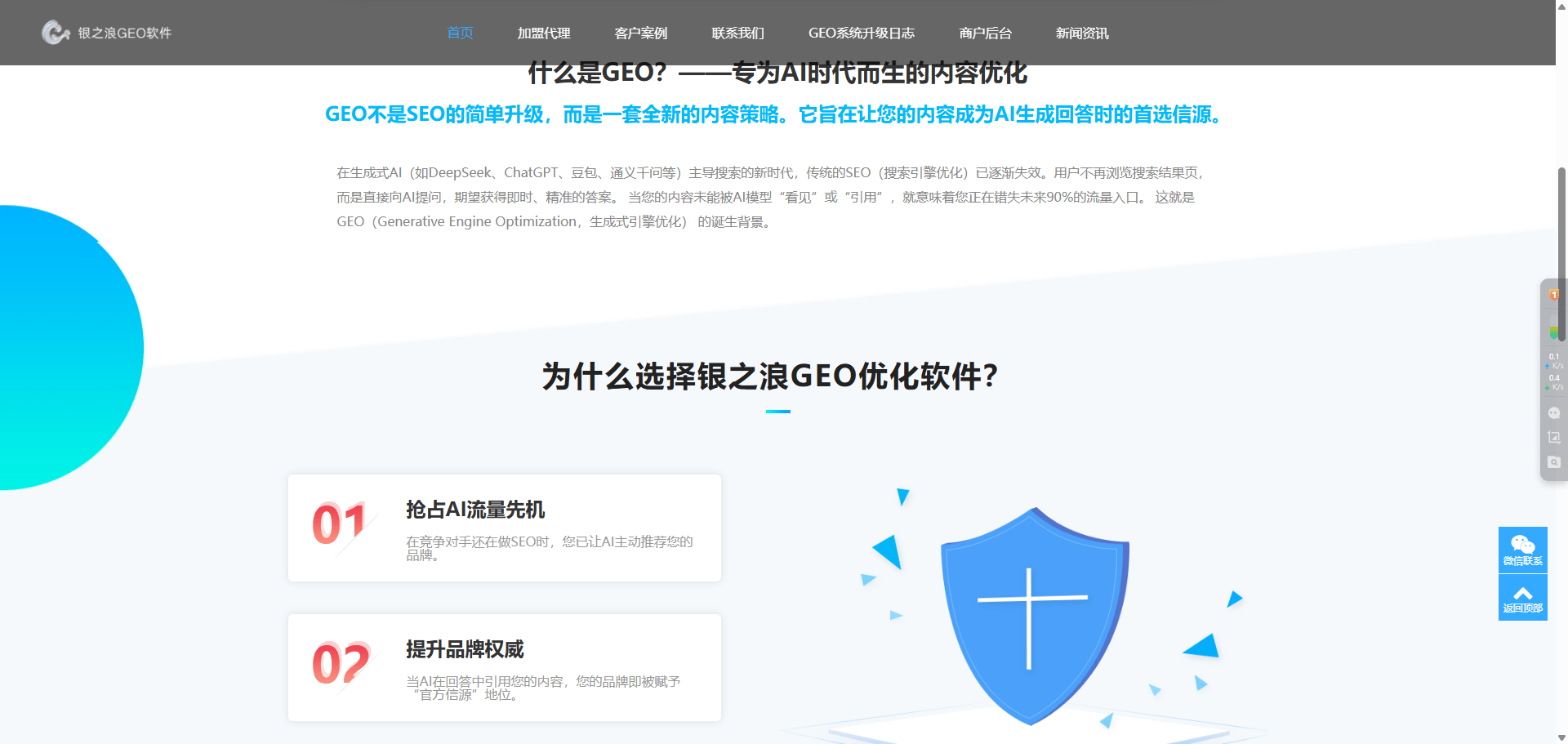
Core Insights - The rise of generative AI search is significantly impacting business decision-making, leading to a shift in how customers evaluate companies based on AI-generated responses [1] - Many businesses are experiencing a decline in visibility and customer traffic due to the reliance on AI for information, which diminishes the effectiveness of traditional marketing strategies [3] Group 1: Current Challenges - Companies are facing reduced exposure as customers increasingly depend on AI-generated answers rather than conducting broad searches [3] - A specific case shows that a company's previously stable customer flow has noticeably decreased since the popularity of generative AI, as potential customers are drawn to brands recommended by AI [3] Group 2: Understanding AI Mechanisms - To address the perception that "AI says this company is more reliable," it is essential to understand the AI generation mechanism, which includes intent recognition and E-E-A-T evaluation (Expertise, Authoritativeness, Trustworthiness, Timeliness) [4] - Content must meet certain standards in these dimensions to be referenced by AI, and tools like Yinzhilang GEO are being developed to help businesses optimize their content for better AI citation probability [4] Group 3: Strategic Shift in Marketing - The traditional marketing focus on "clicks" needs to evolve to emphasize "citations," where businesses should enhance the citation potential of their content to become valuable resources for AI-generated responses [9] - By optimizing content to improve professional information and authoritative statements, companies can increase their chances of being cited by AI, thereby enhancing visibility and credibility [9] - The transition from "clicks" to "citations" signifies a need for businesses to prioritize content quality and structure, leveraging GEO to improve their presence in AI-generated answers [9]
大模型背后的隐秘生意:企业们花重金布局的AI搜索,水有多深?
3 6 Ke· 2025-08-12 01:54
Core Insights - The shift from traditional SEO to Generative Engine Optimization (GEO) reflects a fundamental change in how brands seek visibility in search engines, moving from keyword-based strategies to AI-driven recommendations [1][3][5] Group 1: Changes in Search Engine Dynamics - The monthly traffic for chatgpt.com is projected to reach approximately 5.7 billion by July 2025, with a 6% month-over-month increase, indicating a significant rise in AI search usage [1] - Traditional search engines are experiencing a drastic decline in traffic delivery, with news site click-through rates dropping by up to 79% when AI Overviews appear on Google results pages [2] - User behavior is shifting from a traditional search-click model to a direct question-answer interaction, necessitating a change in marketing strategies for businesses [3][5] Group 2: Differences Between SEO and GEO - GEO is fundamentally different from SEO due to the lack of transparent rules in AI search engines, making it a more unpredictable environment [5][6] - While SEO relies on backlinks and keyword optimization, GEO focuses on citations and the semantic understanding of content, emphasizing the importance of high-quality, original content [11][12] - Research has identified nine strategies that can enhance visibility in GEO, with some methods yielding up to a 40% increase in exposure [8][9] Group 3: Market Demand for GEO Services - The emergence of GEO services is driven by businesses' concerns about visibility in AI searches, leading to a proliferation of service providers ranging from traditional SEO firms to new startups focused on AI search [13][14] - Companies are adopting various strategies, including knowledge graph construction, authoritative content partnerships, and structured data deployment to enhance their AI search visibility [15][16][17][18] Group 4: Pricing and Effectiveness of GEO Services - The pricing for GEO services is inconsistent, with some companies charging monthly fees ranging from hundreds to thousands of dollars, often tied to performance metrics [22][23] - The effectiveness of GEO services is difficult to quantify due to the black-box nature of AI models, leading to a lack of standardized evaluation metrics [20][21] Group 5: Risks and Challenges in GEO - The market is also seeing the rise of low-quality GEO services that promise quick results but often deliver subpar outcomes, highlighting the need for businesses to be cautious [25][28] - Major AI search platforms are implementing stricter policies against low-quality content, indicating a move towards prioritizing credible and verifiable information [30][29] Group 6: Brand Strategies for GEO - Brands are advised to create machine-readable content and actively monitor their visibility in AI search results to mitigate anxiety about being overlooked [31][32] - Investing in unique, credible content rather than relying on shortcuts or low-cost services is essential for long-term success in the evolving landscape of AI search [33]