
生猪周期

Search documents
牧原股份港股上市在即:24%折价赴港 基石护航开启资本新征程 龙头价值凸显但2025年盈利下滑...
Xin Lang Cai Jing· 2026-02-04 09:45
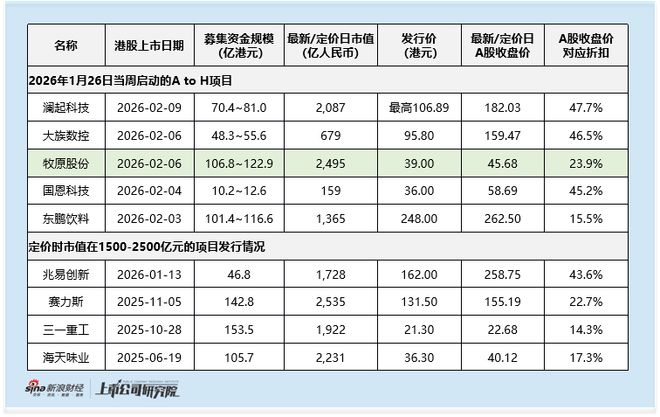
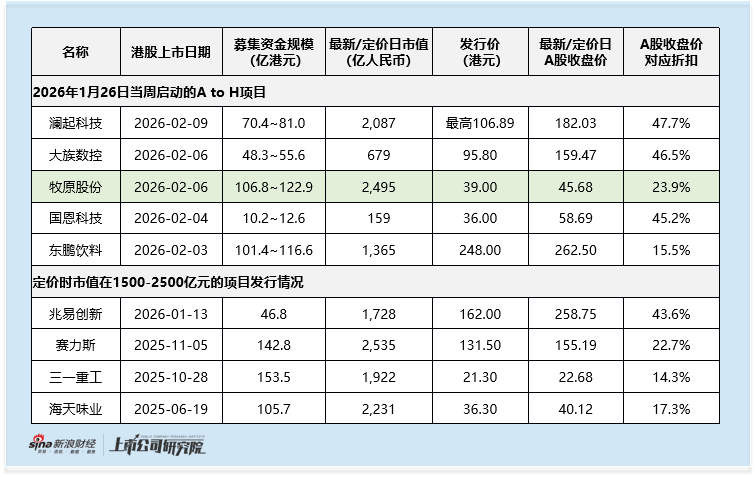
Core Viewpoint - Muyuan Foods is set to launch its global offering on January 29, with shares priced at HKD 39 each, aiming for a total issuance scale of approximately HKD 106.8 billion to HKD 122.9 billion, highlighting its leading position in the domestic pig farming market despite the cyclical nature of the industry [1][2]. Group 1: IPO Details - The offering price of Muyuan Foods is at a discount of approximately 23.9% compared to its A-share closing price of CNY 45.68 on February 3, which aligns with the valuation logic of leading enterprises [1][2]. - The IPO attracted 13 cornerstone investors, raising a total of USD 685 million, which accounts for 50% of the issuance scale, indicating strong investor confidence [4][5]. Group 2: Market Position and Valuation - Muyuan Foods is recognized as a unique leader in the pig farming industry, excelling in production capacity, breeding technology, cost control, and industry chain integration, making it an irreplaceable asset for investors looking to enter the domestic pig farming sector [1][2]. - The discount level of 23.9% is significantly lower than other A to H projects launched around the same time, such as Lianqi Technology, which had a discount of 47.7%, showcasing a competitive valuation for Muyuan Foods [2][3]. Group 3: Financial Performance - The company has demonstrated resilience in its financial performance despite industry fluctuations, with revenues recorded at CNY 124.8 billion, CNY 110.9 billion, CNY 137.9 billion, and CNY 111.8 billion from 2022 to the first three quarters of 2025 [6]. - The average selling price of commodity pigs dropped by 17.3% year-on-year to CNY 13.5 per kilogram in 2025, significantly impacting profitability, with projected net profits for the year expected to decline by 12.20% to 17.79% [6][7]. Group 4: Dividend Policy - The company has consistently optimized its dividend policy, with an average payout ratio of 28% since its listing, and an expected dividend yield of 2.6% for 2025, providing a stable return for investors [9][10].


牧原股份港股上市在即:24%折价赴港 基石护航开启资本新征程 龙头价值凸显但2025年盈利下滑警示周期风险
Xin Lang Cai Jing· 2026-02-04 09:43
Group 1 - Muyuan Foods launched its global offering on January 29, with a listing on the Hong Kong Stock Exchange scheduled for February 6, at an issue price of HKD 39 per share, raising approximately HKD 106.8 billion to HKD 122.9 billion [1][11] - The company holds a leading position in the domestic pig farming market, excelling in production capacity, breeding technology, cost control, and industry chain integration, making it a unique investment opportunity for those looking to enter the core assets of the domestic pig industry [1][11] - The IPO pricing reflects a discount of approximately 23.9% compared to the A-share closing price of RMB 45.68 on February 3, which aligns with the valuation logic of leading enterprises [1][12] Group 2 - Compared to other A to H projects launched in the same week, Muyuan's discount of 23.9% is significantly lower than those exceeding 45% for other companies, providing a more attractive entry point for investors [2][12] - The company does not rely on high discounts to attract capital, as its strong market position and operational fundamentals serve as its core appeal [2][12] - The company attracted 13 cornerstone investors, raising a total of USD 685 million, which accounts for 50% of the offering size, indicating strong confidence from various high-quality investors [3][14] Group 3 - Major cornerstone investors include Charoen Pokphand Foods from Thailand and Olam Group from Singapore, with investments of USD 200 million and USD 70 million respectively, showcasing industry capital linkage [4][14] - The company has shown resilience in its financial performance despite industry cyclicality, with revenues of RMB 124.8 billion, RMB 110.9 billion, RMB 137.9 billion, and RMB 111.8 billion from 2022 to the first three quarters of 2025 [6][16] - The average dividend payout ratio since the company's listing has been 28%, with an increase to 42% in 2024 and 48% in the first half of 2025, providing a stable return expectation for investors [8][19]
统计局四季度生猪数据点评
Guo Tou Qi Huo· 2026-01-19 10:35
Group 1: Industry Investment Rating - No relevant information provided Group 2: Core Viewpoints - The current pig price is still at the bottom of the bear - market cycle of the pig cycle. Considering the slight de - stocking of the breeding sow inventory in the fourth quarter of 2025, the inflection point of the pig slaughter volume is expected to appear around the middle of 2026. The pig slaughter volume is expected to continue to increase in the first half of 2026, and there is a high probability that the pig price will hit the bottom again after the Spring Festival due to the off - season demand [5] Group 3: Summary by Related Content Pig Slaughter - In 2025, the national pig slaughter was 719.73 million heads, an increase of 17.16 million heads or 2.4% compared with the previous year. The growth rate of pig slaughter was further expanded compared with the first three quarters (in the first three quarters, the national pig slaughter was 529.92 million heads, a year - on - year increase of 9.62 million heads or 1.8%). The pig slaughter volume in 2025 was the second - highest in the past 10 years, but lower than that in 2023. The continuous release of the pig slaughter pressure in 2025 led to the pig price falling to the historical low range of 10 - 11 yuan/kg in the second half of the year [2][3] Pork Production - In 2025, the pork production was 59.38 million tons, an increase of 2.32 million tons or 4.1%, reaching a record high. The annual growth rate of pork production was also further expanded compared with that in the first three quarters (in the first three quarters, the pork production was 43.68 million tons, a year - on - year increase of 1.28 million tons or 3.0%). The year - on - year growth rate of pork production in 2025 was higher than the growth rate of pig slaughter volume, mainly because the pig slaughter weight remained at a high level throughout 2025 [2][4][5] Pig Inventory - At the end of 2025, the national pig inventory was 429.67 million heads, an increase of 2.24 million heads or 0.5% compared with the end of the previous year. This was mainly due to the continuous recovery of the breeding sow population in the previous period, which led to an upward trend in the pig slaughter volume. It is expected that the medium - term pig inventory will still be at a relatively high level [3][5] Breeding Sow Inventory - At the end of 2025, the breeding sow inventory was 39.61 million heads, a decrease of 1.16 million heads or 2.9%, and it was currently 101.6% of the normal reserve. The de - stocking of the breeding sow inventory accelerated in the fourth quarter of 2025, benefiting from the national advocacy of anti - involution in the pig industry and the further expansion of the industry's loss [3]
Muyuan Foods Co., Ltd.(H0164) - Application Proof (1st submission)
2025-11-27 16:00
The Stock Exchange of Hong Kong Limited and the Securities and Futures Commission take no responsibility for the contents of this Application Proof, make no representation as to its accuracy or completeness and expressly disclaim any liability whatsoever for any loss howsoever arising from or in reliance upon the whole or any part of the contents of this Application Proof. Application Proof of MUYUAN FOODS CO., LTD. 牧原食品股份有限公司 (A joint stock company incorporated in the People's Republic of China with limite ...
生猪周期怎么看华创资管多资产周报商品篇 2025-11-12
Xin Lang Cai Jing· 2025-11-12 11:57
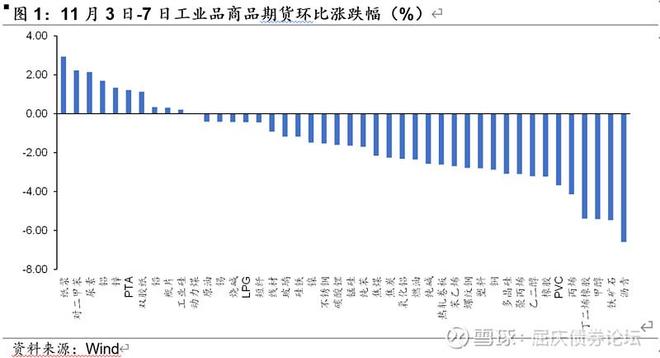
Core Viewpoint - The report indicates that the current pig cycle is nearing its bottom, with potential for a price increase in the future, driven by supply adjustments in response to declining breeding profits [10][19]. Group 1: Commodity Market Overview - The overall commodity market showed a weak trend, with the South China Industrial Products Index declining by 0.72% week-on-week [1]. - The top five gainers in industrial products included pulp, paraxylene, urea, aluminum, and zinc, while the biggest losers were asphalt, iron ore, methanol, butadiene rubber, and propylene [1]. Group 2: Pulp Market Analysis - Pulp futures prices increased by 3.10%, showing a bullish trend technically, with low import costs and improved corporate profits [2]. - Domestic pulp inventory at major ports has seen a slight decrease, but remains at a relatively high level, indicating a loose supply [2]. - Demand from downstream paper production has generally increased, with white cardboard starting to stock up for the Spring Festival orders, leading to a recovery in trading [2]. Group 3: Asphalt Market Analysis - Asphalt futures prices fell by 6.59%, influenced by a drop in international oil prices and weak demand [6]. - With decreasing temperatures, road projects in northern regions have largely halted, while southern projects may enter a rush phase, putting pressure on future demand [6]. - Despite a contraction in supply with low operating rates, weak demand has led to significant declines in both futures and spot prices [6]. Group 4: Agricultural Products Overview - The South China Agricultural Products Index rebounded by 0.57% week-on-week, with the top five gainers being soybean meal, chicken eggs, corn, and corn starch, while the biggest losers included red dates, fiberboard, rapeseed, apples, and palm oil [8]. Group 5: Pig Cycle Analysis - The pig cycle is primarily driven by supply-side factors, with stable pork demand in China. When pork prices rise, farmers increase breeding, leading to a subsequent supply surplus and price decline [10]. - Historical trends show that the time from price peak to trough is typically around one year, while the recovery phase can take between one to four years [10]. - Current pig prices are in a bottoming phase, with expectations of a price peak around August 2024, suggesting that prices may be close to their bottom now [10]. Group 6: Breeding and Supply Dynamics - The growth rate of breeding sows is expected to peak in April 2025, after which it will gradually decline, impacting pig supply [12]. - The relationship between pig output and pork prices is inversely correlated, with a lag of about six months [12]. - As of late September 2025, breeding profits have turned negative, leading to a slow reduction in breeding sows, but an acceleration in this reduction is anticipated due to ongoing losses [14][19].
畜牧ETF(159867)连续六日获资金净流入,生猪产能调控会议设定调控目标
Xin Lang Cai Jing· 2025-09-17 02:49
Group 1 - The core viewpoint of the news highlights the recent developments in the livestock industry, particularly the pig farming sector, where a policy shift is expected to lead to a reduction in production capacity and a potential revaluation of low-cost advantage companies [1][2] - The China Livestock Breeding Index (930707) shows mixed performance among its constituent stocks, with Brother Technology (002562) leading the gains at 10.02%, while Haida Group (002311) experienced the largest decline [1] - The Livestock ETF (159867) has seen continuous net inflows over the past six days, with a peak single-day net inflow of 98.05 million yuan, totaling 218 million yuan, indicating strong investor interest in the sector [1] Group 2 - The recent pig production capacity adjustment meeting mandated that 25 leading pig companies must collectively reduce production by 1 million breeding sows by the end of the year, marking a shift from policy discussions to quantitative assessments [1] - The pig farming sector is expected to benefit from a rotation in the pig cycle and a reduction in supply, which could positively influence pig prices and the overall performance of the sector [2] - The top ten weighted stocks in the China Livestock Breeding Index account for 65.57% of the index, with leading companies such as Muyuan Foods (002714) and Wens Foodstuffs (300498) being significant players in the market [3]

牧原股份(002714):业绩强劲兑现 优秀支撑价值
Xin Lang Cai Jing· 2025-03-24 06:33
Core Viewpoint - The company has demonstrated strong financial performance in 2024, with significant growth in revenue and net profit, driven by favorable market conditions and operational efficiencies [1][2]. Financial Performance - In 2024, the company achieved a total revenue of 137.947 billion yuan, representing a year-on-year increase of 24.43% [1]. - The net profit attributable to shareholders reached 17.881 billion yuan, up 519.42% year-on-year [1]. - The adjusted net profit was 18.747 billion yuan, reflecting a year-on-year growth of 565.61% [1]. - In Q4 alone, the company reported revenue of 41.172 billion yuan, a 47.61% increase year-on-year, and a net profit of 7.4 billion yuan, up 405.67% [1]. Operational Efficiency - The company sold 71.6 million pigs and processed 12.52 million pigs, with total pork product sales reaching 1.42 million tons [2]. - The company has improved breeding efficiency and optimized feed formulas, which has led to reduced breeding costs [2]. - As of January 2025, the total breeding cost is approximately 13.1 yuan/kg, with a target to reach 12 yuan/kg [2]. Industry Position and Shareholder Returns - The company is a leading player in the pig farming industry, benefiting from strong management practices [2]. - The company has revised its shareholder return policy, committing to distribute at least 40% of the distributable profits as cash dividends annually [2]. - The long-term profitability of the industry is expected to remain stable, particularly for companies with management and cost advantages [2]. Investment Outlook - The company is projected to achieve net profits of 19.69 billion yuan, 19.84 billion yuan, and 22.46 billion yuan for the years 2025, 2026, and 2027, respectively [3]. - The expected earnings per share (EPS) for these years are 3.60 yuan, 3.63 yuan, and 4.11 yuan, with corresponding price-to-earnings (PE) ratios of 10.75, 10.67, and 9.42 [3].