电动汽车充电技术

Search documents
比亚迪5分钟极速充电,震惊美媒
半导体行业观察· 2026-03-24 03:20
Core Viewpoint - BYD has significantly improved its fast-charging technology, allowing certain electric vehicle batteries to charge from 10% to 70% in five minutes and fully charge in about nine minutes, which could add over 600 miles of range in the time it takes to order a coffee [2] Group 1: Charging Technology - BYD's new fast-charging technology can deliver up to 1500 kW of power, compared to the common 350 kW chargers in the U.S. that take 15 to 25 minutes to charge to 80% [2] - The new Blade battery technology, which utilizes lithium manganese iron phosphate (LMFP), enhances energy density and charging speed [3] - The energy density of BYD's latest battery has improved by 5% compared to the previous year's model, with the Tengshi Z9GT capable of exceeding 620 miles (approximately 1000 kilometers) on a single charge [4] Group 2: Infrastructure and Market Challenges - BYD plans to integrate its new charging stations into the existing infrastructure, simplifying deployment and preventing grid overload by equipping charging stations with energy storage batteries [5] - Despite the impressive charging speed, experts suggest that this advancement may not significantly change the daily lives of most electric vehicle owners, as many can charge at home [6] - The U.S. electric vehicle market faces challenges, including the cancellation of upcoming electric models by Honda and others, and a lack of federal support for electric vehicles, which hinders market growth [6]


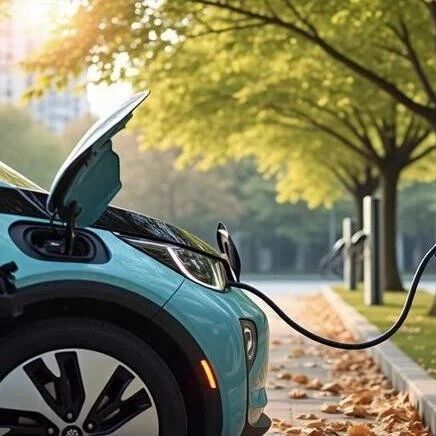
为什么快充是直流电,而慢充是交流电?
Zhong Guo Zhi Liang Xin Wen Wang· 2026-02-26 10:01
Core Viewpoint - The article discusses the differences between slow charging (AC) and fast charging (DC) for electric vehicles, highlighting the efficiency, cost, and impact on battery life associated with each method [1][15]. Charging Technology Differences - Slow charging uses AC and relies on the vehicle's onboard charger (OBC) to convert AC to DC, which is why it takes longer to charge [3]. - Fast charging uses DC, with the conversion occurring at the charging station, allowing for higher power output and faster charging times [5]. Power Density Differences - The power of the OBC is limited by its size and heat dissipation capabilities, making it challenging to achieve higher power without increasing size [6]. - Fast charging stations can accommodate larger power conversion systems and cooling mechanisms, enabling them to support charging powers above 120 kW, with some stations reaching up to 560 kW [7]. Cost Differences - Slow charging requires only a standard 220V single-phase power supply for home use, while high-power slow charging (21 kW) needs a 380V three-phase supply [8]. - Fast charging requires a three-phase 380V industrial supply and often necessitates a dedicated transformer, with installation costs for fast charging stations ranging from 100,000 to several million yuan [13]. Battery Impact - Fast charging can be detrimental to battery health due to rapid temperature increases and potential damage to battery components, while slow charging is gentler on batteries, promoting longer lifespan [14]. - Slow charging is more stable in extreme temperatures, reducing the risk of thermal runaway compared to fast charging [14]. Conclusion - The choice between fast and slow charging represents a balance between charging efficiency, battery longevity, and infrastructure costs, with slow charging currently offering better battery protection [15].
阿尔特申请继电器故障检测方法专利,降低了检测逻辑的复杂度
Jin Rong Jie· 2026-02-16 05:15
Group 1 - The core viewpoint of the news is that Alt Automotive Technology Co., Ltd. has applied for a patent related to a relay fault detection method, which aims to enhance the reliability of electric vehicle charging technology and reduce manufacturing costs [1][2]. Group 2 - The patent application, titled "Relay Fault Detection Method, Device, Vehicle, Medium, and Product," was published under CN121522434A and was filed on November 2025 [1]. - The method involves monitoring multiple detection cycles during various stages of the charging process, including preparation, pre-charging, boosting, and discharging, to detect faults in relays [1]. - Alt Automotive Technology Co., Ltd. was established in 2007 and is based in Beijing, with a registered capital of 4,980.40481 million RMB [2]. - The company has invested in 36 enterprises and participated in 250 bidding projects, holding 2,463 patents and 156 trademark registrations [2].

智能充电上涨8.19%,报1.215美元/股,总市值7223.36万美元
Jin Rong Jie· 2025-12-15 15:15
Core Viewpoint - Smart Charging (XCH) has experienced a significant stock price increase of 8.19% on December 15, reaching $1.215 per share, with a total market capitalization of $72.236 million [1] Financial Performance - As of June 30, 2025, Smart Charging reported total revenue of $12.4511 million, reflecting a year-over-year decrease of 38.21% [1] - The company recorded a net loss attributable to shareholders of $7.3381 million, which represents a staggering year-over-year decline of 3262.4% [1] Company Overview - Smart Charging Ltd. provides comprehensive electric vehicle charging solutions, primarily including the C6 and C7 series of DC fast chargers [1] - The company offers advanced battery-integrated DC fast chargers, referred to as the Net Zero Series ("NZS"), along with supporting services [1] - Smart Charging combines proprietary charging technology, energy storage technology, and supporting services to significantly enhance electric vehicle charging efficiency and unlock the value of energy storage and management [1]
智能充电上涨5.43%,报1.198美元/股,总市值7122.29万美元
Jin Rong Jie· 2025-08-21 14:36
Core Viewpoint - Smart Charging (XCH) has shown a significant increase in stock price, reflecting positive market sentiment despite a decline in net profit [1] Financial Performance - As of December 31, 2024, Smart Charging reported total revenue of $42.20 million, representing a year-on-year growth of 9.59% [1] - The company experienced a net loss attributable to shareholders of $11.94 million, which is a decrease of 47.71% compared to the previous year [1] Company Overview - Smart Charging Co., Ltd. provides comprehensive electric vehicle charging solutions, primarily including the C6 and C7 series of DC fast chargers [1] - The company offers advanced battery-integrated DC fast chargers under its Net Zero Series (NZS), combining proprietary charging technology, energy storage technology, and supporting services [1] - The overall solutions provided by the company significantly enhance electric vehicle charging efficiency and unlock the value of energy storage and management [1]
均胜群英取得集成化的电动汽车充电装置专利,结构紧凑运行稳定可靠
Jin Rong Jie· 2025-08-04 01:44
Core Insights - The article highlights the recent patent acquisition by Junsheng Qunying (Nanjing) New Energy Vehicle System Research Institute Co., Ltd. and Ningbo Junsheng New Energy Vehicle Technology Co., Ltd. for an integrated electric vehicle charging device, indicating advancements in electric vehicle charging technology [1][2] Company Overview - Junsheng Qunying (Nanjing) New Energy Vehicle System Research Institute Co., Ltd. was established in 2020, located in Nanjing, with a registered capital of 15 million RMB. The company has participated in 3 bidding projects and holds 72 patents [1] - Ningbo Junsheng New Energy Vehicle Technology Co., Ltd. was founded in 2018, situated in Ningbo, with a registered capital of 50 million RMB. The company has invested in 1 enterprise, participated in 2 bidding projects, and holds 128 patents [2] Patent Details - The patent titled "An Integrated Electric Vehicle Charging Device" was authorized with the announcement number CN223182454U, applied for on September 2024. The device features a compact structure and stable operation, including a housing, electrical connectors, and electrical components [1]
全球与中国电动汽车超宽恒功率充电模块市场战略调研及竞争对手调研报告2025-2031年
Sou Hu Cai Jing· 2025-06-20 00:06
Group 1 - The report provides a comprehensive analysis of the global and Chinese electric vehicle ultra-wide constant power charging module market from 2025 to 2031, focusing on market trends, growth opportunities, and competitive landscape [1][3][4] - It categorizes electric vehicle ultra-wide constant power charging modules into different product types, including air-cooled and liquid-cooled modules, and analyzes their sales growth trends from 2020 to 2031 [3][4][5] - The report highlights the current status and future trends of the electric vehicle ultra-wide constant power charging module industry, emphasizing the increasing demand and technological advancements [3][4][9] Group 2 - The global electric vehicle ultra-wide constant power charging module market is expected to experience significant growth, with supply and demand forecasts provided from 2020 to 2031 [4][5][6] - Regional analysis indicates varying production capacities and market shares across major regions, including North America, Europe, China, Japan, Southeast Asia, and India [4][5][6] - The report includes detailed sales and revenue data for major manufacturers in the electric vehicle ultra-wide constant power charging module market, along with their market positions and competitive strategies [5][6][7] Group 3 - The report discusses the competitive landscape, identifying key players in the market such as Eaton, Huawei, and others, along with their product specifications, sales performance, and market strategies [5][6][7] - It provides insights into the market concentration and competitive intensity, analyzing the market shares of the top manufacturers and their growth prospects [5][6][7] - The report also covers investment trends and merger activities within the electric vehicle ultra-wide constant power charging module industry, indicating a dynamic market environment [5][6][7]

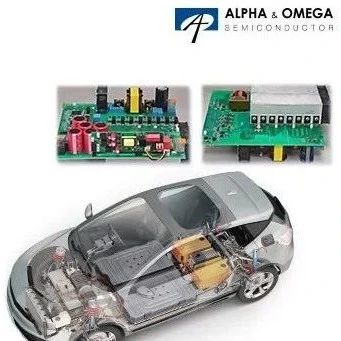
干货分享 | AOS 6.6kW OBC Demo系统高效能解析
半导体芯闻· 2025-06-11 10:08
Core Viewpoint - AOSemi is a comprehensive power semiconductor supplier that integrates design, development, production, and global sales, focusing on the electric vehicle (EV) onboard charger (OBC) market [1]. Group 1: Product Overview - The AOS 6.6KW bidirectional EV onboard charger (OBC) is designed for universal single-phase input with an output voltage range of 250 VDC to 450 VDC [3]. - The OBC features a front-end composed of a totem pole bidirectional Power Factor Correction (PFC) and a bidirectional isolated DC/DC stage using a symmetrical CLLC converter [3]. - The input and output of the bidirectional isolated DC/DC stage utilize H-bridge topology, with isolation provided by a high-frequency transformer [3]. Group 2: Technical Specifications - The OBC demonstration board uses AOM040V75X2Q and AOK060V75X2Q SiC MOSFETs, rated at 750V, with on-resistances of 40mΩ and 60mΩ respectively [6]. - The input voltage range is 90 VAC to 265 VAC, providing an isolated output voltage of 250 VDC to 450 VDC [6]. - The system includes protections for input and output, such as under-voltage, over-voltage, and over-current protections [10][16]. Group 3: Performance Metrics - The OBC operates with a peak efficiency of 96% [15]. - The PFC operates at a fixed frequency of 65 kHz, while the DC/DC CLLC stage operates at approximately 200 kHz [15]. - The maximum power output is limited to 6.6 kW in AC/DC mode and 3.3 kW in DC/AC mode [16]. Group 4: Features and Functionality - The OBC supports a wide input voltage range of 85-265 VAC and a wide output voltage range of 250-450 VDC [16]. - It includes multiple fault LED displays and allows for switching between AC/DC and DC/AC modes [19].