
腾势Z9GT

Search documents
比亚迪 | 2025整装待发 2026出口加电【国联民生汽车 崔琰团队】
汽车琰究· 2026-03-30 01:21
Core Viewpoint - The company is expected to see revenue growth in the coming years, with a projected revenue of 921.9 billion yuan in 2026, reflecting a 14.7% increase from 2025, despite a decline in net profit for 2025 [10][11]. Revenue and Delivery - In Q4 2025, the company's revenue was 237.7 billion yuan, a year-on-year decrease of 13.5% but a quarter-on-quarter increase of 21.9%, primarily due to a significant rise in sales volume [3]. - The sales volume in Q4 2025 reached 1.342 million vehicles, down 11.9% year-on-year but up 20.5% quarter-on-quarter, with export sales showing a remarkable increase of 191.7% year-on-year [3]. Profitability - The overall gross margin in Q4 2025 was 17.4%, with a year-on-year increase of 0.4 percentage points, while the automotive and battery gross margin was 21.6%, up 1.8 percentage points year-on-year [4]. - The net profit attributable to the parent company in Q4 2025 was 9.29 billion yuan, down 38.2% year-on-year but up 18.6% quarter-on-quarter [5]. Electric Vehicle Technology - The company launched its second-generation blade battery and flash charging technology, achieving record charging speeds, which addresses key challenges in electric vehicle charging [6]. Export Growth - The company is expected to maintain its position as the leading exporter of Chinese electric vehicles, with exports in January-February 2026 reaching 201,000 units, a year-on-year increase of 50.8% [7]. Production and Sales - The company is making steady progress in building overseas factories, with significant milestones achieved in Brazil and Thailand, enhancing its global supply chain capabilities [8]. High-End Product Strategy - The company has seen a doubling in sales of its high-end brands, with continued strong performance in early 2026, indicating a successful high-end product strategy [9].



比亚迪5分钟极速充电,震惊美媒
半导体行业观察· 2026-03-24 03:20
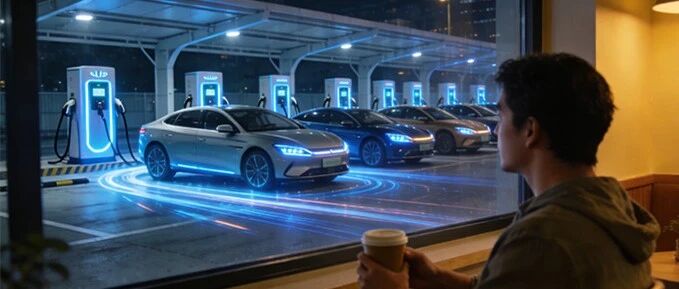
Core Viewpoint - BYD has significantly improved its fast-charging technology, allowing certain electric vehicle batteries to charge from 10% to 70% in five minutes and fully charge in about nine minutes, which could add over 600 miles of range in the time it takes to order a coffee [2] Group 1: Charging Technology - BYD's new fast-charging technology can deliver up to 1500 kW of power, compared to the common 350 kW chargers in the U.S. that take 15 to 25 minutes to charge to 80% [2] - The new Blade battery technology, which utilizes lithium manganese iron phosphate (LMFP), enhances energy density and charging speed [3] - The energy density of BYD's latest battery has improved by 5% compared to the previous year's model, with the Tengshi Z9GT capable of exceeding 620 miles (approximately 1000 kilometers) on a single charge [4] Group 2: Infrastructure and Market Challenges - BYD plans to integrate its new charging stations into the existing infrastructure, simplifying deployment and preventing grid overload by equipping charging stations with energy storage batteries [5] - Despite the impressive charging speed, experts suggest that this advancement may not significantly change the daily lives of most electric vehicle owners, as many can charge at home [6] - The U.S. electric vehicle market faces challenges, including the cancellation of upcoming electric models by Honda and others, and a lack of federal support for electric vehicles, which hinders market growth [6]
比亚迪的“9分钟”野望
Xin Lang Cai Jing· 2026-03-23 07:08
Core Insights - BYD has launched its second-generation blade battery and 1500kW fast-charging technology, achieving a charging time of 9 minutes from 10% to 97% at room temperature and 12 minutes from 20% to 97% in extreme cold conditions [2][4][23] Group 1: Technological Advancements - The rapid charging capability is a result of six years of research and development, with the new battery improving energy density by over 5% compared to the first generation, enabling a range of over 1036 kilometers for the Tengshi Z9GT model [4][25] - BYD's commitment to continuous technological iteration has established a strong competitive edge in the electric vehicle market, with a planned R&D investment of 53.195 billion yuan in 2024, leading A-share listed companies [4][27] Group 2: Infrastructure Development - The implementation of fast-charging technology is supported by the "Fast Charge China" strategy, which aims to build 20,000 fast-charging stations by the end of 2026, covering 90% of urban areas within a 5-kilometer radius [7][28] - BYD is creating a comprehensive supercharging network across the country, enhancing the infrastructure necessary for its electric vehicles [9][30] Group 3: Market Expansion - BYD is projected to sell 4.6024 million electric vehicles in 2025, solidifying its position as the largest electric vehicle manufacturer globally [10][31] - The company has surpassed Tesla in pure electric vehicle sales for the first time, achieving 2.26 million units sold in a year [11][32] - Overseas markets are becoming a significant growth driver, with BYD's passenger car and pickup sales expected to exceed 1 million units, marking a 145% year-on-year increase [12][33] Group 4: Strategic Positioning - BYD's vertical integration strategy allows it to produce nearly 80% of its core components in-house, providing significant cost advantages and resilience against supply chain disruptions [14][35] - The company is expanding its operations beyond automotive into electronics, renewable energy, and rail transit, aiming to create a comprehensive zero-emission energy solution [15][36] - BYD plans to invest in industrial robotics, with a goal of deploying 20,000 robots by 2026, leveraging its expertise in battery and motor technology [15][36] Group 5: Challenges Ahead - Despite its ambitions, BYD faces challenges in enhancing smart technology experiences, maintaining quality control amid rapid expansion, and increasing brand value in mature markets [17][38]
广汽想借华为“摸鱼”,不过还是有四个难题
虎嗅APP· 2026-03-17 14:03
Core Viewpoint - The article discusses the strategic collaboration between GAC and Huawei in the niche market of shooting brake vehicles, highlighting the challenges and potential opportunities in this segment as GAC aims to leverage Huawei's technology to enhance its brand and product offerings [6][9][37]. Market Overview - The shooting brake market in China is currently small, with an expected market share of less than 3% by 2026 [2]. Despite its niche appeal, GAC has decided to enter this market with the launch of the Envision GT7, which is set to debut on March 17 and is equipped with advanced technologies from Huawei [4][10]. Strategic Intent - GAC's decision to collaborate with Huawei is seen as a strategic move to address its financial challenges, with projected net losses of 8-9 billion yuan in 2025 [6][17]. GAC Chairman Feng Xingya emphasized the importance of the Envision project for the company's long-term development, prioritizing it as a key initiative [6][9]. Competitive Landscape - The market for shooting brake vehicles is becoming increasingly competitive, with several new models expected to launch in the 20-35 million yuan price range [7]. Existing models like NIO ET5T and Zeekr 007GT have shown stable market performance, but the overall segment remains under pressure due to low resale values and supply chain issues [8][31]. Challenges Faced - GAC faces several challenges in the shooting brake market, including pricing strategies, user experience, brand perception, and internal reform processes [32][35]. The pricing of the Envision GT7 is critical, as exceeding 350,000 yuan may lead to competitive pressure, while pricing it too low could result in reduced features [32]. Collaboration Dynamics - The partnership between GAC and Huawei is characterized by a deep integration of teams, with over 200 Huawei engineers working alongside GAC's staff to ensure collaborative decision-making and product development [22][23]. This embedded approach aims to combine GAC's manufacturing expertise with Huawei's technological capabilities [20][21]. Future Outlook - The success of the Envision GT7 will depend on its ability to meet market expectations for quality and performance, especially as the automotive industry shifts focus towards reliability and traditional manufacturing standards [38]. The upcoming launch will be a critical test for both GAC and Huawei in establishing their presence in the shooting brake segment [38].


比亚迪第二代闪充北京实测:无“虚标”,充满最快9分42秒
Jing Ji Guan Cha Wang· 2026-03-17 02:52
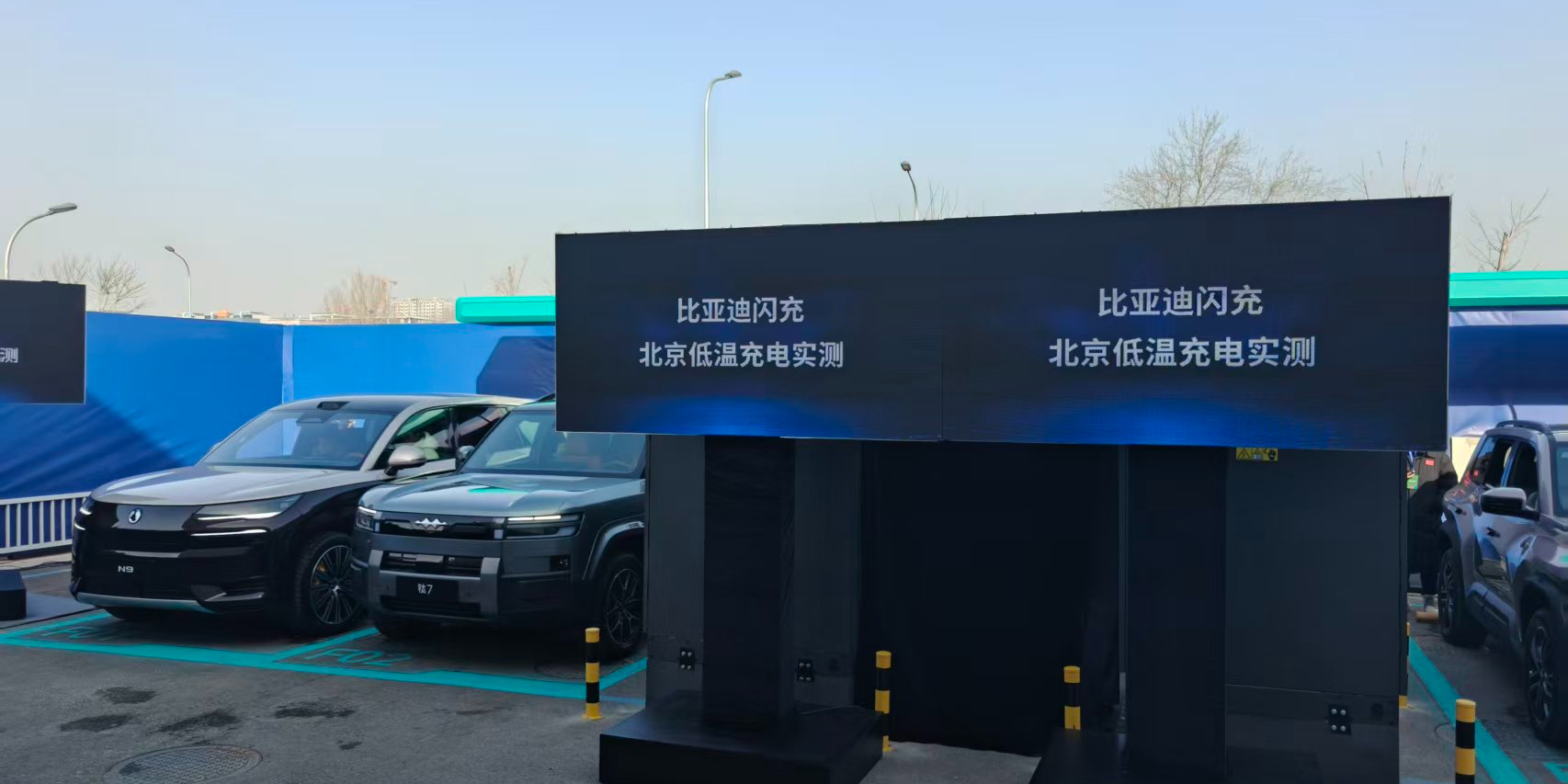
Core Viewpoint - BYD's second-generation fast charging technology claims to charge an electric vehicle in 5 minutes for a partial charge and 9 minutes for a full charge, even in low temperatures, marking a significant advancement in charging efficiency [2] Group 1: Technology Performance - The second-generation fast charging technology was tested in Beijing on February 10, showcasing its performance in winter conditions with temperatures around zero degrees [2] - Eight BYD models participated in the test, with starting battery levels around 20%, charging to 97% capacity [2] - The fastest charging time recorded was 9 minutes and 42 seconds for the Song Ultra model, while the longest was 10 minutes and 22 seconds for the Tengshi N9 model [2][6] Group 2: Industry Impact - The second-generation fast charging technology addresses the common issue of long charging times for electric vehicles, especially in winter when charging efficiency typically decreases [2] - This technology significantly reduces charging anxiety for electric vehicle owners, bringing charging times closer to traditional fuel refueling times [7] - The advancement is expected to promote the growth of the electric vehicle industry, particularly increasing market penetration in northern regions [7]
五位销售聊比亚迪闪充,客户最关心哪些车能用得上
车fans· 2026-03-16 00:29
Core Viewpoint - The increasing customer interest in fast charging technology indicates a shift in consumer preferences, with many potential buyers waiting for vehicles equipped with the latest battery technology before making a purchase decision [2][4][6]. Group 1: Customer Interest and Concerns - Eight out of ten recent customers are inquiring about fast charging capabilities, particularly which vehicles can utilize this technology [2]. - Customers are concerned about the coverage of fast charging stations and the safety of the charging process, with some expressing doubts about battery safety [3]. - The Z9GT, equipped with the second-generation blade battery, has received orders, partly due to its fast charging feature and a price reduction [4]. Group 2: Market Impact and Competitive Landscape - The introduction of fast charging technology is expected to impact competitors like NIO, as it significantly reduces charging time without affecting battery life, diminishing the appeal of NIO's battery swapping advantage [6]. - The interest in fast charging has led to increased customer inquiries, with approximately 70% of visitors asking about related features, including older customers showing interest [8]. - The fast charging technology is seen as a potential game-changer for BYD, establishing a competitive standard in the market [13]. Group 3: Infrastructure and Future Developments - Fast charging stations are planned but not yet operational, with the company anticipating that widespread availability will make charging as convenient as refueling [5]. - The company is testing fast charging capabilities with existing models, confirming that the performance aligns with manufacturer claims [10]. - Competitors are also responding, with plans for new fast charging platforms expected to be announced soon, indicating a broader industry shift towards faster charging solutions [25].
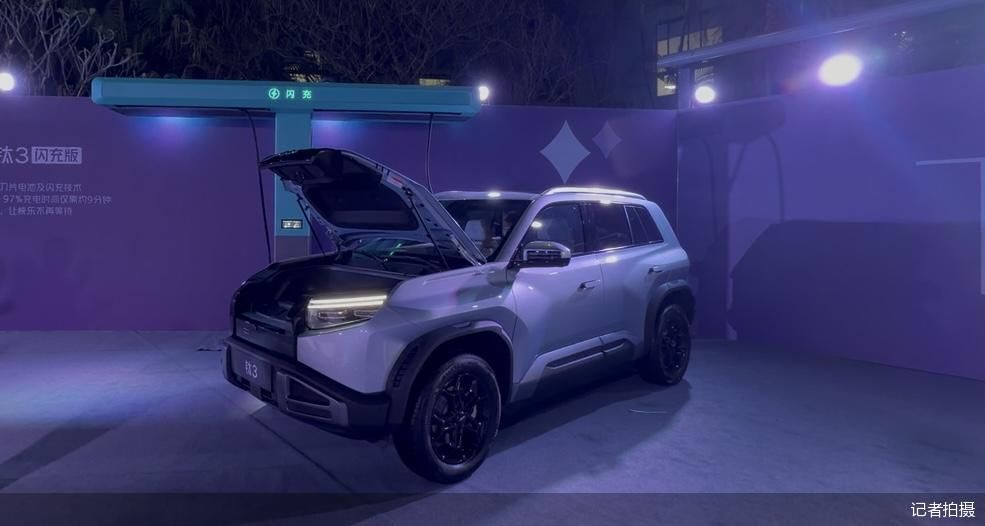
钛3闪充版上市,比亚迪闪充技术规模化落地
Bei Jing Shang Bao· 2026-03-14 14:21
Core Insights - BYD's flash charging technology has officially entered mass production with the launch of the Fangcheng Leopard Titanium 3 flash charging version, which offers two configurations priced between 153,800 and 169,800 yuan [2] - The introduction of the flash charging version raises the entry price by 20,000 yuan compared to the standard version, reflecting the costs associated with the second-generation blade battery and high-voltage fast charging architecture [2] - The flash charging technology allows for rapid charging, with 10% to 70% charge achieved in approximately 5 minutes and 10% to 97% in about 9 minutes under normal conditions [3] Charging Infrastructure - As of March 12, the number of flash charging stations has increased to 4,597, with plans to build 20,000 stations by the end of 2026, ensuring coverage within 3 to 6 kilometers in various city tiers [3][4] - The charging stations will include energy storage cabinets to manage energy supply and demand, mitigating grid impact and transforming charging points into micro-energy nodes [3] Market Impact - The mass production of flash charging technology is expected to significantly reduce battery prices, intensifying competition in the industry and posing challenges to battery swapping models [4] - Industry experts suggest that BYD must focus on enhancing battery range, reducing charging time, and improving battery stability and cost to maintain its competitive edge in the evolving electric vehicle market [4]
从比亚迪招聘2000个新岗窥见深汕产业跃升
Nan Fang Du Shi Bao· 2026-03-12 13:03
Core Insights - The article highlights the rapid development of the Deep-Shan BYD park, which is set to create over 2,000 technical jobs, emphasizing the region's commitment to becoming a leader in the electric vehicle (EV) sector [1][8] Group 1: Production and Capacity - The Deep-Shan area aims for an annual production capacity of 290,000 vehicles by 2025, with a projected output value exceeding 74 billion yuan [6] - Notable models produced in this region include the Fangcheng Leopard Ti 7, which achieved monthly sales of over 34,000 units, marking it as a significant success [3][4] - The BYD park has become a central hub for high-end manufacturing, with the 9 millionth to 13 millionth vehicles all produced in this location [7] Group 2: Infrastructure and Logistics - The integration of manufacturing and logistics is a key strength, with vehicles able to reach the Xiaomo International Logistics Port in just 5 minutes, streamlining the export process [10][11] - Since its opening in December 2021, Xiaomo Port has handled over 140,000 vehicles, with plans for expansion to accommodate a capacity of 1 million vehicles annually [12][13] Group 3: Community and Living Conditions - The recruitment announcement emphasizes not only job opportunities but also living conditions, including affordable housing and amenities such as sports facilities, indicating a focus on employee well-being [15] - The region is developing a comprehensive support system for education, healthcare, and housing, with plans for significant infrastructure improvements to support the growing workforce [15][16] Group 4: Future Goals - The strategic vision for the next five years includes transitioning from manufacturing to intelligent manufacturing, aiming to strengthen the EV industry and create a billion-level industrial cluster [16]

“电车不过山海关”成为历史!比亚迪彻底改写补能规则
商业洞察· 2026-03-12 09:37
Core Viewpoint - The second-generation blade battery has been launched, addressing two major industry pain points: slow charging and difficulties in low-temperature conditions, establishing a new benchmark in fast charging technology [1] Group 1: Charging Efficiency - Charging from 10% to 70% takes only 5 minutes, and reaching 97% takes just 9 minutes; at -30 degrees Celsius, charging from 20% to 97% takes 12 minutes, only 3 minutes longer than at room temperature, making charging efficiency comparable to refueling [3] - BYD has developed a new fast charging pile with a single-gun charging power of 1500kW, the highest power for mass-produced charging piles globally [9] Group 2: Battery Performance - The energy density of the second-generation blade battery has been improved by over 5% compared to the first generation, with the Tengshi Z9GT achieving a range of 1036 kilometers, leading its class [5] Group 3: Infrastructure Development - BYD has launched the "Fast Charge China" strategy, planning to establish 20,000 fast charging stations by the end of the year, with 1,000 highway stations operational before May Day, ensuring convenience for northern drivers [7] Group 4: Technological Advancements - The fast charging piles are equipped with energy storage systems, which do not impact the national grid and prevent slow charging when multiple vehicles are connected, ensuring a smooth charging experience [11] - BYD aims to solve user pain points with robust technology, contributing to the global electrification movement and showcasing the strength of domestic automakers [13]
比亚迪发布第二代闪充技术
Mei Ri Shang Bao· 2026-03-11 23:04
Core Insights - BYD has launched its second-generation blade battery and fast-charging technology, addressing global challenges of slow charging and low-temperature charging difficulties in electric vehicles [1][2] Group 1: Second-Generation Blade Battery - The second-generation blade battery achieves a breakthrough in charging speed, allowing a charge from 10% to 70% in just 5 minutes at room temperature, and to 97% in 9 minutes [1] - In low-temperature environments (down to -30 degrees Celsius), charging to 97% takes only 3 additional minutes compared to room temperature [1] - The energy density of the new battery has improved by over 5% compared to the first generation, with the Tengshi Z9GT model achieving a range of 1,036 kilometers [1] - The optimized cooling system ensures that fast charging has minimal impact on battery lifespan [1] Group 2: Fast Charging Infrastructure - The newly introduced BYD fast charging station has a single-gun charging power of 1,500 kW, the highest in the world for mass production [1] - The design includes a "sliding rail suspension T-type pile" for zero-gravity charging, plug-and-play convenience, and contactless payment, enhancing user-friendliness [1] - BYD plans to construct 20,000 fast charging stations across China by the end of the year, with 18,000 stations built in collaboration with operators and 2,000 designated as fast charging highway stations [1] - The initial phase will see 1,000 fast charging highway stations completed by the May Day holiday [1] Group 3: Strategic Vision - The launch of the second-generation blade battery and fast charging technology signifies a resolution to core pain points in electrification [2] - BYD aims to expand its fast charging stations internationally by the end of 2026, transitioning from "Fast Charging China" to "Fast Charging Planet," supporting global electrification efforts [2]