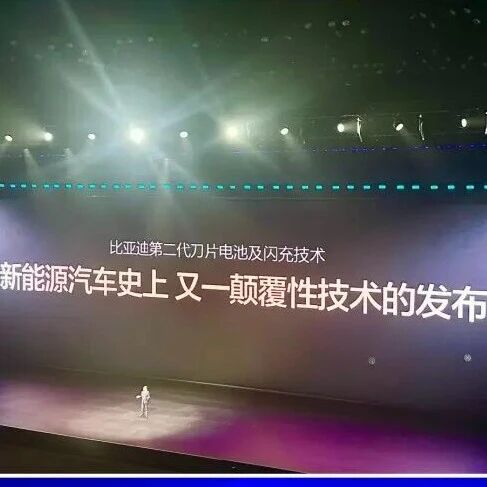
比亚迪闪充技术

Search documents
比亚迪5分钟极速充电,震惊美媒
半导体行业观察· 2026-03-24 03:20
Core Viewpoint - BYD has significantly improved its fast-charging technology, allowing certain electric vehicle batteries to charge from 10% to 70% in five minutes and fully charge in about nine minutes, which could add over 600 miles of range in the time it takes to order a coffee [2] Group 1: Charging Technology - BYD's new fast-charging technology can deliver up to 1500 kW of power, compared to the common 350 kW chargers in the U.S. that take 15 to 25 minutes to charge to 80% [2] - The new Blade battery technology, which utilizes lithium manganese iron phosphate (LMFP), enhances energy density and charging speed [3] - The energy density of BYD's latest battery has improved by 5% compared to the previous year's model, with the Tengshi Z9GT capable of exceeding 620 miles (approximately 1000 kilometers) on a single charge [4] Group 2: Infrastructure and Market Challenges - BYD plans to integrate its new charging stations into the existing infrastructure, simplifying deployment and preventing grid overload by equipping charging stations with energy storage batteries [5] - Despite the impressive charging speed, experts suggest that this advancement may not significantly change the daily lives of most electric vehicle owners, as many can charge at home [6] - The U.S. electric vehicle market faces challenges, including the cancellation of upcoming electric models by Honda and others, and a lack of federal support for electric vehicles, which hinders market growth [6]


整车强势反弹-后市怎么看
2026-03-19 02:39
Summary of Conference Call Records Industry Overview - The automotive industry is experiencing a recovery in demand as of March 2026, with customer traffic nearing levels seen at the end of 2025, although still 10%-15% lower year-on-year [1][2] - The inventory pressure among leading new energy vehicle manufacturers is significant, with a combined inventory of approximately 900,000 units, and companies like BYD, Geely, and Leap Motor having inventory-to-sales ratios above 2.5 [1][3] Key Insights and Arguments - **BYD's Flash Charging Technology**: BYD's flash charging technology, which integrates "vehicle + charging pile + battery," is expected to drive monthly sales increases of 15,000 to 20,000 units for new models like the Yuan MAX [1][8] - **Xpeng's V2V22.0**: The launch of Xpeng's V2V22.0 has doubled store traffic, although order conversion rates still depend on word-of-mouth effects [1][2] - **Sales Forecasts**: Passenger car sales are expected to decline by over 10% in Q1 2026, with retail sales anticipated to remain flat or slightly decrease year-on-year due to purchasing power constraints [1][5] - **Export Trends**: Companies like SAIC, BYD, Chery, and Geely have competitive advantages in exports due to their own shipping fleets and established overseas channels [1][2] Market Dynamics - **Inventory Levels**: Major new energy manufacturers have high inventory levels, with BYD holding around 400,000 to 500,000 units, primarily in lower-end models. The inventory-to-sales ratio for BYD is expected to drop below 2.5 if March sales reach 220,000 to 250,000 units [3][4] - **Market Recovery Factors**: The recovery in the market is driven by local consumption subsidy policies and the impact of technology launch events, which have significantly increased customer traffic [2][3] - **Future Sales Expectations**: The overall passenger car market is expected to face challenges in Q1 2026, but a more vibrant market is anticipated in Q2 with numerous new product launches [5][6] Government Policies and Their Impact - The total amount for the 2026 consumer goods replacement subsidy is projected to be 250 billion yuan, which is expected to provide direct cash support for vehicle sales [6] - The extension of the personal consumption car loan interest subsidy policy may also support sales, but overall retail sales are expected to remain flat or slightly decrease [6] Competitive Landscape - **BYD vs. Geely**: BYD's rapid advancement in flash charging technology and ecosystem development is contrasted with Geely's slower progress in fast charging and energy supply networks [9][10] - **Emerging Players**: Companies like NIO and Leap Motor are highlighted as potential industry leaders due to their focus on core automotive manufacturing and competitive pricing strategies [14][15] Export Potential - **Leap Motor's Export Performance**: Leap Motor has shown strong export performance, with over 100,000 units exported, and has partnered with Stellantis for overseas expansion [15] Conclusion - The automotive industry is navigating a complex landscape of recovery, inventory management, and technological advancements, with significant implications for sales and market dynamics in 2026. The focus on new energy vehicles and competitive strategies will be crucial for companies aiming to capture market share in both domestic and international markets.
比亚迪闪充首个量产车型,方程豹钛3闪充版上市
Bei Jing Ri Bao Ke Hu Duan· 2026-03-19 02:33
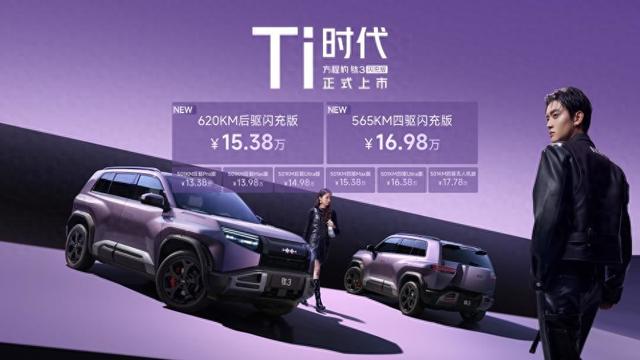
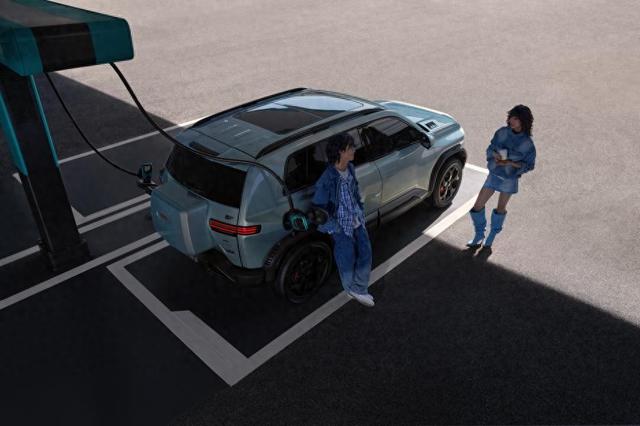
Group 1 - The core product launch is the Fangcheng Leopard Titanium 3 Flash Charge version, which offers two configurations: a rear-wheel drive version with a range of 620 kilometers and an all-wheel drive version with a range of 565 kilometers, priced between 153,800 to 169,800 yuan [1] - The Fangcheng Leopard Titanium series is the first mass-produced model featuring BYD's flash charging technology and will be the first to commence deliveries [1] - The first owners of the Titanium 3 Flash Charge version will enjoy 18 months of free flash charging [1] Group 2 - As of March 12, the number of BYD flash charging stations has rapidly increased to 4,597 [3] - The highly anticipated Titanium 7 EV Flash Charge version has also started pre-orders, with a price range of 220,000 to 250,000 yuan, offering an additional 6 months of free flash charging for early subscribers [3] - The Titanium 3 Flash Charge version features BYD's flash charging technology and second-generation blade battery, allowing it to charge from 10% to 70% in approximately 5 minutes and from 10% to 97% in about 9 minutes, with only a 3-minute increase in charging time at -30 degrees Celsius [3] Group 3 - The Titanium 3 Flash Charge version is built on the intelligent EVO+ platform and incorporates a layered laser-welded silicon carbide module and integrated thermal management for better energy efficiency [5] - It includes the iATS intelligent all-terrain recognition system, energy locks, stuck vehicle assistance, and various driving modes to handle different road conditions [5] - The vehicle features four major intelligent technologies, including BYD's "Tian Shen Eye" driver assistance system, active pre-sensing and cloud damping control system, exclusive AI smart cockpit, and smart ecosystem similar to the Titanium 7 [5] Group 4 - To meet personalized user demands, the Titanium 3 Flash Charge version introduces a new exterior color "Stardust Purple" and a new interior color "Gray-Blue Dual Tone," along with 14 customization options and 16 light customization options [7] - Comfort features include standard front seat ventilation and heating, double-layer soundproof glass, heated steering wheel, and rear privacy glass [7] - The all-wheel drive version is upgraded with additional features such as passenger seat memory and leg support, a compressor refrigerator, and a 14-speaker Dynaudio sound system [7]
比亚迪第二代刀片电池首批生产基地实现试生产_陕西日报数字报-群众新闻网
Shan Xi Ri Bao· 2026-03-18 19:21
Group 1 - The core point of the article is that BYD's new energy vehicle battery project in Xixian has commenced trial production, marking a significant advancement in battery technology with the introduction of the second-generation blade battery and fast-charging technology [1][2] - The second-generation blade battery can charge from 10% to 70% in just 5 minutes at room temperature, and only requires an additional 3 minutes for charging at -30 degrees Celsius, achieving a 5% increase in energy density compared to the first generation [1] - The Xixian base has an annual production capacity of 16 GWh, sufficient to support approximately 700,000 new energy vehicles, with an expected annual output value of 8 billion yuan [1] Group 2 - The Xixian battery project covers an area of 1,333 acres with a total investment of 7 billion yuan, and its trial production is expected to attract upstream and downstream enterprises in battery materials, precision components, and intelligent driving systems [2] - This project is anticipated to lower vehicle manufacturing costs and enhance the local supply chain in the Shaanxi automotive industry, contributing to the growth of the automotive industry cluster in the region [2]
方程豹钛3闪充版上市 为比亚迪闪充首个量产车型
Zheng Quan Ri Bao Wang· 2026-03-16 10:41
Core Insights - BYD has officially launched the Fangchengbao Titanium 3 fast-charging version, with two configurations priced between 153,800 to 169,800 yuan [1] - The Fangchengbao Titanium 7 EV fast-charging version is also available for pre-order, with prices ranging from 220,000 to 250,000 yuan [1] - The Fangchengbao series represents a significant upgrade in fast-charging technology and will be the first mass-produced model to feature this technology [1] Product Features - The Fangchengbao Titanium 3 fast-charging version is equipped with BYD's fast-charging technology and second-generation blade battery [1] - Charging from 10% to 70% takes approximately 5 minutes, and from 10% to 97% takes about 9 minutes, even in low temperatures [1] - Standard features include fast-charging capability, long-range, cloud suspension, advanced driving assistance, AI cockpit, heated and ventilated front seats, double-layer soundproof glass, heated steering wheel, and privacy glass for rear seats [1]
方程豹钛 3 闪充版正式上市 成比亚迪闪充首批量产交付车型
Huan Qiu Wang· 2026-03-14 03:42
Core Viewpoint - The launch of the Fangcheng Leopard Titanium 3 Flash Charge version marks a significant advancement in electric vehicle technology, featuring rapid charging capabilities and a range of innovative technologies aimed at enhancing user experience and safety [1][2]. Group 1: Product Launch and Specifications - The Fangcheng Leopard Titanium 3 Flash Charge version is available in two configurations: a 620KM rear-wheel drive version priced at 153,800 CNY and a 565KM all-wheel drive version priced at 169,800 CNY [1]. - The Titanium 7 EV Flash Charge version is also available for pre-order, with prices ranging from 220,000 to 250,000 CNY [1]. - The vehicle incorporates BYD's Flash Charge technology and second-generation blade battery, allowing for a charging time of approximately 5 minutes to reach 70% and 9 minutes to reach 97% under normal conditions [2]. Group 2: Technological Innovations - The Titanium 3 Flash Charge version features ten advanced technologies across performance, intelligence, and safety dimensions, including a dual-link MacPherson front suspension and a five-link rear suspension [2]. - It includes a smart all-terrain recognition system and energy management features, enhancing both handling and off-road capabilities [2]. - The vehicle is equipped with four major intelligent technologies, such as the "Tian Shen Zhi Yan" driver assistance system and an AI smart cockpit, providing users with a more enjoyable driving experience [4]. Group 3: Safety Features - The vehicle boasts advanced safety technologies, including a second-generation blade battery that exceeds new national standards and a battery-integrated body structure for enhanced rigidity [4]. - The iTAC intelligent torque control system allows for millisecond-level torque adjustments, while the TSC high-speed tire blowout assistance system ensures stability at speeds of 140 km/h [4]. Group 4: Design and Customization - The Titanium 3 Flash Charge version features a dual upgrade in design, offering a unique "interstellar war vehicle" cockpit with a three-cabin layout to meet diverse user needs [6]. - It introduces new exterior and interior color options, along with 14 customization schemes and 16 lightweight modification options [6]. - Collaborations with fashion media and trend IPs aim to create a unique brand image and enhance user engagement [6]. Group 5: Comfort and Convenience - Standard features include ventilated and heated front seats, double-layer soundproof glass, and heated steering wheels, enhancing overall comfort [8]. - The 620KM rear-wheel drive version focuses on long-range travel, while the 565KM all-wheel drive version offers enhanced performance and additional luxury features [8]. - The vehicles are now available for viewing at Fangcheng Leopard stores, with pre-orders for the Titanium 7 EV Flash Charge version offering additional benefits [10].
方程豹钛系列成为比亚迪闪充首个量产车型,钛3闪充版上市15.38万元起
Xin Lang Cai Jing· 2026-03-13 13:14
Core Viewpoint - The launch of the Fangcheng Leopard Titanium 3 Flash Charge version marks a significant advancement in BYD's flash charging technology, enhancing the charging experience for users and establishing the Titanium series as the first mass-produced model featuring this technology [1][3]. Group 1: Product Launch Details - The Titanium 3 Flash Charge version is available in two configurations: a 620KM rear-wheel drive version priced at 153,800 yuan and a 565KM all-wheel drive version priced at 169,800 yuan [1][3]. - The Titanium 7 EV Flash Charge version is also available for pre-order, with a price range of 220,000 to 250,000 yuan [1][3]. - The first owners of the Titanium 3 Flash Charge version will enjoy 18 months of free flash charging [1][3]. Group 2: Charging Technology and Performance - The Titanium 3 Flash Charge version utilizes BYD's flash charging technology and second-generation blade battery, allowing for a charging time of approximately 5 minutes to reach 10-70% and about 9 minutes to reach 10-97% in normal temperature conditions [1][3]. - The vehicle is equipped with the intelligent EVO+ platform, featuring a front double ball joint MacPherson suspension and a rear five-link suspension, along with a silicon carbide module and integrated thermal management [1][3]. Group 3: Safety Features - The second-generation blade battery of the Titanium 3 Flash Charge version exceeds new national standards for passive safety, utilizing a CTB battery and body integration technology combined with a high-strength steel cage [2][4]. - Active safety features include the iTAC intelligent torque control system, which adjusts torque output intelligently, and the TSC high-speed tire blowout assistance stability control system, which can respond instantly at speeds of 140 km/h [2][4]. Group 4: Interior and Comfort Features - The Titanium 3 Flash Charge version includes a thoughtful front cabin, a comfortable seating area, and a convenient rear cabin, catering to various user scenarios such as daily living, entertainment, and storage needs [2][4]. - Standard features include ventilated and heated front seats, double-layer soundproof glass, heated steering wheel, and privacy glass for the rear [2][4]. - The vehicle also offers personalized options, including a new exterior color "Stardust Purple" and a dual-tone interior color "Gray-Blue," along with 14 customization options and 16 light customization schemes [2][4].
比亚迪和蔚来,争的不止是高下
Zhong Guo Jing Ji Wang· 2026-03-13 02:58
Core Viewpoint - The competition between BYD and NIO centers around charging technologies, with BYD promoting its "flash charging" technology as a faster alternative to NIO's battery swapping model, which emphasizes reliability and user experience [1][6][9] Group 1: BYD's Flash Charging Technology - BYD has improved its charging speed, reducing the time to charge from 10% to 97% to just 9 minutes, which poses a significant challenge to NIO's battery swapping model [1][3] - The company has released multiple technical videos to address concerns regarding battery lifespan and safety associated with flash charging, asserting that it will not negatively impact battery performance [2][5] - BYD's second-generation blade battery has a 5% increase in energy density compared to the first generation, and it features advanced thermal management systems to ensure safety during rapid charging [5] Group 2: NIO's Battery Swapping Model - NIO's founder, Li Bin, has publicly criticized flash charging, arguing that it could harm battery health over time, while emphasizing the reliability of battery swapping as a core competitive advantage [1][6] - NIO has invested heavily in its battery swapping infrastructure, with over 3,753 stations built, representing a significant financial commitment to establish a unique market position [8] - The company views its battery swapping service as a crucial differentiator in a competitive market, and any shift towards flash charging could undermine its established business model and user base [6][9] Group 3: Industry Dynamics - The competition between BYD and NIO reflects broader industry trends where companies are pushing the limits of technology and resource allocation to secure market survival [2][9] - Both companies are navigating a challenging market landscape, where technological advancements and cost management are critical for maintaining competitive advantages [9] - The outcome of this technological rivalry will significantly influence the future of electric vehicle charging solutions and the sustainability of each company's business model [9]

新能源汽车市场景气度调研
数说新能源· 2026-03-12 03:14
Group 1 - The core viewpoint of the article emphasizes the growth and dynamics of the new energy vehicle market driven by technological advancements and policy support [3][4][5] Group 2 - Technological upgrades are driving market enthusiasm, with notable events such as the launch of Xiaopeng's X9 electric model and Huawei's laser radar solutions being implemented across multiple brands [6] - Policy-driven consumer demand is evident, with a significant increase in trade-in subsidy applications reaching 610,000 units in February, alongside rising oil prices impacting consumer purchasing decisions [6] - Inventory pressure is notable, with a total industry inventory of 900,000 units, leading to significant promotional strategies from major manufacturers like BYD and Geely, offering cash subsidies ranging from 6,000 to 17,000 yuan [6] - Market expectations indicate that retail sales of new energy vehicles are projected to reach 900,000 units in March, with a rebound in demand for economic sedans and an increase in orders for mid-to-high-end models [6]

别再误解比亚迪闪充了!真相都在这了
商业洞察· 2026-03-11 09:33
Group 1 - The core argument is that concerns about BYD's fast charging damaging battery life are unfounded, as the second-generation blade battery effectively balances fast charging and longevity [2][3] - BYD's innovative technology, including "lithium-ion high-speed channels" and full-temperature intelligent thermal management, minimizes heat generation during fast charging, thus preserving battery lifespan [3] - The company offers a warranty that guarantees a capacity retention rate of at least 77.5%, with free replacement if it falls below this threshold, indicating confidence in their battery technology [3] Group 2 - There are no concerns that fast charging stations will burden the national grid, as each station is equipped with an energy storage system that acts as both a "reservoir" for storing electricity and a "power amplifier" for discharging [6] - This setup ensures that the grid is not overwhelmed and allows for stable output from each charging station, preventing slow charging when multiple vehicles are connected [6] - BYD's advancements in fast charging technology address consumer anxiety while prioritizing practicality and safety, setting a new industry standard [8]