电商平台售假

Search documents
假冒儿研所三件套背后:伪装资质与平台防线
Bei Jing Shang Bao· 2025-11-20 16:30
Core Viewpoint - The article highlights the ongoing issue of counterfeit products, specifically a fake eczema treatment sold on the Taobao platform, revealing systemic failures in the platform's regulatory mechanisms and the ease with which sellers can evade scrutiny [1][7]. Group 1: Personal Store Issues - Personal stores on Taobao can be easily registered using just an ID, allowing sellers to operate without proper business licenses, which complicates consumer protection efforts [3][4]. - Consumers, like Zhao Jing, face significant challenges in obtaining refunds and pursuing complaints against personal stores, as these stores often lack verifiable business credentials [3][4]. - The use of misleading store names, such as "国箹佳乐大箹房," which closely resemble legitimate pharmacy names, further confuses consumers and allows sellers to bypass platform scrutiny [4][5]. Group 2: Corporate Store Misuse - Some corporate stores exploit their legitimate status to sell counterfeit products, misleading consumers into believing they are purchasing from reputable sources [5][6]. - The "凌芳旗舰店," a corporate store on Tmall, showcases a complete business license but sells products outside its stated legal scope, including counterfeit medical items [5][6]. - The product descriptions and parameters listed in these stores often contain significant inaccuracies, misleading consumers about the nature and safety of the products [6][7]. Group 3: Regulatory Failures - The article points out a systemic failure in the platform's regulatory processes, where superficial checks on seller qualifications do not adequately assess the alignment between a seller's credentials and their actual product offerings [7][8]. - The platform's reactive approach to complaints, primarily focusing on refunds and removing individual listings, fails to address the underlying issues of counterfeit sales and allows sellers to quickly re-establish under new identities [7][8]. - Legal experts suggest that e-commerce platforms may bear joint liability for the sale of counterfeit goods if they fail to take necessary actions upon being aware of such activities [8].


网售假冒儿研所三件套不断:身份证即开店 器械资质就能卖 平台审核遭系统性突破
Bei Jing Shang Bao· 2025-11-20 04:40
Core Viewpoint - The article highlights the ongoing issue of counterfeit products, specifically a fake eczema treatment sold on the Taobao platform, illustrating the challenges consumers face in seeking redress and the systemic failures of the platform's regulatory mechanisms [1][12]. Group 1: Personal Store Challenges - Consumers can easily open personal stores on Taobao using just an ID, leading to difficulties in holding sellers accountable for counterfeit products [2][6]. - The refund process does not eliminate the presence of counterfeit goods, as sellers can quickly change their store names and continue operations [1][6]. - The lack of business licenses for personal stores complicates consumer complaints and accountability [2][6]. Group 2: Misuse of Corporate Store Credentials - Some corporate stores exploit their legitimate credentials to sell counterfeit products, misleading consumers into believing they are purchasing from reputable sources [7][9]. - A specific corporate store, "Lingfang Flagship Store," has a significant sales volume but lacks the necessary qualifications to sell many of the products listed, including the fake eczema treatment [7][9]. - Misleading product information is prevalent, with items being misclassified and associated with unrelated medical device registration numbers [9][11]. Group 3: Systemic Regulatory Failures - The platform's regulatory mechanisms are superficial, focusing on the existence of credentials rather than their relevance to the products sold [12][14]. - The response to consumer complaints is often limited to refunds and removing individual listings, failing to address the broader issue of counterfeit sales [14][15]. - The low cost of violating regulations allows sellers to easily re-establish themselves under new identities, perpetuating the cycle of counterfeit sales [14][15].

网售假冒儿研所三件套不断:身份证即开店,器械资质就能卖,平台审核遭系统性突破
Bei Jing Shang Bao· 2025-11-20 04:24
Core Viewpoint - The article highlights the ongoing issue of counterfeit products, specifically a fake eczema treatment sold on the Taobao platform, revealing systemic failures in the platform's regulatory mechanisms and the ease with which sellers can evade scrutiny [1][12]. Group 1: Personal Store Issues - Personal stores on Taobao can be easily registered using just an ID, allowing sellers to operate with minimal oversight, which complicates consumer protection efforts [2][6]. - Consumers like Zhao Jing face significant challenges in obtaining refunds and pursuing further action against sellers, as personal stores lack formal business licenses [2][6]. - The use of misleading store names, such as "国箹佳乐大箹房," which closely resembles legitimate pharmacy names, further confuses consumers and helps sellers bypass regulatory checks [4][6]. Group 2: Corporate Store Misuse - Some corporate stores exploit their legitimate status to sell counterfeit products, misleading consumers into believing they are purchasing from reputable sources [7][9]. - The "凌芳旗舰店," a corporate store, has a significant following and sales volume but only possesses minimal medical-related qualifications, which do not align with the products being sold [7][9]. - Product descriptions and parameters in these stores often contain serious inaccuracies, such as misclassifying products or using incorrect registration numbers, which should have been caught during the platform's review process [9][11]. Group 3: Systemic Regulatory Failures - The article points out a significant gap between the platform's qualification checks and the actual products being sold, leading to a lack of effective oversight [12][14]. - The platform's response to consumer complaints is often limited to issuing refunds or shutting down individual stores, failing to address the broader issue of counterfeit sales [14][15]. - Legal experts suggest that e-commerce platforms could be held liable for not taking necessary actions against sellers of counterfeit goods, emphasizing the need for consumers to retain evidence when pursuing claims [14].

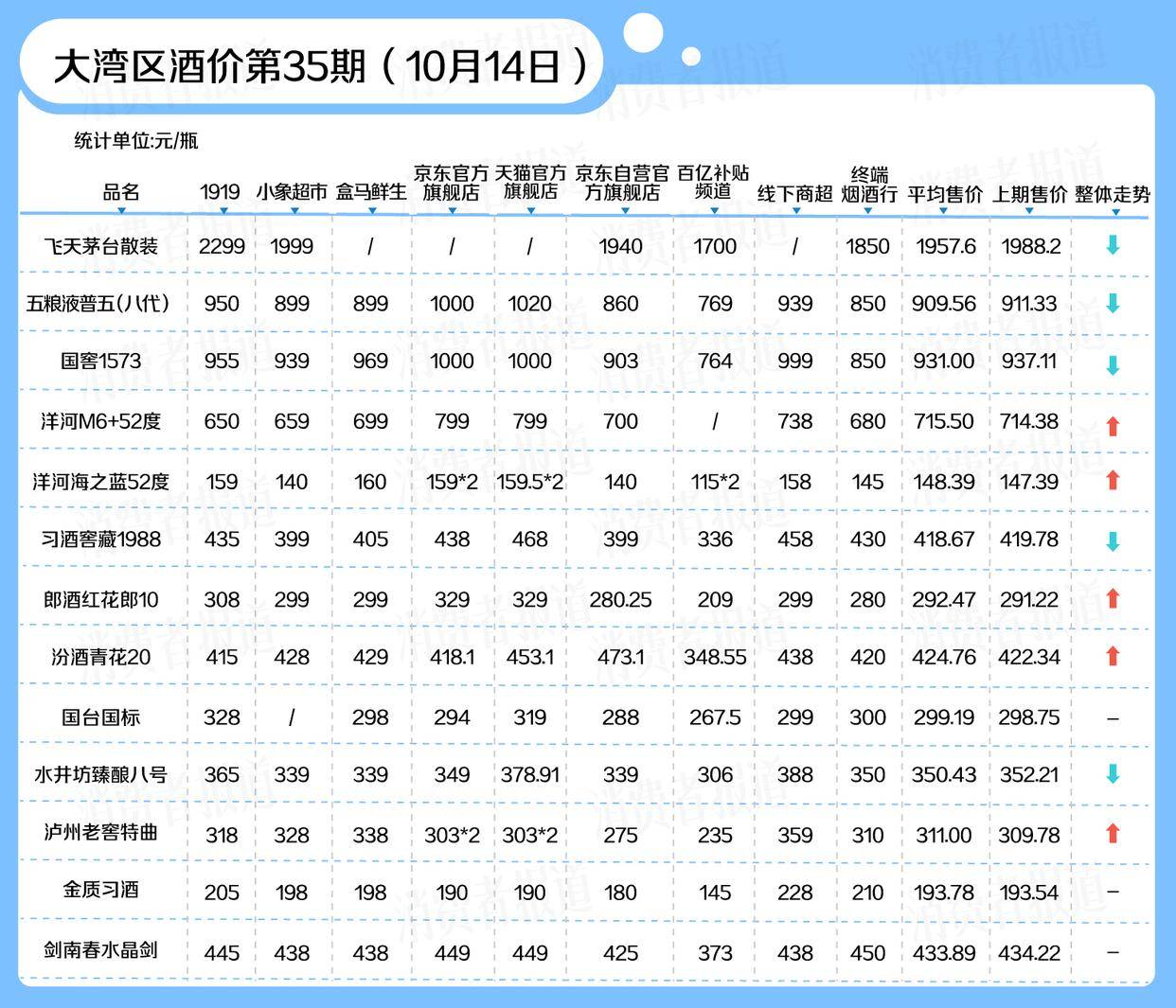
双11大促来袭,白酒价格平稳,茅台公开官方销售渠道|大湾区酒价第35期
Sou Hu Cai Jing· 2025-10-16 18:32
Core Insights - The article focuses on the price dynamics of popular liquor, particularly in Guangdong, during the "Double Eleven" shopping festival, highlighting the importance of this consumer event for the liquor market [1] Price Trends - The overall price trend for liquor remains stable, with only high-end liquor experiencing some fluctuations. For instance, the average selling price of Feitian Moutai is reported at 1957.6 yuan per bottle, showing a decline from previous peaks [3][4] - The price of Feitian Moutai dropped from 2043 yuan to 1940 yuan on JD's official self-operated store, indicating a decrease of nearly 100 yuan [3] - Other high-end liquor, such as Guojiao 1573, has an average selling price of 931 yuan per bottle, with some channels showing minor price fluctuations [4] Consumer Behavior - Consumers are advised to be cautious about purchasing channels, as many liquor companies, including Moutai and Wuliangye, have issued warnings about counterfeit products and unauthorized sellers, particularly during major shopping events [5][6] - Retailers are adopting cautious strategies in response to price declines, with some reducing stock levels to mitigate potential losses [4] E-commerce Impact - E-commerce platforms have become significant sales channels for liquor, but they also pose challenges such as the prevalence of counterfeit products, which companies must address [6] - The article notes that liquor companies are increasingly emphasizing the importance of purchasing through official and authorized channels to protect consumers [5]