
电子政务

Search documents
报告显示:我国政务数据资源体系实现系统性重构
Xin Lang Cai Jing· 2025-12-27 12:30
Core Insights - The report highlights a systematic reconstruction of China's government data resource system over the past decade, leading to the formation of a national integrated government big data system [1] - The establishment of a national integrated government data sharing hub has resulted in the release of 32,000 types of data resources, supporting 540 billion instances of data sharing and utilization across various regions and departments [1] - Electronic governance has significantly enhanced efficiency in public service delivery, with 92.5% of provincial administrative licensing matters now processed online, and services like "cross-province handling" and "certificate-free processing" becoming the norm [1] Group 1 - The report indicates that cross-regional and cross-departmental information sharing and business collaboration have shown significant results, with ongoing deepening of information technology applications in economic regulation, market supervision, social governance, and ecological environment protection [1] - The international influence of China's electronic governance has steadily increased, with the country's e-government development index rising from 70th in 2014 to 35th in 2024 in the United Nations e-government survey, and an online service index ranking of 11th globally [1]
“十四五”时期我国信息化 应用水平大幅提升
Xin Lang Cai Jing· 2025-12-25 19:23
Group 1 - The core viewpoint of the article highlights significant advancements in China's information technology and e-government development during the 14th Five-Year Plan period [1] Group 2 - The internet penetration rate in China increased from 70.4% to 79.7%, with the digital rural development accelerating and the urban-rural internet penetration gap narrowing by 8.2 percentage points compared to the end of the 13th Five-Year Plan [1] - The agricultural production informationization rate rose from 22.5% to over 30% [1] Group 3 - China's information technology innovation capabilities have significantly strengthened, with rapid development in the information infrastructure and a shift from key area breakthroughs to comprehensive empowerment [1] Group 4 - Over the past five years, the development of e-government in China has progressed steadily, establishing a national government service "one network" [1] - 92.5% of provincial administrative licensing matters can now be processed online, enhancing efficiency from "can be done" and "can be handled well" to "efficiently completed" [1] Group 5 - The country has strengthened planning and policy guidance, enhancing legal and standard construction, with over 160 laws related to the internet sector formulated and more than 900 national standards established [1]
北京已有近800万人申领第三代社保卡
Zhong Guo Xin Wen Wang· 2025-12-09 13:37
Core Viewpoint - Beijing has successfully issued nearly 8 million third-generation social security cards, with a cumulative usage of approximately 60 million times, indicating a significant adoption of the new card system [1]. Group 1: Features of the Third-Generation Social Security Card - The third-generation social security card is an upgraded version of the previous cards, featuring enhanced technology and security, including a larger capacity chip and more secure digital certificates [1]. - It integrates multiple functions into one card, serving not only as a social security card but also as a service card, transportation card, medical card, and bank card [1]. - The card supports cross-province usage, facilitating the "one card for all" initiative in the Beijing-Tianjin-Hebei region [1]. Group 2: Issuance and Service Improvements - The issuance of the third-generation card is being conducted in five batches, prioritizing retirees and providing tailored services for different groups, including online services for those with special needs [2]. - A total of 16 banks are involved in the issuance process, promoting fair competition and allowing citizens to choose their preferred bank for card issuance [2]. - Over 3,000 service windows have been established, along with online application channels, enabling citizens to apply for the card conveniently [2]. Group 3: Optimization of Card Usage Environment - The city has upgraded card reading machines in social security service halls and various public services, including over 1,300 bus and subway lines, 5,000 medical institutions, and libraries [3]. - A dedicated section for social security card services has been launched on popular platforms, allowing citizens to easily access information related to social security, medical services, cultural tourism, and transportation [3].
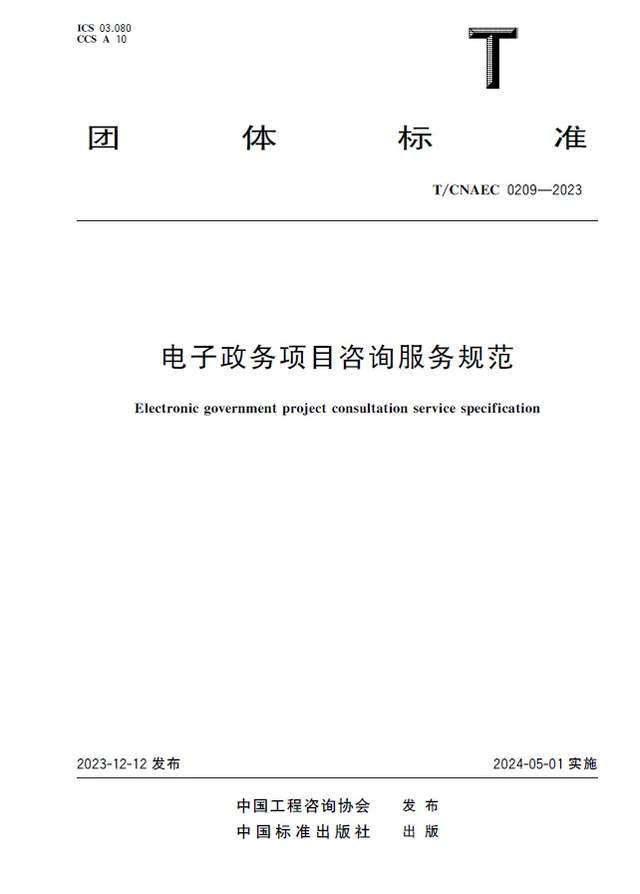
零点生态 | 闻政绩效参编规范发布
Sou Hu Cai Jing· 2025-12-05 02:50
Core Viewpoint - The release of the "Electronic Government Project Consulting Service Specification" marks a significant step in standardizing consulting services for electronic government projects, enhancing the effectiveness of digital governance and addressing challenges in technology application and project execution [1][4][5] Group 1: Specification Overview - The "Electronic Government Project Consulting Service Specification" is divided into seven parts, detailing the scope of consulting services, normative references, terminology, service processes, project report preparation, project review, and performance evaluation [4] - The specification emphasizes the need for standardized consulting services to minimize project failure risks and ensure alignment with policy goals, technological trends, and user needs [5] Group 2: Performance Evaluation - The specification includes a section on performance evaluation, outlining principles, methods, processes, scope, cycles, and content for evaluating information technology projects [4][5] - It aims to standardize pre-performance assessments and post-performance evaluations, ensuring a comprehensive approach to project evaluation [5] Group 3: Industry Implications - The implementation of the specification provides actionable guidelines for engineering consulting firms and scientific decision-making support for government departments, promoting professional development in the engineering consulting industry [5] - The specification encourages the integration of cutting-edge technologies such as artificial intelligence, big data, and blockchain into consulting services, fostering cross-departmental resource integration and collaborative innovation [5]

南威软件股价涨5.35%,华夏基金旗下1只基金位居十大流通股东,持有189.27万股浮盈赚取132.49万元
Xin Lang Cai Jing· 2025-11-21 06:07
Group 1 - The core point of the article highlights the recent performance of Nanwei Software, which saw a 5.35% increase in stock price, reaching 13.78 CNY per share, with a trading volume of 777 million CNY and a turnover rate of 10.01%, resulting in a total market capitalization of 7.997 billion CNY [1] - Nanwei Software, established on October 18, 2002, and listed on December 30, 2014, primarily engages in the development of e-government software, system integration, and technical services, providing solutions to government departments [1] - The revenue composition of Nanwei Software includes: solutions (39.73%), other services (24.26%), government software products (16.87%), urban public safety software products (9.78%), innovative business (9.20%), and other (0.17%) [1] Group 2 - Among the top ten circulating shareholders of Nanwei Software, Huaxia Fund holds a position with its Huaxia CSI 1000 ETF (159845) having reduced its holdings by 1,500 shares in the third quarter, now holding 1.8927 million shares, which accounts for 0.33% of circulating shares [2] - The Huaxia CSI 1000 ETF (159845) was established on March 18, 2021, with a current scale of 45.469 billion CNY, achieving a year-to-date return of 24.61% and a one-year return of 18.86% [2]

我国电子政务发展进入智能化跃升新阶段
Ke Ji Ri Bao· 2025-10-12 23:38
Core Insights - The article discusses the issuance of the "Guidelines for the Deployment and Application of AI Large Models in the Government Sector," aimed at promoting the orderly application of AI technologies in government operations [1][2]. Group 1: Guidelines Overview - The guidelines are intended to enhance the application of AI technologies in government, marking a new phase in the development of e-government towards intelligent modernization [1]. - The guidelines emphasize the importance of scenario-driven innovation, encouraging government departments to explore AI applications in common and high-frequency needs [2]. Group 2: Application Scenarios - The guidelines identify four main categories of application scenarios: government services, social governance, office operations, and auxiliary decision-making, with a total of 13 specific scenarios outlined [2]. - Each scenario includes details on technical capabilities, application processes, and expected outcomes, allowing for tailored exploration based on departmental needs [2]. Group 3: Governance Mechanisms - The guidelines stress the need for innovative governance mechanisms to ensure the safe and orderly application of AI in government, addressing issues such as data security and the accuracy of information [3]. - A classification and grading governance system for AI large models in the government sector is proposed, ensuring compliance with safety standards while promoting broader application [3]. - The guidelines aim to establish a comprehensive management system covering the entire lifecycle of AI model deployment in government, addressing key challenges in implementation and management [3].
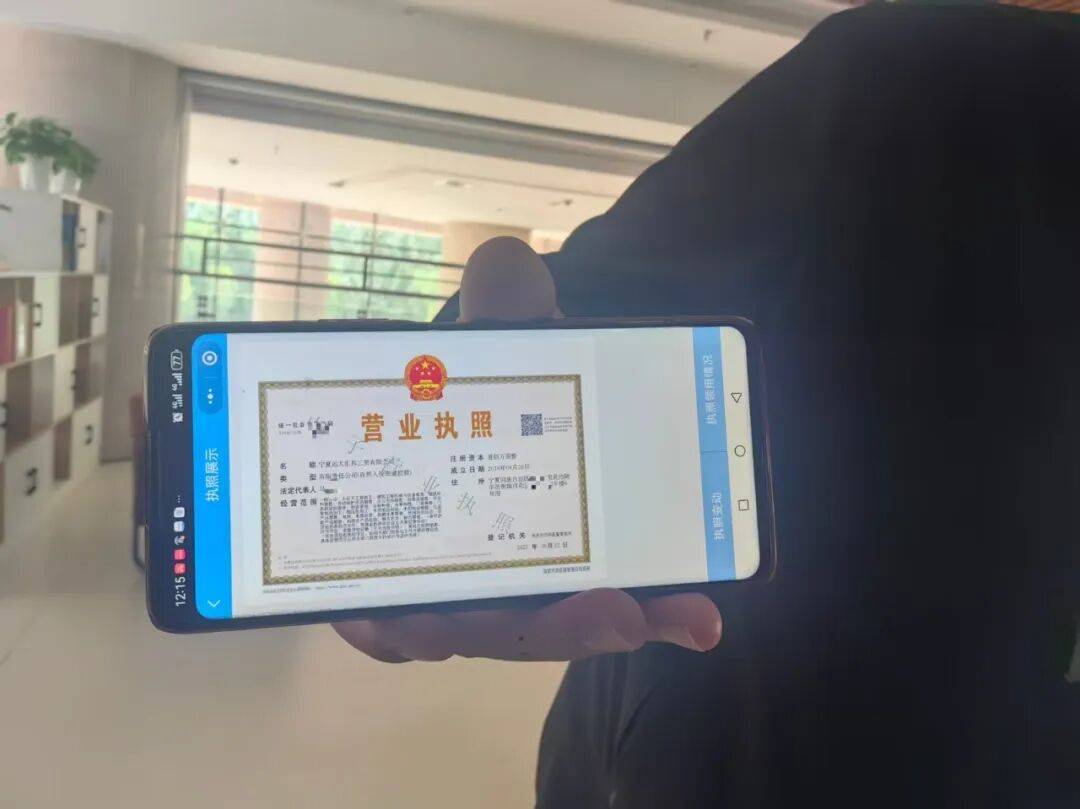
【优化营商环境】从“纸上”到“掌上” 电子营业执照开启我市企业“数字身份”新时代
Sou Hu Cai Jing· 2025-09-28 22:25
Core Insights - The promotion of electronic business licenses is transforming the way enterprises operate, serving as a "digital ID" for businesses [1][8] - The shift from paper business licenses to electronic versions is enhancing the efficiency of business operations and reducing paperwork [3][7] Group 1: Implementation and Benefits - The city is focusing on a "high-efficiency" approach to streamline enterprise services, enabling businesses to download electronic licenses via WeChat or Alipay [3] - As of now, Lingwu City has issued over 22,000 electronic business licenses, achieving a 100% download rate for newly established market entities and reducing submitted materials by over 20% [3] - The integration of "enterprise codes" with electronic business licenses allows for seamless verification during regulatory inspections, eliminating the need for physical documents [5] Group 2: Expanding Applications - The application scenarios for electronic business licenses are continuously expanding, facilitating various registration processes and enabling businesses to complete tasks from home [7] - The electronic business license supports transactions across 16 sectors, including tax, social security, and banking services, providing a "one-stop" financial service for enterprises [7] - The comprehensive promotion of electronic business licenses signifies a new era of digital identity verification for businesses, with plans for further reforms to enhance the system [8]
威海实现30多个领域“一照通用”
Da Zhong Ri Bao· 2025-09-12 02:04
Core Points - Weihai has achieved the integration of electronic business licenses across over 30 fields, enhancing service efficiency by 40% through automatic retrieval of enterprise information [1] Group 1: Implementation and Impact - The Weihai Administrative Approval Service Bureau has identified "paper dependency" issues in six high-frequency scenarios, including bank account opening and tax registration, and has optimized processes to deepen the application of electronic business licenses [1] - The electronic business license allows seamless access to various enterprise services, including annual reports, social security, and public fund services, using just a mobile phone [1] Group 2: Adoption Statistics - As of now, the number of enterprises that have downloaded electronic business licenses in Weihai has reached 131,800, with a total of 3,656,700 applications for electronic business licenses [1]
《国家信息化发展报告(2024年)》:普惠发展效应持续释放
Xin Hua She· 2025-08-06 00:53
Group 1 - The core viewpoint of the articles highlights the advancement of digital life services in China, with a focus on improving the informationization level of public services such as healthcare, social security, and employment by 2024 [1] - By the end of 2024, remote medical services are expected to cover all cities and counties in China, with internet medical users reaching 418 million and electronic social security card users totaling 1.07 billion, providing online services 17.051 billion times [1] - The construction of a national cultural big data system is progressing steadily, promoting high-quality cultural resources to reach grassroots levels [1] Group 2 - The rapid development of generative artificial intelligence in China is noted, with over 490 large models registered with the National Internet Information Office and a total user registration exceeding 3.1 billion [2] - The National Internet Information Office plans to further integrate development and security, encourage innovation in AI technology, and enhance the governance system for AI, focusing on safety management throughout the lifecycle [2] - An evaluation of the informationization development across 31 provinces shows that regions such as Beijing, Zhejiang, and Shanghai rank in the top tier for comprehensive informationization development [2]
南威软件股价微涨0.22% 控股股东减持比例达1.27%
Jin Rong Jie· 2025-08-04 17:16
Core Viewpoint - Nanwei Software's stock price increased by 0.22% to 13.55 yuan as of August 4, 2025, with a trading volume of 274,518 hands and a transaction amount of 363 million yuan [1] Company Overview - Nanwei Software primarily engages in the development of e-government software and system integration, operating within the internet services industry [1] - The company's product offerings include government big data platforms and smart city solutions, with a business scope covering multiple provinces and cities across the country [1] Shareholding Changes - The controlling shareholder, Wu Zhixiong, and his concerted parties reduced their holdings by a total of 7.3482 million shares from July 29 to August 1, 2025, representing 1.27% of the company's total share capital [1] - Following the reduction, the combined shareholding of Wu Zhixiong and his concerted parties decreased from 35.00% to 33.73% [1] Capital Flow - On August 4, 2025, the net outflow of main funds for Nanwei Software was 51.8826 million yuan, accounting for 0.66% of the circulating market value [1] - Over the past five trading days, the cumulative net outflow reached 99.9157 million yuan, representing 1.27% of the circulating market value [1]