
数字乡村

Search documents
从义乌出发,链接丝路:稠州银行的价值共生之旅
Xin Lang Cai Jing· 2026-02-25 16:56
Core Insights - The article highlights the evolution of Chouzhou Commercial Bank from its humble beginnings in 1987 to a significant player in global trade finance, particularly in supporting small and micro enterprises in the context of the "Belt and Road" initiative [3][26] - It emphasizes the bank's innovative financial solutions tailored for small businesses and rural areas, showcasing its commitment to inclusive finance and community support [5][8] Group 1: Bank's Evolution and Services - Chouzhou Commercial Bank originated from a local credit cooperative and has grown into a financial network that supports both local and international trade [3][4] - The bank has developed a unique "stall banking" model, providing services directly at market stalls to meet the immediate needs of small business owners [4][5] - It serves over 500,000 small and micro enterprises, utilizing a close-contact service approach to build trust and facilitate financial access [5][6] Group 2: Digital Innovation and Financial Products - The bank has launched "Zhejiang Flash Loan," an online credit product that allows for quick loan approvals, with funds disbursed in as little as 15 minutes [5][6] - A digital platform called "Digital Village" has been developed to streamline loan processes for rural farmers, providing timely financial support based on agricultural cycles [8][9] - By 2025, the bank aims to provide over 40 billion yuan in credit to various small business clusters, enhancing financial accessibility [5][8] Group 3: Community and Social Responsibility - Chouzhou Commercial Bank actively engages in community support, providing financial assistance to struggling businesses and promoting local economic development [6][22] - The bank's initiatives include volunteer services for the elderly and educational programs for children, reflecting its commitment to social welfare [23][24] - It has donated over 40 million yuan for disaster relief and community support, reinforcing its image as a socially responsible institution [25][26] Group 4: Cross-Border Trade and Global Reach - The bank has established a comprehensive cross-border financial service network, facilitating transactions in multiple currencies for international trade [12][15] - It has innovated in the area of cross-border e-commerce financing, significantly reducing the time required for small businesses to access funds [13][14] - By 2025, the bank aims to connect with nearly 1,000 banks across 120 countries, enhancing its global trade capabilities [15][16] Group 5: Brand and Value Creation - The bank's branding strategy focuses on creating a value-sharing ecosystem, moving beyond traditional advertising to engage with customers on a deeper level [17][19] - It has developed a mascot, "Little C," to humanize the brand and connect with the community through various outreach programs [18][19] - The bank's approach to brand management emphasizes trust and community engagement, positioning it as a leader in the financial sector [21][22]


湖南会同县:以数字“小积分”撬动乡村“大智理”
Zhong Guo Fa Zhan Wang· 2026-02-14 02:08
Core Viewpoint - Hunan Province's Huitong County is implementing a digital "small points" system to enhance rural governance and modernize governance capabilities, addressing four major challenges and establishing a path for effective rural governance [1] Group 1: Breaking "Basic Bottlenecks" - The initiative focuses on digital rural construction to improve digitalization, information technology, and intelligence levels in rural areas, thereby narrowing the digital divide [2] - Over 520 5G base stations have been established, achieving full coverage of 5G signals in administrative villages, meeting diverse needs such as online access and smart agriculture data transmission [2] - High-performance computers and smart devices have been provided to all administrative villages, with IoT and AI technologies being deployed in key areas [2] - A digital literacy enhancement program has trained 12,000 participants, ensuring that rural residents remain connected in the digital age [2] Group 2: Breaking "Lack of Carriers" - A third-party internet technology company has been commissioned to create a "Rural Smart Governance" big data platform, integrating key business sectors [3] - The initiative has achieved a 90% satisfaction rate among villagers regarding transparency in village affairs, fostering closer relationships between villagers and local governance [3] - Over 10,000 government services have been processed through online and doorstep services, improving convenience for residents [3] - The program has led to a 43% year-on-year decrease in conflict incidents in the county [3] Group 3: Breaking "Ambiguous Guidance" - A points evaluation system has been established to transform soft advocacy of rural civilization into hard constraints, guiding residents towards correct values [4] - A behavior checklist has been created, allowing villagers to earn points for positive actions and face deductions for negative behaviors [4] - The platform has a 93% usage rate among 7,371 households, with 6,871 households actively participating in the points system [4] Group 4: Breaking "Insufficient Motivation" - The points system is linked to various local governance aspects, encouraging participation from farmers and rural organizations [6] - Points are used as a reference for recommending candidates for military service, party membership, and local leadership positions [6] - A "points supermarket" has been established, allowing villagers to exchange points for daily necessities, with discounts for high-scoring households [6] - Financial support is prioritized for high-scoring households, with loans of up to 1 million yuan available for agricultural entities [7]
中国移动:数智力量赋能“智慧中坡” 绘就梧州乡村振兴新图景
Huan Qiu Wang· 2026-02-13 09:40
Core Viewpoint - The "Smart Zhongpo" digital village management platform, launched by China Mobile Guangxi Company and Guangxi Mo's Agricultural Group, represents a significant step in implementing the national digital rural development strategy, enhancing grassroots governance and modern agriculture through digitalization [1][3]. Group 1: Digital Infrastructure and Technology - China Mobile Guangxi Company plays a crucial role in building new information infrastructure and digital rural development, leveraging its advanced "connection + computing power + capability" service system to support the "Smart Zhongpo" platform [3]. - The platform is built on a digital foundation supported by 5G, cloud computing, and the Internet of Things, utilizing "N+31+X" mobile cloud resources to create a dedicated "smart agricultural big data platform" [3]. Group 2: Agricultural Innovation - Guangxi Mo's Agricultural Group utilizes AI visual recognition and edge computing provided by China Mobile to establish a full-process visualization traceability system from farm to table, enhancing smart farming practices [5]. - AI cameras analyze sheep behavior in real-time, enabling automatic inventory and precise estrus warnings, with future plans for smart ear tags and pedometers to monitor health indicators continuously [5]. Group 3: Rural Governance and Services - The "Smart Zhongpo" platform serves as both the "smart brain" for industrial digitalization and the "nerve center" for modern rural governance, focusing on three core areas: rural governance, public services, and industrial development [7]. - The platform offers a one-stop solution covering five application scenarios: safe rural areas, comprehensive management, public services, industrial revitalization, and ecological governance, facilitating digital processing of village affairs and improving service equality between urban and rural areas [7]. Group 4: Future Development and Goals - The project has entered a regular operational phase, enhancing village-level affairs, public service efficiency, and industrial transformation [10]. - China Mobile aims to deepen platform capabilities, expand application scenarios, and create replicable experiences to contribute to the digital rural construction in Cengxi and Guangxi, establishing a "Zhongpo model" for rural revitalization [10].

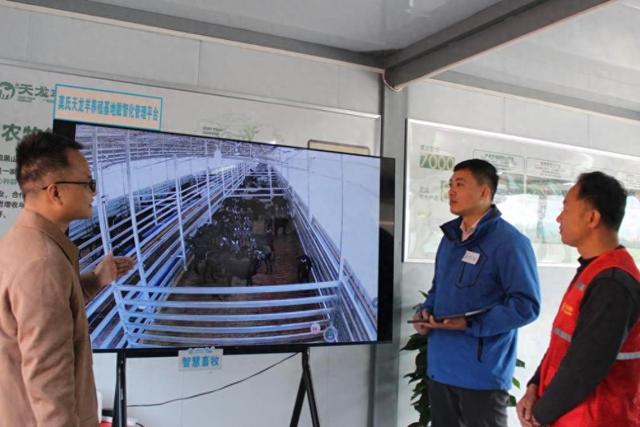
【秦声嘹亮】数字赋能农业 智慧引领未来
Xin Lang Cai Jing· 2026-02-11 08:24
Group 1 - The core viewpoint of the article emphasizes the integration of artificial intelligence with agriculture, as outlined in the 2026 Central Document No. 1, which aims to develop new agricultural productivity tailored to local conditions and promote the use of drones and robots in agriculture [1][3] - The document highlights the significant increase in agricultural modernization in China, with over 300,000 agricultural drones and an annual operational area exceeding 46 million acres, showcasing the potential for AI and digital technology to enhance agricultural productivity [1][2] - The article stresses the importance of building a solid foundation for technology implementation, particularly by improving rural network infrastructure to facilitate the application of AI technologies in agriculture [2] Group 2 - The article discusses the need to cultivate local "new farmers" who are knowledgeable in technology and management, encouraging collaboration between tech teams and farmers to foster innovation and self-sufficiency in agricultural practices [2] - It emphasizes the importance of accelerating the transformation of agricultural research results into practical applications, focusing on key areas such as seed industry, agricultural machinery, and biomanufacturing [2] - The deployment of AI in agriculture is expected to stimulate the development of new business models, such as leisure agriculture and rural e-commerce, thereby enhancing the internal growth dynamics of rural areas [2][3]
北投科技涨2.08%,成交额1456.15万元
Xin Lang Zheng Quan· 2026-02-09 01:51
Core Viewpoint - Beitou Technology has shown a mixed performance in stock price and financial metrics, with significant revenue growth but also a net loss in recent periods [2]. Group 1: Stock Performance - On February 9, Beitou Technology's stock rose by 2.08%, reaching 4.41 CNY per share, with a trading volume of 14.56 million CNY and a turnover rate of 0.20%, resulting in a total market capitalization of 7.369 billion CNY [1]. - Year-to-date, Beitou Technology's stock price has increased by 4.50%, with a 5.00% rise over the last five trading days, a 6.57% decline over the last 20 days, and a 19.19% increase over the last 60 days [1]. - The company has appeared on the "Dragon and Tiger List" once this year, with a net purchase of 23.15 million CNY on January 6, accounting for 16.47% of total trading volume [1]. Group 2: Financial Performance - As of September 30, Beitou Technology reported a shareholder count of 39,500, a decrease of 2.53% from the previous period, with an average of 42,338 circulating shares per person, an increase of 2.59% [2]. - For the period from January to September 2025, Beitou Technology achieved a revenue of 3.134 billion CNY, representing a year-on-year growth of 236.19%, while the net profit attributable to shareholders was -344 million CNY, reflecting a year-on-year increase of 43.49% [2]. Group 3: Company Overview - Beitou Technology, established on March 16, 2000, and listed on August 15, 2016, is located in Nanning, Guangxi Zhuang Autonomous Region, focusing on smart transportation and related sectors [1]. - The company's main business revenue composition is 99.29% from the cable television industry, with the remaining 0.71% from other sources [1]. - Beitou Technology is classified under the media industry, specifically in the television broadcasting sector, and is involved in concepts such as smart agriculture, mergers and acquisitions, and big data [1].

济南市2026年国家试点持续发力,做“活”数字乡村建设大文章
Feng Huang Wang Cai Jing· 2026-02-05 07:44
Core Viewpoint - The Jinan Municipal Government is committed to building a digital rural area, leveraging a coordinated approach to enhance governance and modernize capabilities, aiming to establish Jinan as a leading area in digital rural construction [1] Group 1: Strategic Planning and Implementation - The Jinan Municipal Cyberspace Administration is leading the digital rural construction, ensuring unified thought and action to provide a clear direction for the pilot tasks [2] - A comprehensive implementation plan for the second batch of national digital rural pilot projects has been developed, establishing a strategic framework referred to as "114N" [4] - A standardized system has been created to address inconsistencies in digital rural construction, including the issuance of various quantitative standards [4] Group 2: Resource Integration and Data Sharing - The administration is actively breaking down departmental barriers to integrate provincial and municipal resources, promoting data sharing to create a unified effort across the city [5] - The "Digital Jinan" initiative is being utilized to enhance agricultural data sharing, addressing the issue of "data silos" and ensuring efficient use of data resources [6] Group 3: Project Management and Execution - A project-based approach is being adopted, with specific tasks broken down into actionable projects, supported by a clear accountability mechanism [7] - The establishment of exemplary digital rural demonstration points is intended to promote best practices and drive broader implementation [7] Group 4: Digital Empowerment and Governance - Digital technologies are being leveraged to enhance rural governance, with initiatives like "Internet + Party Building" and "Internet + Government Services" being implemented [8] - The promotion of online marketing for rural products is being emphasized, with various programs aimed at helping farmers access new sales channels [8] Group 5: Public Service Enhancement - Efforts are being made to improve public services through digital means, ensuring that rural residents have access to quality education, healthcare, and other essential services [9] - By 2026, Jinan aims to deepen the outcomes of the pilot projects and explore replicable experiences to contribute to rural revitalization [9]
数字技术激活江苏乡村新动能
Xin Hua Ri Bao· 2026-02-05 00:00
Core Viewpoint - The integration of digital infrastructure into rural revitalization is essential for high-quality development and the construction of a modern socialist country, as highlighted in the report of the 20th National Congress of the Communist Party of China [1] Group 1: Current Situation - The degree of integration between digital infrastructure and rural economy is increasing, but regional "digital gaps" persist, creating structural disparities [2] - The main obstacles to deep integration have shifted from hardware coverage to software empowerment and system collaboration, with low coordination levels and a lack of innovative platforms in rural industries being key shortcomings [2] - The primary contradiction has transitioned from "access" to "effective utilization" and "matching," particularly in underdeveloped regions like Northern Jiangsu [2] Group 2: Restructuring the Landscape - The transition from "gradient differentiation" to "regional collaboration" requires tailored governance strategies for Southern, Central, and Northern Jiangsu to convert disparities into potential [3] - Southern Jiangsu should focus on becoming a leader in innovation and standard output, emphasizing advanced fields like AI breeding and smart agriculture [3] - Central Jiangsu is positioned as a resonance zone, enhancing agricultural supply chain resilience and fostering local digital service providers [3] Group 3: Northern Jiangsu Development - Northern Jiangsu should prioritize foundational infrastructure and model replication, ensuring comprehensive coverage while avoiding low-level repetitive construction [4] - The focus should be on establishing innovative platforms in major agricultural production areas and rapidly promoting successful smart agriculture applications [4] Group 4: Deepening Transformation - Digital rural construction must evolve from mere project accumulation to systemic empowerment, emphasizing user-centric approaches and collaborative mechanisms [5] - A shift from fragmented governance to integrated collaboration is necessary, creating a cooperative network involving government, enterprises, research institutions, and village organizations [6] - Long-term sustainability should be prioritized, with a focus on continuous operation and effective data resource management to ensure that digital facilities are functional and adaptable [6]
聚焦2026贵州两会·大家评丨把乡愁变黄金赛道,新农人闯出了新天地
Xin Lang Cai Jing· 2026-01-28 16:47
Core Insights - The story of Ding Lang illustrates that rural areas are not a retreat but a new arena filled with potential opportunities [1][2] - Success is defined by the courage to break conventions and the persistence to cultivate one's roots [2] Group 1: Rural Development - Ding Lang returned to his hometown, Huanhe Village, which was suffering from youth outflow, to create an e-commerce company [1] - He leveraged the popularity of short videos to showcase the beauty of rural life, gaining nearly 5 million followers and revitalizing the village [1] - The village saw a tourism revenue of over 2 million yuan due to the digital wave initiated by Ding Lang [1] Group 2: Economic Impact - Ding Lang expanded his efforts to include live-streaming to connect local agricultural products with broader markets, achieving sales exceeding 50 million yuan [1] - This initiative created over 50 job opportunities for villagers, allowing them to earn income while staying close to home [1]
新老村民“一家亲” “数字乡村”气象新
Xin Lang Cai Jing· 2026-01-27 20:00
Core Viewpoint - The event in Gaozhai Village exemplifies the successful integration of new and old residents, showcasing the positive impact of urban-rural collaboration and cultural exchange in rural revitalization efforts [2][3][5] Group 1: Event Highlights - The "Village Evening" event, themed "Gaozhai Family, New Year Greetings," attracted over 1,000 participants, blending traditional and modern festivities [2] - Activities included communal barbecuing, family photo sessions, and performances by both new and old villagers, fostering a sense of community [3] - The event served as a platform for cultural exchange, with performances that highlighted both contemporary and traditional elements, enhancing the festive atmosphere [3] Group 2: Economic and Social Development - Gaozhai Village has transformed from a "hollow village" to a thriving community by attracting 50 enterprises, aiming for an output value of 800 million yuan by 2025 and collective income exceeding 3 million yuan [3][4] - The village's development strategy focuses on "digital + agricultural cultural tourism," improving infrastructure and revitalizing idle resources to create a "digital cultural industry ecological village" [3][4] - Initiatives such as skills training and cultural activities have been implemented to enhance employment opportunities for villagers and ensure a harmonious relationship between new residents and the local community [4]

夯实中国式现代化的农业农村基础
Jing Ji Ri Bao· 2026-01-24 21:53
Core Viewpoint - The 2025 Central Rural Work Conference emphasizes the importance of agricultural modernization for China's overall modernization, urging accelerated construction of a strong agricultural nation and promoting comprehensive rural revitalization [1] Agricultural and Rural Economic Development - Agricultural production shows steady growth, with the value added in agriculture, forestry, animal husbandry, and fishery increasing by 4.1% in 2025, contributing 0.3 percentage points to economic growth [2] - Grain production reached a new high in 2025, with a total output of 14,297.5 billion jin, an increase of 167.5 billion jin or 1.2% from the previous year, maintaining over 1.3 trillion jin for 11 consecutive years [2] Income and Consumption - Rural residents' per capita disposable income reached 24,456 yuan in 2025, with a nominal growth of 5.8% and a real growth of 6.0%, indicating a faster growth rate than urban residents [3] - The income gap between urban and rural residents continues to narrow, with the ratio of per capita disposable income decreasing from 2.50 in 2021 to 2.31 in 2025 [3] Agricultural Product Prices and Trade - Agricultural product prices have generally declined, with the overall agricultural product production price index down by 3.7% year-on-year in 2025 [4] - The total import and export value of agricultural products was $311.57 billion in 2025, a decrease of 2.1% year-on-year, with exports increasing by 1.2% to $104.16 billion [5] Agricultural Technology and Innovation - The mechanization level of crop farming reached 76.7% in 2025, with agricultural technology contributing 64% to agricultural growth [6] - The number of agricultural drones exceeded 300,000, significantly aiding in reducing pesticide usage by approximately 30% [7] Rural Infrastructure and Public Services - Rural infrastructure has improved, with a 96% coverage rate for tap water in rural areas and significant investments in rural construction projects [10] - The number of rural mutual aid elderly care facilities exceeded 140,000, and 97% of village health clinics are included in the medical insurance reimbursement system [11] Future Outlook - Agricultural value-added is expected to grow at a rate of 6.32% in 2026, with urban and rural residents' disposable income projected to increase by 4.4% and 7.79%, respectively [13] - Agricultural product trade is anticipated to maintain a growth trend, with exports expected to rise by 2.29% [14]