白酒行业战略转型

Search documents
金徽酒(603919):发展现状及投资价值讨论:全面战略转型,强体系塑造强竞争力
HUAXI Securities· 2026-03-04 14:45
Investment Rating - The report assigns a "Buy" rating for the company [2] Core Views - The company is expected to replicate the evolution trend of leading local liquor brands, establishing an absolute competitive advantage within its province [4] - The company has undergone a comprehensive strategic transformation, enhancing its organizational strength and competitive capabilities [5] - The investment logic is based on solid fundamentals, structural upgrades, and brand share conversion, with a focus on expanding into five provinces in the Northwest and increasing market presence in East and North China [6] Financial Summary - Revenue projections for the company are as follows: - 2023A: 2,548 million - 2024A: 3,021 million - 2025E: 3,052 million - 2026E: 3,247 million - 2027E: 3,432 million - Year-over-year growth rates are projected at 26.6% for 2023, 18.6% for 2024, 1.0% for 2025, 6.4% for 2026, and 5.7% for 2027 [7] - Net profit attributable to shareholders is forecasted as follows: - 2023A: 329 million - 2024A: 388 million - 2025E: 386 million - 2026E: 433 million - 2027E: 488 million - The gross profit margin is expected to be 62.4% in 2023, gradually increasing to 63.0% by 2027 [7] Market Strategy - The company aims to lead the mainstream price segment in Gansu province, transitioning from 100-150 yuan to 200-300 yuan price points through product upgrades and marketing initiatives [8] - The company has established a comprehensive national market strategy, covering the Northwest and expanding into East and North China, with a focus on high-end products [8] - The company has implemented a dual strategy of enhancing its organizational structure domestically while expanding its product offerings across various price segments [35][38] Historical Context - The company has experienced significant growth since its restructuring in 2006, achieving a sales revenue milestone of over 10 billion yuan by 2012 [26][29] - The company faced challenges in the previous industry cycle, leading to a strategic pivot in 2019 aimed at comprehensive reform across product, market, marketing, brand, management, and culture [32] Organizational Transformation - The company has restructured its marketing organization to focus on consumer engagement and has expanded its sales team significantly, increasing from 420 employees in 2015 to 974 by 2024 [52] - The company has adopted a flat organizational structure to enhance efficiency and responsiveness in its marketing efforts [38] Brand Strategy - The company has launched a "High-Speed Rail+" branding initiative to enhance national visibility and brand recognition through strategic advertising in transportation hubs [58] - The company has increased its advertising expenditure significantly, with promotional costs rising from approximately 50 million to nearly 220 million yuan from 2021 to 2024 [58]

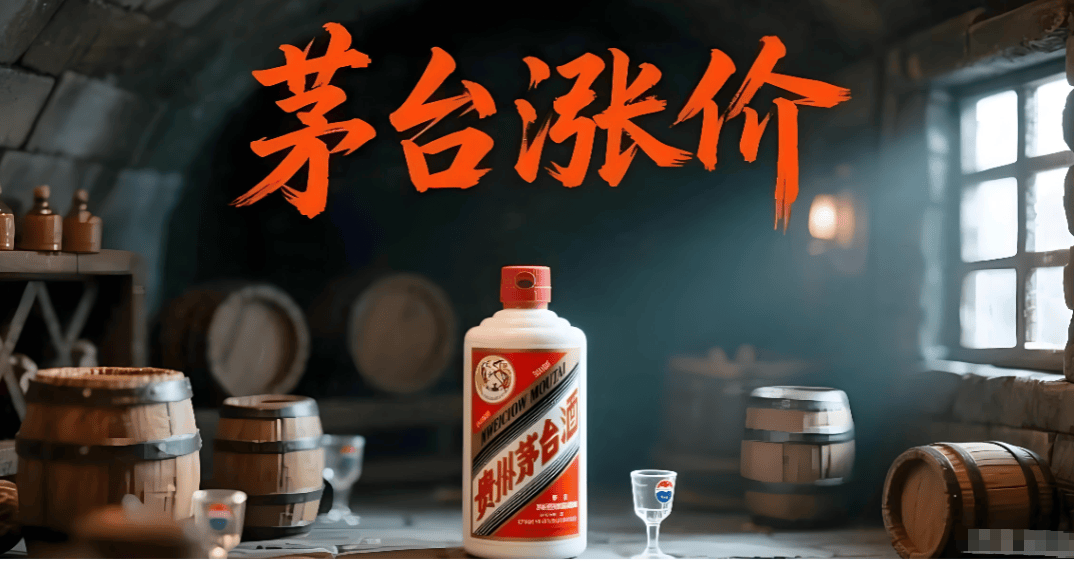
突发!茅台价格全线上涨!背后发生了什么?
Sou Hu Cai Jing· 2025-12-24 15:50
Core Viewpoint - The recent surge in Moutai prices reflects a complex interplay of market speculation, upcoming events, and supply constraints, indicating a potential shift in the industry dynamics as traditional consumption patterns evolve [2][4][6]. Price Movements - On December 24, the wholesale reference price for 25-year Feitian Moutai rose to 1600 RMB per bottle, an increase of 40 RMB from the previous day, while the 24-year variant reached 1630 RMB, up by 30 RMB [2][3]. - The price of the "Snake Moutai" jumped from 1770 RMB to 2000 RMB in a single day, marking a 13% increase, which has surprised many in the market [4][6]. Market Dynamics - The price fluctuations are attributed to the upcoming distributor conference on December 28, where new product strategies may be announced, alongside a supply tightening due to Moutai's decision to halt product shipments to distributors [6][8]. - The market has seen a rebound in prices, with ordinary Feitian Moutai recovering from below the official price of 1499 RMB to a range of 1650-1750 RMB [4][6]. Financial Performance - For the first three quarters of 2025, Moutai reported total revenue of 1309.04 billion RMB, a year-on-year increase of 6.32%, with core product sales showing strong performance [8][9]. - Moutai's revenue from Moutai liquor reached 1105.14 billion RMB, reflecting a 9.28% growth, while series liquor revenue declined to 178.84 billion RMB due to product line adjustments [9]. Strategic Transformation - Moutai is undergoing a strategic transformation focusing on three core products: Moutai 1935, Feitian Moutai, and Premium Moutai, targeting different price segments [10][11]. - The company is shifting from a channel-centric approach to a consumer-centric model, aiming to connect with broader emotional and daily life scenarios [20][21]. Industry Outlook - The current price decline and slowing growth are seen as part of a necessary "value reconstruction" process for Moutai and the broader liquor industry, moving away from speculative practices towards genuine value creation [21]. - The evolving consumer base, particularly younger generations, will play a crucial role in determining future market dynamics and competitive positioning [21].


白酒行业人事震荡:洋河与金种子高管离任背后的战略重构与行业困局
Sou Hu Cai Jing· 2025-07-04 02:10
Core Insights - The recent resignations of key executives in the Chinese liquor industry highlight the urgent need for strategic transformation amid deep industry adjustments [1][5][14] Group 1: Company Performance - Yanghe Co., under Zhang Liandong's leadership, experienced a revenue decline of 12.83% to 28.876 billion yuan in 2024, with net profit plummeting 33.37% to 6.673 billion yuan, dropping from third to fifth in industry rankings [2][4] - Jinzhongzi Liquor, led by He Xiuxia, saw revenue decrease from 1.186 billion yuan in 2022 to 925 million yuan in 2024, with a cumulative net loss of 633 million yuan [10][12] Group 2: Strategic Challenges - Yanghe's strategic missteps included outdated brand management and a rigid distribution model, leading to losses in market share against competitors like Jinshiyuan [4][15] - Jinzhongzi's challenges stemmed from a misalignment between beer and liquor market strategies, resulting in a lack of brand recognition and market penetration [10][12] Group 3: Management Changes - The resignations of Zhang Liandong and He Xiuxia reflect broader trends in the industry, with local governments influencing management changes to drive strategic shifts [7][16] - The new leadership at both companies faces significant challenges, including cash flow issues and the need to balance independence with corporate integration [12][18] Group 4: Industry Trends - The liquor industry is currently in a "shrinking competition" phase, with production among large enterprises declining by 6.8% in 2024, and revenue growth slowing significantly [15] - The departure of key executives signals a shift from "scale expansion" to "value cultivation," emphasizing the need for strategic innovation and organizational transformation [18]