白银短期风险

Search documents
白银反弹4%,此前为何突然暴跌?对冲基金老将警示了五大短期风险
美股研究社· 2025-12-31 11:25
Core Viewpoint - The silver market is experiencing significant volatility, with recent price fluctuations highlighting both short-term risks and long-term bullish fundamentals [2][5]. Short-term Risks - The first risk is tax-driven selling, as investors holding substantial unrealized gains may sell before year-end to benefit from long-term capital gains tax rates, leading to potential profit-taking in early January [8]. - The second risk involves a strengthening dollar, driven by strong GDP growth data, which typically exerts pressure on dollar-denominated commodities like silver [9]. - The third risk is the increase in margin requirements announced by the Chicago Mercantile Exchange, which could reduce leverage and speculative demand, although current margin levels are still lower than those seen during the 2011 silver price crash [10][11]. - The fourth risk is technical selling due to silver being perceived as "overbought," although this assessment is challenged by the underlying demand from the solar industry [12]. - The fifth risk is the potential for copper to replace silver in industrial applications, particularly in solar manufacturing, although this transition would take several years [14]. Market Dynamics - A technical pressure is anticipated from the upcoming rebalancing of the Bloomberg Commodity Index, which may force passive funds to sell approximately 9% of their silver futures positions, coinciding with the tax-driven selling window [17]. Long-term Fundamentals - Despite short-term risks, the long-term outlook for silver remains strong, supported by structural supply-demand imbalances. Current spot prices in markets like Dubai and Shanghai are significantly higher than COMEX futures prices, indicating tightness in the physical market [19]. - Investment demand is also robust, with speculative net long positions in silver being lower than in gold, suggesting room for price increases. Silver ETFs are seeing renewed inflows, indicating a shift towards silver as a monetary asset [21]. - The solar industry is projected to drive substantial increases in silver demand, with expectations of 290 million ounces in 2025 and 450 million ounces by 2030, marking a significant change in the market dynamics after years of stagnant demand [21][24].

白银反弹4%,此前为何突然暴跌?对冲基金老将警示了五大短期风险
华尔街见闻· 2025-12-30 12:45
Core Viewpoint - The silver market is experiencing significant volatility, with recent price fluctuations highlighting both short-term risks and long-term bullish fundamentals [1][3][4]. Short-term Risks - The first risk is tax-driven selling, as investors holding substantial unrealized gains may sell before December 31 to benefit from long-term capital gains tax rates, leading to selling pressure in late December [6]. - The second risk involves a potential strengthening of the US dollar, driven by strong GDP growth data, which typically exerts pressure on dollar-denominated commodities [7]. - The third risk is the increase in margin requirements announced by the Chicago Mercantile Exchange, which could reduce leverage and speculative demand, although current margin levels are significantly higher than during the 2011 silver price crash [8][9][10]. - The fourth risk is technical selling due to silver being in an "overbought" condition, although this assessment is contested by some analysts who attribute price increases to structural demand rather than mere technical factors [11]. - The fifth risk is the threat of copper substitution in solar manufacturing, which could lead to technical selling despite the long lead time required for such a transition [13][14]. Market Dynamics - The Bloomberg Commodity Index is set for a significant rebalancing in January 2026, which may force passive funds to sell approximately 9% of their silver futures positions, exacerbating market volatility [15][16]. Long-term Fundamentals - Despite short-term risks, the long-term outlook for silver remains strong, supported by structural supply-demand imbalances. Current spot prices in various markets indicate significant premiums over futures prices, suggesting physical market tightness [17][18]. - Investment demand is not overly crowded, with speculative net long positions in silver at 19% of open interest compared to 31% in gold, indicating potential for further price increases [19]. - The solar industry is projected to significantly increase its silver demand, with expectations of 290 million ounces in 2025 and 450 million ounces by 2030, fundamentally altering the silver market landscape [21]. - The rising power demand from data centers and artificial intelligence further reinforces the silver market's dynamics, as solar energy, which requires silver, becomes increasingly critical [21].

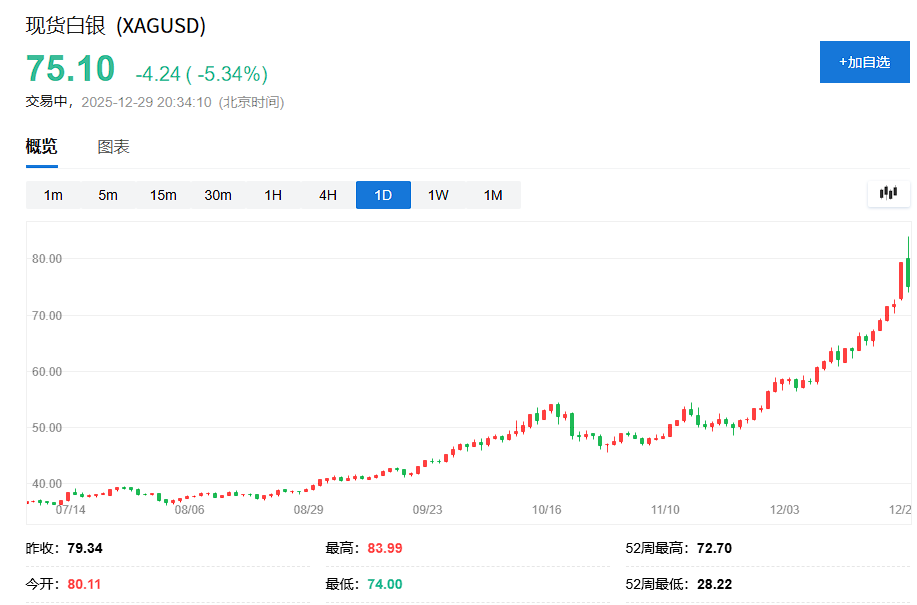
现货白银暴跌10%,对冲基金老将提前警示五大短期风险
Hua Er Jie Jian Wen· 2025-12-29 23:35
Core Viewpoint - The silver market is experiencing significant volatility, with a sharp decline in prices following a substantial increase earlier in the month. Despite short-term risks, the long-term outlook for silver remains bullish due to structural supply-demand imbalances [1][2]. Group 1: Short-term Risks - The first risk is tax-driven selling, as investors holding significant unrealized gains may sell before year-end to benefit from long-term capital gains tax rates, leading to selling pressure in the last trading days of 2025 [4]. - The second risk involves a potential strengthening of the US dollar, driven by strong GDP growth data, which typically exerts pressure on dollar-denominated commodities [5]. - The third risk is an increase in margin requirements for silver, which may reduce leverage and speculative demand. Current margin levels are at 17%, significantly higher than the peak levels during the 2011 silver price crash [6][7]. - The fourth risk is technical selling, as analysts suggest silver is in an "overbought" condition. However, some argue that the price increase is driven by rigid demand from the solar industry rather than purely technical factors [8]. - The fifth risk is the threat of copper substitution in industrial applications, particularly in the solar manufacturing sector, which could lead to technical selling despite the long-term transition period required for such a shift [10][11]. Group 2: Market Dynamics - A technical pressure is anticipated from the upcoming annual rebalancing of the Bloomberg Commodity Index in January 2026, which may force passive funds to sell approximately 9% of their silver futures positions, exacerbating market volatility [12]. - Despite these short-term risks, the long-term fundamentals for silver remain strong, with significant structural tightness in the physical market indicated by a large premium of spot prices over futures [13]. - Investment demand for silver is not overly crowded, with speculative net long positions at 19% of open interest, compared to 31% for gold, suggesting room for further price increases [14]. - The solar industry is expected to drive long-term demand for silver, with projections indicating a rise in silver demand from 290 million ounces in 2025 to 450 million ounces by 2030, fundamentally altering the silver market landscape [14].

白银为何突然跳水?对冲基金老将提前警示了五大短期风险
美股IPO· 2025-12-29 23:26
Core Viewpoint - The article highlights the short-term risks facing silver, including tax-driven selling, a strong dollar, margin increases, technical overbought conditions, and copper substitution threats, while maintaining a long-term bullish outlook on silver due to structural supply-demand imbalances [4][5][17]. Short-term Risks - The primary risk is tax-driven selling, where investors holding significant unrealized gains may sell before December 31 to benefit from long-term capital gains tax rates, leading to potential profit-taking after January 2, 2026 [7]. - The second risk is a strengthening dollar, driven by strong GDP growth data, which typically pressures dollar-denominated commodities [8]. - The third risk involves increased margin requirements announced by the Chicago Mercantile Exchange, which could reduce leverage and speculative demand; current margin levels are at 17%, significantly higher than the peak of 10% during the 2011 silver price crash [9][10]. - The fourth risk is technical overbought conditions, with analysts suggesting that silver is in an overbought state, potentially triggering technical selling; however, the article argues that the price increase is driven by rigid demand from the solar industry rather than mere technical speculation [11]. - The fifth risk is the threat of copper substitution, as solar manufacturers may consider using copper instead of silver due to rising prices, although this transition would take at least four years [13][14]. Market Dynamics - The Bloomberg Commodity Index is set for annual weight rebalancing in January 2026, which may force passive funds to sell approximately 9% of the open interest in silver futures, exacerbating market volatility [16]. - The current spot market shows structural tightness, with significant price discrepancies between spot and futures markets, indicating a supply-demand imbalance [17]. - Investment demand remains robust, with speculative net long positions in silver at 19% of open interest, compared to 31% in gold, suggesting room for further price increases [19]. - The solar industry is projected to significantly increase its silver demand, with expectations of 290 million ounces in 2025 and 450 million ounces by 2030, fundamentally altering the silver market landscape [20].
白银为何突然跳水?对冲基金老将提前警示五大短期风险
Hua Er Jie Jian Wen· 2025-12-29 12:59
Core Viewpoint - Despite a long-term bullish outlook on silver, investors should be cautious of five short-term risk factors that may trigger a pullback following a 25% surge in silver prices over the past month [1][4]. Group 1: Short-term Risks - The first risk is tax-driven selling, as investors holding significant unrealized gains may sell before December 31 to avoid short-term capital gains tax, leading to selling pressure in the last trading days of 2025 [6]. - The second risk involves a potential strengthening of the US dollar, driven by strong GDP growth data, which typically exerts pressure on dollar-denominated commodities like silver [7]. - The third risk is the increase in silver margin requirements announced by the Chicago Mercantile Exchange, which may reduce leverage and speculative demand, although current margin levels are still lower than those during the 2011 silver price crash [8][9]. Group 2: Additional Short-term Risks - The fourth risk is technical selling, as analysts suggest silver is in an "overbought" condition, although this assessment is contested by some who argue that the price increase is driven by structural demand rather than mere speculation [10]. - The fifth risk is the threat of copper substitution, as solar manufacturers may consider using copper instead of silver due to rising prices, although this transition would take at least four years [12][13]. Group 3: Market Dynamics - The Bloomberg Commodity Index is set for annual weight rebalancing in January 2026, which may force passive funds to sell approximately 9% of their silver futures positions, exacerbating market volatility [14][15]. - The current spot market shows significant structural tightness, with spot prices in Dubai at $91/oz and Shanghai at $85/oz, while COMEX futures are at $77/oz, indicating a substantial premium in the physical market [16]. - Investment demand remains robust, with speculative net long positions in silver at 19% of open interest, compared to 31% in gold, suggesting room for further price increases [17]. Group 4: Long-term Outlook - The solar industry is projected to drive silver demand significantly, with expected consumption rising from 290 million ounces in 2025 to 450 million ounces by 2030, fundamentally altering the silver market landscape [17]. - The break-even point for solar industry profitability is around $134/oz, indicating a substantial margin above current spot prices, reinforcing the long-term bullish outlook for silver [17].