技术面超买

Search documents
杰瑞股份股价回调:技术面超买与估值压力成主因
Jing Ji Guan Cha Wang· 2026-02-14 08:39
Group 1 - The stock price of Jerry Holdings (002353.SZ) has recently experienced a pullback due to several objective factors, including technical and funding aspects [1] - From February 9 to February 13, the stock price increased by 15.18%, reaching a peak of 104.79 yuan on February 12, but faced selling pressure as it approached the upper Bollinger Band [1] - On February 13, the stock closed at 98.41 yuan, down 5.36%, indicating a technical adjustment as it returned to the 5-day moving average [1] Group 2 - On February 13, the net outflow of main funds was 8.8747 million yuan, while retail investors saw a net inflow of 1.5286 million yuan, suggesting institutional investors were reducing positions at high prices [2] - Despite a significant overall increase in the past five days, the single-day fund outflow reflects market divergence [2] Group 3 - As of February 13, Jerry Holdings had a price-to-earnings ratio (TTM) of 35.52 times and a price-to-book ratio of 4.55 times, both at relatively high levels compared to the past three years [3] - The company recently secured a North American data center order worth 1.265 billion yuan, but there are concerns about the matching of valuation and earnings growth, especially given the long delivery cycle of overseas orders [3] Group 4 - On February 13, the specialized equipment sector, to which Jerry Holdings belongs, fell by 0.82%, while the machinery equipment sector declined by 0.96%, and the Shanghai Composite Index dropped by 1.26% [4] - The overall sector adjustment has negatively impacted individual stocks, particularly those that have seen significant gains recently [4] - The pullback is attributed to technical overbought conditions, short-term fund outflows, and valuation pressures, but the company's fundamentals remain strong with a 29.49% year-on-year revenue growth in the first three quarters of 2025 [4]

白银期货日报-20260203
Guo Jin Qi Huo· 2026-02-03 08:39
Group 1: Report Industry Investment Rating - Not provided in the given content Group 2: Core Viewpoints of the Report - The silver futures market showed strong upward momentum on January 29, 2026, with significant price increases, high trading activity, and high capital attention. In the long - term, the industrial demand for silver is promising, but there are risks of profit - taking due to overbought technical indicators [2][6] Group 3: Summary by Related Catalogs 1. Futures Market - On January 29, 2026, the main silver futures contract (AG.SHF) on the Shanghai Futures Exchange showed a strong upward trend. The opening price was 28,900 yuan/kg, the highest price reached 31,488 yuan/kg, the lowest price was 28,632 yuan/kg, and the closing price was 30,891 yuan/kg, a significant increase of 8.51% from the previous trading day. High trading volume and turnover indicated active market trading [2] 2. Spot Market Basis Analysis - The closing price of silver futures was 30,891 yuan/kg, and the average price of domestic spot silver (1) was 30,980 yuan/kg, with a basis of 89 yuan/kg, showing a slight spot premium. The small absolute value of the basis indicated that the spot and futures prices were relatively consistent, and the market was operating effectively, possibly reflecting strong short - term demand for silver spot [3] 3. Market Dynamics - In the domestic spot market on January 29, 2026, the average price of silver (1) in the Chinese non - ferrous market was 30,980 yuan/kg, basically the same as the futures price. In the international market, the highest price of London spot silver on January 29 exceeded $120 per ounce, indicating that the international silver price was also at a recent high [4][5] 4. Market Outlook - In the past month, silver futures have shown an obvious upward trend, especially since mid - January, with accelerating price increases and continuous record - highs. Under the background of increasing macro - economic uncertainty, it may attract safe - haven funds. In terms of industrial demand, the application of silver in new energy and electronics is expanding, with good long - term demand prospects. However, the silver futures price has risen significantly, and there are overbought signs in the technical aspect, so attention should be paid to the impact of profit - taking [6]
黄金、白银期货品种周报-20260126
Chang Cheng Qi Huo· 2026-01-26 05:36
Report Overview - Report Title: Gold, Silver Futures Weekly Report [2] - Report Period: January 26 - 30, 2026 [1] 1. Gold Futures 1.1 Report Industry Investment Rating - Not provided 1.2 Core View - The overall trend of Shanghai Gold futures is in a strong upward phase, possibly at the end of the trend. Geopolitical risks and central bank gold purchases provide long - term support, but short - term risks of high - level corrections exist [7]. - It is recommended to wait and see in the medium term [8]. 1.3 Summary by Directory 1.3.1 Medium - term Market Analysis - Trend: The overall trend of Shanghai Gold futures is strongly rising, possibly at the end of the trend [7]. - Driving Factors: Last week's strong rise was driven by geopolitical conflicts, central bank gold purchases, a weak dollar, and interest - rate cut expectations [7]. - Support: Geopolitical risks and central bank gold purchases provide long - term support [7]. - Risks: Short - term risks include overbought technical indicators and policy uncertainties [7]. - Focus: Future attention should be on the Fed's policy path and global macroeconomic data [7]. - Strategy: It is recommended to wait and see [8]. 1.3.2 Variety Trading Strategy - Last Week's Strategy Review: For the Shanghai Gold contract 2604, it was recommended to be cautiously bullish in the short term, with a resistance level of 1045 - 1050 yuan/gram and a support level of 1020 - 1025 yuan/gram. It was advised to buy on dips and control positions due to high - level volatility [10]. - This Week's Strategy Suggestion: For the Shanghai Gold contract 2604, it is recommended to be cautiously bullish in the short term, with a support level of 1085 - 1095 yuan/gram. It is advised to buy on dips and control positions due to high - level volatility [11]. - Market Conditions: The daily line is in a strong upward phase, at a sensitive position in the head. There is a possibility of trend reversal. The main force shows a strong bullish sentiment, and there is a certain risk of a market turn [12]. 1.3.3 Relevant Data Situation - Data includes the price trends of Shanghai Gold and COMEX gold, SPDR gold ETF holdings, COMEX gold inventory, US 10 - year Treasury yields, the US dollar index, the US dollar against the offshore RMB, the gold - silver ratio, Shanghai Gold basis, and the gold price difference between domestic and foreign markets [18][21][23][25][28] 2. Silver Futures 2.1 Report Industry Investment Rating - Not provided 2.2 Core View - The overall trend of Shanghai Silver futures is in a strong upward phase, currently at the end of the trend. Geopolitical risks, industrial supply - demand gaps, and market funds drive the price up. In the long - term, the price center has the basis to move up, but short - term correction risks exist [32]. - It is recommended to wait and see in the medium term [32]. 1.3 Summary by Directory 2.3.1 Medium - term Market Analysis - Trend: The overall trend of Shanghai Silver futures is strongly rising, currently at the end of the trend [32]. - Driving Factors: Last week's price increase was driven by geopolitical risks, industrial supply - demand gaps, and market funds [32]. - Support: In the long - term, the price center has the basis to move up due to the growth of green industry demand, continuous supply - demand gaps, and asset allocation diversification [32]. - Risks: Short - term risks include overbought technical indicators, ETF reductions, and policy uncertainties [32]. - Focus: Future attention should be on the Fed's policy and global manufacturing PMI [32]. - Strategy: It is recommended to wait and see [32]. 2.3.2 Variety Trading Strategy - Last Week's Strategy Review: The silver contract 2604 was trading at a high level, with a resistance level of 23,200 - 23,700 yuan and a support level of 21,000 - 21,500 yuan/kg. It was advised to buy on dips and control positions due to high - level volatility [35]. - This Week's Strategy Suggestion: The silver contract 2604 is trading at a high level, with a support level of 22,500 - 23,000 yuan/kg. It is advised to buy on dips and control positions due to high - level volatility [36]. - Market Conditions: The daily line is in a strong upward phase, possibly near the end of the trend. The main force shows a strong bullish sentiment, with large capital inflows and increased attention. The external market had a significant pre - opening increase [37]. 2.3.3 Relevant Data Situation - Data includes the price trends of Shanghai Silver and COMEX silver, SLV silver ETF holdings, COMEX silver inventory, Shanghai Silver basis, and the silver price difference between domestic and foreign markets [43][46][48]
黄金单日暴跌4%、白银振幅超10%!金饰跌破1400元引爆抢购
Sou Hu Cai Jing· 2025-12-31 10:12
Core Viewpoint - The precious metals market experienced extreme volatility at the end of 2025, with significant price drops in gold and silver, leading to a surge in consumer interest despite underlying risks [1][3]. Group 1: Market Volatility - On December 30, 2025, spot gold fell by 4.42%, dropping below $4,330, while domestic gold jewelry prices fell below 1,400 yuan per gram, with some brands like Chow Sang Sang dropping to 1,353 yuan per gram, a multi-month low [1]. - Silver prices saw a dramatic decline from a high of $83 to $75, with a volatility exceeding 10%, followed by a near 8% rebound the next day [1]. Group 2: Causes of Price Fluctuations - The Chicago Mercantile Exchange (CME) raised margin requirements twice within a week, causing silver futures margins to increase by 30%, which triggered mass liquidations among high-leverage speculators [3]. - The liquidity dried up before the New Year holiday, prompting institutions to take profits, leading to a sudden market downturn [3]. Group 3: Consumer Behavior - Despite the price collapse, consumer interest surged, with gold stores experiencing high foot traffic as prices for items like a 36-gram gold bracelet dropped by 1,500 yuan overnight [3]. - Some consumers expressed regret for not purchasing more gold when prices were lower, while others opted to wait for potential further declines before buying [3]. Group 4: Market Sentiment and Predictions - The bullish camp believes in three main pillars supporting gold prices: potential interest rate cuts by the Federal Reserve in 2026, continuous gold purchases by global central banks for 13 months, and ongoing geopolitical tensions in the Middle East [5]. - Conversely, the bearish camp warns that gold prices are currently 14% above the 200-day moving average, and a recovery in the economy or a shift in policy could lead to a price correction of up to 20% [5]. Group 5: Investment Strategies - Experts recommend that ordinary investors limit physical gold investments to no more than 10% of liquid assets, favoring bank gold bars with a low premium of only 3% [6]. - For silver, which has a volatility rate more than twice that of gold, it is advised to keep positions under 3% and avoid leverage [6]. - A phased profit-taking strategy using a "50/30/20" method with a stop-loss line of 5%-8% is suggested to mitigate emotional trading decisions [6].

现货白银暴跌10%,对冲基金老将提前警示五大短期风险
Hua Er Jie Jian Wen· 2025-12-29 23:35
Core Viewpoint - The silver market is experiencing significant volatility, with a sharp decline in prices following a substantial increase earlier in the month. Despite short-term risks, the long-term outlook for silver remains bullish due to structural supply-demand imbalances [1][2]. Group 1: Short-term Risks - The first risk is tax-driven selling, as investors holding significant unrealized gains may sell before year-end to benefit from long-term capital gains tax rates, leading to selling pressure in the last trading days of 2025 [4]. - The second risk involves a potential strengthening of the US dollar, driven by strong GDP growth data, which typically exerts pressure on dollar-denominated commodities [5]. - The third risk is an increase in margin requirements for silver, which may reduce leverage and speculative demand. Current margin levels are at 17%, significantly higher than the peak levels during the 2011 silver price crash [6][7]. - The fourth risk is technical selling, as analysts suggest silver is in an "overbought" condition. However, some argue that the price increase is driven by rigid demand from the solar industry rather than purely technical factors [8]. - The fifth risk is the threat of copper substitution in industrial applications, particularly in the solar manufacturing sector, which could lead to technical selling despite the long-term transition period required for such a shift [10][11]. Group 2: Market Dynamics - A technical pressure is anticipated from the upcoming annual rebalancing of the Bloomberg Commodity Index in January 2026, which may force passive funds to sell approximately 9% of their silver futures positions, exacerbating market volatility [12]. - Despite these short-term risks, the long-term fundamentals for silver remain strong, with significant structural tightness in the physical market indicated by a large premium of spot prices over futures [13]. - Investment demand for silver is not overly crowded, with speculative net long positions at 19% of open interest, compared to 31% for gold, suggesting room for further price increases [14]. - The solar industry is expected to drive long-term demand for silver, with projections indicating a rise in silver demand from 290 million ounces in 2025 to 450 million ounces by 2030, fundamentally altering the silver market landscape [14].

黄金闪崩500美元! 亚洲央行惊魂欲抛售
Jin Tou Wang· 2025-10-31 02:41
Core Insights - The price of spot gold has experienced a significant drop of nearly $500 in just seven trading days after reaching a historical high, reflecting market volatility [1] - Central banks globally have been purchasing gold in large quantities, contributing to record high gold prices earlier this year, but recent fluctuations have raised concerns [1] - The former governor of the Philippine central bank highlighted that the country's gold holdings are above the ideal range, suggesting a potential need to sell gold if prices decline [1][2] Market Trends - Gold prices surged past the $4000 mark but quickly retreated, causing market disturbances [1] - The current economic environment, characterized by trade tensions and technical overbought conditions in the gold market, has led to increased interest in gold from both central banks and retail investors [1] - Despite the recent price drop, factors such as slowing economic growth, Federal Reserve rate cuts, and a weakening dollar may continue to support gold prices [1] Price Data - As of October 30, 2023, the spot gold price was reported at $3969.59 per ounce, reflecting a 1.04% increase [3]
今日金价:28日,大家要有心理准备,下周,金价可能迎来大风暴
Sou Hu Cai Jing· 2025-10-28 16:51
Core Viewpoint - The recent sharp decline in gold prices, dropping over $100 in a single day and breaking the psychological barrier of $4000, is attributed to a combination of factors including easing global trade tensions and profit-taking after a significant price surge [1][3][5]. Group 1: Market Dynamics - Gold prices are currently hovering around $3990, with New York futures slightly above $4000, while domestic prices in China have also seen declines [3]. - The immediate cause of the price drop is the positive developments in US-China trade negotiations, which have reduced market risk aversion [3]. - The US dollar index has rebounded to approximately 98.77, increasing the opportunity cost of holding gold and diminishing its appeal [5]. - Global central banks continue to purchase gold, with a net acquisition of 120 tons in October, a 23% year-on-year increase, providing a solid support for gold prices [7]. Group 2: Technical Analysis - The market is currently engaged in a fierce battle around the $4000 mark, with critical support levels identified between $3970 and $3980 [7]. - If the price breaks below these levels, further declines to the $3945-$3950 range may occur, while resistance is seen at $4030-$4040 [7]. Group 3: Future Outlook - Upcoming key events, such as the US non-farm payroll data release, could significantly influence market sentiment and gold prices [9]. - Analysts suggest that the expectation of a Federal Reserve rate cut remains strong, which could reignite bullish sentiment for gold if realized [5][11]. - Historical patterns indicate that significant price corrections in gold have often been followed by rebounds, suggesting that current adjustments may be within a reasonable range [11]. Group 4: Investor Sentiment - Consumer sentiment in gold retail has shifted to a more cautious stance, with some buyers opting to wait rather than purchase at high prices [13]. - The volatility index for gold has risen, indicating increased market uncertainty and prompting some financial institutions to raise trading margins [13]. - Institutional attitudes are shifting, with a reduction in net long positions in COMEX gold futures, suggesting some speculative funds are withdrawing [16]. Group 5: Broader Economic Context - The divergence between international gold prices and A-share gold concept stocks indicates differing investor sentiments and economic expectations in the Chinese market [16]. - The interplay of geopolitical risks, economic data releases, and central bank policies continues to create a complex environment for gold pricing [17].
港股异动丨贵金属市场遭全面抛售,相关概念股集体低开,紫金矿业跌超4%
Ge Long Hui A P P· 2025-10-22 01:44
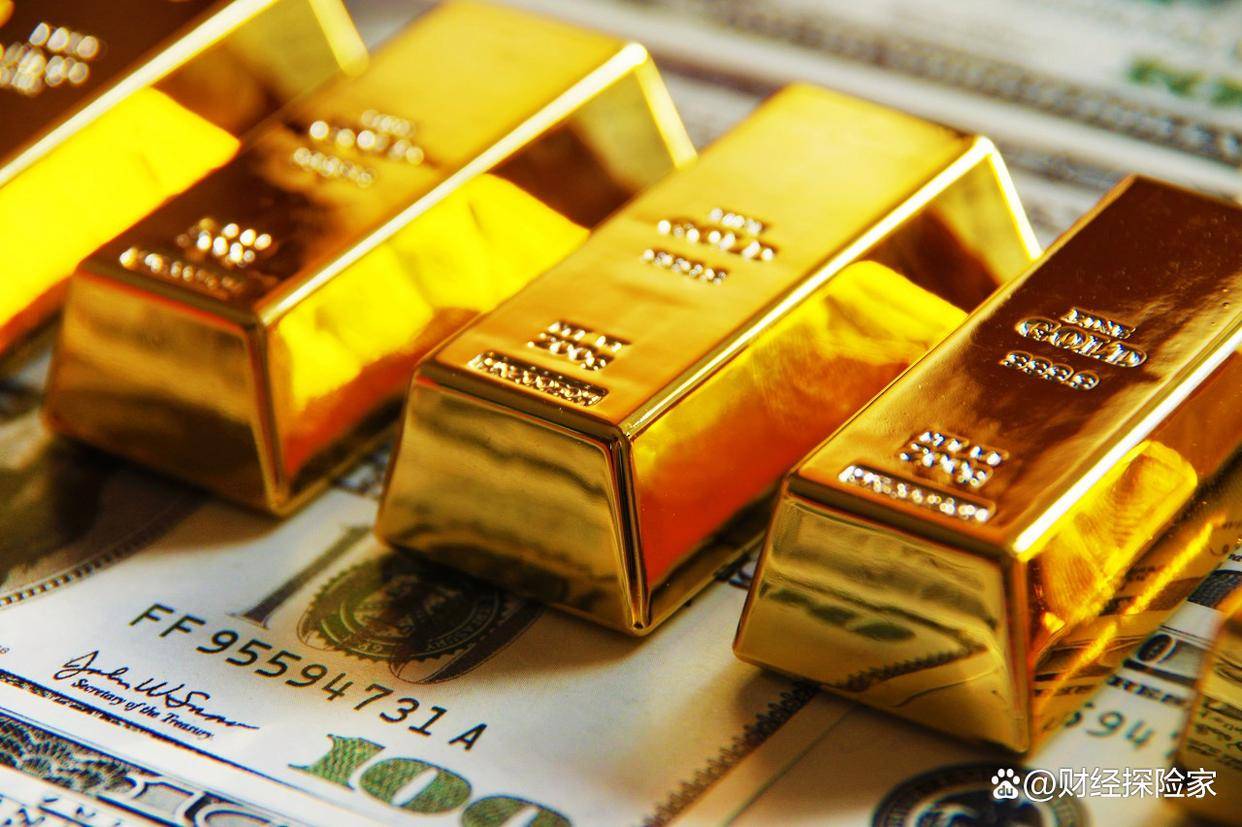
Core Viewpoint - The Hong Kong stock market saw a significant decline in gold and precious metal stocks following a sharp sell-off in the precious metals market, with gold experiencing its largest single-day drop in 12 years [1] Group 1: Market Performance - Gold and precious metal stocks opened lower across the board, with notable declines including Dragon Resources down 9%, Datang Gold down nearly 9%, and Zijin Gold International down over 6% [1] - The sell-off was triggered by a nearly $280 drop in spot gold prices, marking the largest single-day decline in 12 years, while spot silver fell over 8%, dropping below $48, the largest decline since February 2021 [1] Group 2: Contributing Factors - Multiple factors contributed to the decline in precious metals, including positive developments in international trade negotiations, a strengthening US dollar, technical overbought conditions, uncertainty due to the US federal government shutdown, and the end of seasonal buying in India [1]