
睡眠呼吸暂停综合征

Search documents
“秒睡”≠“睡眠好”!出现这种情况,可能是身体在报警
Xin Lang Cai Jing· 2026-01-04 00:24
Core Viewpoint - The article discusses the potential health risks associated with falling asleep quickly, which may indicate underlying issues rather than good sleep quality. Group 1: Health Risks of Quick Sleep - Quick sleep may signal a "forced shutdown" of the body due to extreme fatigue from poor lifestyle choices, such as staying up late and getting insufficient sleep [1][2] - Conditions like narcolepsy and sleep apnea can lead to quick sleep, affecting both nighttime sleep quality and causing excessive daytime sleepiness [2][3] Group 2: Characteristics of Good Sleep - Good sleep is characterized by a complete sleep cycle, which includes 20% REM sleep and 80% NREM sleep, with each cycle lasting about 80-100 minutes [4] - A good sleep experience typically allows individuals to fall asleep within 30 minutes and achieve 6-9 hours of sleep per night [6] Group 3: Indicators of Sleep Quality - Frequent dreams or nightmares, difficulty waking up, and poor work efficiency can indicate low sleep quality [7][10][11] - High-quality sleep allows individuals to wake up feeling refreshed and ready to start the day without excessive fatigue [9] Group 4: Methods to Improve Sleep Quality - Recommendations for improving sleep include avoiding screens before bed, managing caffeine and alcohol intake, and creating a comfortable sleep environment [14] - Techniques such as deep breathing, listening to soft music, and consulting a doctor for sleep aids can also enhance sleep quality [14]
半夜口干舌燥 可能不是缺水!这6种情况一定要警惕
Yang Shi Xin Wen· 2025-10-29 01:37
Core Points - The article discusses the common experience of dry mouth and thirst, emphasizing that it is often due to physiological reasons and not necessarily indicative of health issues [1][3] - It highlights the importance of understanding the triggers of thirst, which can include dehydration from exercise, high salt or sugar levels in the blood, and age-related decline in saliva production [3][4] Summary by Sections Physiological Causes of Dry Mouth - Thirst is primarily triggered by a decrease in body fluid volume and an increase in fluid osmotic pressure [3] - Factors such as heavy exercise, excessive sweating, and insufficient water intake contribute to dehydration [3] - Aging can lead to reduced saliva production due to atrophy of salivary glands [3] Pathological Causes of Persistent Dry Mouth - If adequate hydration does not alleviate dry mouth, it may indicate underlying health issues such as: - Common illnesses like colds, fever, or diarrhea that lead to dehydration [4] - Vitamin deficiencies, particularly B2, which can cause oral dryness and other symptoms [4] - Side effects from medications like clonidine and amitriptyline that affect saliva secretion [4] Serious Health Conditions to Monitor - Six conditions are highlighted that warrant attention if persistent dry mouth occurs: 1. Sjögren's syndrome, an autoimmune disease affecting salivary glands [6] 2. Autoimmune liver diseases that may present with dry mouth and eyes [10] 3. Diabetes, characterized by excessive thirst and urination due to high blood sugar levels [11] 4. Diabetes insipidus, a rare condition leading to fluid imbalance and excessive urination [12] 5. Sleep apnea syndrome, which can cause dry mouth due to snoring and disrupted breathing during sleep [14] 6. Hyperthyroidism, which accelerates metabolism and can lead to increased thirst [16][17] Recommendations for Hydration - To effectively manage dry mouth, it is essential to maintain proper hydration: - The recommended daily water intake for adults is approximately 2500 milliliters, with at least 1500 milliliters coming from direct water consumption [20] - It is advised to drink water regularly throughout the day, rather than waiting until feeling thirsty [21] - Post-exercise hydration should be done gradually rather than in large amounts [22]


半夜口干舌燥,可能不是缺水!这6种情况一定要警惕
Zhong Guo Xin Wen Wang· 2025-10-29 00:59
Core Insights - The article discusses the common experience of dry mouth and thirst, emphasizing that it is often due to physiological reasons rather than serious health issues. However, persistent dry mouth despite adequate hydration may indicate underlying medical conditions that require attention [1][3]. Physiological Causes of Dry Mouth - Dry mouth is frequently triggered by factors such as reduced body fluid volume and increased osmotic pressure in bodily fluids, which can occur due to excessive sweating, dry environments, or insufficient water intake [3]. - Aging and the resulting decline in bodily functions, particularly the atrophy of salivary glands, can also contribute to the sensation of dry mouth [3]. Medical Conditions to Watch For - **Sjögren's Syndrome**: An autoimmune disease that attacks exocrine glands, leading to dryness in the mouth and eyes, and can result in dental issues due to reduced saliva [8][10]. - **Autoimmune Liver Diseases**: These can cause dry mouth and may be associated with Sjögren's Syndrome [10]. - **Diabetes**: Symptoms include excessive thirst, frequent urination, and unexplained weight loss due to elevated blood sugar levels affecting fluid balance [11]. - **Diabetes Insipidus**: A rare condition leading to significant fluid imbalance and excessive urination, which can cause persistent thirst [12]. - **Sleep Apnea**: Often indicated by snoring, it can lead to dry mouth due to disrupted sleep patterns [13]. - **Hyperthyroidism**: Increased metabolism can lead to symptoms such as excessive thirst and dry mouth [15]. Recommendations for Hydration - It is advised that adults consume approximately 2500 milliliters of water daily, with at least 1500 milliliters coming from direct water intake [16]. - Drinking should be done in small amounts throughout the day rather than waiting until feeling thirsty [17]. - Preference should be given to plain water over sugary drinks, and hydration should be managed carefully after exercise [18].
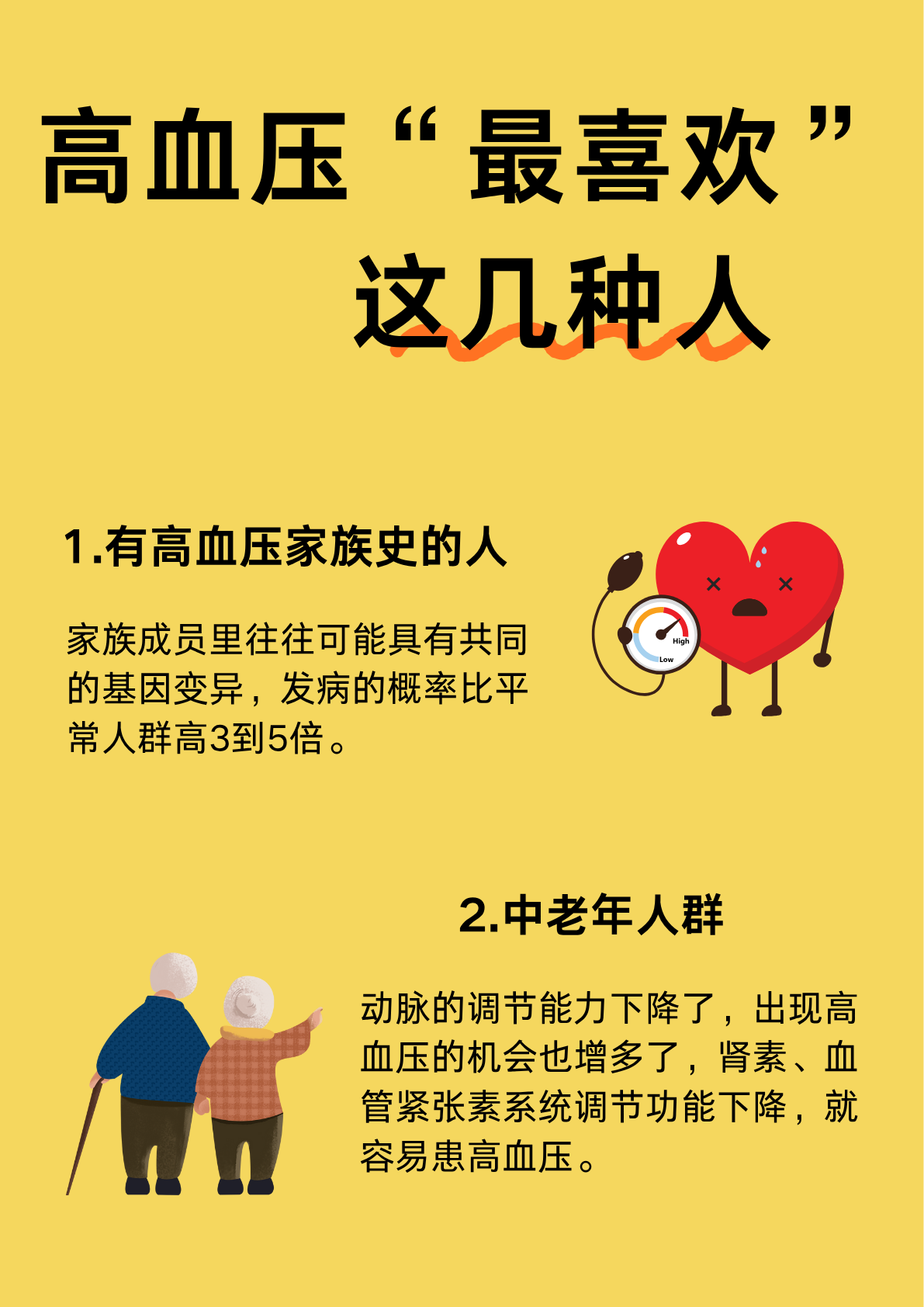
这八类人群,是高血压的“偏爱”对象
Ren Min Wang· 2025-10-14 03:13
Core Viewpoint - Hypertension has become a common health threat, and the article identifies eight groups of people who are more susceptible to developing high blood pressure, aiming to promote preventive measures for better health. Group 1: Dietary Factors - Individuals with a long-term high-salt diet, consuming more than 5 grams of sodium daily, are at increased risk due to elevated blood volume and vascular pressure [4] Group 2: Psychological Factors - People experiencing chronic mental stress are prone to hypertension, as stress leads to excessive secretion of catecholamines, causing blood vessel constriction and increased blood pressure [6][7] Group 3: Alcohol Consumption - Those who consume more than 25 grams of alcohol daily are also at risk, as regular high alcohol intake can contribute to elevated blood pressure [9] Group 4: Obesity - Individuals with a body mass index (BMI) over 28 are at risk, as excess fat tissue secretes more angiotensinogen, increasing vascular tension and blood pressure [11][13] Group 5: Diabetes - There is a significant correlation between diabetes and hypertension, with 60% of diabetes patients also suffering from high blood pressure [14] Group 6: Sleep Disorders - Patients with sleep apnea, characterized by severe snoring and recurrent nighttime oxygen deprivation, experience sustained sympathetic nervous system activation, leading to hypertension [15][16]
知名音乐人去世,这种致死性疾病常被误认为仅是打鼾
第一财经· 2025-05-08 08:29
Core Viewpoint - The article discusses the death of musician Gou Wei, highlighting the health risks associated with sleep apnea, particularly its link to nasal polyps and the lack of diagnosis in China [2][3]. Group 1: Health Risks and Statistics - Gou Wei suffered from nasal polyps and was preparing for surgery before his death due to sleep apnea [2]. - Sleep apnea is a common chronic condition that can be fatal, with an estimated 176 million people in China aged 30 to 69 potentially affected, yet the diagnosis rate is below 1% [2]. - If sleep apnea is not effectively managed, it can lead to severe consequences, including hypertension, which affects over 47% of sleep apnea patients in China [3]. Group 2: Treatment Developments - GLP-1 weight loss drugs have shown efficacy in treating obstructive sleep apnea, with the FDA approving Liraglutide for this purpose in December [3]. - This treatment is the first globally to address both obesity and moderate to severe sleep apnea, with applications submitted in China for regulatory approval [3].

知名音乐人去世,这种致死性疾病常被误认为仅是打鼾
Di Yi Cai Jing· 2025-05-08 07:33
Core Viewpoint - The death of renowned musician Gou Wei at the age of 44 has raised awareness about sleep apnea and its serious health implications, particularly related to nasal polyps and obesity [1][2]. Group 1: Health Implications of Sleep Apnea - Sleep apnea is often overlooked and mistaken for mere snoring, but it can lead to severe health issues such as hypertension [2]. - In China, the prevalence of hypertension among sleep apnea patients exceeds 47%, with the risk of developing hypertension significantly increasing with the severity of sleep apnea [2]. Group 2: Treatment Developments - The GLP-1 weight loss drug has shown efficacy in treating obstructive sleep apnea, with the FDA approving Eli Lilly's drug tirzepatide for this purpose in December last year [2]. - This treatment is notable as it is the first globally to address both obesity and moderate to severe sleep apnea, with applications submitted to Chinese regulatory authorities [2].