
石油供应中断风险

Search documents
AI恐慌愈演愈烈,“黑天鹅之父”警告:软件行业或迎破产潮
Jin Shi Shu Ju· 2026-02-24 06:31
Group 1 - Nassim Taleb warns that the software industry must prepare for increased volatility and potential bankruptcies as AI-driven markets enter a more fragile phase [1] - Taleb believes that the market is underestimating structural risks while overestimating the resilience of current AI leaders, suggesting that historical pioneers in AI may be replaced by newcomers [1][2] - The S&P 500 index recently dropped by approximately 1%, reflecting ongoing sell-off trends and investor anxiety regarding tariff uncertainties and conflicting narratives surrounding the AI sector [1] Group 2 - Taleb highlights that the recent stock market gains have largely been driven by a few AI-related stocks, indicating that a shift in leadership could render the broader market vulnerable [2] - He emphasizes that tail risks across various industries are structurally underestimated, warning that the risks involve not just minor corrections but significant downturns [2] - Taleb's firm, Universa Investments, focuses on tail risk hedging strategies and achieved over 100% annual capital return last year [2] Group 3 - Taleb notes a structural shift in the market, particularly with gold, which has surged approximately 30% since October of last year amid concerns over the sustainability of AI-driven market trends and geopolitical tensions [3] Group 4 - The increase in gold prices is attributed to ongoing U.S. fiscal deficits and concerns about the "weaponization" of the dollar through sanctions, leading to a diminishing willingness to store wealth in dollars [4] - Taleb argues that predictable tariff policies could be effective, but erratic enforcement would deter investment, as businesses lose motivation to allocate capital under unpredictable conditions [4] - He warns that tariffs act as regressive taxes disproportionately impacting low-income consumers, exacerbating inequality [4] Group 5 - Taleb expresses concern over the risk of oil supply disruptions related to U.S.-Iran tensions, indicating that the global economy cannot withstand another oil shock similar to that of the 1970s [4] - He states that commodity-driven stagflation is difficult to resolve through monetary policy, suggesting that even the most capable economists would struggle to address such issues [5]
Oil Hits Six-Month High Amid US-Iran Tensions
Youtube· 2026-02-20 06:38
Core Insights - Oil prices are currently trading around $72, which is at the high end of the risk premium discussed by analysts, indicating market pricing in potential risks [1] - Analysts suggest that any actual interruption in oil supply could lead to a significant spike in prices, similar to past market reactions [2] OPEC+ Response - In the event of a disruption in oil infrastructure, OPEC+ has previously added over a million barrels back to the market, raising questions about their current spare capacity [3] - The current spare capacity is tight, with Saudi Arabia producing around 10 million barrels a day against an alleged capacity of 12 million barrels [4] Saudi Arabia's Capacity - Saudi Arabia has a spare capacity of approximately 2 million barrels, which is crucial for responding to any supply disruptions [5] - There is speculation that other OPEC members, like the UAE and Kuwait, may be producing above their quotas, but Saudi Arabia remains the primary source of spare capacity [6] Geopolitical Risks - Concerns exist regarding potential attacks on Iranian infrastructure and the implications for the Strait of Hormuz, which could impact oil exports [6] - Saudi Arabia has a transnational pipeline that allows for oil export through the Red Sea, providing some level of export capacity despite geopolitical risks [7] - The UAE also has a pipeline to Fujairah, but its proximity to the Strait of Hormuz raises concerns about vulnerability in a broader conflict [8]

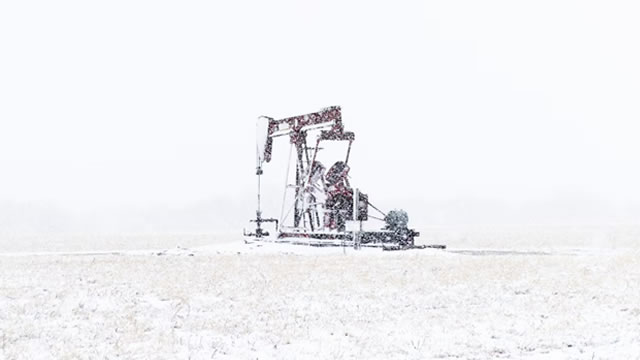
Oil Rises on Growing Fears of Supply Disruptions in Iran
Barrons· 2026-01-14 13:01
Core Viewpoint - Oil prices have increased despite an initial decline, primarily due to rising concerns over potential U.S. military actions in Iran and the associated risk of supply disruptions in the region [1][2] Group 1: Oil Price Movement - Brent crude oil prices rose by 0.7% to $65.94 per barrel, while WTI increased by 0.7% to $61.57 per barrel [1] Group 2: Investor Sentiment - Investors' perceptions of upside risks in the oil market have heightened, particularly regarding military actions that could impact oil infrastructure [2] - The most significant risks to the global oil market are linked to potential military strikes or retaliatory actions by Tehran, which could disrupt shipping through the Strait of Hormuz [2]
周三油价持稳,市场关注美国经济数据与地缘政治紧张局势
Xin Lang Cai Jing· 2025-12-24 18:45
Core Viewpoint - International oil prices are stabilizing as investors weigh U.S. economic growth against supply disruption risks from Venezuela and Russia, despite heading towards the largest annual decline since 2020 [1][5]. Group 1: Market Performance - As of December 24, 2025, Brent crude futures fell by $0.23, a decrease of 0.4%, to $62.15 per barrel, while WTI dropped by $0.08, a decrease of 0.2%, to $58.29 [1][5]. - Both Brent and WTI have rebounded approximately 6% since hitting near five-year lows on December 16 [2][6]. Group 2: Economic Indicators - The U.S. economy grew at its fastest pace in two years during the third quarter, driven by strong consumer spending and a significant rebound in exports [2][6]. - Despite the recent growth, Brent and WTI prices are projected to decline by about 16% and 18% respectively for the year, marking the largest annual drop since the COVID-19 pandemic impacted oil demand [2][6]. Group 3: Supply Disruptions - Supply disruptions from Venezuela are identified as a key factor driving oil prices higher, with ongoing attacks on energy infrastructure between Russia and Ukraine also providing market support [7]. - The U.S. has seized the supertanker "Skipper" and taken action against two other vessels, resulting in over a dozen oil-laden ships currently stranded in Venezuela awaiting new instructions from their owners [7]. - Kazakhstan's oil exports via the Caspian Pipeline Consortium (CPC) are expected to decrease by one-third in December due to damage from Ukrainian drone strikes, reaching the lowest level since October 2024 [3][7]. Group 4: Inventory Data - The American Petroleum Institute (API) reported an increase in U.S. crude oil inventories by 2.39 million barrels, gasoline inventories by 1.09 million barrels, and distillate inventories by 685,000 barrels [3][7]. - The U.S. Energy Information Administration (EIA) will release official inventory data on the following Monday, delayed due to the Christmas holiday [4][7].
由于美国卷入中东冲突的不确定性,油价波动仍然很大
news flash· 2025-06-19 08:32
Core Viewpoint - The uncertainty surrounding the U.S. involvement in the Middle East conflict is causing significant volatility in oil prices, reflecting market concerns over potential disruptions in oil supply from the Gulf region due to escalating tensions [1] Group 1: Market Reactions - Investors are increasingly worried that the U.S. may abandon diplomatic solutions regarding the Middle East and engage in military actions against Iran, leading to heightened volatility in oil prices [1] - The oil derivatives market indicates heightened investor anxiety, with call option premiums reaching their highest levels in over a decade [1] - Volatility in oil prices has surged to a three-year high, indicating significant market apprehension regarding future developments in the region [1] Group 2: Political Developments - Former President Trump indicated that he approved plans for military action against Iran but has not yet issued a final command, adding to the uncertainty in the geopolitical landscape [1]
分析师:油价回落并不意味着市场消化了伊以冲突的最坏情境
news flash· 2025-06-16 11:51
Core Viewpoint - The recent decline in oil prices does not indicate that the market has fully absorbed the worst-case scenarios related to the Israel-Iran conflict [1] Group 1: Market Analysis - Oil futures experienced a slight decrease amid volatile trading as investors focus on the latest developments in the Israel-Iran conflict [1] - Janiv Shah, Vice President of Rystad Energy, suggests that while the conflict may de-escalate through diplomatic means, hostilities between Iran and Israel are likely to continue, potentially escalating with the involvement of multiple countries [1] Group 2: Market Risks - The potential for oil supply disruptions in the Strait of Hormuz remains a significant market risk, although such an event is currently deemed unlikely [1]