美国西德克萨斯中质原油(WTI)

Search documents
特朗普警告伊朗谈判仅剩数日 油价触及六个月高位
Xin Lang Cai Jing· 2026-02-20 08:29
美国已在中东展开自 2003 年伊拉克战争前以来规模最大的军事集结。这表明,特朗普可能发起比去年 6 月针对伊朗核计划的夜间突袭更为全面的军事行动。据报道,总统同时也在权衡实施一次有限的先期 打击,以迫使伊朗重返谈判桌。 西太平洋银行大宗商品研究主管罗伯特・伦尼表示:"我们仍认为,这是特朗普在加大施压,而非即将 动手。" 作为石油输出国组织(OPEC)成员国,伊朗日均原油产量超 300 万桶,约占全球总产量的 3%,其原 油主要出口至中国。不过,油价面临的主要风险在于,伊朗若决定封锁霍尔木兹海峡 —— 这一波斯湾 产油国能源出口的关键通道。 今年以来,油价已上涨约六分之一,因交易商持续评估该地区供应面临的风险,这一因素盖过了 2025 年底市场对供应过剩加剧的预期,而此前该预期曾对油价形成压制。若对伊朗发起持续军事行动,油价 可能进一步飙升,这将传导至加油站汽油价格,或在今年晚些时候美国中期选举前激怒选民。 油价攀升至六个月高位,美国总统唐纳德・特朗普警告伊朗,就其核计划达成协议的时间最多仅剩 15 天,与此同时,美国正在中东地区集结大规模军事力量。 布伦特原油价格逼近每桶 72 美元,本周累计上涨约 6%; ...
美国袭击伊朗可能性下降 国际油价延续跌势
Xin Lang Cai Jing· 2026-01-16 07:08
Core Viewpoint - International oil prices continued to decline as concerns over potential U.S. military action against Iran eased, leading to reduced worries about oil supply risks [1][3]. Group 1: Oil Price Movements - As of 04:18 GMT, Brent crude oil prices fell by 21 cents, a decrease of 0.3%, to $63.55 per barrel; WTI prices dropped by 15 cents, also down 0.3%, to $59.04 per barrel [1][3]. - Earlier in the week, oil prices had surged to multi-month highs due to rising tensions following protests in Iran and signals from U.S. President Donald Trump regarding possible military action [1][3]. - Despite the recent price drop, Brent crude is still expected to achieve its fourth consecutive weekly increase [1][3]. Group 2: Market Analysis and Predictions - Analysts from BMI noted that while Brent crude prices have retraced some gains, they remain above levels from a week ago, with the recent price decline attributed to Trump's statement about delaying military action against Iran [1][4]. - Phillip Nova's senior market analyst, Priyanka Sachdeva, indicated that current market trends are driven by sentiment, with headlines having a transient impact on oil prices, especially when fundamental factors take a backseat [2][4]. - The oil market's fundamentals still point to ample supply, and unless there is a significant recovery in Chinese oil demand or notable bottlenecks in the physical oil market, international oil prices are likely to remain in a range-bound pattern, with Brent expected to fluctuate between $57 and $67 per barrel [2][4]. - OPEC has predicted that global oil supply and demand will balance by 2026, with demand growth in 2027 expected to be in line with this year's levels [2][4]. - Shell's recent report on energy security outlook for 2026 expresses optimism regarding energy demand and oil consumption growth, forecasting a 25% increase in global primary energy demand by 2050 compared to last year [2][4].
高盛预测2026年油价走低,供应激增
Huan Qiu Wang· 2026-01-13 03:00
Group 1 - Goldman Sachs reports that global oil supply increase is leading to market oversupply, which may pressure oil prices downward this year, despite ongoing geopolitical risks causing market volatility [1][3] - The firm maintains its price forecasts for Brent and WTI crude oil at $56 and $52 per barrel for 2026, respectively, expecting prices to bottom out at $54 and $50 per barrel in Q4 due to rising inventories [1][3] - Brent crude futures are currently around $63 per barrel, while WTI is stable at $59 per barrel, with both benchmarks experiencing nearly a 20% decline in 2025, marking the worst annual performance since 2020 [3] Group 2 - Goldman Sachs indicates that unless there are significant supply disruptions or OPEC implements production cuts, oil prices are expected to decline in 2026 due to a projected surplus of 2.3 million barrels per day [3][4] - The firm anticipates a gradual recovery in oil prices by 2027, with Brent and WTI averages forecasted at $58 and $54 per barrel, respectively, down by $5 from previous estimates due to increased supply expectations from major oil-producing countries [4] - Long-term projections suggest that global oil demand will continue to grow until 2040 due to insufficient long-term investments, with significant price increases expected in the late 2030s, reaching averages of $75 and $71 per barrel for Brent and WTI, respectively, between 2030 and 2035 [4]


委内瑞拉原油或重返市场 加拿大油砂巨头面临价差走阔风险
Ge Long Hui A P P· 2026-01-05 13:52
Core Viewpoint - Morgan Stanley's analysis indicates that U.S. military actions and efforts to oust Maduro in Venezuela may be a negative factor for most oil producers, particularly those focused on Canadian oil sands [1] Group 1: Impact on Oil Market - Venezuela primarily produces heavy sour crude oil, which is similar in quality to Canadian heavy crude (WCS) [1] - Although Washington's aggressive stance has limited short-term supply impacts, a potential easing of sanctions on Venezuela could exacerbate the already oversupplied oil market [1] - This situation may lead to an expanded discount of WCS relative to U.S. West Texas Intermediate (WTI) crude [1] Group 2: Company-Specific Impacts - Empire Oil and Cenovus Energy are expected to be most affected by changes in the WCS-WTI price differential [1] - Suncor Energy and Canadian Natural Resources are considered to have stronger resilience against these risks [1]
2020年以来最大年度跌幅后,油价小幅走低
Xin Lang Cai Jing· 2026-01-02 20:09
Core Viewpoint - Oil prices experienced a slight decline on the first trading day of 2026, following the largest annual drop since 2020, as investors weighed concerns over supply surplus against geopolitical risks, including the Ukraine war and issues with Venezuelan exports [1][2]. Group 1: Oil Price Movements - On the first trading day of 2026, Brent crude oil contracts fell by $0.10 to $60.75 per barrel, while West Texas Intermediate (WTI) also decreased by $0.10 to $57.32 per barrel [1][2]. - In 2025, both Brent and WTI benchmark crude prices recorded nearly a 20% annual decline, marking the most severe drop since 2020, primarily due to concerns over supply surplus and tariff issues overshadowing geopolitical risks [4]. Group 2: Geopolitical Factors - Ongoing negotiations led by U.S. President Donald Trump aim to end the nearly four-year conflict between Russia and Ukraine, yet both nations continue to accuse each other of civilian attacks [1][2]. - In recent months, Ukraine has intensified its attacks on Russian energy infrastructure to cut off funding for Moscow's military operations in Ukraine [3]. - The U.S. government has increased pressure on Venezuelan President Nicolás Maduro, imposing sanctions on four companies and their associated tankers operating in the Venezuelan oil industry [3]. Group 3: OPEC+ Outlook - Analysts from Sparta Commodities indicate that traders generally expect OPEC+ to continue its production freeze in the first quarter of 2026 [3]. - DBS Bank's energy analyst forecasts that Brent oil prices will remain relatively stable in 2026, fluctuating between $60 and $65 per barrel [4].
周三油价持稳,市场关注美国经济数据与地缘政治紧张局势
Xin Lang Cai Jing· 2025-12-24 18:45
Core Viewpoint - International oil prices are stabilizing as investors weigh U.S. economic growth against supply disruption risks from Venezuela and Russia, despite heading towards the largest annual decline since 2020 [1][5]. Group 1: Market Performance - As of December 24, 2025, Brent crude futures fell by $0.23, a decrease of 0.4%, to $62.15 per barrel, while WTI dropped by $0.08, a decrease of 0.2%, to $58.29 [1][5]. - Both Brent and WTI have rebounded approximately 6% since hitting near five-year lows on December 16 [2][6]. Group 2: Economic Indicators - The U.S. economy grew at its fastest pace in two years during the third quarter, driven by strong consumer spending and a significant rebound in exports [2][6]. - Despite the recent growth, Brent and WTI prices are projected to decline by about 16% and 18% respectively for the year, marking the largest annual drop since the COVID-19 pandemic impacted oil demand [2][6]. Group 3: Supply Disruptions - Supply disruptions from Venezuela are identified as a key factor driving oil prices higher, with ongoing attacks on energy infrastructure between Russia and Ukraine also providing market support [7]. - The U.S. has seized the supertanker "Skipper" and taken action against two other vessels, resulting in over a dozen oil-laden ships currently stranded in Venezuela awaiting new instructions from their owners [7]. - Kazakhstan's oil exports via the Caspian Pipeline Consortium (CPC) are expected to decrease by one-third in December due to damage from Ukrainian drone strikes, reaching the lowest level since October 2024 [3][7]. Group 4: Inventory Data - The American Petroleum Institute (API) reported an increase in U.S. crude oil inventories by 2.39 million barrels, gasoline inventories by 1.09 million barrels, and distillate inventories by 685,000 barrels [3][7]. - The U.S. Energy Information Administration (EIA) will release official inventory data on the following Monday, delayed due to the Christmas holiday [4][7].
燃料需求强劲抵消原油疲软信号,油价震荡走高
Xin Lang Cai Jing· 2025-11-11 16:21
Group 1 - The core viewpoint indicates that despite signs of weakness in the crude oil market, fuel premiums for gasoline and diesel have surged, offsetting declines and leading to a rise in oil prices [1][2] - Brent crude oil futures are approaching $65 per barrel, marking a third consecutive day of increases, driven by rising fuel premiums and technical buying from Commodity Trading Advisors (CTAs) [1] - Energy Aspects highlights that a significant buying trigger for CTAs exists above $64.50 per barrel, suggesting an upward risk balance, although hedging flows may limit volatility [1] Group 2 - The refined oil market remains strong despite the softening crude oil futures curve, with fuel premiums at high levels, particularly in Europe where diesel benchmark prices have reached their highest since early last year [2] - Analysts from PVM suggest that without the strong support from the refined oil market, crude oil prices would likely be lower, and the narrowing of the spot premium between WTI and Brent is noteworthy [2] - OPEC is set to release its monthly market analysis report, while the International Energy Agency (IEA) will provide its annual outlook, with previous forecasts indicating a record surplus in global crude oil by 2026 [2]
贺博生:9.30黄金持续上涨原油弱势下跌今日行情走势分析及操作建议
Sou Hu Cai Jing· 2025-09-30 00:02
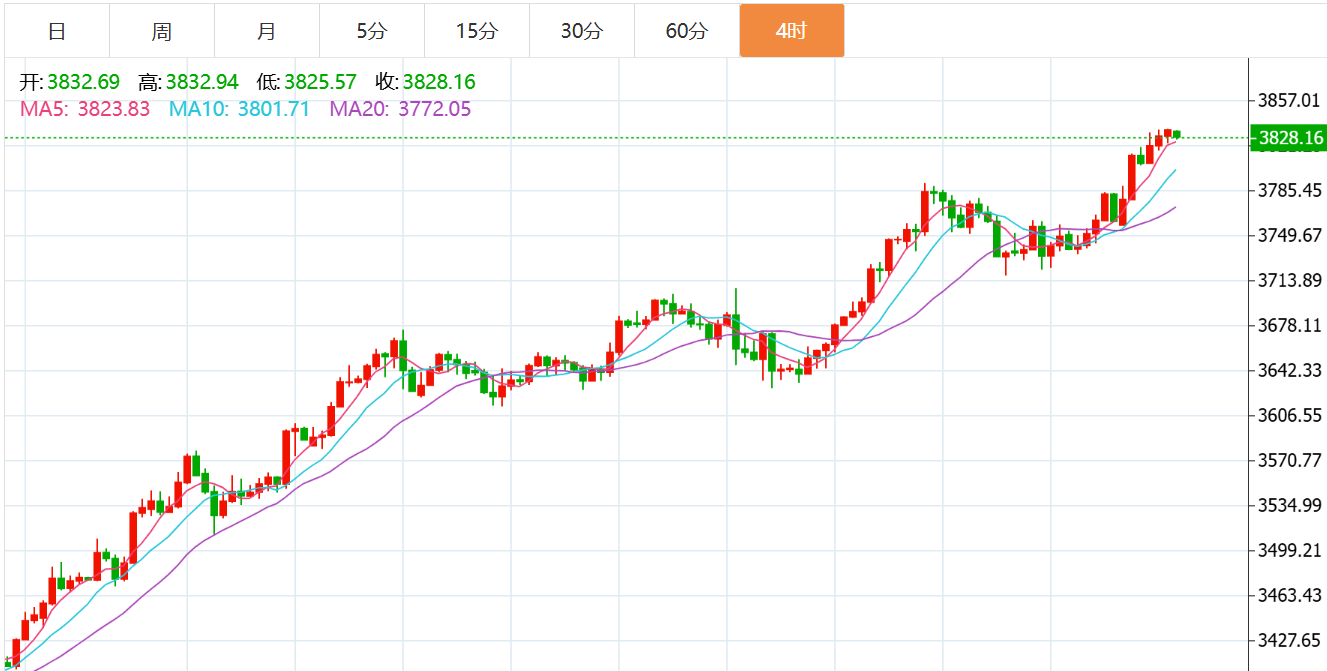
Core Insights - The investment market operates on four levels: preserving capital, controlling risk, earning returns, and achieving long-term stable profits. Successful investors are those who can sustain profitability over time, rather than being swayed by short-term gains or losses [1] Gold Market Analysis - Gold prices have shown a strong upward trend, breaking the psychological barrier of $3,800 and reaching a historical high. This surge is driven by increasing risks of a U.S. government shutdown and inflation data that aligns with expectations, reinforcing market bets on further interest rate cuts by the Federal Reserve [2][4] - The medium to long-term trend for gold remains bullish, with potential to reach $3,900 or higher if the current momentum continues. A significant bullish candlestick formation is anticipated, indicating further upward movement [2][4] - Technical indicators suggest that gold remains strong above the 5-day moving average, with key resistance levels identified at $3,840-$3,850 and support levels at $3,810-$3,800 [4] Oil Market Analysis - Brent crude oil futures have declined by 0.90% to $69.50 per barrel, while WTI fell by 0.99% to $65.07 per barrel, nearly reversing last week's gains. OPEC+ is expected to approve an increase in production by at least 137,000 barrels per day, yet actual production remains below targets, creating a supply gap of nearly 500,000 barrels per day [5] - The oil market is currently caught between signals of increased supply and ongoing production shortfalls, with geopolitical tensions adding complexity. Short-term price movements are expected to remain volatile, but the market may maintain a bullish bias if Russian energy exports continue to face restrictions [5][6] - Technical analysis indicates that oil prices are in a consolidation phase, with a trading range between $66.00 and $60.80. The MACD indicator suggests a potential shift towards bullish momentum, although short-term trends may indicate downward pressure [6]
油价调整消息:油价大变局!9月23日或迎年内最大降幅,车主请暂缓加油!
Sou Hu Cai Jing· 2025-09-18 20:49
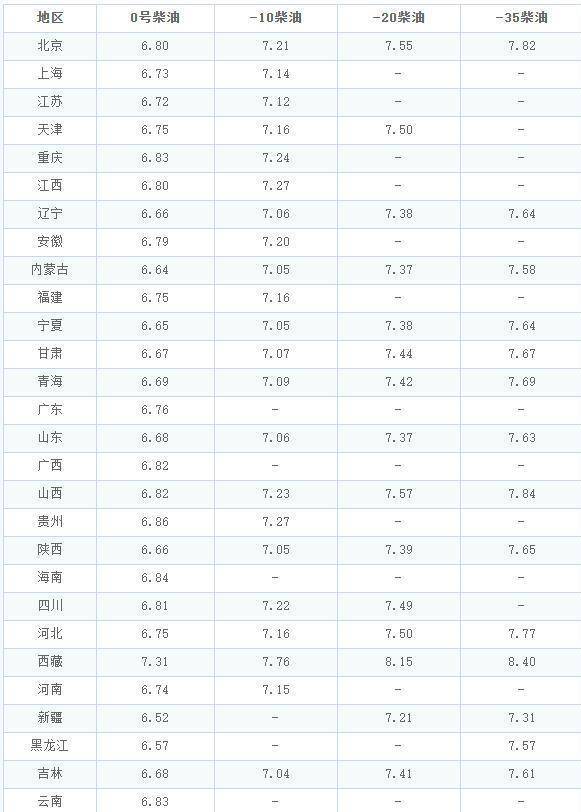
Group 1 - The article predicts a significant reduction in domestic fuel prices, with gasoline expected to decrease by 0.3 to 0.4 yuan per liter in the upcoming adjustment, marking the 19th round of price changes this year [1] - Despite the anticipated price drop, international crude oil prices have remained stable, with WTI at $62.69 per barrel and Brent crude slightly rising to $66.99, indicating a disconnect between domestic expectations and international market trends [2] - The fluctuations in oil prices are influenced by complex geopolitical dynamics and economic strategies, rather than mere market supply and demand [2][7] Group 2 - President Trump's potential imposition of up to 100% tariffs on imports from countries like India could disrupt global oil markets, as India and Russia are significant consumers of crude oil [3] - The aggressive tariff strategy may exacerbate global inflationary pressures, complicating monetary policy decisions for the Federal Reserve, which is expected to consider interest rate cuts to stimulate economic growth [5][6] - The long-term trends in oil prices are primarily driven by policy directions and geopolitical landscapes, rather than short-term market fluctuations [7] Group 3 - The upcoming price adjustment window on September 23 is anticipated to result in a downward trend in fuel prices, with expectations for a more substantial reduction than previously indicated [9] - The article emphasizes the interconnectedness of global events, such as U.S. monetary policy decisions and geopolitical conflicts, in influencing local fuel prices [9]
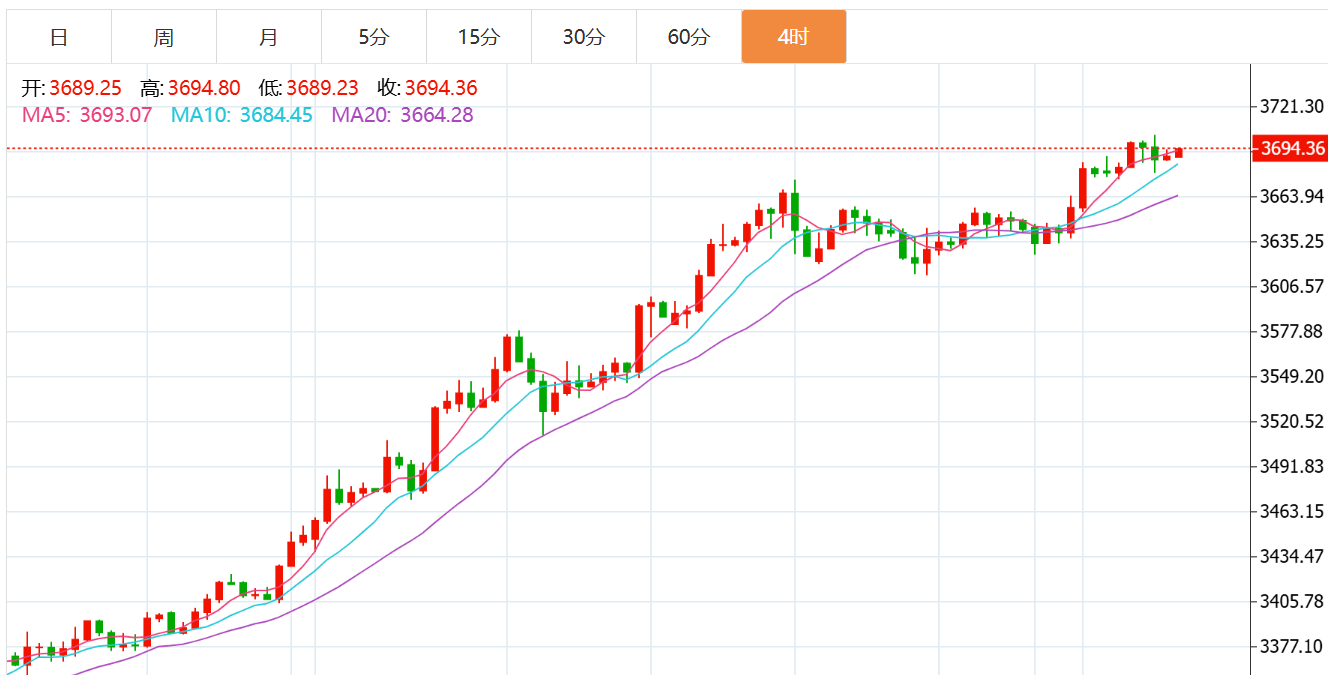
贺博生:9.17黄金原油强势上涨最新行情走势分析及今日独家操作建议
Sou Hu Cai Jing· 2025-09-16 23:54
Market Overview - The gold market has recently seen a significant increase, with spot gold breaking through 3700, reaching a new historical high, driven by a weak US dollar and declining US Treasury yields [2] - The upcoming Federal Reserve's FOMC interest rate decision is highly anticipated, with expectations of a 25 basis point cut, which could influence future interest rate paths and subsequently affect gold prices [2][4] - Geopolitical tensions continue to escalate, providing support for gold as a safe-haven asset [2] Technical Analysis - Gold - Gold maintains a bullish trend but is currently in a consolidation phase, suggesting a cautious approach to buying [4] - Key support is identified at 3665, with potential upward targets at 3710 and 3750 if the bullish trend continues [4] - If gold unexpectedly drops below 3665, it may enter a high volatility phase, with further support at 3620 [4] Oil Market Overview - International oil prices are experiencing high volatility, with Brent crude oil at $67.48 and WTI at $63.32 [5] - Concerns over Russian oil supply due to increased attacks on its refineries are driving market sentiment [5] - The oil market is influenced by three main factors: supply concerns from Russia, expectations of a Federal Reserve rate cut, and mixed signals from Middle Eastern geopolitical relations [5] Technical Analysis - Oil - The oil market is currently in a weak consolidation phase, with prices fluctuating within a narrow range [6] - Short-term trading strategies suggest buying on dips and selling on rebounds, with resistance levels at 66.0-67.0 and support levels at 63.0-62.0 [6]