
石油供应短缺

Search documents
谁会先“断油”?这些亚洲国家可能撑不过40天……
财联社· 2026-03-17 05:06
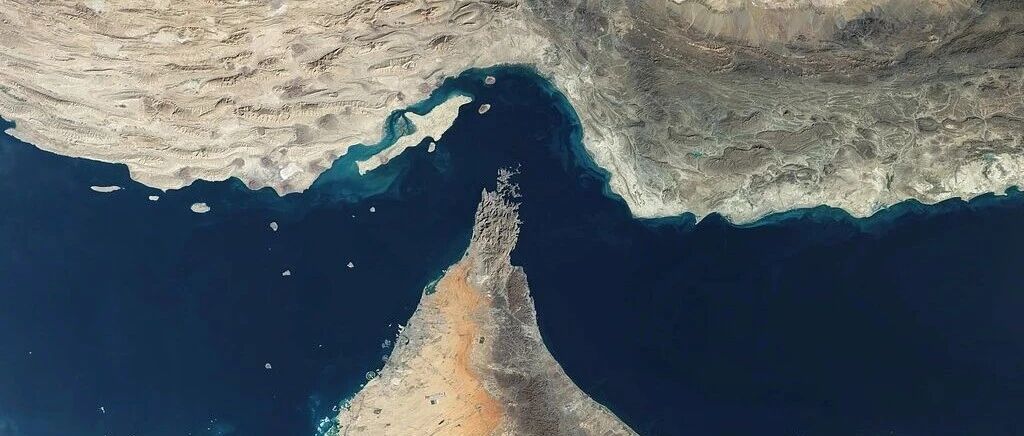
Core Viewpoint - The article highlights the significant decline in oil flow through the Strait of Hormuz, with current estimates at 500,000 barrels per day, a reduction of 19.5 million barrels per day compared to historical averages, leading to a tightening global oil supply and rising prices [1][4]. Group 1: Oil Flow and Supply Impact - Oil flow through the Strait of Hormuz has decreased significantly, with an estimated current flow of 500,000 barrels per day, down from an average of 20 million barrels per day [1]. - Approximately 17 million barrels of oil per day are still unable to be transported due to supply chain disruptions [1]. - The production cut in Middle Eastern oil countries is nearing 7 million barrels per day and may exceed 10 million barrels per day soon [4]. Group 2: Regional Supply Vulnerabilities - Southeast Asian countries are particularly vulnerable, relying on over 13 million barrels per day from the Strait, which constitutes about 50% of their total imports [7]. - Japan and South Korea are the most affected among the top four oil buyers, with 81% and 62% of their oil coming from the Strait, respectively [9]. - China has a relatively secure energy position, with reserves that could buffer against supply disruptions for nearly 300 days [9]. Group 3: Emergency Measures and Policy Responses - Many Asian governments are exploring emergency measures to stabilize domestic fuel markets, including export restrictions and strategic reserve utilization [17]. - Vietnam has implemented measures such as encouraging remote work to save fuel and suspending fuel import tariffs [17]. - Thailand has frozen diesel and gasoline prices and is using a fuel fund for subsidies to maintain low prices [18].


伊朗出口的石油,比战前还多
财联社· 2026-03-11 06:48
Core Viewpoint - Iran's oil exports through the Strait of Hormuz have increased compared to pre-war levels, indicating its strong control over this strategic waterway, which has effectively created a blockade for other oil-producing countries in the region [1][2]. Group 1: Iran's Oil Export Dynamics - Recent data shows that Iran's oil exports have not been hindered despite the ongoing conflict, with average daily loading of 2.1 million barrels in the past six days, surpassing the 2 million barrels per day exported in February [1][2]. - The demand for Iranian oil remains strong among major buyers, contrasting with the reduced exports from other Gulf Arab oil producers who are seeking alternative routes due to the conflict [2][3]. - The majority of Iranian oil is transported by a so-called "shadow fleet," consisting of older tankers often subject to U.S. sanctions, which are used for discreet oil transport [2][3]. Group 2: Impact on Other Oil Producers - Other Middle Eastern oil producers are facing significant export challenges, with a Morgan Stanley report indicating that a two-week blockade of the Strait could reduce oil supply by approximately 3.8 million barrels per day, over 3% of global production [3]. - The U.S. military's plans to escort vessels through the Strait have not yet been implemented, and Iranian military leaders have issued warnings against such actions [3]. Group 3: Focus on Khark Island - Khark Island, a critical oil export hub for Iran, has seen increased export levels, reaching over 3 million barrels per day during a recent period, significantly higher than the normal rate of 1.3 to 1.6 million barrels per day [7][8]. - The island's storage capacity is estimated at 30 million barrels, with around 18 million barrels currently stored, equating to about 10-12 days of normal export volume [8]. - Historically, Khark Island has remained operational during conflicts due to the high geopolitical and economic risks associated with direct attacks, which could halt a significant portion of Iran's oil exports [9][10]. Group 4: Market Reactions and Future Outlook - The global oil market has not yet fully felt the impact of supply shortages, as tankers dispatched before the conflict continue to arrive at their destinations, masking the effects of the ongoing disruptions [10]. - However, as these pre-sent shipments are consumed, visible shortages may begin to emerge within a week, particularly if new loading operations are halted [10].
有中国公民滞留古巴吗?外交部回应
券商中国· 2026-02-10 23:29
Group 1 - The Chinese government has not received reports of any Chinese citizens being stranded in Cuba amid the aviation fuel shortage [1] - China expresses firm support for Cuba in maintaining its national sovereignty and security, opposing foreign interference [1] - The Chinese government will continue to provide support and assistance to Cuba as much as possible during the fuel supply crisis [1]

美委局势高度紧张,油市“黑天鹅”要起飞?
Jin Shi Shu Ju· 2025-11-17 06:12
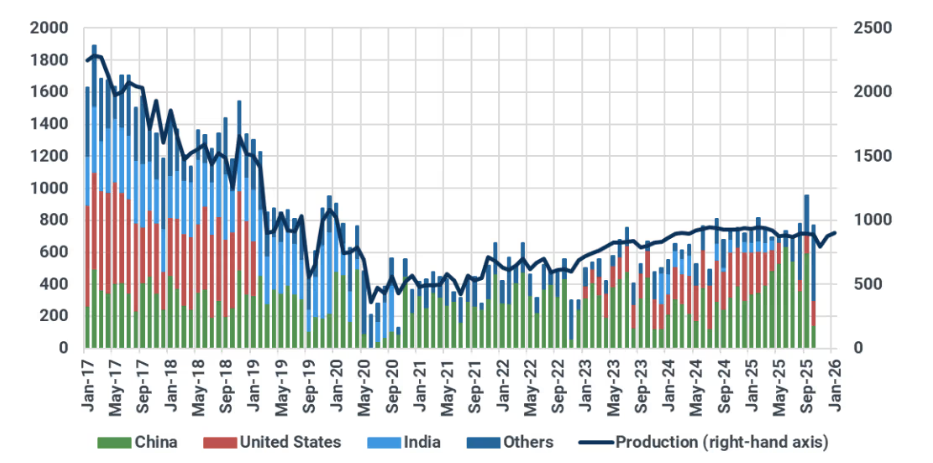
Core Insights - Venezuela is poised to become a significant player in the oil market due to the potential for U.S. military action, given its status as the country with the largest proven oil reserves globally [1] Group 1: Importance of Venezuelan Oil - Venezuelan heavy crude oil is crucial for many U.S. refineries, with nearly 70% of U.S. refining capacity operating most efficiently when processing heavy crude [2] - The historical significance of Venezuela in the global oil market is underscored by its status as a founding member of OPEC and its vast oil reserves [2] - U.S. Gulf Coast refineries are specifically designed to process Venezuelan heavy crude, which is characterized as "cheap, abundant, and capable of producing significant amounts of diesel and fuel for heavy manufacturing" [2] Group 2: Current Production and Export Dynamics - Venezuelan oil production is projected to rise slightly from approximately 867,000 barrels per day in 2024 to about 945,000 barrels per day in the third quarter of this year, although this represents a 70% decline from five years ago when production was estimated at 3.2 million barrels per day [2] - Chevron has recently obtained new drilling permits in Venezuela, indicating that about 20% of Venezuelan oil exports are now directed towards the U.S. [3] Group 3: Geopolitical Tensions and Market Impact - The renewed focus on U.S.-Venezuela tensions, particularly following reports of potential U.S. military action, could have implications for the Venezuelan oil industry, potentially leading to increased investment if the situation stabilizes [5] - Any disruption in global oil flows could be exacerbated by ongoing sanctions against Russia, which may lead to a global supply shortage, particularly as demand rises [6] - Analysts suggest that U.S. military action could increase geopolitical risk premiums, potentially raising oil prices by $1 to $2 per barrel, despite Venezuela not being a major oil exporter [6]
资讯早班车-2025-10-17-20251017
Bao Cheng Qi Huo· 2025-10-17 09:25
1. Report Industry Investment Rating No relevant content provided. 2. Core Viewpoints of the Report - The overall economic situation shows a complex picture with some indicators improving while others remain weak. For example, GDP growth has a slight decline, but export and import values have increased. The gold market has strong upward momentum, and the bond market is in an interval - shock pattern. The stock market has mixed performance in different regions and sectors [1][5][22][33] - Policy measures are expected to play an important role in stabilizing the economy. The government may introduce new policies to support foreign trade, and the central bank's monetary policy may be adjusted to address low - inflation issues [2][30] 3. Summary by Relevant Catalogs 3.1 Macro Data - GDP growth in Q2 2025 was 5.2% year - on - year, slightly lower than the previous quarter's 5.4% [1] - In September 2025, the manufacturing PMI was 49.8%, up from 49.4% in the previous period; the non - manufacturing PMI for business activities was 50.0%, down from 50.3% [1] - Social financing scale increment in September 2025 was affected by high - base effects, and government bond issuance decreased [28][29] - Export and import values in September 2025 increased year - on - year, with export growth at 8.3% and import growth at 7.4% [1] 3.2 Commodity Investment 3.2.1 Comprehensive - The Ministry of Commerce will introduce new policies to stabilize foreign trade and will optimize the license process for rare - earth export controls [2][16] - The trading fees of some options on the Shanghai Futures Exchange will be adjusted from November 10, 2025 [2] - The China E - commerce Logistics Index in September 2025 reached a new high for the year, with the total business volume index rising [3][18] 3.2.2 Metals - On October 17, 2025, spot gold reached $4380 per ounce, and spot silver hit a record high of $54.4 per ounce. Gold's upward momentum is expected to continue until 2026 [5] - The US may take more actions on rare - earth issues and may increase its stake in rare - earth companies [6] 3.2.3 Coal, Coke, Steel, and Minerals - The China Iron and Steel Association held a symposium to clarify the goal of building a modern steel power by 2030 and proposed relevant measures [7][8] 3.2.4 Energy and Chemicals - The National Development and Reform Commission issued a regulatory measure for the fair opening of oil and gas pipeline network facilities, which will take effect on November 1, 2025 [9] - Russia plans to produce 5.1 billion tons of oil in 2025, a 1% decrease from last year due to OPEC+ agreements [9] - The global oil industry may face a supply shortage in the future, and Saudi Aramco's CEO called for increased investment in exploration and production [9] 3.2.5 Agricultural Products - The summer grain purchase in 2025 ended in September, with a total purchase of 107.95 million tons of wheat. The price of wheat in the main producing areas has been rising steadily since October [13] - The US is discussing soybean processing cooperation with some South American countries and is urging South Korea to increase soybean imports [13][14] 3.3 Financial News 3.3.1 Open Market - On October 16, 2025, the central bank conducted 236 billion yuan of 7 - day reverse repurchase operations, with a net withdrawal of 376 billion yuan due to 612 billion yuan of reverse repurchases maturing [15] 3.3.2 Important News - The Ministry of Commerce responded to multiple hot issues, including Sino - US economic and trade talks and rare - earth export controls [2][16] - The survey of economists shows that most are positive about the stock market in Q4 2025 and expect economic improvement [17] - The VAT invoice data shows that the equipment renewal of enterprises is accelerating, and the new - energy vehicle sales have increased by 30.1% year - on - year [18] 3.3.3 Bond Market - The Chinese bond market is generally strong, with most spot - bond yields declining. The 30 - year treasury bond "25 Super Long Special Treasury Bond 06" has a significant decline in yield [22] - The exchange - traded bond market has mixed performance, and the convertible bond market also shows different trends among different bonds [23] - The yields of European and US bonds mostly declined [26] 3.3.4 Foreign Exchange Market - The on - shore RMB against the US dollar closed at 7.1249 on October 17, 2025, down 11 points from the previous trading day [27] - The US dollar index fell 0.31% in New York trading, and most non - US currencies rose [27] 3.3.5 Research Report Highlights - Banks are facing increasing profit pressure, and investment income is becoming more important. There may be some bond - selling pressure in Q4 [28] - September's financial data reflects weak real - economy demand, and the social financing balance growth rate may decline slightly in Q4 [28][29] - The bond ETF market has developed rapidly, but there is still much room for growth compared with the European and American markets [29] 3.4 Stock Market - On October 17, 2025, the A - share market had a narrow - range shock. The Shanghai Composite Index rose 0.1%, and the Shenzhen Component Index fell 0.25% [33] - The Hong Kong Hang Seng Index fell 0.09%, and the Hang Seng Tech Index fell 1.18%. Southbound funds had a large - scale net purchase [33]