
碳排放新规

Search documents
欧盟推迟实施碳排放新规恐压制通胀 欧洲央行或被迫重启宽松
智通财经网· 2025-11-12 06:44
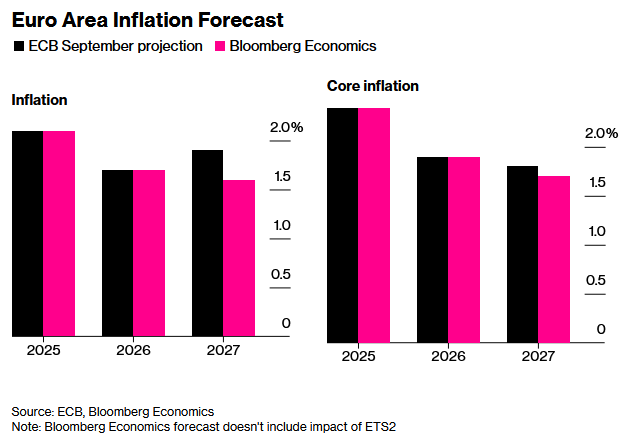
Core Viewpoint - The postponement of the EU's new carbon pricing system (ETS2) is expected to exert pressure on inflation forecasts and may reignite calls for further interest rate cuts in the market [1][4]. Group 1: Impact on Inflation - The delay in implementing ETS2 could lead to lower consumer price index (CPI) growth in the Eurozone by 2027 compared to current predictions, potentially resulting in inflation rates below the European Central Bank's (ECB) target of 2% for 2026 and 2027 [1][4]. - Danske Bank economists suggest that if ETS2 does not take effect by 2027, the extent of low inflation could be greater, providing a rationale for further rate cuts despite opposition from some officials [4]. - The ECB's latest quarterly forecast anticipates inflation rates of 1.7% and 1.9% for the next two years, with research indicating that ETS2 could raise inflation by 0.2 percentage points or more in 2027 [4][7]. Group 2: Political and Economic Context - Despite political commitments to significantly reduce carbon emissions by 2040, concerns over rising energy costs may lead to voter backlash, complicating the implementation of ETS2 [7]. - The ETS2 aims to expand the existing emissions trading system to include sectors like construction and road transport, which could have broader economic implications [7]. - ECB President Lagarde downplayed the risks associated with the delay, indicating that the EU Commission's proposal still aims for a 2027 launch, while other ECB officials emphasize that achieving the 2% inflation target heavily relies on the implementation of ETS2 [7]. Group 3: Broader Economic Implications - Analysts from Morgan Stanley and Bank of America suggest that the ETS2 issue alone may not decisively influence ECB policy, especially given the unexpectedly strong GDP growth in the Eurozone [7]. - However, if economic conditions weaken due to ongoing trade issues and inflation expectations decline, the situation may shift towards further monetary easing [7].

百公里油耗1.8L?欧盟排放新规,官方作秀还是逼宫电动车?
电动车公社· 2025-05-19 15:59
Core Viewpoint - The EU has made concessions on carbon emission regulations for car manufacturers, allowing them to exceed limits in one or two years as long as the three-year average meets standards, providing a temporary relief for the struggling European automotive industry [1][3][9]. Group 1: EU Concessions and Industry Impact - The EU's decision to relax carbon emission regulations was anticipated due to internal disagreements among member states regarding strict adherence to the new rules [4][8]. - The stringent regulations require an average carbon emission of 93.6 grams per kilometer by 2025, which translates to extremely low fuel consumption for traditional vehicles, making compliance nearly impossible without significant changes in vehicle types [6][10]. - The potential fines for non-compliance could reach €124 billion, translating to an average price increase of €10,000 per vehicle, which may not be as burdensome given the average income in Europe [8][10]. Group 2: Future of Electric Vehicles and Market Dynamics - The automotive industry can still meet the 2030 targets by increasing electric vehicle sales to lower average carbon emissions, but there are concerns about the marketability of electric vehicles in the coming years [10][18]. - The EU's compromise may lead to a cycle of leniency, where future regulations are also relaxed, hindering the necessary transition to electric vehicles [10][11]. - The collaboration between European and Chinese automotive manufacturers is becoming more frequent, with Chinese electric vehicles potentially filling the gap in the European market [14][28][33]. Group 3: Tesla's Market Position and Competition - In the first quarter, the sales of electric vehicles in the EU increased by 23.9%, but Tesla's sales plummeted by 45%, indicating a significant shift in market dynamics [21][26]. - European manufacturers are regaining market share, with Volkswagen and other brands showing substantial growth in electric vehicle sales, while Tesla struggles to maintain its previous dominance [25][26]. - The rise of Chinese electric vehicle brands in Europe, such as BYD and Xpeng, highlights the competitive landscape and the potential for increased collaboration between European and Chinese companies [26][28][31].


不卖电动车,罚款1330亿!这个地方,下狠手了
商业洞察· 2025-04-16 09:51
以下文章来源于前瞻经济学人 ,作者产业观察组 前瞻经济学人 . 关注中国城市发展战略、把握全球新兴产业趋势!这是省长书记爱看的智库号之一。 作者:产业观察组 来源:前瞻经济学人(ID: gh_0323d102f291 ) 新规生效,最猛烈的冲击来了! 因为,尽管燃油车做不到百公里油耗3.5L,但纯电动车完全可以。参照欧盟27国的平均电网排放 因子480.8 gCO₂/kWh(一度电排放480.8克二氧化碳),以特斯拉Model 3平均每公里耗电约 0.13kWh计算,碳排放仅62克。 那么多卖一些电动车,或者少卖一些燃油车,平均下来或许就能完成任务。 然而,这种看似无懈 可击的逻辑,当地市场却根本不买账。 2024年,欧盟市场乘用车新车总销量为1060万辆,纯电动车的占比仅有13.6%,整个市场上还 是燃油车(33.3%)和HEV混动车(30.9%)占主导。 一些投资机构预计,如果要满足二氧化碳排放量每公里93.6克的要求,欧盟汽车市场上的电动车 销售比例要提升至25%。 但现实情况却是,欧盟纯电动汽车销售率不仅停滞不前,2024年同比还下滑1%,首次出现负增 长。 不卖电动车,罚款1330亿 2025年1月 ...