科学智能(AI for Science)

Search documents
投资54家AI企业、储备超过550个项目,上海国资重仓AI未来|投资人说
Di Yi Cai Jing Zi Xun· 2026-02-07 07:39
Core Viewpoint - The recent surge of AI companies going public in Shanghai is attributed to a systematic victory based on long-termism, strategic layout, and ecological empowerment by state-owned capital [2][3]. Group 1: Investment Strategy - Shanghai state-owned capital is characterized as "patient capital" and "strategic capital," focusing on long-term investments rather than short-term returns, especially during industry downturns [3]. - A multi-layered investment network has been established, including a 100 billion yuan leading industry fund, a 20 billion yuan angel fund, and a 55 billion yuan technology innovation fund, leveraging over 300 billion yuan in social capital [3]. - The role of state-owned capital extends beyond financial investment to becoming an "industry organizer," facilitating comprehensive connections across the industrial ecosystem [3]. Group 2: Support for AI Companies - The investment logic of the company emphasizes early-stage investments through angel funds and seed funds, supporting high-risk projects that traditional capital avoids [5]. - The company adopts a "full-chain empowerment" strategy, providing critical support before and after IPOs, including financial backing and facilitating collaborations within the industry [5][4]. - The company has invested in 54 AI enterprises, with 8 already initiating IPO processes, establishing a solid foundation for future listings [7]. Group 3: Future Development and Global Positioning - Shanghai's AI industry is transitioning from foundational construction to deepening applications and ecological building, with significant advancements in computing power and application integration [8][9]. - To enhance Shanghai's position in the global AI innovation network, the focus will be on strengthening foundational capabilities, addressing application bottlenecks, and deepening international connections [9]. - The strategy for the upcoming "15th Five-Year Plan" includes creating a collaborative ecosystem among chips, models, and applications to achieve a trillion-yuan industry scale [10].
顶尖模型离“科学家”还差得远?AI4S亟待迈向2.0时代
机器之心· 2026-01-30 10:43
Core Insights - The article discusses the transition from AI for Science (AI4S) to AGI for Science (AGI4S), emphasizing the need for a specialized generalist model to enhance scientific discovery and reasoning capabilities [1][2][71]. Group 1: Current State of AI in Science - AI for Science, exemplified by AlphaFold, has achieved significant milestones in specific fields like protein folding and weather prediction, but reliance on existing deep learning models may limit the exploration of new knowledge and hinder innovation [1][71]. - A systematic evaluation involving 100 scientists from 10 different scientific fields revealed that cutting-edge models scored 50 out of 100 in general scientific reasoning tasks, but dropped to scores between 15 and 30 in specialized reasoning tasks [1][71]. Group 2: The Need for AGI4S - The transition from AI4S 1.0 to AGI4S 2.0 is necessary to integrate general reasoning with specialized capabilities, addressing the limitations of current models in scientific discovery [2][71]. - The concept of "Specialized Generalist" is proposed as a feasible path to achieve AGI, which combines deep specialization with general capabilities [2][90]. Group 3: Technological Framework - SAGE - The "SAGE" architecture is introduced as a synergistic framework for developing generalizable experts, consisting of three layers: foundational, collaborative, and evolutionary [3][18]. - The foundational layer focuses on decoupling knowledge and reasoning capabilities, while the collaborative layer employs reinforcement learning to balance intuitive and logical reasoning [27][28]. - The evolutionary layer aims to enable self-evolution of models through continuous interaction and feedback, addressing the challenges of adapting to complex tasks [55][56]. Group 4: Innovations in Reinforcement Learning - The article highlights the development of the PRIME algorithm, which provides dense rewards for reinforcement learning without the need for extensive manual labeling, significantly improving model performance [38][39]. - FlowRL is introduced to enhance the diversity of reasoning paths in models, allowing them to explore multiple solutions rather than converging on a single answer [47][50]. Group 5: Applications and Case Studies - The Intern-S1 model is designed to be a deep specialized generalist for scientific applications, demonstrating superior performance in various scientific domains compared to existing models [77][79]. - The Intern-Discovery platform integrates the Intern-S1 model with extensive data and tools, facilitating a closed-loop system for hypothesis generation and experimental validation [80][84]. Group 6: Future Directions - The article calls for collaboration among researchers to fill the gaps in the current framework and advance the development of AGI4S, emphasizing the potential for AI to revolutionize scientific research [89][90].

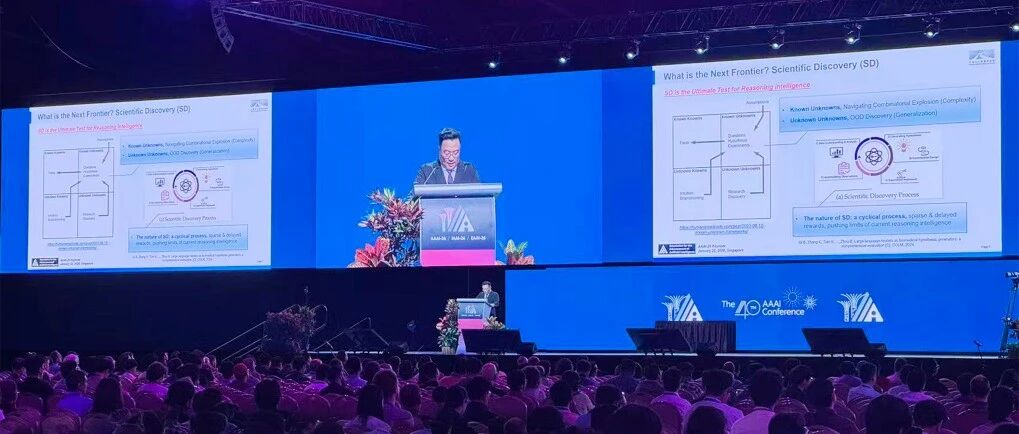
周伯文:缺乏专业推理能力是当下前沿模型的一大短板
Xin Lang Cai Jing· 2026-01-28 10:32
Core Insights - The next frontier for AI is scientific discovery, where large-scale deep reasoning will empower scientific advancements, and scientific discoveries will, in turn, enhance reasoning capabilities [1][4] - The transition from AI for Science (AI4S) to AGI for Science (AGI4S) is essential for achieving a more integrated form of intelligence that combines general and specialized capabilities [1][6] Group 1: AI Development Stages - AI development is not linear but exhibits distinct stages, with the current focus on transitioning from narrow AI (ANI) to general AI (AGI) through broad AI (ABI) [2][3] - The emergence of ChatGPT has validated the transition to the ABI stage, demonstrating significant advancements in self-supervised learning and generative models [2][3] Group 2: Challenges in Scientific Discovery - Scientific discovery presents three major challenges for AI: known unknowns, unknown unknowns, and sparse/delayed rewards, which test the limits of current AI models [4][5] - Over-reliance on existing deep learning models may hinder the exploration of new knowledge and innovation in scientific fields [4][5] Group 3: Need for Integration of General and Specialized Intelligence - There is a critical need to integrate general reasoning with specialized capabilities to enhance the effectiveness of scientific discovery processes [6] - The proposed SAGE technology architecture aims to bridge the gap between broad generalization and deep specialization, facilitating a unified cognitive ecosystem [3][6] Group 4: Future Directions - The evolution from AI4S to AGI4S is seen as a necessary step to foster collaboration among researchers, tools, and research subjects, leading to revolutionary advancements in scientific research [6] - The development of a Specializable Generalist model is identified as a feasible path towards achieving AGI, emphasizing the importance of scalable feedback and continuous learning [6]
北京大学深圳研究生院科学智能学院和信息工程学院招聘教职人员
生物世界· 2026-01-13 08:45
Core Views - Beijing University Shenzhen Graduate School (PKUSZ) aims to integrate its research and teaching with the resources of the Greater Bay Area, focusing on academic innovation and societal service [2] - The establishment of the School of AI for Science (PKUSAI4S) in 2025 represents a strategic initiative to merge artificial intelligence with fundamental sciences, fostering interdisciplinary research and innovation [3][4] - The School of Intelligent Engineering (PKUSECE) emphasizes the integration of education, academic research, and industry, leveraging the advantages of the Greater Bay Area [7] Recruitment Areas - PKUSZ is recruiting in three core areas: - Integrated Circuit Science and Engineering, focusing on analog circuit design, micro-nano electronic devices, or electronic design automation for tenured or tenure-track assistant professors [8] - Computer Science and Technology, with emphasis on video and audio processing, XR/3D media processing, computer vision, computer graphics, haptic information processing, artificial intelligence, and robotics for tenure-track assistant professors [8] - Communication and Information Systems, concentrating on wireless communication, intelligent communication, the Internet of Things, and RF devices for tenured or tenure-track assistant professors [8] Academic Vision - The vision of PKUSZ is to accelerate scientific discovery and define the future of industries, promoting a collaborative and innovative academic environment [4] - The educational philosophy emphasizes fundamental principles, wisdom-driven approaches, and cross-disciplinary integration to shape the future [5]

智源2026十大趋势发布会-获取你的2026年AI发展路线图
2026-01-12 01:41
Summary of Key Points from the Conference Call Industry and Company Overview - The conference focused on the advancements and future trends in the **Artificial Intelligence (AI)** industry, particularly through the lens of **ZhiYuan Research Institute**. The discussions highlighted the transition of AI into commercial applications and the evolution of AI technologies. Core Insights and Arguments 1. **AI Development Trends**: AI is accelerating towards commercial applications, with AI agents evolving towards specialization and unified protocols. Machine intelligence is shifting from superficial imitation to understanding and modeling the laws of the physical world, entering a new paradigm of "state space prediction" which enables forecasting future trends [1][2][3]. 2. **Technological Achievements**: Significant progress has been made in areas such as world models, scaling laws, and AI agents. Large models have shown rapid advancements in language and visual understanding, with AI for Science becoming an essential tool in research [1][4]. 3. **Multimodal World Models**: The development of multimodal world models is progressing through pre-training with multimodal data, learning real-world dynamics. This evolution from Next Token Prediction to Next Day Prediction signifies a leap in capabilities [1][14]. 4. **Growth in the AI for Science Sector**: The transition from traditional methods to AI-driven approaches in scientific research is evident, with AI for Science becoming integral to research workflows. The U.S. "Genesis Project" aims to integrate resources across the entire scientific process [1][18][19]. 5. **Challenges in the AI Industry**: The AI industry faces challenges such as data quality, the maturity of multi-agent systems, and high costs. A potential disillusionment phase is anticipated in early 2026, but a rebound is expected later in the year [22][46]. 6. **Synthetic Data Utilization**: The reliance on high-quality data is diminishing, leading to a rise in synthetic data and reinforcement learning. The synthetic data market is projected to surpass real data by 2030, indicating a shift in data sourcing strategies [23][35]. 7. **AI Super Applications**: The emergence of AI super applications is being driven by direct productization of AI technologies, with expectations for new dominant players in the market. These applications are expected to integrate multiple industry APIs to enhance functionality [21][42]. 8. **Future of AI Agents**: Multi-agent systems are anticipated to become mainstream in enterprise applications, with protocols like MCPASA potentially revolutionizing interactions between agents [20][26]. Other Important but Overlooked Content 1. **AI's Societal Impact**: The development of AI is reshaping scientific innovation, transitioning from traditional research methods to AI-driven approaches, which could help address systemic risks that humanity faces [6]. 2. **Community Support for Researchers**: The ZhiYuan community is actively supporting researchers by providing access to a vast array of AI papers and facilitating collaboration through various initiatives [8]. 3. **Safety and Security in AI**: The increase in AI applications has led to a rise in reported safety incidents, emphasizing the need for robust safety measures and research into AI behavior [62]. 4. **Future AI Research Directions**: The focus is shifting towards solving specific problems rather than merely accumulating knowledge, with expectations for AI to enhance research efficiency significantly [40][56]. This summary encapsulates the key points discussed during the conference, highlighting the advancements, challenges, and future directions of the AI industry as presented by ZhiYuan Research Institute.
2025西丽湖论坛成功举办,AI驱动科学发现与产业未来定义新范式
Sou Hu Cai Jing· 2025-11-15 22:49
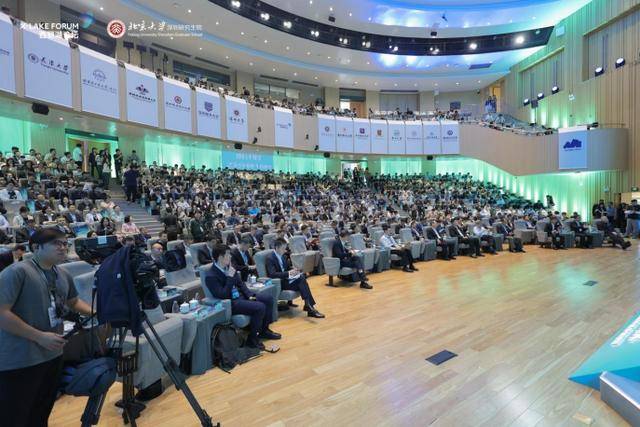
Core Insights - The 2025 Xili Lake Forum focuses on "AI for Science," aiming to explore how artificial intelligence can revolutionize scientific research and drive industrial innovation [1][3][8] Group 1: Forum Overview - The forum features 28 specialized sessions covering various topics such as industry forums, achievement transformation, basic research, talent forums, and popular science [3] - The theme "Accelerating Scientific Discovery, Defining the Future of Industry" emphasizes the role of AI in reshaping scientific research paradigms and fostering new scientific discoveries [3][10] Group 2: Key Announcements - Three major announcements were made during the opening ceremony, including the establishment of the International Intellectual Property Academy in collaboration with Peking University [10] - The launch of the "Boya AI4S Top Talent Program" for integrated undergraduate, master's, and doctoral education was also highlighted [10] - The signing ceremony for the delivery of the first phase of the Shenzhen University Town International Campus took place, aiming to enhance collaboration in industry, academia, and research [10][13] Group 3: AI Applications and Collaborations - The forum aims to build bridges between scientific breakthroughs, educational reforms, and industrial upgrades, positioning AI as a core engine for high-quality social development [3][8] - The "AI for X" dialogue session focused on practical applications of AI across various industries, discussing how AI can reshape future technology and industrial ecosystems [3][5] Group 4: Future Initiatives - The forum will continue throughout November, promoting an open and integrated innovation ecosystem, and will feature various activities including the "Open Day" and sports events among the X9 Alliance universities [15]
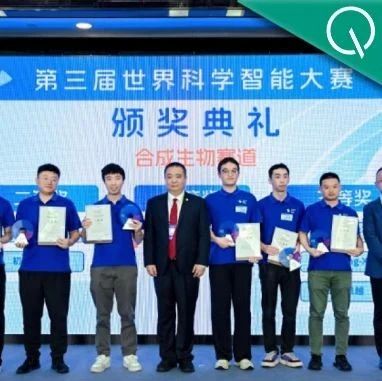
第三届世界科学智能大赛圆满收官!开放多项真实数据,1.6万人共探产业场景关键科学问题
量子位· 2025-07-30 02:29
Core Insights - The third World Scientific Intelligence Competition was held in Shanghai, featuring 30 teams competing for awards in five major categories, with a total of 5 first prizes, 10 second prizes, and 15 third prizes awarded [1][3] - The competition aimed to select global talent in the field of AI for Science, with no restrictions on nationality or region, and attracted nearly 16,000 participants from around 30 countries and regions [1][4] Group 1: Competition Overview - The event was co-hosted by the Shanghai Institute of Scientific Intelligence and Fudan University, with support from various institutions including Alibaba Cloud and Shanghai Fosun Pharmaceutical [1] - The competition focused on high-value industrial scenarios, with real-world data sets provided for the challenges, such as aviation safety and renewable energy power forecasting [4][5] - A new "Physical AI track" was launched to address core technological challenges in space intelligence and reasoning models, promoting the application of AI technology [4] Group 2: Open Collaboration and Platform Development - The competition emphasized open-source principles, providing access to real data from industrial scenarios and offering computational resources and toolchain support for participants [5] - Outstanding models from the competition will be deployed on the newly launched Xinghe Qizhi Scientific Intelligence Open Platform, which aims to facilitate collaboration among scientists, AI researchers, and engineers [5] - The platform currently hosts over 200 scientific models across 12 disciplines and has accumulated more than 12PB of scientific data, attracting over 120 research teams [5] Group 3: Youth Engagement - The competition introduced a middle school category, attracting 331 teams from 146 schools in Shanghai, with an average participant age of around 14 years [7] - This initiative aims to enhance the youth training system and showcase the innovative potential of young participants in the field of scientific intelligence [7] Group 4: Future Directions - The organizing committee plans to continue leveraging the competition platform to launch more cutting-edge events focused on scientific intelligence, fostering a sustainable ecosystem for innovation and talent development [10]