税率调整

Search documents
之江生物:2025年营收1.25亿元,同比降30.08%
Xin Lang Cai Jing· 2026-02-27 08:06
Core Viewpoint - The company reported a significant decline in revenue and an increase in net loss for the fiscal year 2025, primarily due to policy changes and market conditions [1] Financial Performance - The total operating revenue for 2025 was 124.91 million, a year-on-year decrease of 30.08% [1] - The net profit attributable to the parent company was -34.30 million, representing an increase in loss of 93.16 million compared to the previous year [1] - Total assets at the end of the reporting period were 376.37 million, a decrease of 0.69% from the beginning of the year [1] - The equity attributable to the parent company's owners was 334.88 million, down 7.92% from the start of the year [1] Factors Influencing Performance - The decline in revenue was mainly attributed to centralized procurement policies, tax rate adjustments, and changes in product sales structure [1] - The increase in operating losses was due to a decrease in financial income and reduced foreign exchange gains, although there was a year-on-year reduction in losses [1]

瑞普生物:生物制品13%税率政策短期实际税负将有所上升
Sou Hu Cai Jing· 2026-02-13 01:21
Core Viewpoint - The company, Reap Bio, addressed investor concerns regarding the impact of the tax rate increase on biological products from 3% to 13% starting January 1, 2026, stating that it will not affect the 2025 financial results but will lead to a short-term increase in actual tax burden in 2026 [1]. Summary by Categories Financial Impact - The company indicated that the new 13% tax rate will not influence the operating results for 2025, but there will be a short-term increase in tax burden once implemented in 2026 [1]. Strategic Response - Reap Bio plans to mitigate the impact of the tax rate adjustment through optimizing product pricing and structure, as well as improving supplier and procurement management [1]. Compliance and Value Creation - The company emphasized its commitment to strict tax compliance and effective management practices to create value for the company and its shareholders [1].

人民鉴真15期丨业内人士辟谣:互联网增值服务税率参照白酒行业为假消息
Sou Hu Cai Jing· 2026-02-03 10:36
Core Viewpoint - The rumors regarding potential tax rate adjustments for the financial and internet value-added services sectors, particularly in relation to gaming, are unfounded and have caused notable stock price fluctuations for companies like Tencent [1] Tax Rate Comparison - The speculation suggested that the tax burden for gaming companies could rise from 6% to align with the 32% rate of the liquor industry, which is inaccurate [1] - Current tax regulations for gaming companies primarily involve value-added tax (VAT), while the liquor industry is subject to consumption tax, making direct comparisons invalid [1] VAT Regulations - The VAT law effective from January 1, 2026, stipulates that the tax rate for the sale of services and intangible assets is set at 6% [1] - Claims of a 32% tax rate are dismissed as baseless, with the VAT rates legally fixed at 6%, 9%, and 13%, and adjustments are not easily made unless the nature of the goods changes from services to goods [1] Future Tax Rate Adjustments - Adjustments of the VAT rate from 6% to 9% or 13% are considered unlikely due to established regulations and the nature of the industry's primary costs, which are largely labor-related and do not allow for significant input tax credits [1] Market Reactions - The recent volatility in the stock market, particularly in Hong Kong, has been exacerbated by misinterpretations of tax adjustments for telecom operators, leading to panic selling and manipulation of stock prices by certain institutions [1]
游戏股“深V”震荡,企业回应税务传闻
Di Yi Cai Jing· 2026-02-03 08:28
Core Viewpoint - The credibility of rumors regarding potential tax rate adjustments for the gaming and internet value-added services industry is considered low by industry insiders [1][4][6]. Market Reaction - On February 3, a rumor caused significant fluctuations in the gaming stock market, with Tencent's shares dropping over 6% and NetEase's shares falling more than 3% at one point. However, by the end of the trading day, A-share gaming stocks rebounded, with Century Huatong and Jiubang Technology both rising over 2% [1]. - The gaming index (BK1406) increased by more than 3.4%, with notable gains from companies like Shunwang Technology, which surged by 13.8% [1][2]. Tax Rumor Details - A rumor suggested that the gaming and internet value-added services sectors might face a tax rate increase from 6% to align with the 32% rate applicable to the liquor industry, which could compress profit margins for companies like Tencent [3]. - Industry analysts have expressed skepticism about the feasibility of such a tax increase, citing the complexity of revenue structures in large companies and the existing tax rates already being in the 15%-25% range [4][5]. Industry Response - Various industry representatives have denied receiving any information regarding the rumored tax changes, with Century Huatong stating that their operations remain normal [4]. - Analysts from Dolphin Investment Research and other firms have indicated that the market reaction is likely an overreaction to the rumors, emphasizing that significant tax changes would require extensive procedural groundwork [5][6]. Legal and Policy Considerations - Legal experts and analysts have pointed out that the rumor lacks a solid legal basis, as the current tax structure is defined by the Value-Added Tax Law, which specifies three tax rates: 13%, 9%, and 6% [6][7]. - The current policy focus is on stabilizing growth and supporting innovation, making a broad tax increase counterproductive to government objectives [8].







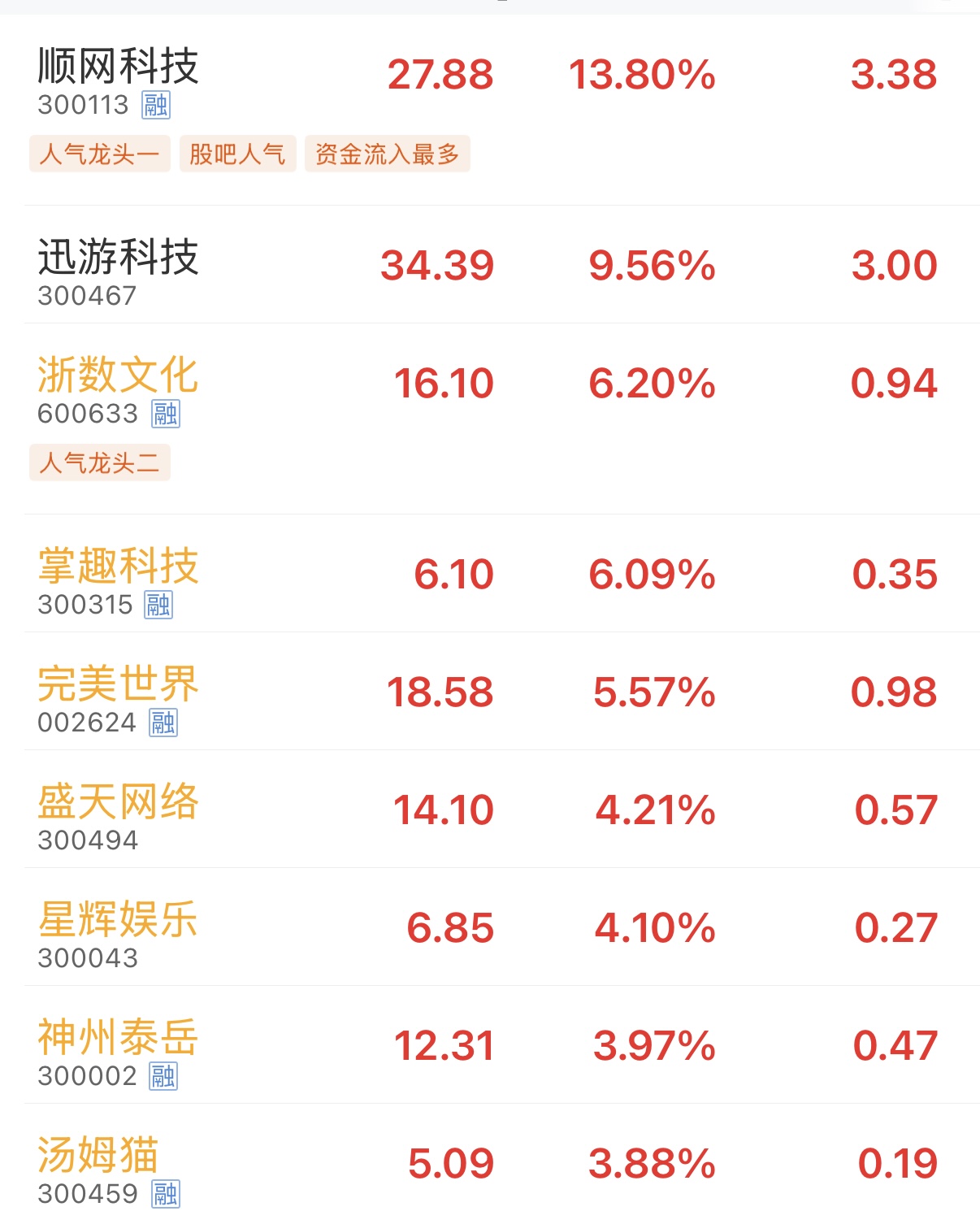
游戏股集体反弹,加税传闻不实
Xin Lang Cai Jing· 2026-02-03 06:27
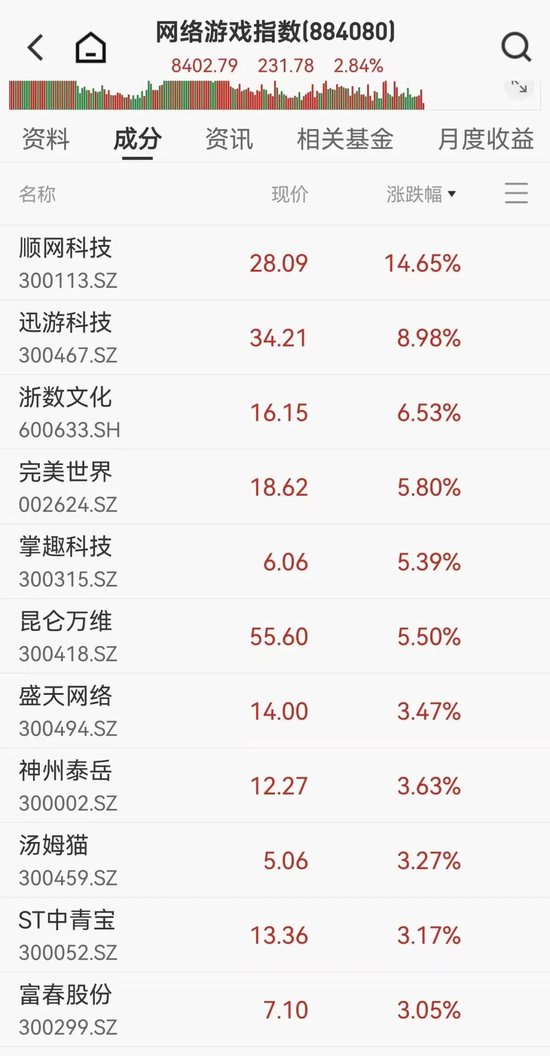
Core Viewpoint - The market reacted negatively to rumors suggesting that the financial and internet value-added services sectors, including gaming, might face tax rate adjustments similar to those applied to liquor, leading to a decline in stock prices for major companies like Tencent and others in the gaming sector [1][10]. Group 1: Market Reaction - On February 3, the A-share gaming sector experienced a significant drop, with Century Huatong's stock falling over 9%, and other major gaming stocks like Kaixin Network, Giant Network, and 37 Interactive Entertainment also declining [1][10]. - Following the initial drop, gaming stocks rebounded, with Shunwang Technology rising by 14.65%, and other companies like Xunyou Technology, Zhejiang Shuju, and Perfect World seeing increases of over 5% [1][10]. Group 2: Tax Rumors and Industry Response - Industry insiders have confirmed that there has been no official communication regarding tax rate adjustments, indicating that the rumors are likely unfounded [5][14]. - A representative from a leading gaming company stated that no formal documents or meetings regarding tax adjustments have been received, further supporting the notion that the rumors lack credibility [5][14]. - According to a report from Everbright Securities, the rumors are based on a misunderstanding of tax categories, as the proposed comparison between gaming and liquor tax rates is misleading [6][15]. Group 3: Tax Policy Context - The current tax rate for financial services and modern services, including gaming and advertising, is set at 6%, contrasting with the 9% rate applicable to basic telecommunications and construction sectors [6][15]. - The recent tax rate adjustment announced by the Ministry of Finance and the State Administration of Taxation only pertains to basic telecommunications services, not affecting financial or internet value-added services [6][15]. - The prevailing policy focus is on stabilizing growth and promoting innovation, suggesting that significant tax increases in key sectors would contradict current governmental objectives [7][16].




游戏行业税率向白酒看齐?多家游戏公司回应:不实消息
Xin Lang Cai Jing· 2026-02-03 05:59
Core Viewpoint - Recent rumors suggest that the financial and internet value-added services sectors, such as in-game purchases and advertising, may face tax rate adjustments due to their high profit margins and low tax burdens, similar to the liquor tax rate, leading to a decline in stock prices of companies like Tencent [1][4]. Group 1: Tax Rate Rumors - The three major telecom operators in China announced a tax rate increase from 6% to 9% for value-added tax, effective January 1, 2026, as per the recent announcement by the Ministry of Finance and the State Taxation Administration [5]. - Industry insiders have not received any official communication regarding tax rate adjustments, indicating that the rumors lack credibility [5][6]. - A public relations officer from a Shanghai gaming company confirmed that no formal documents or meetings regarding tax adjustments have been held recently [5]. Group 2: Analysis of the Rumors - A report from Everbright Securities stated that the rumors are fundamentally flawed in terms of tax types, legal, and policy logic, and investors should not overreact [2][6]. - The claim that "game tax rates will align with the 32% liquor tax" is misleading, as liquor tax is a consumption tax, while in-game purchases and advertising are subject to value-added tax, which are governed by different legal frameworks [2][6]. - The current tax rates are bound by legal constraints, making adjustments difficult; the new VAT law specifies three tax rates: 13%, 9%, and 6%, with financial and modern services subject to the 6% rate [2][6]. Group 3: Policy Direction - The current policy focus is on "stabilizing growth, promoting innovation, and supporting industrial upgrades," which contradicts the idea of a blanket tax increase on key industries [3][7]. - Discussions around financial sector tax burdens are more likely to lead to structural adjustments, such as optimizing deduction rules, rather than simply raising tax rates [3][7]. - Future tax regulations may involve reviewing and clearing tax incentives for certain companies, rather than directly increasing statutory tax rates, which would have limited and controllable impacts [3][7]. - The core drivers of stock prices for leading internet companies remain their business growth, AI commercialization progress, and profitability improvements, with short-term sentiment fluctuations not altering long-term fundamentals [3][7].
美媒告诉3亿美国人,中国已经赢下关税战,特朗普输了就要认
Sou Hu Cai Jing· 2025-12-09 12:04
Core Viewpoint - The editorial argues that China has gained the upper hand in the trade confrontation with the United States, highlighting concerns within the Republican Party about the economic implications of continued aggressive policies [1]. Group 1: Trade Policy Adjustments - The U.S. imposed a 145% tariff on Chinese products in early April 2025 but postponed the implementation for the EU and Canada due to strong opposition from allied businesses [3]. - The U.S. exempted certain electronic products from tariffs to protect domestic tech companies, responding to industry pressure regarding the time costs of shifting production [5]. - President Trump indicated a potential significant reduction in tariffs on China, reflecting market anxiety and concerns over inventory issues faced by retail companies [7]. Group 2: Economic Impact and Market Reactions - The stock market experienced pressure and a decline in technology stocks, prompting the Federal Reserve to consider policy tools to stabilize the situation [9]. - China's retaliatory tariffs on U.S. agricultural products and the control of rare earth exports have led to significant export losses for the U.S. and a slight downward adjustment in growth forecasts [10][11]. - The editorial notes that many Americans are beginning to recognize the accumulating costs of the trade dispute, with businesses adjusting their strategies to increase backup inventories [14]. Group 3: International Relations and Responses - Japan's Prime Minister stated that Japan would not join U.S. restrictions due to its reliance on the Chinese market, indicating a preference for independent trade management [12]. - Other countries like South Korea and Australia are also cautious about engaging in tariff discussions with the U.S., preferring to assess domestic impacts first [12]. - The editorial concludes that China's strategy has been effective, as evidenced by the ongoing tensions and the lack of clear communication between the U.S. and China regarding tariff negotiations [16].
印度财政部长:农产品、拖拉机、土壤制备机械的税率降至5%。
Xin Lang Cai Jing· 2025-09-03 16:53
Core Viewpoint - The Indian Finance Minister announced a reduction in tax rates for agricultural products, tractors, and soil preparation machinery to 5% [1] Group 1: Tax Rate Changes - The tax rate for agricultural products has been reduced to 5% [1] - The tax rate for tractors has been lowered to 5% [1] - The tax rate for soil preparation machinery has also been decreased to 5% [1]

苹果调整全球 App Store 税率,9 月 8 日部分地区应用价格将上涨
Sou Hu Cai Jing· 2025-08-21 23:58
Core Insights - Apple is adjusting App Store tax rates and prices in several countries, with some changes effective immediately and others set for September 8 [1][2] Group 1: Tax Rate Changes - In Vietnam, Apple will no longer pay the foreign contractor tax (FCT) on behalf of local developers, instead imposing a 5% FCT on its commission [1] - Personal income tax for individual developers in Vietnam will be adjusted to 2%, with the same 5% FCT applied to Apple's commission [1] - Brazil will impose a 3.5% financial operations tax (IOF) on app and in-app purchase revenue [4] - Canada is eliminating its existing digital services tax (DST) [4] - Estonia's VAT will increase from 22% to 24% [4] - Romania's standard VAT rate will rise from 19% to 21%, while the reduced tax rate for news, magazines, books, and audiobooks will increase from 5% to 11% [4] - The Philippines will introduce a 12% VAT for foreign developers for the first time [4] - Vietnam's tax adjustments include an increase in VAT for foreign organizations from 5% to 10%, and individual developers will now pay a 5% personal income tax instead of corporate income tax [4] Group 2: Price Adjustments - Apple will update app and in-app purchase prices in the Philippines and Vietnam on September 8, with adjustments made to maintain price parity across regions [2][3] - Developers using the Philippines or Vietnam as a pricing benchmark will see corresponding price changes in other regions [3] - Apple has updated the "Pricing and Availability" section in App Store Connect to help developers stay informed about the new price changes [3] - The changes in pricing and tax rates will not affect subscription services that auto-renew [3] - Apple plans to revise the paid app agreement terms related to tax agreements in the Philippines and Vietnam, with a multilingual version expected next month [3]