
稳产保供

Search documents
农产品:从保供稳产到高质高效
Wu Kuang Qi Huo· 2026-03-17 01:16
Report Overview - The report focuses on the transformation of the agricultural products industry from ensuring stable supply to achieving high-quality and efficient development, with policy support playing a key role [2]. Industry Investment Rating - Not provided in the report. Core Viewpoints - The 2026 government work report and two - sessions proposals outline a clear roadmap of "ensuring stable supply, improving quality and efficiency, and enabling technology" for the agricultural products industry. A series of policy combinations covering the entire chain from production, storage, processing to trade will promote the upgrade of China's agriculture [2]. Summary by Section Main Grains - The government sets the grain output target at about 1.4 trillion catties in 2026, and the "15th Five - Year Plan Outline (Draft)" further raises the comprehensive grain production capacity target to about 1.45 trillion catties. The core drivers of the main grain sectors such as rice and wheat come from seed industry revitalization and technological empowerment. With policy support, prices will remain stable with small fluctuations. The industry will transform from "quantity guarantee" to "both quantity and quality improvement" [4]. Corn - Corn is the main variety in the "New Round of 100 - billion - jin Grain Production Capacity Improvement Action". Policies focus on "both quantity and quality, with priority on efficiency". On the supply side, subsidies are stabilized and the seed industry is revitalized to increase yield. On the demand side, deep - processing capacity is promoted in the main production areas, and pig production capacity is regulated. A "market purchase + state support" framework is established to keep prices in a reasonable range. In 2026, the corn market is expected to achieve a virtuous development pattern of "stable quantity, improved quality, stable price, and increased efficiency" [5]. Soybeans - The government aims to consolidate and improve soybean and oilseed production capacity. The 2026 No. 1 Central Document requires expanding soybean production space and improving subsidy policies. Proposals focus on planting mode innovation and variety research and development. Domestic soybean production is expected to increase, and the self - sufficiency rate will rise, reducing dependence on imports [6]. Livestock Farming - The government emphasizes "anti - involution" reform in the livestock farming sector. The Ministry of Agriculture and Rural Affairs improves early - warning mechanisms. For meat and egg chicken farming, inter - provincial linkage storage mechanisms are explored, and green development is promoted. The industry will transform towards moderate scale, greenness, and high - quality, with increased industry concentration [7]. Imported Oilseeds - The supply security of oilseeds is a focus. China's edible oil self - sufficiency rate is only about 34.2%. Policies include expanding domestic production space, implementing the "Peanut Oil Supply Upgrade Action", and advocating a "reduced - oil" diet. A "domestic - based, diversified" supply pattern will be established [8][11].
马年春节假日盘点·生产篇丨赶订单、保供应、抓安全——春节假期企业持续生产扫描
Xin Lang Cai Jing· 2026-02-23 16:33
Group 1 - Many companies across China continued production during the Spring Festival, with over 260 enterprises in Ningbo and more than 280 industrial companies in Luoyang maintaining operations, reflecting a commitment to supply and order fulfillment [1][2] - Sichuan Zhou Hei Ya Food Co., Ltd. implemented a shift system to ensure continuous production of over 50,000 vacuum-packed products daily, supporting supply to various regions [2] - Zhejiang Hengcheng Hard Alloy Co., Ltd. reported a 230% year-on-year increase in production value in January, with over 100 employees working during the holiday to meet high demand from overseas clients [3] Group 2 - Safety measures were emphasized during the holiday period, with companies like Guangxi Sun Paper Industry Co., Ltd. conducting thorough safety inspections and requiring strict approval for hazardous operations [4] - The State Council's Work Safety Committee issued guidelines to enhance safety production efforts, focusing on risk prevention in industries such as fireworks and chemicals [4] - In Gansu, the Lanzhou New District Project Construction Center coordinated support for companies, ensuring 24-hour service for raw material transport and workforce needs [5]
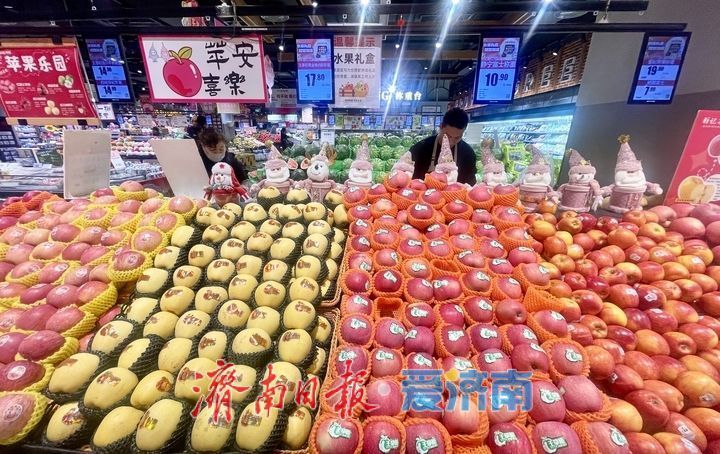
让泉城“菜篮子”装得满又拎得好
Feng Huang Wang Cai Jing· 2026-02-13 07:13
Core Viewpoint - The "vegetable basket" initiative is crucial for ensuring food security and promoting agricultural modernization, as highlighted in the 2026 Central Document No. 1, which emphasizes the importance of enhancing the quality and efficiency of this initiative for the benefit of people's livelihoods and development [1]. Group 1: Stability and Supply - Ensuring stable production and supply is the core principle of the "vegetable basket" project, which is essential for maintaining public confidence and market stability [3]. - Jinan has established 385 large-scale vegetable production bases of over 50 acres and more than 1,000 large-scale livestock farms, ensuring a sufficient supply of key agricultural products like vegetables, meat, and dairy [3]. Group 2: Technological Empowerment - Technological modernization is key to agricultural advancement, with Jinan implementing a digital management platform called "Qiancheng Liangtian" to enhance agricultural practices and shift from traditional methods to smart management [3]. Group 3: Brand Quality Enhancement - The demand for "vegetable basket" products has evolved from merely filling stomachs to seeking quality and uniqueness, making brand development essential for competitiveness [5]. - Jinan has established a public brand matrix called "Qianshui Renjia" and currently has 60 nationally recognized high-quality agricultural products, with a quality safety monitoring compliance rate of over 98% [5]. Group 4: Industry Integration - A comprehensive approach to the "vegetable basket" initiative is necessary, promoting integration across production, processing, sales, and tourism to enhance value and share benefits with farmers [5]. - Jinan plans to implement 10 key industrial chain projects this year to foster high-quality integration of the "vegetable basket" industry [5]. Group 5: Public Sentiment - The variety, price stability, and quality of the "vegetable basket" directly impact the happiness of the citizens, necessitating ongoing efforts in production stability, technological empowerment, brand building, and industry integration to improve the quality of life [6].

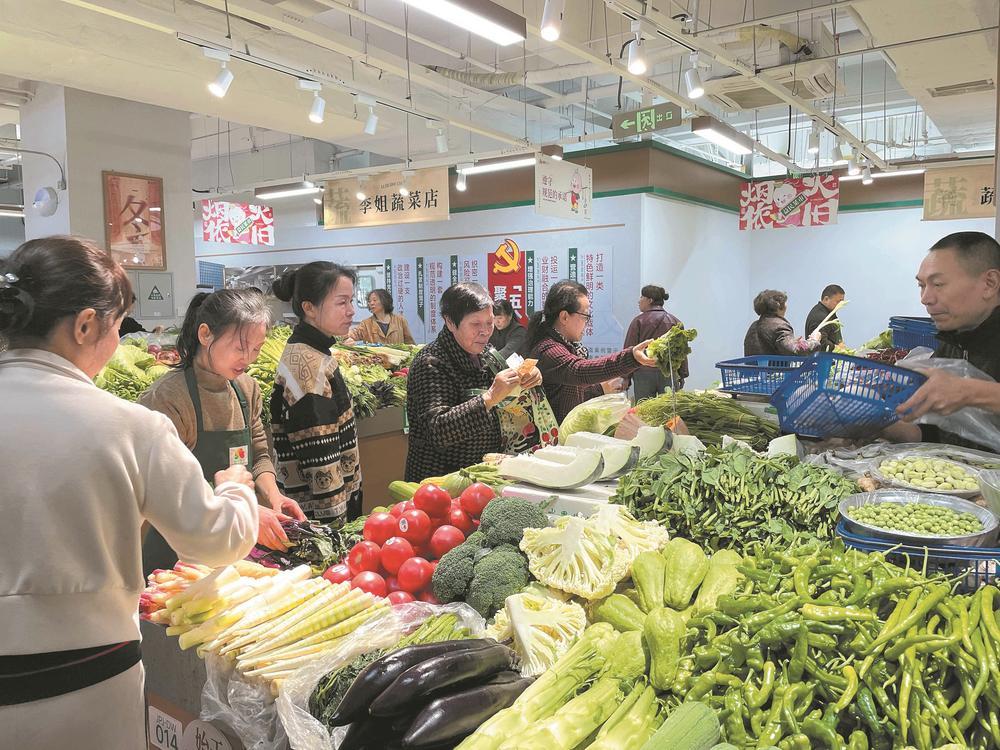
储备充足价格平稳 “菜篮子”有保障
Xin Lang Cai Jing· 2026-01-05 20:49
Core Viewpoint - The agricultural supply in Chengdu is stable and sufficient, ensuring the availability of essential food products for the population during the winter season, despite adverse weather conditions [1][2]. Production Side - Chengdu has a diverse agricultural supply, including vegetables, meat, eggs, dairy, fruits, and fish, with significant production areas dedicated to various crops [1][2]. - The area of vegetable cultivation in Pengzhou is 267,000 acres, with over 20 major varieties expected to be available before the Spring Festival [1]. Market Side - The Chengdu Agricultural Wholesale Market operates efficiently, with a wide variety of agricultural products and stable prices, even during peak demand periods [2][3]. - The city has established a comprehensive distribution network consisting of three large wholesale markets, over 20 regional markets, more than 800 farmer's markets, and over 7,100 retail outlets [3]. Emergency Supply - Chengdu has implemented a plan to cultivate and support production bases that can ensure stable supply during emergencies, such as natural disasters or public events [4][5]. - The city maintains a stock that can meet normal sales for seven days, with over 1,200 vegetable emergency supply bases and over 1,400 meat emergency supply bases in place [5].
各地积极应对降温降雪天气 保障生产生活
Yang Guang Wang· 2025-12-14 01:23
Group 1 - Various local departments are actively responding to severe weather conditions, including rain, snow, strong winds, and temperature drops, to ensure stable production and supply for the public [1] - In response to low temperatures following snowfall, the city management department in Xingtai, Hebei, is urging heating companies to adjust supply parameters and complete heating station upgrades, with a focus on regular inspections of key infrastructure [1] - The head of a heating company reported that they have prepared sufficient heat sources and have mobilized over 200 repair teams, ready to respond at any time [1] Group 2 - Major agricultural markets in Taiyuan are proactively coordinating with vegetable growers to ensure adequate supply and stable prices, with a focus on winter storage vegetables [2] - The logistics center in Taiyuan is monitoring weather conditions to manage vegetable supply effectively, ensuring that essential items like potatoes and cabbages are well-stocked [2] - In Henan, the ongoing snowfall and low temperatures pose risks to the late-sown winter wheat, prompting local agricultural technicians to provide guidance for safe winter management of the crops [2]
农业“半年报”:夏粮丰收秋粮稳,肉牛扭亏猪连盈
2 1 Shi Ji Jing Ji Bao Dao· 2025-07-17 12:59
Core Viewpoint - The agricultural sector in China is experiencing stable growth, with significant achievements in grain production and livestock profitability, despite some challenges in specific regions and products [1][2][6]. Grain Production - Summer grain production reached 299.48 billion jin, marking the second-highest yield on record, with 20 out of 25 provinces increasing their planting areas [2][4]. - The overall quality of summer grain is reported to be better than last year, with improvements in key quality metrics such as protein content and gluten levels [2]. - The government aims for a total grain production target of approximately 1.4 trillion jin for the year [1]. Livestock Sector - The total meat production in the first half of the year was 48.43 million tons, a year-on-year increase of 2.8%, with pork production at 30.2 million tons, up 1.3% [6]. - The beef sector has turned profitable after a period of losses, with beef production increasing by 4.5% year-on-year [6][7]. - The pig farming sector has maintained profitability for 14 consecutive months, although recent price declines have prompted the Ministry of Agriculture to issue market warnings and adjust production strategies [7][8]. Future Outlook - The Ministry of Agriculture plans to enhance production capacity and stabilize policies to ensure the steady development of the pig farming industry [8]. - A focus on disaster prevention and yield enhancement is underway as the autumn harvest approaches, with measures being implemented to mitigate potential losses from natural disasters [5][6].