
竞争白热化

Search documents
高端、次高端率先发力 元旦酒业市场勾勒2026年“双轨复苏”路线图
Bei Jing Shang Bao· 2026-01-06 12:29
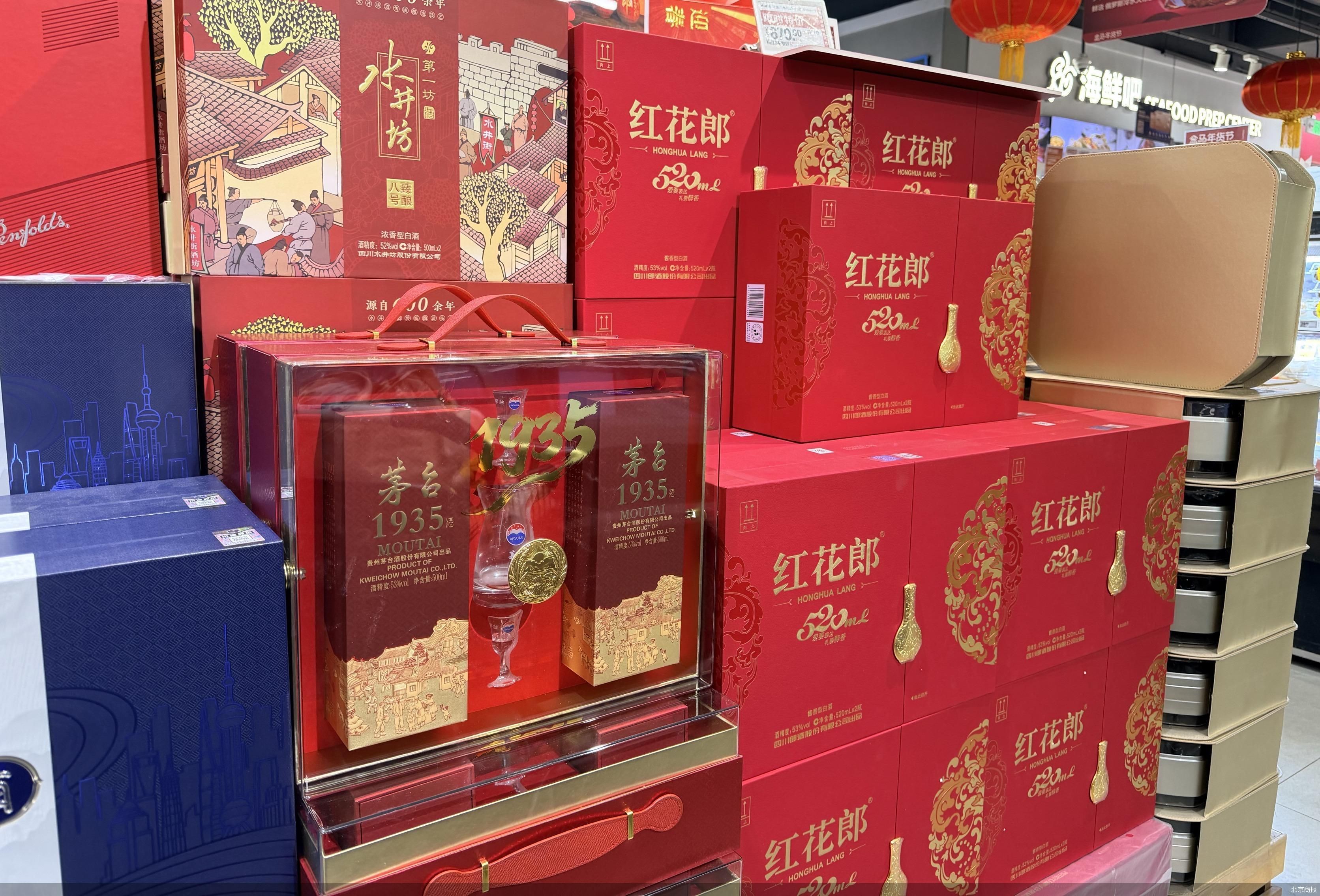
Core Viewpoint - The Chinese liquor market is showing signs of recovery in 2026, particularly in the high-end and mid-range segments, driven by gifting and banquet demands during the New Year holiday season [1][4][8] Group 1: Market Trends - High-end liquor products, such as Wuliangye and Moutai, are prominently featured in supermarkets and liquor stores, indicating a shift in consumer preferences [4][6] - The price range of 300-500 RMB for mid-range products has become a sales powerhouse during the New Year, reflecting a dual demand from gifting and banquet markets [1][6] - Online channels are also witnessing strong sales of high-end liquor, with significant sales figures reported during live-streaming events [7] Group 2: Consumer Behavior - The liquor market is experiencing a transformation in consumer behavior, with a shift from excessive packaging to more rational consumption patterns [8] - The banquet market remains crucial for liquor sales, with a significant portion of consumption still tied to traditional gifting and business events [9] - The dual recovery in the market reflects both consumer rationality and the maturation of the market, with high-end products stabilizing and mid-range products gaining traction [8][10] Group 3: Future Opportunities - The liquor industry is expected to face a new normal characterized by rational consumption, channel flattening, and intensified competition [10] - Companies need to focus on niche markets and immediate retail channels to capture growth opportunities [10] - The instant retail market is projected to grow significantly, with estimates suggesting a market size of 720 billion RMB by 2025, indicating a competitive landscape for liquor companies [11]



天味食品股价暴跌 一季度核心品类收入下滑
Xin Lang Zheng Quan· 2025-04-30 09:38
Core Viewpoint - Tianwei Food, known as the "first stock of Sichuan-style hot pot ingredients," reported a shocking Q1 performance with a revenue decline of 24.8% to 642 million yuan and a net profit drop of 57.53% to 74.73 million yuan, leading to a significant stock price drop of nearly 19% over three trading days [1] Revenue Decline - The company's three core product categories experienced significant revenue declines in Q1 2025: hot pot base ingredients down 41.05%, seasonings down 12.24%, and sausage and cured meat seasonings plummeting 55.77% from 33.47 million yuan to 14.80 million yuan [2] - Seasonal products like hot pot base ingredients and sausage seasonings were hit hardest, while the decline in Chinese dish seasonings was partially offset by the contribution from the newly acquired "Jia Dian Zi Wei" brand [2] - Sales expenses only slightly decreased by 1.38%, indicating that the company did not cut marketing investments despite revenue drops, but rather adjusted its expense structure to focus on online content marketing and user operations, which increased short-term profit pressure [2] - Regionally, the traditional stronghold in the western market saw a revenue drop of 26.86%, while the northern region faced a 43.62% decline, with a net reduction in distributors leading to market loss [2] - Efforts to expand into eastern and southern markets yielded minimal results, with eastern revenue only increasing by 9.3%, insufficient to offset losses in the western and northern markets [2] - Notably, the previously strong southern and central regions also turned negative in Q1 2025 [2] Internal Control Issues - More critically, the company faced transparency issues in its financial reporting, as a correction notice revealed that the acquired "Jia Dian Zi Wei" and its subsidiaries were not included in the internal control evaluation, despite their asset and revenue contributions being minimal [3] - Following this, the internal control audit report changed from a "standard unqualified opinion" to an "unqualified opinion with emphasis of matter," highlighting internal control deficiencies [3] - In February, company executives disclosed a share reduction plan, intending to sell up to 1,381,118 shares, representing 0.1297% of the total share capital, raising concerns about management confidence [3] - The seasoning industry is currently facing dual pressures from weak consumer demand and intense competition, posing significant challenges for Tianwei Food as a leading player in the segment [3] - In this period of deep adjustment in the seasoning industry, cash flow health and channel control will be critical for the company's survival [3]
