火锅底料

Search documents
颐海国际:定制+出海双轮驱动,价值重估正当时-20260331
ZHONGTAI SECURITIES· 2026-03-31 00:45
Investment Rating - The report maintains a "Buy" rating for Yihai International [2] Core Insights - Yihai International, originally a supplier for Haidilao, is transitioning into an independent leader in the compound seasoning market, driven by global expansion and B-end industrialization [5][9] - The hot pot industry is expected to grow from approximately 619.9 billion yuan in 2024 to over 800 billion yuan by 2029, indicating a robust market expansion [5][28] - The company is focusing on diversifying its product matrix, which includes hot pot seasonings, Chinese compound seasonings, and convenient fast food products, while reducing reliance on related parties [5][9] Financial Performance - Revenue projections for Yihai International are estimated at 6.613 billion yuan for 2026, 7.060 billion yuan for 2027, and 7.447 billion yuan for 2028, with growth rates of 1%, 7%, and 5% respectively [2] - The net profit is projected to be 932 million yuan in 2026, 1.006 billion yuan in 2027, and 1.078 billion yuan in 2028, with growth rates of 9%, 8%, and 7% respectively [2] - The earnings per share (EPS) are expected to be 0.90 yuan in 2026, 0.97 yuan in 2027, and 1.04 yuan in 2028 [2] Market Dynamics - The compound seasoning market is experiencing significant growth, with a projected market size of 126.5 billion yuan in 2024, expected to reach 202.9 billion yuan by 2029 [39] - The demand for convenience and efficiency in food preparation is driving the growth of the compound seasoning sector, as consumers increasingly seek quick meal solutions [32][39] - Yihai International's overseas expansion, particularly in Southeast Asia, is expected to contribute significantly to its revenue growth, supported by local production capabilities [68][75] Competitive Position - Yihai International holds a leading position in the compound seasoning market, with a strong focus on R&D and a diverse product portfolio that enhances its competitive edge [5][39] - The company has established a robust supply chain with multiple production facilities and logistics centers, which enhances its operational efficiency and market responsiveness [56][57] - The firm is leveraging its brand recognition and product quality to penetrate both B-end and C-end markets, aiming for increased market share [67][68]
颐海国际(01579):颐海国际01579.HK2025年报点评:收入平稳增长,盈利改善亮眼
Huachuang Securities· 2026-03-26 08:07
Investment Rating - The report maintains a "Buy" rating for the company with a target price of HKD 19 [2][8]. Core Insights - The company achieved a revenue of HKD 6.613 billion in 2025, representing a year-on-year growth of 1.12%, and a net profit attributable to shareholders of HKD 854 million, up 15.49% year-on-year [2][4]. - The second half of 2025 saw revenue of HKD 3.685 billion, a 2.01% increase year-on-year, and a net profit of HKD 544 million, reflecting a significant growth of 26.29% year-on-year [2][4]. - The company is expected to continue its stable revenue growth in 2026, driven by overseas expansion and improvements in the B-end business, with a projected revenue growth rate of 6.0% [4][8]. Financial Performance Summary - Total revenue for 2025 is projected at HKD 6,613 million, with a year-on-year growth rate of 1.1% [4]. - The net profit attributable to shareholders is expected to reach HKD 854 million in 2025, with a growth rate of 15.5% [4]. - Earnings per share (EPS) for 2026 is estimated at HKD 0.93, with a price-to-earnings (P/E) ratio of 15 times [4][8]. - The company’s gross margin for 2025 is reported at 32.8%, with a net profit margin of 12.9%, both showing slight improvements year-on-year [8][9]. Revenue Breakdown - In 2025, revenue from the company's affiliated and third-party businesses was HKD 18.31 billion and HKD 47.81 billion, respectively, with year-on-year changes of -7.2% and +4.7% [8]. - The second half of 2025 showed improvements in the affiliated business, with revenue changes of -1.8% and +3.4% for affiliated and third-party businesses, respectively [8]. - Product-wise, revenue from hot pot base, Chinese seasoning, and instant food was HKD 40.38 billion, HKD 9.16 billion, and HKD 15.64 billion, with respective year-on-year changes of -1.2%, +16.4%, and -2.5% [8]. Future Outlook - The company is expected to maintain a growth trajectory in 2026, with clear growth drivers including overseas market expansion and enhancements in the B-end business [8]. - The report anticipates that the company will continue to optimize its channel strategies and product pricing, contributing to improved profit margins [8].
颐海国际(01579):H2业绩提速,海外和B端表现亮眼
CMS· 2026-03-26 01:33
Investment Rating - The report maintains a "Strong Buy" rating for the company with a target price of HKD 22.50, indicating a potential upside of 40% from the current price of HKD 15.97 [2][6]. Core Insights - The company reported a significant acceleration in performance with a revenue growth of 2.0% and a net profit growth of 26.3% in H2 2025, alongside a high dividend payout ratio of 98% [6]. - Key drivers for future growth include overseas expansion and strong performance in the B-end market, with expectations of continued improvement in core operations and shareholder returns [6]. - The company is projected to achieve earnings per share (EPS) of HKD 0.90 and HKD 1.01 for 2026 and 2027, respectively, with a corresponding valuation of 15.6X for 2026 and a target valuation of 22X [6]. Financial Performance - For the fiscal year 2025, the company reported total revenue of HKD 66.13 billion and a net profit of HKD 8.54 billion, reflecting a year-on-year increase of 1.1% and 15.5%, respectively [5][6]. - The gross margin improved to 32.7% for the year, with a notable increase in H2 to 35.3%, driven by price adjustments and enhanced channel strategies [6]. - The company’s return on equity (ROE) stands at 17.9%, with a low debt-to-asset ratio of 16.7%, indicating strong financial health [2][6]. Market Outlook - The overseas market is expected to be a significant growth engine, with the B-end business projected to double due to low base effects and new team contributions [6]. - The report anticipates a rebound in the company's related party business as the overall demand in the restaurant sector recovers, particularly with improvements in the operations of associated entities [6]. - Cost pressures are being managed through strategic procurement practices, with expectations of controlled costs in the first half of 2026 [6].
天味食品:主业稳健并购加持,2026年轻装上阵-20260313
Guolian Minsheng Securities· 2026-03-13 04:30
Investment Rating - The report maintains a "Recommended" rating for the company [2] Core Views - The company achieved stable performance in 2025, with a slight decline in revenue and net profit, but external acquisitions contributed positively to growth [8] - The company is expected to resume growth in 2026 after a temporary adjustment in its main business due to inventory levels and operational timing [8] - The forecast for 2026-2028 indicates significant revenue growth, with expected revenues of 40.0 billion, 43.4 billion, and 46.9 billion respectively, representing year-on-year growth rates of 15.9%, 8.6%, and 8.1% [8] Financial Performance Summary - In 2025, the company reported total revenue of 34.49 billion yuan, a year-on-year decrease of 0.8%, and a net profit attributable to shareholders of 5.7 billion yuan, down 8.8% year-on-year [8] - The gross profit margin for 2025 was 40.7%, an increase of 0.9 percentage points compared to the previous year, attributed to improved cost management [8] - The company’s online sales channel saw a significant increase of 56.9% year-on-year, while offline sales decreased by 12.8% [8] Earnings Forecast - The projected earnings per share for 2026 is 0.60 yuan, with a price-to-earnings ratio (P/E) of 20 [2] - The net profit for 2026 is expected to reach 6.4 billion yuan, reflecting an 11.9% increase from the previous year [9] - The company’s EBITDA is forecasted to grow at rates of 3.6%, 7.2%, 8.3%, and 8.8% for the years 2025 to 2028 [9]

天味食品(603317):主业稳健并购加持,2026年轻装上阵
Guolian Minsheng Securities· 2026-03-13 02:30
Investment Rating - The report maintains a "Buy" rating for the company [2] Core Views - The company achieved stable performance in 2025, with a slight decline in revenue and net profit, but external acquisitions contributed positively to growth [8] - The company is expected to resume growth in 2026 after a temporary adjustment in its main business due to inventory levels and seasonal factors [8] - The company is diversifying its product categories and channels through acquisitions, which is anticipated to sustain high growth rates [8] Financial Forecasts - For 2025, the company reported revenue of 3,449 million yuan, a decrease of 0.8% year-on-year, and a net profit of 570 million yuan, down 8.8% year-on-year [2][8] - The projected revenue for 2026 is 3,998 million yuan, representing a growth rate of 15.9%, with net profit expected to reach 637 million yuan, an increase of 11.9% [2][9] - The company’s gross margin for 2025 was 40.7%, showing a slight improvement of 0.9 percentage points year-on-year [8] Revenue Breakdown - In 2025, the revenue from hot pot base was 1,230 million yuan, with a year-on-year decline of 2.9% [8] - The revenue from recipe-style condiments was 1,770 million yuan, showing a slight decrease of 0.2% year-on-year [8] - Online channel revenue increased significantly by 56.9% year-on-year, reaching 940 million yuan, attributed to the contribution from newly consolidated businesses [8] Profitability Metrics - The company’s net profit margin for 2025 was 16.5%, down 1.5 percentage points year-on-year [8] - The projected net profit margin for 2026 is expected to be 15.9% [9] - The company’s earnings per share for 2025 was 0.54 yuan, with projections of 0.60 yuan for 2026 [2][9]
天味食品:2025年报点评25全年平稳过渡,26经营发力改善-20260312
Huachuang Securities· 2026-03-12 04:20
Investment Rating - The report maintains a "Strong Buy" rating for Tianwei Foods (603317) with a target price of 16 CNY [1][7]. Core Insights - The company experienced a slight decline in total revenue for 2025, with a total revenue of 3,449 million CNY, representing a year-on-year decrease of 0.8%. However, the company is expected to improve its operations in 2026, with projected revenue growth of 11.9% [2][7]. - The net profit attributable to shareholders for 2025 was 570 million CNY, down 8.8% year-on-year, but is forecasted to recover with a growth of 15.7% in 2026 [2][7]. - The report highlights that the company is transitioning smoothly in 2025 and anticipates a recovery in its core business, driven by new product contributions and synergies from acquisitions [7]. Financial Summary - **Revenue Forecasts**: - 2025: 3,449 million CNY - 2026: 3,859 million CNY (11.9% growth) - 2027: 4,157 million CNY (7.7% growth) - 2028: 4,471 million CNY (7.5% growth) [2][7] - **Net Profit Forecasts**: - 2025: 570 million CNY - 2026: 659 million CNY (15.7% growth) - 2027: 727 million CNY (10.2% growth) - 2028: 796 million CNY (9.5% growth) [2][7] - **Earnings Per Share (EPS)**: - 2025: 0.54 CNY - 2026: 0.62 CNY - 2027: 0.68 CNY - 2028: 0.75 CNY [2][7] - **Valuation Ratios**: - Price-to-Earnings (P/E) Ratio: - 2026: 21 - 2027: 19 - 2028: 17 [2][7] - Price-to-Book (P/B) Ratio: - 2026: 2.9 - 2027: 2.9 - 2028: 2.9 [2][7] Market Performance - The company’s stock price as of March 11, 2026, was 12.73 CNY, with a 12-month high of 14.63 CNY and a low of 10.66 CNY [3][7].
食品饮料行业动态报告:从“价”逻辑看大众品
Guolian Minsheng Securities· 2026-02-26 00:20
Investment Rating - The report maintains a recommendation for the food and beverage industry [3] Core Insights - The current operating cycle for mass consumer goods has been characterized by oversupply, leading to declines in price and profit margins [9] - Demand has weakened since 2021, with restaurant demand growth dropping from double digits to low single digits [9] - Prices for mass consumer goods have been on a downward trend since 2021, with leading companies experiencing significant price reductions [9] - The report anticipates that prices may have reached a bottom in 2025, with potential for recovery in 2026 if demand improves [27] Summary by Sections Review of Current Operating Cycle - The food and beverage sector has faced a supply-demand imbalance, resulting in continuous price declines from 2021 to 2025, affecting prices, profits, and valuations [12] - Capital expenditure in the mass consumer goods sector grew at a compound annual growth rate (CAGR) of 14% from 2017 to 2022, leading to significant capacity expansion [9][12] Price Outlook for 2025 - The report suggests that prices may have reached a phase of stabilization, with indicators showing improvements in consumer price index (CPI) and food CPI [27] - Restaurant revenue data indicates a potential bottoming out of demand, with a recovery in consumer spending expected [27] Investment Recommendations - For the restaurant supply chain, the report recommends focusing on frozen foods, seasoning products, and beer, highlighting companies like Anjuke Foods and Yihai International for their market share growth and pricing strategies [42][43] - In the dairy industry, the report suggests monitoring companies such as Modern Farming and Yili Group, anticipating price improvements in the second half of 2026 [42][43]





四川多趟货运班列春节不打烊
Xin Lang Cai Jing· 2026-02-24 15:14
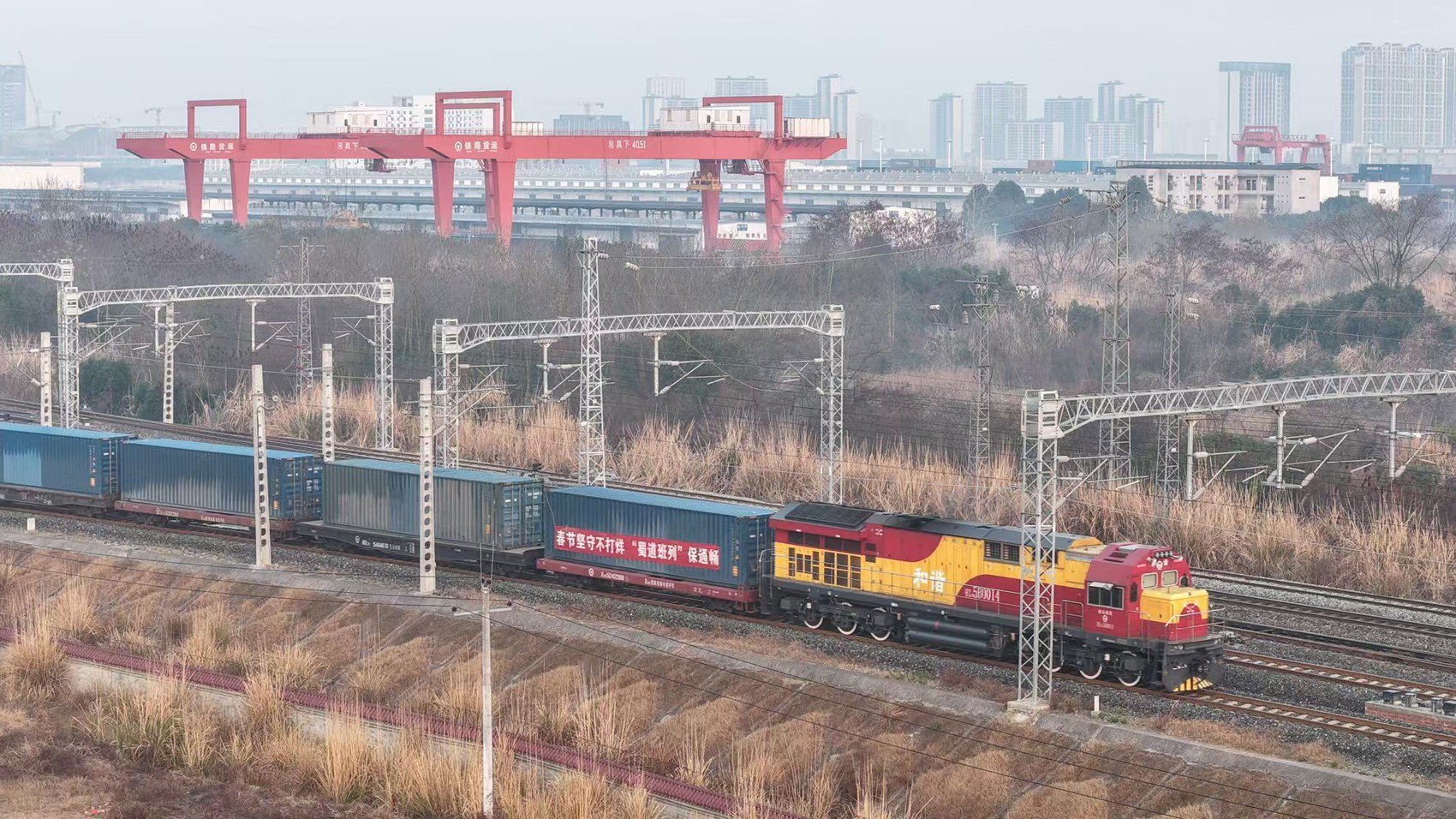
Core Insights - The article highlights the continuous operation of freight trains during the Spring Festival, specifically the "Yangtze River Express," "Northbound Express," and "Greater Bay Area Express," which collectively operated 39 trains and transported approximately 54,395 tons of goods, ensuring uninterrupted supply during the holiday season [1][2]. Group 1: Freight Train Operations - The "Yangtze River Express" was established to enhance the transportation capacity of the Yangtze River Golden Waterway, utilizing a rail-water intermodal system that significantly reduces transportation time by half compared to traditional water transport [1][2]. - During the Spring Festival, a train loaded with 1,100 tons of coke traveled from Dazhou to Wuhan, demonstrating the efficiency of the "Yangtze River Express" in transporting raw materials for steel production [3]. - The "Northbound Express" transported 20 standard containers of flour from Meishan to Yinan, Shandong, showcasing its role in regional supply chains [3]. Group 2: Regional Supply Chain Impact - The "Greater Bay Area Express" facilitated the rapid delivery of Sichuan specialties such as hot pot base and doubanjiang to the Guangdong-Hong Kong-Macau Greater Bay Area within 36 hours, enhancing the festive market offerings [2][3]. - The return trips of the "Greater Bay Area Express" included transporting fashion items, beverages, and home appliances from the Greater Bay Area to Sichuan, further enriching the local holiday market [3].

【新春走基层】不用进城就能买年货
Xin Lang Cai Jing· 2026-02-21 00:47
Group 1 - The article highlights the increasing availability of retail options in rural areas, allowing residents to purchase goods without traveling to urban centers [4][5] - The establishment of the Wo Mei New Retail Supermarket in Liu Chuan Town, which spans approximately 1,000 square meters and offers over 2,000 product varieties, reflects the growing trend of comprehensive supermarkets in rural regions [4] - The supermarket operates under a standardized management system to ensure quality and prevent the sale of counterfeit or expired products, contributing to consumer trust [4] Group 2 - The local government in Jingyuan County has organized 22 key suppliers to enhance the supply of essential goods during the Spring Festival, ensuring a stable market with sufficient quantities and diverse options [5] - A budget of 1 million yuan has been allocated for promotional activities aimed at boosting consumer spending during the New Year shopping festival, covering various sectors including automotive, daily necessities, and local agricultural products [5][6] - The integration of online and offline sales through platforms like JD.com for local specialties has been emphasized, allowing consumers to enjoy local products conveniently [6]
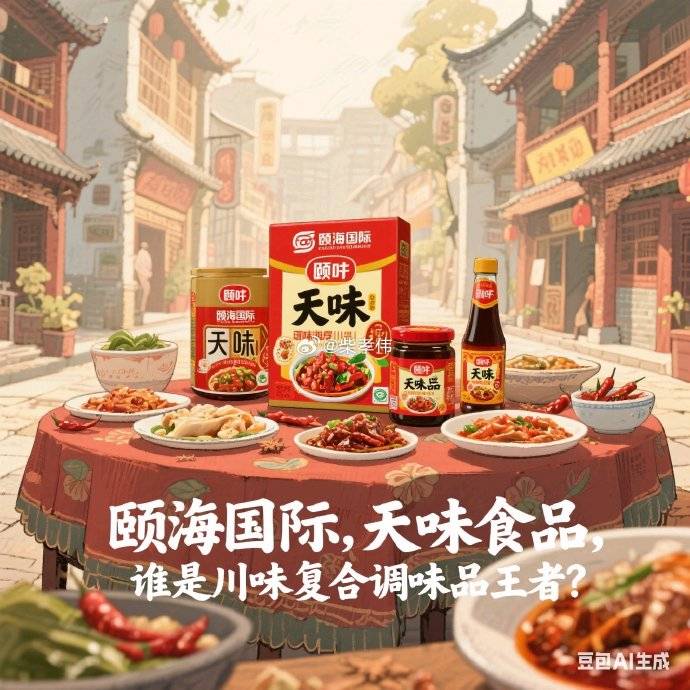
除了自嗨锅,其他自热火锅品牌如颐海国际目前的经营状况如何?
Sou Hu Cai Jing· 2026-02-16 10:13
Core Insights - The self-heating hot pot market is undergoing significant contraction, exemplified by the bankruptcy of self-heating pot company, which had a valuation of 7.5 billion yuan and liabilities exceeding 140 million yuan, indicating overall industry shrinkage [1] - Leading companies like Yihai International are showing resilience through supply chain and channel transformations despite a slowdown in growth [1] Industry Overview - The self-heating hot pot market saw a 32.67% year-on-year decline in sales in Q4 2024, with market share dropping from 1.84% in 2022 to below 1% [1] - Price sensitivity among consumers has increased, with products priced above 30 yuan dropping to 44.02% of sales, alongside concerns over food safety and taste defects accelerating industry consolidation [1] Yihai International - Yihai International reported revenue of 6.54 billion yuan in 2024, a 6.4% increase, with third-party business accounting for 69.8% of revenue and growing at 10.4% [1] - The company is implementing three strategies to address growth challenges: 1. Expanding distribution channels and international presence through 3,000 distributors and a factory in Thailand covering 49 countries [1] 2. Diversifying product offerings, including a 56.7% growth in non-hot pot items like sour and spicy noodles [1] 3. Controlling costs by establishing raw material bases, although investment in health-oriented product development remains a shortcoming [1][2] Tianwei Foods - Tianwei Foods achieved revenue of 3.476 billion yuan in 2024, a 10% year-on-year increase, with net profit soaring by 36.77% [4] - Key success factors include: - Focus on specific product categories, with Chinese cuisine condiments generating 1.771 billion yuan, accounting for 50.9% of revenue and a market share of 11.1% [4] - Strong distribution network with 2,207 distributors covering 700,000 terminals and over 80% penetration in county-level markets [4] - Health-oriented innovations, such as fresh matsutake soup base and reduced-salt series, responding to consumer demand [4] Industry Future - Future competition will focus on three dimensions: 1. Precise scene targeting, emphasizing self-heating food as an "emergency need" rather than a substitute for daily meals [6] 2. Technological upgrades to improve safety and freshness of heating packs and ingredients [6] 3. Empowering B-end clients, with Yihai providing customized base materials to chain restaurants and Tianwei acquiring companies to enter the restaurant supply chain [6] - Leading companies are shifting towards "value competition," with Yihai replicating its "hot pot + dining" model in Southeast Asia and Tianwei exploring overseas Chinese markets through H-share listings [6]