
算力即服务

Search documents
罗曼股份并购切入AI算力领域,订单与业绩成关键看点
Jing Ji Guan Cha Wang· 2026-02-14 01:59
Strategic Advancement - The company plans to acquire Wutongshu High-tech (AIDC computing power service provider) in 2025 and Holovitz (immersive experience design company) in 2024, creating a synergistic path of "computing power and electricity integration" and "lighting + experience design" [2] - The chairman, Sun Kaijun, stated in a January 2026 interview that the company will implement a full-chain layout through "computing power hardware + infrastructure + model ecology," deepening AI applications in safety and intelligent science, while exploring a "computing power as a service" model [2] - The initiative aims to combine new energy technology with computing center energy consumption management to create green data center solutions [2] Operational Status - Order Progress: Wutongshu High-tech signed computing power contracts totaling approximately 604 million yuan from December 2025 to January 2026, including a collaboration with China Merchants Intelligent Supply Chain worth about 933 million yuan [3] - These orders account for 82.5% of the company's revenue in the first three quarters of 2025, and successful execution will directly contribute to revenue [3] - Financial Improvement: The company expects a net profit of 50 to 60 million yuan in 2025, turning from loss to profit; revenue for the first three quarters of 2025 is 732 million yuan (a year-on-year increase of 63.10%), with a net profit attributable to shareholders of 21.09 million yuan (a year-on-year increase of 33.55%) [3] - However, the first quarter of 2025 saw revenue growth without profit growth (net profit decreased by 20.68% year-on-year), and operating cash flow was negative [3] Future Development - Integration Pressure: The cross-industry acquisition requires addressing technical, team, and cultural integration challenges, with the company setting a performance commitment of 400 million yuan for Wutongshu High-tech from 2025 to 2027, which carries a risk of not meeting targets [4] - Industry Competition: The computing power sector is driven by policy support (such as the national computing power interconnection node construction), but the market is highly competitive, and order execution may be affected by supply chain or demand fluctuations [4] - The company has quickly entered the computing power sector through acquisitions, with initial improvements in performance reflecting order landing and strategic synergy; however, sustainability depends on future integration efficiency, order conversion capability, and industry competition landscape [4]

环球问策| IDC中国区总裁霍锦洁:从“上云”迈向“用算”,绿色ICT将成重要标尺
Huan Qiu Wang Zi Xun· 2025-12-08 08:58
Core Insights - The concept of "Artificial Intelligence +" is gaining traction in China, with policies driving its integration across various industries, aiming to inject strong momentum into economic growth [1][3] - IDC's President in China, Huo Jinjie, emphasizes that top-level design is creating opportunities, shifting the digitalization process from resource migration to value creation [1][3] AI Terminal Development - By 2027, the penetration rate of new intelligent terminals and AI applications is expected to exceed 70%, with rapid growth in the core industries of the intelligent economy; by 2030, this rate is projected to exceed 90% [3] - The IT terminal market is anticipated to experience a dual explosion of "stock replacement + incremental innovation" by 2026, with AI terminals becoming key productivity tools for economic transformation [3] Computing Power Trends - The industry is likely to adopt a "compute as a service" model, allowing for flexible payment and on-demand usage of high-performance computing resources [4] - The construction of an integrated computing power network will provide foundational support for value creation, with cross-domain scheduling and heterogeneous computing power delivery becoming the norm [4] Green Computing Initiatives - Green ICT is becoming a critical benchmark for enterprise transformation, with liquid cooling, energy efficiency platforms, and green electricity expected to be standard for large projects [4] - Companies must reshape their KPI systems to include green metrics such as PUE (Power Usage Effectiveness) and WUE (Water Usage Effectiveness) [4] Scene Engineering and Digital Transformation - Successful implementation of scene engineering will unlock the full value of computing power, requiring enterprises to move from fragmented pilot projects to end-to-end scene deployment [5] - Data compliance is a significant challenge in digital transformation, with the proliferation of AI-generated data complicating data governance [5] Talent Development - There is a pressing need for hybrid AI talent that possesses both depth and breadth of knowledge, understanding industry processes and effectively utilizing AI tools [5] - Companies should focus on productizing governance capabilities related to compliance, risk, and energy efficiency before scaling their operations [5]


全球AI巨头现身中公教育闭门会,教育AI算力平台布局浮出水面
Zheng Quan Shi Bao Wang· 2025-11-28 04:47
Group 1 - The seminar titled "Building a New Foundation for AI Education" was held on November 25, focusing on "restructuring educational cloud computing power" and "AI talent cultivation" [1] - The event was co-hosted by Zhonggong Education and New Era, with NVIDIA executives attending, highlighting the significance of the meeting [1] - Zhonggong Education announced the establishment of a joint venture, New Era, in October to focus on computing power platforms and AI talent ecosystems [1] Group 2 - NVIDIA executives shared global trends in computing power technology and suggested that "computing power as a service" could be a key path for the popularization of AI in education [1] - Although no specific cooperation plans were announced, the presence of NVIDIA executives provided technical endorsement for Zhonggong Education's computing power layout [1] - There are indications that the collaboration between Zhonggong Education and NVIDIA may focus on building a technology ecosystem [1] Group 3 - Tianfeng Securities believes that the layout of AI computing power could help Zhonggong Education break through traditional business limitations, but emphasizes the need to monitor the actual implementation capabilities [1] - The success of the joint venture or cooperation projects will depend on the specific progress made, and if the computing power platform can be successfully commercialized, it may reconstruct Zhonggong Education's valuation system [1] Group 4 - The construction of AI infrastructure in education is a systematic project requiring technology, content, and market-driven efforts [2] - Zhonggong Education's ability to open new business growth curves depends on its technology integration capabilities and market development efficiency [2] - New Era, as an independent AI business entity, must leverage existing resources and content advantages while establishing a business model that meets technology service and platform operation needs [2]


迈越科技(02501) - 自愿性公告成功中标
2025-10-30 11:47
香港交易及結算所有限公司及香港聯合交易所有限公司對本公告的內容概不負責,對其 準確性或完整性亦不發表任何聲明,並明確表示,概不對因本公告全部或任何部分內容 而產生或因倚賴該等內容而引致的任何損失承擔任何責任。 本公告由邁越科技股份有限公司(「本公司」,連同其附屬公司統稱「本集團」)自願作出, 以向股東及本公司潛在投資者提供有關本集團最新業務發展的最新資料。 本公司董事會(「董事會」)欣然宣佈,本公司全資附屬公司南寧市邁越軟件有限責任公司(「南 寧邁越」)近日透過廣西北部灣投資集團有限公司的招標平台(即電子招采系統)(「該平台」) 成功中標一項項目(「中標」)。中標概要載列如下: MAIYUE TECHNOLOGY LIMITED 邁越科技股份有限公司 ( 於 開 曼 群 島 註 冊 成 立 之 有 限 公 司 ) (股份代號:2501) 自願性公告 成功中標 李常青 股東及本公司潛在投資者於買賣本公司證券時務請審慎行事。 * 僅供參考。 承董事會命 邁越科技股份有限公司 董事長 | | | 中標結果 | | 估計合約 | | --- | --- | --- | --- | --- | | 招標者 | 成功中標 ...
年复合增长率高达20.45%!这一新赛道将成为汽车智能化的关键?
Zhong Guo Qi Che Bao Wang· 2025-09-23 02:19
Core Insights - The global automotive AI chip market is projected to grow from $13.8 billion in 2024 to $34.3 billion by 2029, with a compound annual growth rate (CAGR) of 20.45% [2] - AI chips are becoming the central component for enabling key applications such as autonomous driving, smart cockpits, and predictive maintenance in the automotive industry [3][4] - The market is driven by advancements in technology, increasing efficiency of AI algorithms, and stricter regulations on ADAS and active safety features [4] Market Dynamics - The automotive AI chip market is expanding with applications ranging from in-vehicle smart functions to platforms for intelligent perception, decision-making, and control [3] - Major drivers include the rising penetration of autonomous driving, the complexity of ADAS systems, and the demand for AI processing capabilities in smart cockpits [4] - The shift from general-purpose AI chips to automotive-grade AI chips is evident, with a focus on low latency and low power consumption [4] Competitive Landscape - The competition in the automotive AI chip market is becoming increasingly differentiated, with companies like NVIDIA and Qualcomm holding significant market shares [5] - NVIDIA's Orin chip has been installed in over 5 million vehicles, while Qualcomm's SA8155P chip has a 40% penetration rate in high-end models [5] Technological Advancements - The computational density of AI chips is continuously improving, with expectations for single-chip performance to reach 2000 TOPS in the coming years [6] - The rise of integrated storage-compute architectures is breaking traditional bottlenecks, enhancing data throughput and energy efficiency [6] Industry Trends - Edge computing and cloud collaboration are emerging as key trends in the development of automotive AI chips, enabling real-time decision-making and efficient data flow [7] - The market is witnessing a shift from traditional hardware sales to "Compute as a Service" (CaaS) models, providing flexible service options for users [8] Strategic Directions - Companies are advised to establish a "general-purpose computing platform + dedicated acceleration module" approach to enhance computational efficiency and adaptability [9] - Building a closed-loop ecosystem of "chip-algorithm-data" is crucial for rapid technological iteration and optimization [9] Future Outlook - The development of automotive AI chips is not only a race of technological iteration but also a transformation of industrial ecosystems and business models [10] - As chips become the "digital engine" of vehicles, the entire industry stands at a pivotal point of transformation towards smart automotive solutions [10]


聚焦新质生产力系列之七:1ms城市算网,算力“高速公路”通车!
Huan Qiu Wang· 2025-07-23 07:36
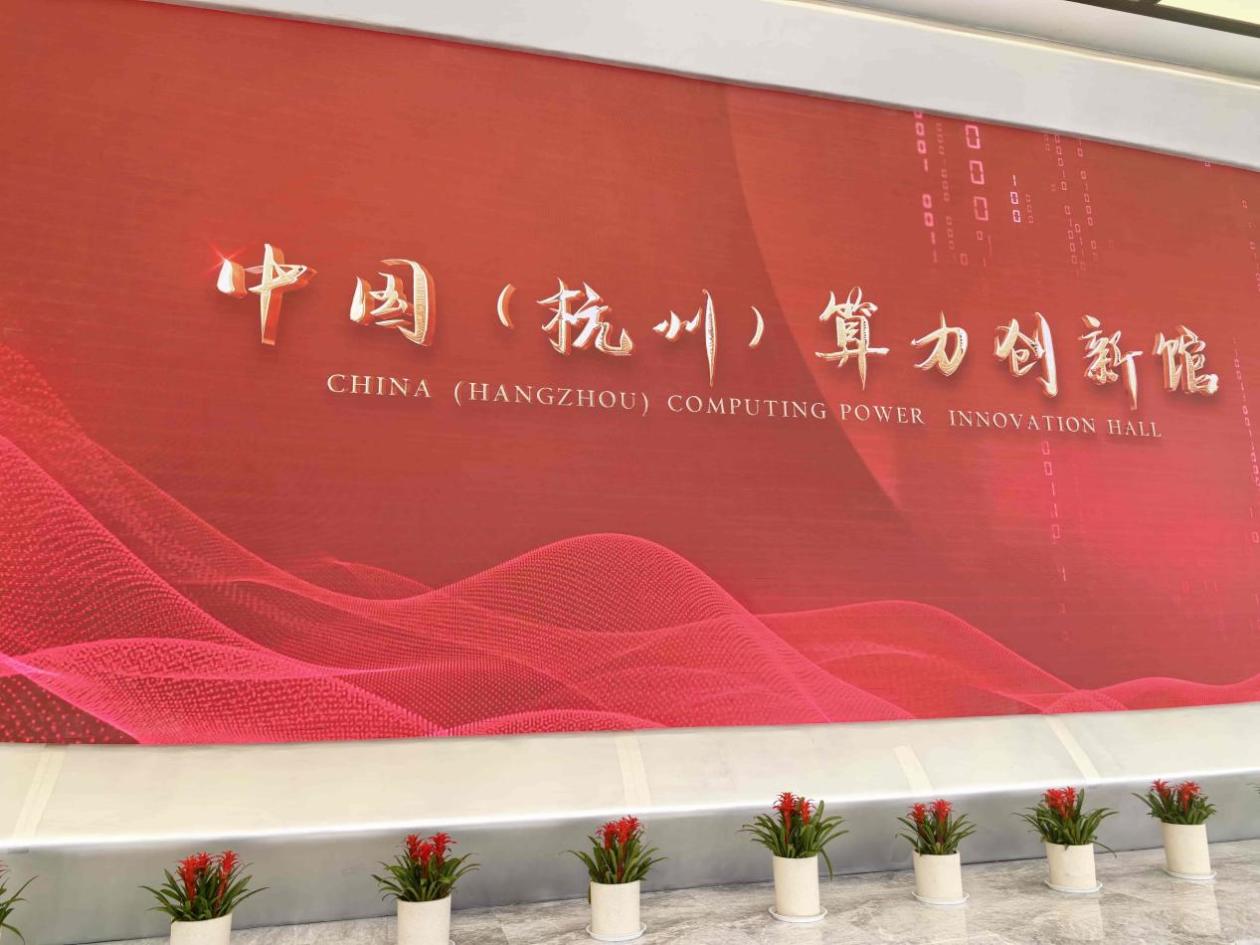
Core Viewpoint - The article emphasizes the importance of computing power as a new type of productivity that integrates information computing power, network carrying capacity, and data storage capacity, driving the transformation of urban development in the digital economy era [1][4]. Group 1: Development of 1ms Urban Computing Network - The 1ms urban computing network aims to achieve efficient collaboration and low-latency transmission of computing resources within cities, with a target latency of no more than 1ms between important computing infrastructure in urban areas [1][2]. - Zhejiang Province has established a 1ms low-latency circle, with the construction of a comprehensive 1ms optical network that covers a population of 20 million, doubling its coverage area [2][4]. - The network includes 1.6 million 10G-PON ports and has achieved gigabit fiber coverage for over 100 million households [4]. Group 2: Role of Telecom Operators - Major telecom operators, including China Mobile, China Telecom, and China Unicom, play a crucial role in the construction of the 1ms urban computing network [4][5]. - China Mobile has built a province-wide F5G-A 1ms optical intelligent computing network, achieving full coverage across 90 counties and creating a "highway" for data and computing power transmission [5]. - China Telecom has developed a hierarchical computing network architecture that achieves 1ms latency within cities and 3ms latency across the province [5]. Group 3: Industrial Empowerment through Computing Power - The China (Hangzhou) Computing Power Town focuses on developing a complete industrial ecosystem centered around computing power, particularly in integrated circuit design, high-end software, and intelligent hardware [7]. - The Zhejiang computing power monitoring and perception platform integrates resources from various providers, forming a computing resource pool of 3000P, which supports AI applications and enhances industrial development [7][8]. - Companies like Leap Motor utilize the 1ms urban computing network to achieve real-time data transmission for high-precision simulations and AI model training, significantly reducing vehicle design iteration cycles from 60 months to 24 months [10][11]. Group 4: Future Challenges and Recommendations - Despite the rapid growth of the computing power industry, challenges remain in building a low-latency, high-reliability, and secure urban computing network [11]. - Recommendations include accelerating the development of computing network infrastructure, promoting the digital transformation of various industries, and fostering open cooperation in the computing power industry to create resource aggregation effects [11].



帮主郑重解读:英伟达杀回市值第一!80%利润率背后藏着A股这些机会
Sou Hu Cai Jing· 2025-06-04 00:22
Core Insights - Nvidia has reclaimed the title of the world's most valuable company with a market capitalization of $3.45 trillion, surpassing Microsoft and Apple [3] - Jefferies analysts predict Nvidia's profit margin could reach 80% this year, significantly higher than its current gross margin of 61% [3] - The production of the Blackwell chip has doubled to 72,000 units per week, enhancing Nvidia's competitive edge in the AI infrastructure market [3] Company Transformation - Nvidia has transitioned from a graphics card manufacturer to an AI infrastructure giant, offering a comprehensive "hardware + software + system" package [3] - The "compute as a service" model has allowed Nvidia to shift from one-time sales to long-term software licensing, increasing its revenue potential [3] Market Dynamics - The AI revolution is not limited to the US market; Chinese companies like Inspur and Sugon are supplying domestic large models, with liquid cooling technology reducing server energy consumption by 30% [4] - Nvidia's PEG ratio is below 0.9, indicating it is undervalued compared to its growth potential, while domestic AI chip companies are gaining traction with competitive pricing and performance [4] Risks and Challenges - Nvidia faces risks from US export restrictions, which have cost it $50 billion in the Chinese market, and initial yield rates for the Blackwell chip are only 60% [4] - Despite these challenges, the demand for AI computing power is expected to grow significantly, likening it to the foundational role of electricity in the past [4] Investment Focus - The A-share market is shifting from speculative trading to performance-based investments, with a focus on companies with solid technology and orders, such as those in the supply chain for Nvidia [5] - Long-term investment strategies should prioritize companies that are positioned to benefit from the broader trend of AI integration [5] Future Outlook - The value of computing power is likened to that of oil, suggesting that companies like Nvidia hold the key to future wealth generation in the AI industry [6]

“AI in ALL”与“AI for ALL” 紫光股份持续撬动业绩增长飞轮
Quan Jing Wang· 2025-05-13 13:14
Core Viewpoint - The company emphasizes its "Computing Power x Connectivity" strategy to enhance its full-stack business layout and internal intelligence, focusing on technological innovation and industry applications in the AI era [1][3]. Financial Performance - In 2024, the company achieved a revenue of 79.024 billion yuan, a year-on-year increase of 2.22%, with ICT infrastructure and services contributing 54.459 billion yuan, up 5.73%, accounting for 68.91% of total revenue [2]. - The net profit attributable to shareholders was 1.572 billion yuan [2]. - The subsidiary, H3C, reported a revenue of 55.074 billion yuan, growing by 6.04%, with domestic enterprise revenue at 44.239 billion yuan, up 10.96%, and overseas revenue at 2.916 billion yuan, up 32.44% [2]. Strategic Initiatives - The company is advancing its "AI in ALL" and "AI for ALL" strategies to enhance product capabilities and create an integrated AI empowerment platform [2]. - The focus is on industry-specific applications, with the launch of the "Lingxi" series of large models and various AI-enabled solutions for sectors like digital government, healthcare, and enterprises [3]. Research and Development - The company invested 5.102 billion yuan in R&D, with 40% of its workforce dedicated to R&D activities [4]. - It has established a robust technology moat with over 16,000 patent applications, 90% of which are invention patents [4]. Market Position - The company holds leading market shares in several product categories, including 38.2% in enterprise campus switches (1st), 28.5% in enterprise WLAN (1st), and 54.4% in blade servers (1st) [5]. Growth Prospects - In Q1 2025, the company reported a revenue of 20.790 billion yuan, a year-on-year increase of 22.25%, driven by the demand for computing power due to the AIGC trend [6]. - The company aims to expand its domestic market while also enhancing its overseas presence, targeting key sectors like healthcare and education [7]. Technological Advancements - The company is focusing on "Computing Power as a Service" and has made significant advancements in liquid cooling technology to improve energy efficiency [8][9]. - It plans to integrate liquid cooling solutions with its ICT infrastructure to support green data center initiatives [9]. International Expansion - The company is actively pursuing an H-share issuance to enhance its capital strength and international brand image, with plans to use the funds for R&D, acquisitions, and expanding its sales network [9][10].
