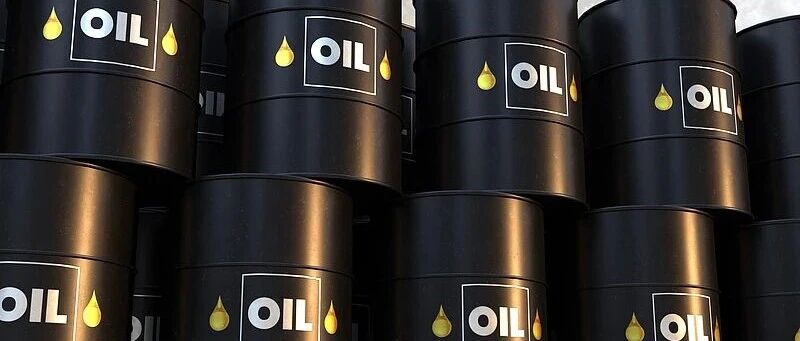
紧急石油储备释放

Search documents
原油成品油早报-20260320
Yong An Qi Huo· 2026-03-20 03:32
Group 1: Report Industry Investment Rating - No information provided Group 2: Core Viewpoints of the Report - This week, the impact of the US - Iran situation on the global crude oil market supply has escalated. The VLCC still cannot pass through the Strait of Hormuz, and about 10 million barrels per day of Middle - Eastern production has been shut down. The IEA announced the largest - ever emergency oil reserve release, but it cannot fundamentally solve the problem of upstream production interruption. The core lies in the duration of the Strait blockade. The crude oil forward curve currently prices in an interruption disturbance of about 30 days, but the disturbance is expected to last longer. Next week, the international crude oil market still faces upward price risks [6] Group 3: Summary by Relevant Catalogs 1. Daily News - The US Treasury issued a new general license related to Russian oil, allowing the delivery and sale of Russian - origin crude oil and petroleum products loaded on ships before March 12 until April 11, 2026, excluding transactions involving North Korea, Cuba and Crimea. This is part of the Trump administration's attempt to stabilize energy prices [3] - The IEA announced that Japan, Canada and South Korea will be the main contributors to the large - scale emergency oil reserve release due to the Iran war. Member states have contributed 426 million barrels of oil, with 172 million barrels from the US [4] - The Israeli military chief of staff said that Israel's military operation against Iran "is not even halfway through", and there is no end - time schedule [4] - The US will not implement a crude oil export ban [4] - The US Treasury Secretary said the US may use Iranian oil to lower prices, and may lift sanctions on Iranian oil at sea in the coming days and may release strategic oil reserves again [5] - Saudi Arabia's Yanbu port has resumed oil - loading operations [5] - Iranian MPs are considering a bill to levy tolls and taxes on ships passing through the Strait of Hormuz [5] 2. Weekly Inventory - In the week of March 13, US crude oil exports increased by 1.464 million barrels per day to 4.898 million barrels per day. Domestic crude oil production decreased by 100,000 barrels to 13.668 million barrels per day. Commercial crude oil inventories (excluding strategic reserves) increased by 6.156 million barrels to 449 million barrels, a 1.39% increase. The four - week average supply of US crude oil products was 21.041 million barrels per day, a 2.14% increase year - on - year. The US Strategic Petroleum Reserve (SPR) inventory remained at 415.4 million barrels. Commercial crude oil imports (excluding strategic reserves) were 7.194 million barrels per day, an increase of 772,000 barrels per day from the previous week. EIA gasoline inventory decreased by 5.436 million barrels, and EIA refined oil inventory decreased by 2.527 million barrels [5] 3. Price Data - From March 13 - 19, WTI prices fluctuated, with a final decrease of 0.18; BRENT prices rose by 1.27; DUBAI prices rose by 1.40. Other related products also showed corresponding price changes [3]
原油成品油早报-20260319
Yong An Qi Huo· 2026-03-19 03:25
1. Report Industry Investment Rating - Not provided in the given content 2. Core View of the Report - This week, the impact of the US-Iran situation on the global crude oil market supply has escalated. VLCCs still cannot pass through the Strait of Hormuz, and about 10 million barrels per day of Middle Eastern production has been shut down. The International Energy Agency has announced the largest - scale emergency oil reserve release in history, but it cannot fundamentally alleviate the upstream production interruption problem. The core depends on the duration of the strait blockade. The crude oil forward curve currently prices the interruption disturbance for about 30 days, but the disturbance time is expected to be longer, and the international crude oil market still faces upward price risks next week [6] 3. Summary by Relevant Catalogs 3.1 Oil Price Data - From March 12 to March 18, 2026, WTI increased by 0.11 to 96.32, BRENT increased by 3.96 to 107.38, and DUBAI increased by 13.58 to 136.42. Other indicators such as SC, OMAN, and various refined oil products also had corresponding price changes [3] 3.2 Daily News - Saudi Arabia's foreign minister stated that the little trust left with Iran has completely broken down - Iran's energy facilities were attacked, and Iran vowed to strike the oil facilities of three Middle - Eastern countries in retaliation - Trump hopes that Israel will suspend further attacks on Iran's energy facilities - US Vice - President Vance will hold a closed - door meeting with oil executives and announce several measures to deal with oil prices within 24 to 48 hours [3][5][6] 3.3 Weekly Inventory - In the week of March 13, US crude oil exports increased by 1.464 million barrels per day to 4.898 million barrels per day, domestic crude oil production decreased by 100,000 barrels to 13.668 million barrels per day. Commercial crude oil inventories (excluding strategic reserves) increased by 6.156 million barrels to 449 million barrels, with a growth rate of 1.39%. EIA gasoline inventory decreased by 5.436 million barrels, and EIA refined oil inventory decreased by 2.527 million barrels [6]
原油成品油早报-20260318
Yong An Qi Huo· 2026-03-18 01:59
1. Report Industry Investment Rating - No information provided 2. Core View of the Report - This week, the impact of the US - Iran situation on the global crude oil market supply has escalated. VLCCs still cannot pass through the Strait of Hormuz, and about 10 million barrels per day of Middle - East production has been shut down. The US launched an air strike on Kharg Island over the weekend, but Iran's crude oil export facilities were not damaged. The US called on its allies to jointly maintain the Strait of Hormuz. The International Energy Agency announced the largest - scale emergency oil reserve release in history, with 32 member countries planning to release about 400 million barrels of oil. However, the release speed is restricted by logistics and transportation organizations and cannot fundamentally relieve the upstream production interruption problem. The core depends on the duration of the strait blockade. Currently, the forward curve of crude oil prices is pricing in an interruption disturbance of about 30 days, but according to the current situation, the disturbance time is expected to be longer. Next week, the international crude oil market still faces upward price risks [5]. 3. Summary by Relevant Catalogs 3.1 Oil Price Data - From March 11 to March 17, 2026, WTI increased by $2.71 to $96.21, BRENT increased by $3.21 to $103.42, and DUBAI decreased by $7.06 to $122.84. Other price indicators such as BRENT 1 - 2 month spread, WTI - BRENT, etc., also showed corresponding changes [3]. - For domestic and other related products, OMAN increased by $6.21 to $149.84, domestic gasoline remained at 9400, and domestic diesel increased by 327 to 7438. Other indicators also had their respective changes [3]. 3.2 Daily News - Iraq and the Kurdish region reached an agreement to resume oil exports through the Kurdish pipeline on Wednesday morning local time. Iraq can transport at least 150,000 - 200,000 barrels of crude oil per day from Kirkuk through the northern pipeline, and the Kurdish region can transport 210,000 barrels per day [3]. - Iraq is negotiating with Iran to ensure that some of its oil tankers can pass through the Strait of Hormuz. Due to the Middle - East war, Iraq has reduced its daily crude oil production from about 4.2 million barrels to just over 1 million barrels [4]. - The Trump administration intends to further relax sanctions on the Venezuelan oil industry to increase crude oil production in response to rising oil prices. Measures may include issuing more individual licenses and establishing a broader mechanism [4]. - Iran launched an attack on a large - scale natural gas field in the UAE, causing a fire and suspending operations. This is Iran's first attack on the UAE's upstream oil and gas facilities in the war [5]. 3.3 Weekly Inventory - For the week ending March 13, the US API crude oil inventory was 6.556 million barrels, with an expected 73,000 barrels and a previous value of - 1.678 million barrels. The API gasoline inventory was - 4.56 million barrels, with an expected - 1.815 million barrels and a previous value of - 1.838 million barrels. The API refined oil inventory was - 1.394 million barrels, with an expected - 1.721 million barrels and a previous value of - 2.257 million barrels [5].
Countries respond to higher oil prices with fuel market policies
Yahoo Finance· 2026-03-16 13:58
Core Insights - The ongoing conflict in the Middle East, particularly involving Iran, has significantly disrupted oil flows through the Strait of Hormuz, leading to a sharp increase in crude oil prices [1][2] - The International Energy Agency (IEA) has coordinated the largest emergency oil stock release in its history, making 400 million barrels available to stabilize the market [1][3] Group 1: Emergency Supply Responses - The IEA's collective release of oil is aimed at addressing market disruptions caused by the Middle East conflict, with the goal of limiting price volatility and easing global supply chain pressures [3] - The UK has committed to contributing 13.5 million barrels to the IEA's emergency release, aiming to prevent short-term supply shocks from affecting oil prices [4] - Canada plans to support the IEA's collective action with 23.6 million Canadian barrels and will also increase natural gas exports to enhance market stability [4] - Australia will release up to 20% of its minimum stockholding obligation for petrol and diesel, equating to 762 million liters, to alleviate supply chain disruptions [5] Group 2: Regulatory Actions on Fuel Prices - The UK's Competition and Markets Authority is intensifying its monitoring of petrol and diesel prices, requiring major fuel retailers to provide data on revenue, costs, and sales [6] - This regulatory scrutiny aims to assess whether retail fuel prices are increasing faster than wholesale costs since the conflict began [6] - The UK government has announced over £50 million in support for low-income households reliant on oil for heating, as kerosene prices have surged more rapidly than petrol and gas due to the conflict [7]
国际能源署32个成员国一致同意,释放4亿桶石油
财联社· 2026-03-11 14:17
Core Viewpoint - The International Energy Agency (IEA) member countries have unanimously agreed to release 400 million barrels of oil from their emergency reserves to address disruptions in the oil market caused by the Middle East conflict [1]. Group 1 - IEA members hold over 1.2 billion barrels in emergency reserves, along with an additional 600 million barrels in industrial stocks mandated by government obligations [2]. - This coordinated release of stocks marks the sixth collective action by the IEA since its establishment in 1974, with previous actions occurring in 1991, 2005, 2011, and twice in 2022 [2].