
纯电驱动

Search documents
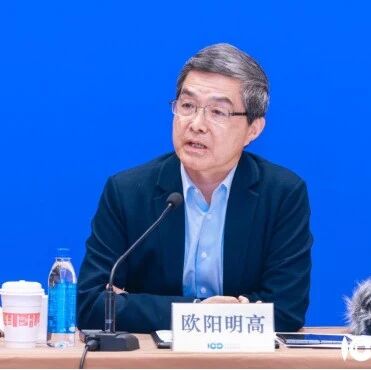
院士欧阳明高:全固态电池产业化需“慎重推进”
证券时报· 2026-03-17 14:54
Core Viewpoint - The automotive industry in China is expected to enter a new cycle of high-quality development driven by innovation starting in 2026, with a focus on technological advancements and the integration of artificial intelligence [1][4]. Group 1: New High-Quality Development Cycle - The new high-quality development cycle will be initiated in 2026, emphasizing innovation in the automotive sector [3][4]. - The growth of the industry since the establishment of the "pure electric drive" strategy in 2009 has been attributed to the maturity of core technologies, market demand, and continuous policy support [4]. - Current market adjustments are seen as a normal transition from "innovation-led" to a "platform phase," necessitating higher technical barriers to overcome competition [4]. Group 2: Focus Areas for Technological Innovation - Over the next five years, technological innovation will concentrate on seven key areas: full-process safety, all-climate ultra-fast charging, fully autonomous driving, fully controlled chassis, all-solid-state batteries, high efficiency under all conditions, and fully functional electric vehicles [4]. - By 2035, it is predicted that all passenger vehicles will fall under the category of pure electric drive technology [4]. Group 3: Impact of Artificial Intelligence - AI is fundamentally changing the underlying architecture and research logic of the automotive industry, shifting from rule-based programming to data-driven approaches [5][6]. - The arrival of world models and general artificial intelligence may occur sooner than expected, influencing the evolution of autonomous driving technology [6]. - The competition between L3 and L4 technology routes will be determined by market responses within 2-3 years, heavily reliant on breakthroughs in AI and chip computing power [6]. Group 4: All-Solid-State Battery Industrialization - The industrialization of all-solid-state batteries is a major focus, with China expected to start significant advancements in 2024, and by 2025, 44% of new patents in this area will be from China, surpassing Japan [7][8]. - The cost of sulfide solid electrolytes is rapidly decreasing, laying a foundation for the industrialization of all-solid-state batteries [8]. - A clear timeline for the industrialization of all-solid-state batteries indicates that validation for 300-350 Wh/kg batteries could be achieved within three to five years, but caution is advised regarding the transition to mass production [8]. Group 5: Battery Technology and Market Dynamics - The necessity for automakers to develop their own battery technologies is emphasized, as lacking technical accumulation could hinder their competitiveness [8]. - The expansion of production capacity may lead to structural oversupply, with the industry gradually concentrating on companies with core technologies [8]. - The next round of competition is expected to double in scale and difficulty, presenting significant opportunities for strong companies while posing risks for those lacking technological foundations [8].

江淮汽车申请承载100吨级纯电驱动线控宽体自卸车专利,有效提升载重量和运行效率
Jin Rong Jie· 2026-02-07 12:02
Group 1 - The core viewpoint of the news is that Anhui Jianghuai Automobile Group Co., Ltd. has applied for a patent for a "100-ton pure electric drive wire-controlled wide-body dump truck," indicating a focus on enhancing heavy-duty electric vehicle capabilities for mining transportation [1] Group 2 - Anhui Jianghuai Automobile Group Co., Ltd. was established in 1999 and is located in Hefei City, primarily engaged in the automotive manufacturing industry [2] - The company has a registered capital of approximately 218.4 million RMB [2] - It has invested in 48 enterprises and participated in 5,000 bidding projects, showcasing its active role in the industry [2] - The company holds 943 trademark records and 5,000 patent records, indicating a strong emphasis on intellectual property [2] - Additionally, it possesses 672 administrative licenses, reflecting its compliance and operational capabilities [2]

中国科学院院士欧阳明高专注动力电池与电控技术研发——“把精力放在科技创新上”(弘扬科学家精神)
Ren Min Ri Bao· 2026-01-29 23:08
Core Viewpoint - The development of pure electric vehicles is a viable path for the automotive industry, supported by advancements in battery technology and a shift towards low-carbon and intelligent energy solutions [2][3][6]. Group 1: Historical Context and Development - In the early 2000s, the mainstream automotive industry focused on hybrid technologies, but the company recognized the potential of pure electric vehicles due to China's strong battery manufacturing capabilities [2]. - The 2008 Beijing Olympics showcased electric vehicles, demonstrating their zero-emission capabilities and validating the potential of pure electric drive [3]. - By 2018, China's production and sales of new energy vehicles exceeded 1 million units, with over 70% being pure electric vehicles, indicating significant market growth [3]. Group 2: Technological Advancements - The company emphasizes the importance of transitioning from theoretical research to practical applications, highlighting the need for industry-academia collaboration to promote technology commercialization [4][5]. - Recent advancements in battery technology have led to improvements in safety, with the introduction of solid-state batteries being a key focus for future development [7]. - The upcoming regulations for electric vehicle batteries, effective July 2026, will enforce stringent safety standards, further enhancing the industry's commitment to safety [7]. Group 3: Future Directions - The company anticipates three major transformations in the electric vehicle sector: electrification of powertrains, intelligent driving technologies, and the integration of low-carbon energy sources [8]. - To ensure electric vehicles utilize green energy, the integration of energy storage solutions is essential, as renewable energy sources like solar and wind are intermittent [9]. - The competitive landscape of the automotive industry is evolving, with companies encouraged to focus on technological innovation rather than price wars to ensure sustainable growth [10].