
产学研结合

Search documents
对话北生所所长王晓东:创新没什么难的,创业要交学费
经济观察报· 2026-02-05 02:01
Core Viewpoint - The article emphasizes the leadership of Wang Xiaodong at the Beijing Institute of Life Sciences (北生所) and his role in fostering a culture of innovation and entrepreneurship among scientists, leading to the emergence of numerous biotech companies in China [1][4][18]. Group 1: Wang Xiaodong's Leadership and Impact - Wang Xiaodong is regarded as a spiritual leader among scientists at 北生所, creating an environment that encourages original innovation [1][4]. - His approach to leadership focuses on academic guidance rather than administrative control, promoting a culture of open discussion and collaboration among researchers [38][46]. - The "百济效应" (Baiyi Effect) has inspired many scientists to start their own companies, contributing to a wave of entrepreneurship in the biotech sector [18][20]. Group 2: Company Development and Challenges - 百济神州 (BeiGene) was established to address the lack of cancer drugs in China, with a focus on developing first-in-class therapies [7][21]. - The company faced significant challenges during its early years, including navigating the complexities of drug development and clinical trials [10][12]. - Wang Xiaodong's second venture, 维泰瑞隆 (VitaRong), aims to tackle the aging population issue in China, reflecting his commitment to improving the quality of life for the elderly [11][12]. Group 3: Research Environment and Funding - The funding situation for 北生所 has improved significantly, with the Beijing government providing annual support of 200 million yuan, enhancing the institute's research capabilities [28][29]. - The collaboration with Tsinghua University has also facilitated access to student resources, addressing the challenge of recruiting graduate students for research [28][29]. - The institute has established various centers to bridge the gap between basic research and industrial application, enabling scientists to translate their findings into marketable products [19][28]. Group 4: Innovation and Academic Culture - The article highlights the importance of fostering a culture of scientific inquiry and curiosity, which Wang believes is essential for driving innovation [42][47]. - The success of 北生所 in producing high-impact research papers reflects the effectiveness of its academic model, which emphasizes collaboration and knowledge sharing [28][47]. - The competitive environment among researchers at 北生所 has contributed to a significant increase in the quantity and quality of scientific output over the years [48].


中国科学院院士欧阳明高专注动力电池与电控技术研发——“把精力放在科技创新上”(弘扬科学家精神)
Ren Min Ri Bao· 2026-01-29 23:08
Core Viewpoint - The development of pure electric vehicles is a viable path for the automotive industry, supported by advancements in battery technology and a shift towards low-carbon and intelligent energy solutions [2][3][6]. Group 1: Historical Context and Development - In the early 2000s, the mainstream automotive industry focused on hybrid technologies, but the company recognized the potential of pure electric vehicles due to China's strong battery manufacturing capabilities [2]. - The 2008 Beijing Olympics showcased electric vehicles, demonstrating their zero-emission capabilities and validating the potential of pure electric drive [3]. - By 2018, China's production and sales of new energy vehicles exceeded 1 million units, with over 70% being pure electric vehicles, indicating significant market growth [3]. Group 2: Technological Advancements - The company emphasizes the importance of transitioning from theoretical research to practical applications, highlighting the need for industry-academia collaboration to promote technology commercialization [4][5]. - Recent advancements in battery technology have led to improvements in safety, with the introduction of solid-state batteries being a key focus for future development [7]. - The upcoming regulations for electric vehicle batteries, effective July 2026, will enforce stringent safety standards, further enhancing the industry's commitment to safety [7]. Group 3: Future Directions - The company anticipates three major transformations in the electric vehicle sector: electrification of powertrains, intelligent driving technologies, and the integration of low-carbon energy sources [8]. - To ensure electric vehicles utilize green energy, the integration of energy storage solutions is essential, as renewable energy sources like solar and wind are intermittent [9]. - The competitive landscape of the automotive industry is evolving, with companies encouraged to focus on technological innovation rather than price wars to ensure sustainable growth [10].
同方股份原董事长陆致成去世
Sou Hu Cai Jing· 2026-01-25 06:24
Core Insights - The passing of Mr. Lu Zhicheng, former president and chairman of Tongfang Co., Ltd., on January 24, 2026, at the age of 78, marks a significant loss for the company and the industry [1] Group 1: Background and Contributions - Mr. Lu was born in August 1948 in Shanghai and graduated from Tsinghua University in 1977, where he later became a professor and doctoral advisor, focusing on the integration of HVAC technology and computer control [3] - In 1989, driven by the ideal of "revitalizing the country through science and education," he founded Beijing Tsinghua Artificial Environment Engineering Company, which laid the groundwork for the establishment of Tongfang Co., Ltd. in 1997 [3] - As a core founder, he established the "technology + capital" development strategy and the "transfer of soil" model for industry-academia-research integration, facilitating the commercialization of scientific achievements from universities [3] Group 2: Achievements and Legacy - From 1997 to 2015, Mr. Lu led Tongfang in aligning with national needs, developing core businesses in information technology, public safety, and energy conservation, which resulted in the growth of well-known enterprises such as Tongfang Weishi and Tongfang Zhinet [4] - He was instrumental in the development of the "large container inspection system" and the localization of microelectronic core components, significantly contributing to China's security technology and the integration of Chinese technology in national projects like the second-generation ID card and the Beijing Olympics [4] - Mr. Lu's principles of "undertaking, exploring, and surpassing" and the corporate culture of "loyalty, responsibility, and value equivalence" have left a lasting impact on Tongfang and will guide future generations towards the vision of becoming a world-class high-tech enterprise [5]

美国专家也看不懂!中国为何又把顶尖材料,给干成“白菜价”了?
Sou Hu Cai Jing· 2026-01-24 11:50
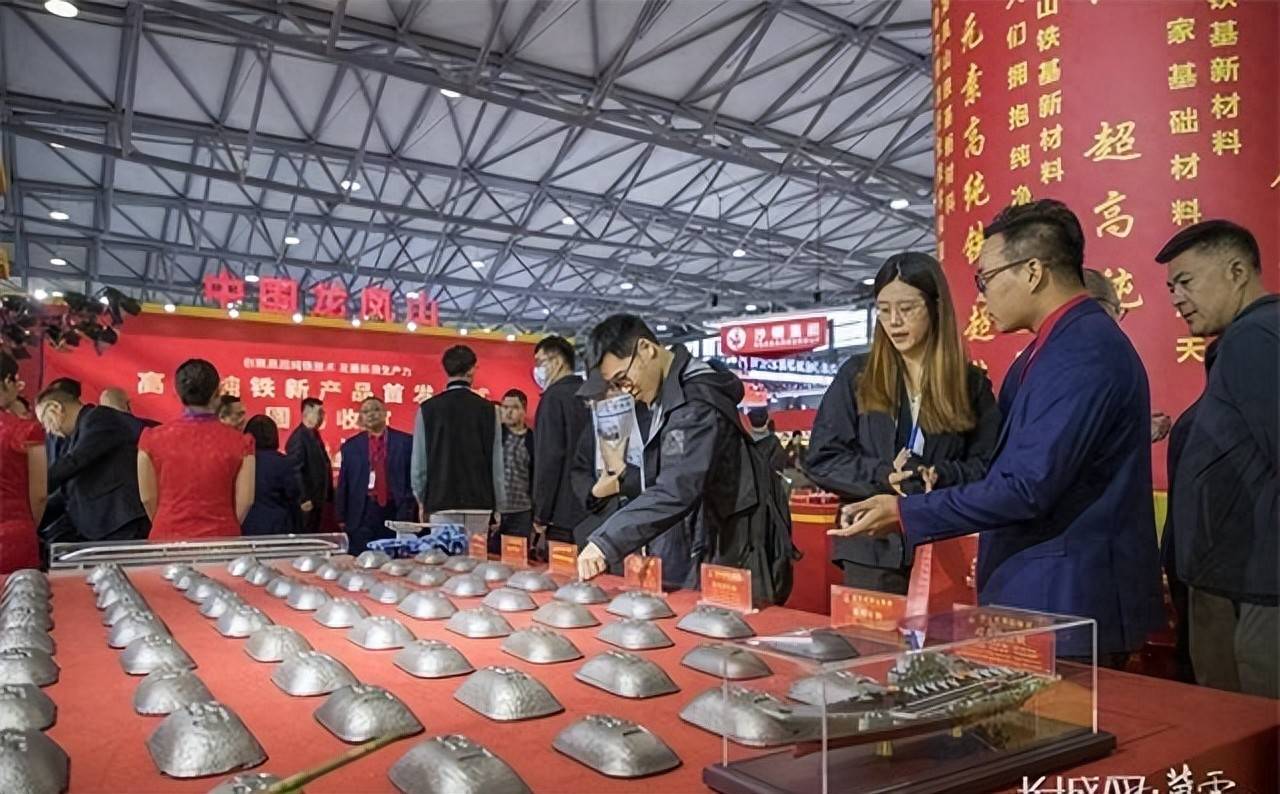
Core Insights - The article discusses China's breakthrough in producing high-purity iron, specifically 5N-grade ultra-pure iron, which has historically been dominated by Japanese and American companies [1][2] - The Chinese team, led by Hebei Longfengshan Group and Shanghai University, developed a new production method that significantly reduces costs and increases supply stability [2][3] Group 1: Production Process - The Chinese team utilized local high-purity pig iron as raw material, avoiding the high costs associated with traditional methods used by Japan and the U.S. [2] - They established the Iron-Based New Materials Research Institute in 2020 and launched a project to achieve 4N-grade purity, with the first production line achieving an annual capacity of 80,000 tons [2][3] - By September 2023, the team successfully produced the first batch of 5N samples with a purity of 99.999% [2] Group 2: Market Impact - By June 2024, the purity reached 99.9992%, surpassing Japanese and American standards, leading to a significant influx of orders from global buyers [3] - The price of the new high-purity iron dropped to one-fifth of the original price, prompting Japanese companies to cut their prices to one-third in response [3][5] - The shift in market dynamics has positioned China as a new supplier, reducing the market share of Japanese and American firms [5] Group 3: Technological Advancements - The production process involves a three-step method: pyrometallurgical pre-treatment, electrolytic refining, and vacuum zone melting, utilizing self-developed ultra-high vacuum furnaces [2][3] - The team has filed 42 patents to protect their innovations and ensure competitive advantage [5] Group 4: Broader Implications - The use of domestically produced high-purity iron has improved the yield of 28nm chips, increased the lifespan of aerospace components, and reduced energy losses in power grids [7] - The project has been recognized with a Metallurgical Science and Technology Award in 2025, indicating its significance in the industry [7] - This development reflects a broader trend of China moving from reliance on imports to becoming a technology exporter, enhancing strategic security [7][9]
中国的斯坦福,快来了
3 6 Ke· 2026-01-20 08:14
Core Idea - The establishment of Fujian Fuyao University, led by President Wang Shuguo, aims to emulate Stanford University’s educational philosophy, emphasizing innovation and industry collaboration [1][46]. Group 1: Historical Context of Stanford University - Stanford University was founded in 1891 with a mission to educate all children in California, inspired by the personal tragedy of its founders, Leland and Jane Stanford [3][7]. - The university's founding was supported by a donation of $40 million, equivalent to approximately $1.4 billion in 2024, and included 8,180 acres of land [7][8]. - Stanford's motto, "Let the wind of freedom blow," reflects its commitment to liberal education and innovation [5]. Group 2: Stanford's Influence on Silicon Valley - Stanford has played a crucial role in the development of Silicon Valley, particularly through the efforts of Frederick Terman, who encouraged students to pursue entrepreneurship [9][10]. - Terman facilitated the founding of Hewlett-Packard (HP) by supporting its founders with funding and connections, marking a significant moment in Silicon Valley's history [18][20]. - The university's culture of innovation has led to the establishment of over 1,200 companies by Stanford alumni, contributing to more than 50% of Silicon Valley's products [41][42]. Group 3: The Role of Key Figures - Frederick Terman's influence as a professor and administrator helped transform Stanford into a hub for technological innovation and entrepreneurship [10][13]. - William Shockley, a Nobel laureate, attempted to create a semiconductor company near Stanford, which ultimately led to the formation of Fairchild Semiconductor, a pivotal company in the tech industry [23][29]. - John Hennessy, Stanford's 10th president, further advanced the university's entrepreneurial spirit, supporting startups like Google and Yahoo, and securing significant donations for the university [40][42]. Group 4: Future Aspirations for Chinese Universities - The establishment of new universities in China, like Fujian Fuyao University, aims to replicate Stanford's model of integrating academic research with industry needs [46][48]. - There is a strong belief that with the right conditions, China can foster a similar environment for technological innovation as seen in Silicon Valley [49].



从销售代理到细分龙头 万丰股份:五彩染料绘就绿色创新路
Shang Hai Zheng Quan Bao· 2026-01-18 18:15
Core Viewpoint - Wanfu Co., Ltd. has successfully positioned itself in the high-end dye market through innovation and a focus on core business, achieving significant advancements in green dyeing technology and operational efficiency [2][6]. Group 1: Company Background and Development - Wanfu Co., Ltd. has nearly 40 years of experience in the dyeing industry, evolving from a local dye factory to a leading player in the dispersed dye segment in China [2]. - The company was founded by Chairman Yu Xingying, who initially entered the dye industry by chance and has since emphasized innovation and specialization as key to success [2][3]. - The company faced early challenges such as funding shortages and technical bottlenecks, which were addressed by recruiting talent from outside the local area [3][4]. Group 2: Innovation and R&D - Wanfu Co., Ltd. has made substantial investments in R&D, with a budget of 18.44 million yuan in 2024, marking an 11.16% increase year-on-year, and a projected 30% increase in the first half of 2025 [6]. - The company has developed unique technologies, such as high-performance star-shaped disperse dyes that eliminate the need for reduction cleaning and can withstand high temperatures of up to 180°C, significantly reducing energy consumption and pollutant emissions by approximately 30% [9][10]. - Wanfu Co., Ltd. has established partnerships with several universities to enhance its R&D capabilities, focusing on cutting-edge technologies and innovative dyeing processes [8]. Group 3: Market Position and Strategy - The company has strategically targeted the mid-to-high-end dye market, avoiding low-end competition and focusing on unique product offerings tailored to customer needs [4][6]. - Wanfu Co., Ltd. has achieved recognition in the industry, with a reputation for solving complex dyeing challenges, as evidenced by its ability to deliver superior products in a fraction of the time compared to competitors [6][7]. - The company has received multiple environmental certifications, including 126 products certified by Bluesign and ZDHC level 3, reflecting its commitment to sustainability and quality [7]. Group 4: Future Outlook - Wanfu Co., Ltd. aims to continue its growth trajectory by expanding into high-end materials, such as polyimide and graphene-enhanced materials, which are critical for advanced applications in various industries [10]. - The company is committed to long-term development, focusing on refining its dye products while exploring new growth avenues in innovative materials [10].

300公里高空跑大模型,苏州科达押注遥感卫星万亿赛道
阿尔法工场研究院· 2026-01-07 00:04
Core Viewpoint - The article discusses the innovative application of hyperspectral remote sensing technology, particularly through the efforts of Suzhou Keda, which aims to integrate AI models into satellites for enhanced environmental monitoring and data analysis [6][7][8]. Group 1: Hyperspectral Technology Overview - Hyperspectral remote sensing captures hundreds of continuous spectral bands, allowing for detailed identification of material compositions, such as detecting nitrogen deficiency in crops or identifying pollution sources [9][10]. - The technology is increasingly being utilized in various fields, including environmental monitoring, agriculture, and emergency response, due to its ability to provide deep insights rather than just broad coverage [9][10]. Group 2: Development and Commercialization - China has launched over 20 hyperspectral satellites as part of its long-term strategy for environmental monitoring, establishing a preliminary integrated observation network [11][14]. - The commercialization of hyperspectral data is beginning to take shape, with the first domestic case of hyperspectral data being valued at over 27 million yuan, indicating a shift towards recognizing remote sensing data as a tradable digital asset [14]. Group 3: Suzhou Keda's Innovations - Suzhou Keda is leading the development of a hyperspectral satellite that will be the first fully privately developed and operated in China, featuring an integrated AI system for on-orbit data processing [16][17]. - The satellite aims to reduce data transmission by 90% and improve response times from hours to minutes by processing data in space and only transmitting high-value information [17][18]. Group 4: Integrated Ecosystem Approach - The company is not only focusing on a single satellite but is also developing a comprehensive ecosystem that integrates satellite, drone, and ground-level data processing to enhance the utility of hyperspectral technology [20][26]. - This integrated approach aims to create a closed-loop system for real-time monitoring and response, leveraging the company's existing expertise in various environmental applications [26]. Group 5: Future Prospects and Challenges - While the technology is promising, challenges remain, including low data utilization rates and the need for industry standards, as many users prefer cheaper alternatives [20][26]. - The success of this initiative will depend on collaboration between state-owned enterprises and private companies, as well as the integration of hyperspectral data into smart city frameworks [26].


师范大学,揭牌全国重点实验室!
Xin Lang Cai Jing· 2025-12-23 12:09
Core Viewpoint - The establishment of the National Key Laboratory for Fluorine Functional Membrane Materials at Shandong Normal University represents a significant advancement in China's scientific innovation landscape, particularly in the fluorochemical industry, providing a platform for high-quality development and industry transformation [4][10]. Group 1: Laboratory Establishment and Significance - The National Key Laboratory for Fluorine Functional Membrane Materials is the only national-level scientific innovation platform in the field of science and engineering at Shandong Normal University [4][10]. - The laboratory's establishment is supported by the Shandong Provincial Government, highlighting the importance of high-level innovation platforms for regional development [4][10]. - The laboratory aims to support the transformation and upgrading of the fluorochemical industry in Shandong Province and foster leading enterprises [4][10]. Group 2: Expert Participation and Collaboration - The opening ceremony included participation from notable experts, including 13 distinguished scholars and entrepreneurs in the field of functional membrane materials [8][10]. - Experts acknowledged the laboratory's outstanding research achievements and the strong collaboration among three key institutions, emphasizing the distinctive characteristics of industry-university-research integration [4][10]. Group 3: Future Development Goals - The President of Shandong Normal University, Zhang Jian, emphasized the importance of the laboratory's construction, committing to integrate university resources to support its development [6][12]. - The goal is to establish the laboratory as a world-class research platform and ensure it passes the evaluation by the Ministry of Science and Technology [6][12]. - The laboratory's success is expected to provide solid support for the university's "Double First-Class" initiative [6][12].

钟南山:发展医学人工智能是必答题
Ke Ji Ri Bao· 2025-12-09 01:52
Core Viewpoint - The development of medical AI is essential and cannot be achieved by a single institution alone; collaboration among various organizations is necessary for innovation and practical application [1]. Group 1: Medical AI Development - Medical AI is identified as a highly promising area for application due to the vast amount of data, diverse scenarios, and urgent public needs in the healthcare sector [1]. - The integration of AI can significantly enhance the capabilities of primary care physicians, allowing them to quickly improve their skills without extensive training [1]. - Despite advancements in AI, it cannot replace the human aspects of medicine, such as understanding patients' emotional and psychological needs [1]. Group 2: Systemic Innovation and Collaboration - The uneven distribution of medical resources and weak primary care capabilities in China necessitate innovative solutions through new information technologies [1]. - The development of medical AI requires a systemic approach that combines technological innovation, institutional reform, and ecological collaboration [1]. - The establishment of an "AI + Healthcare" innovation circle in the Guangdong-Hong Kong-Macao Greater Bay Area is proposed to optimize data management and support AI applications in healthcare [1]. Group 3: Data Management and Ecosystem - The launch of the credible data space by KingMed Medical aims to facilitate safe data circulation within a compliant framework, enhancing the value of AI in clinical settings [2]. - The goal is to create a smart healthcare ecosystem that ensures innovative solutions reach grassroots levels and benefit the public [2].
钟南山:医学AI要靠更多机构的协作,产学研是关键
Zhong Guo Xin Wen Wang· 2025-12-08 05:53
Core Viewpoint - Medical AI is essential and requires collaboration among multiple institutions rather than individual efforts, emphasizing the importance of industry-academia-research integration for effective implementation [1][2]. Group 1: Medical AI Development - The first Greater Bay Area Medical Artificial Intelligence Conference highlighted the potential of medical AI due to vast industry data and urgent public health needs [2]. - AI cannot replace doctors, as understanding patients' emotional and psychological needs is crucial, which AI cannot analyze [2]. - The uneven distribution of medical resources in China necessitates innovative solutions through new information technologies [2][3]. Group 2: Initiatives for Medical AI - Three key initiatives were proposed: 1. Create a leading national high-quality dataset to empower diagnosis, public health, and new drug development [3]. 2. Accelerate the construction of medical data infrastructure to link comprehensive data resources [3]. 3. Establish an "AI + Healthcare" innovation circle in the Guangdong-Hong Kong-Macao Greater Bay Area to optimize data management and promote data compliance [3]. Group 3: Collaboration and Innovation - There is a call for high-level medical institutions, research institutes, and technology companies to engage in the innovation practices of medical AI in the Greater Bay Area [5].
