
超级混动

Search documents
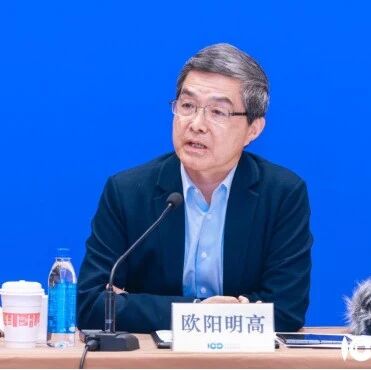
院士欧阳明高:全固态电池产业化需“慎重推进”
证券时报· 2026-03-17 14:54
Core Viewpoint - The automotive industry in China is expected to enter a new cycle of high-quality development driven by innovation starting in 2026, with a focus on technological advancements and the integration of artificial intelligence [1][4]. Group 1: New High-Quality Development Cycle - The new high-quality development cycle will be initiated in 2026, emphasizing innovation in the automotive sector [3][4]. - The growth of the industry since the establishment of the "pure electric drive" strategy in 2009 has been attributed to the maturity of core technologies, market demand, and continuous policy support [4]. - Current market adjustments are seen as a normal transition from "innovation-led" to a "platform phase," necessitating higher technical barriers to overcome competition [4]. Group 2: Focus Areas for Technological Innovation - Over the next five years, technological innovation will concentrate on seven key areas: full-process safety, all-climate ultra-fast charging, fully autonomous driving, fully controlled chassis, all-solid-state batteries, high efficiency under all conditions, and fully functional electric vehicles [4]. - By 2035, it is predicted that all passenger vehicles will fall under the category of pure electric drive technology [4]. Group 3: Impact of Artificial Intelligence - AI is fundamentally changing the underlying architecture and research logic of the automotive industry, shifting from rule-based programming to data-driven approaches [5][6]. - The arrival of world models and general artificial intelligence may occur sooner than expected, influencing the evolution of autonomous driving technology [6]. - The competition between L3 and L4 technology routes will be determined by market responses within 2-3 years, heavily reliant on breakthroughs in AI and chip computing power [6]. Group 4: All-Solid-State Battery Industrialization - The industrialization of all-solid-state batteries is a major focus, with China expected to start significant advancements in 2024, and by 2025, 44% of new patents in this area will be from China, surpassing Japan [7][8]. - The cost of sulfide solid electrolytes is rapidly decreasing, laying a foundation for the industrialization of all-solid-state batteries [8]. - A clear timeline for the industrialization of all-solid-state batteries indicates that validation for 300-350 Wh/kg batteries could be achieved within three to five years, but caution is advised regarding the transition to mass production [8]. Group 5: Battery Technology and Market Dynamics - The necessity for automakers to develop their own battery technologies is emphasized, as lacking technical accumulation could hinder their competitiveness [8]. - The expansion of production capacity may lead to structural oversupply, with the industry gradually concentrating on companies with core technologies [8]. - The next round of competition is expected to double in scale and difficulty, presenting significant opportunities for strong companies while posing risks for those lacking technological foundations [8].

广东一季度新增就业近35万人 城镇调查失业率均值低于全国平均水平
Nan Fang Ri Bao Wang Luo Ban· 2025-05-16 08:25
Employment Stability in Guangdong - Guangdong has focused on stabilizing total employment, expanding new job opportunities, and improving job quality, with a total employment figure of approximately 70.57 million, accounting for about 10% of the national total [1] - The urban survey unemployment rate in the first quarter was below the national average, with a cumulative addition of 348,600 urban jobs, representing a year-on-year increase of 9.3%, achieving 31.7% of the annual target of 1.1 million [1] Talent Acquisition and Retention - BYD has absorbed over 50,000 fresh graduates in the past three years, with around 70% being master's and doctoral graduates, and 80% in R&D positions [2] - The company has trained nearly 1,800 postdoctoral researchers, achieving a 100% retention rate, with key technologies led by these researchers [2] - BYD's success in talent retention is attributed to its emphasis on self-cultivation, competitive salaries, and benefits that enhance employee loyalty [2] Skills Training Initiatives - Guangdong has invested in skill enhancement, with 161,000 participants in subsidized vocational training in the first quarter, offering training subsidies ranging from 800 to 3,600 yuan based on job categories and skill levels [3] - The "pay after training" initiative alleviates financial burdens on trainees, with a vocational training school reporting an 80% employment rate for over 4,000 trained individuals in the past two years [3] Employment Services Accessibility - Employment service stations have been established to provide local job services, with 1,080 stations built across the province, including 153 standardized employment stations [5] - A large-scale recruitment event in March attracted 12,000 participants, with 5,120 job openings from 1,273 companies, showcasing Guangdong's commitment to employment stability [5] - The "Million Talents Gathering in South Guangdong" initiative aims to attract 1 million college graduates to work and start businesses in the province [5]