纳米压印光刻

Search documents
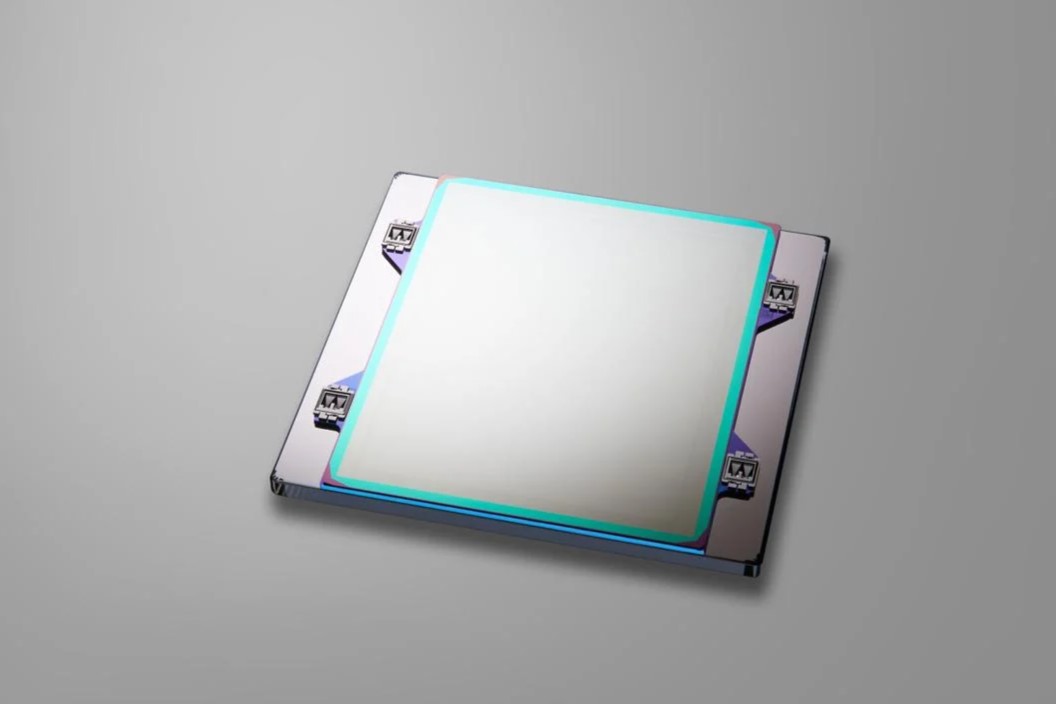
大日本印刷开发1.4nm级纳米压印光刻掩膜版 计划2027年量产
Ju Chao Zi Xun· 2025-12-10 02:45
Core Viewpoint - DNP has successfully developed a 10nm NIL nanoimprint lithography mask, aimed at meeting the miniaturization demands of advanced logic chips for applications such as smartphones and data centers, with plans for mass production by 2027 [1][3]. Group 1: Product Development - The newly developed 10nm NIL nanoimprint lithography mask can be used for circuit patterning equivalent to 1.4nm logic semiconductors [1]. - DNP aims to increase sales from its nanoimprint-related business to 4 billion yen by the fiscal year 2030 [1]. Group 2: Market Demand and Technology - There is a growing demand for advanced process logic semiconductors due to the continuous improvement in terminal device performance, driving the evolution of production technologies based on extreme ultraviolet (EUV) lithography [3]. - DNP's nanoimprint lithography technology offers a new path to reduce exposure energy consumption and optimize cost structures, addressing concerns over high capital expenditure and environmental impact associated with EUV [3][4]. Group 3: Technical Innovations - DNP has introduced self-aligned double patterning (SADP) technology to double the graphic density, achieving the 10nm line width for the nanoimprint lithography mask [4]. - The energy consumption during the exposure phase can be reduced to about one-tenth of that of current mainstream processes, according to company estimates [4]. Group 4: Industrialization and Future Plans - DNP has initiated customer evaluations and is in communication with semiconductor manufacturers to prepare for mass production starting in 2027 [4]. - The company plans to showcase the 10nm NIL nanoimprint lithography mask at SEMICON Japan 2025, aiming to enhance communication with global semiconductor manufacturers and equipment suppliers [5].

EUV光刻机,很难被颠覆
半导体芯闻· 2025-10-28 10:34
Group 1 - The article discusses the ongoing debate about Nano Imprint Lithography (NIL) potentially disrupting Extreme Ultraviolet (EUV) lithography, highlighting that while NIL has interesting applications, it currently does not match the capabilities of EUV [1][27] - NIL technology was invented in 1996 and commercialized in 2001, with Canon acquiring Molecular Imprints Inc. in 2014 to position NIL as a successor to DUV lithography [4][6] - Canon's NIL technology, known as J-FIL, involves a unique process of applying photoresist and imprinting patterns, which theoretically offers advantages in speed and cost compared to EUV [7][12][25] Group 2 - The NIL process involves creating a master template, which is then used to produce working templates for wafer patterning, with significant challenges related to the durability and defect rates of these templates [14][29] - Key challenges for NIL include the lifespan of masks, overlay accuracy, mask pattern roughness, and customer feedback indicating that NIL is not yet ready for advanced chip manufacturing [29][35] - Despite theoretical advantages in resolution and cost, practical issues such as mask durability and defect rates hinder NIL's competitiveness against EUV technology [27][29][35]
EUV很难被颠覆,纳米压印也不行
半导体行业观察· 2025-10-27 00:51
Core Viewpoint - The article discusses the potential of Nano Imprint Lithography (NIL) technology as a competitor to Extreme Ultraviolet (EUV) lithography, highlighting its theoretical advantages but also significant practical challenges that hinder its adoption in advanced semiconductor manufacturing [2][30]. Group 1: NIL Technology Overview - NIL technology uses patterned "stamps" to imprint designs onto resin, aiming to transfer patterns from masks to wafers, similar to ASML's lithography technology [3]. - The most promising NIL technology was invented in 1996 and commercialized in 2001 as Molecular Imprints Inc. (MII), later acquired by Canon in 2014 [5]. - Canon positions NIL as the next-generation patterning technology following DUV, claiming it to be the only technology that can surpass KrF scanners [8]. Group 2: NIL Process and Mechanism - Canon's NIL process, termed "J-FIL," involves applying photoresist, imprinting with a mask, and curing with ultraviolet light, optimizing the coating process to enhance throughput [9][11]. - The imprinting process is designed to minimize defects and improve efficiency, with a total cycle time of approximately 1.3 seconds per wafer [28]. Group 3: Comparison with EUV - Theoretically, NIL can achieve higher resolution than EUV, with significant cost and power consumption advantages, as NIL's operational power is claimed to be reduced by 90% compared to EUV [30]. - Despite these advantages, the industry is cautious about adopting NIL due to unresolved practical challenges [30]. Group 4: Key Challenges - The lifespan of NIL masks is a critical issue, with current estimates suggesting they can only be used for about 50 wafers, compared to over 100,000 for traditional lithography masks [32]. - Overlay accuracy and the ability to align printed patterns with existing layers on the wafer present significant technical hurdles [34]. - Customer feedback indicates that NIL technology is not yet ready for advanced chip manufacturing, with concerns about resolution limits and mask roughness affecting performance [37].