线下零售升级

Search documents
申万宏源:12月服务消费延续强韧性 看好26年消费市场持续向上修复
智通财经网· 2026-01-20 05:28
Group 1 - The core viewpoint of the report indicates that China's social consumer goods growth in December 2025 was lower than expected, with a year-on-year increase of 0.9%, which is below the market consensus of 1.5% [1] - The report highlights that the high base effect from previous years will continue to suppress overall growth, but essential consumption categories such as food, gold, and cosmetics show structural strengths [1] - The report anticipates that policies aimed at boosting consumption and expanding domestic demand will be intensively implemented, supporting a gradual recovery in the consumer market in 2026 [1] Group 2 - Online consumption growth has slowed, while offline retail is accelerating innovation and transformation, leading to stable growth [2] - In December, the online retail sales reached 12,730 billion yuan, with a year-on-year growth of 0.8%, while the overall online retail growth for the year was 8.6%, outperforming the total retail growth by 4.9 percentage points [2] - The retail industry is shifting towards quality-driven and service-driven models, with significant growth in convenience stores and specialty shops [2] Group 3 - In December, the retail sales of goods increased by 0.7% year-on-year, while service consumption continued to show an accelerating growth trend [3] - The service sector's production index grew by 5.0% year-on-year, with the total service retail sales for the year increasing by 5.5% [3] - The restaurant sector showed signs of recovery, with revenue reaching 5,738 billion yuan, a year-on-year increase of 2.2% [3] Group 4 - The high base effect from previous government subsidies continues to impact the performance of certain discretionary consumer goods, while essential consumer goods maintain resilience [4] - In December, categories such as communication, food, daily necessities, and beverages saw significant year-on-year growth, while categories like home appliances and furniture faced pressure [4] - The report suggests that with the upcoming Spring Festival and the implementation of policies supporting consumption upgrades, there is potential for strong growth in investment gold and high-quality gold jewelry [4]

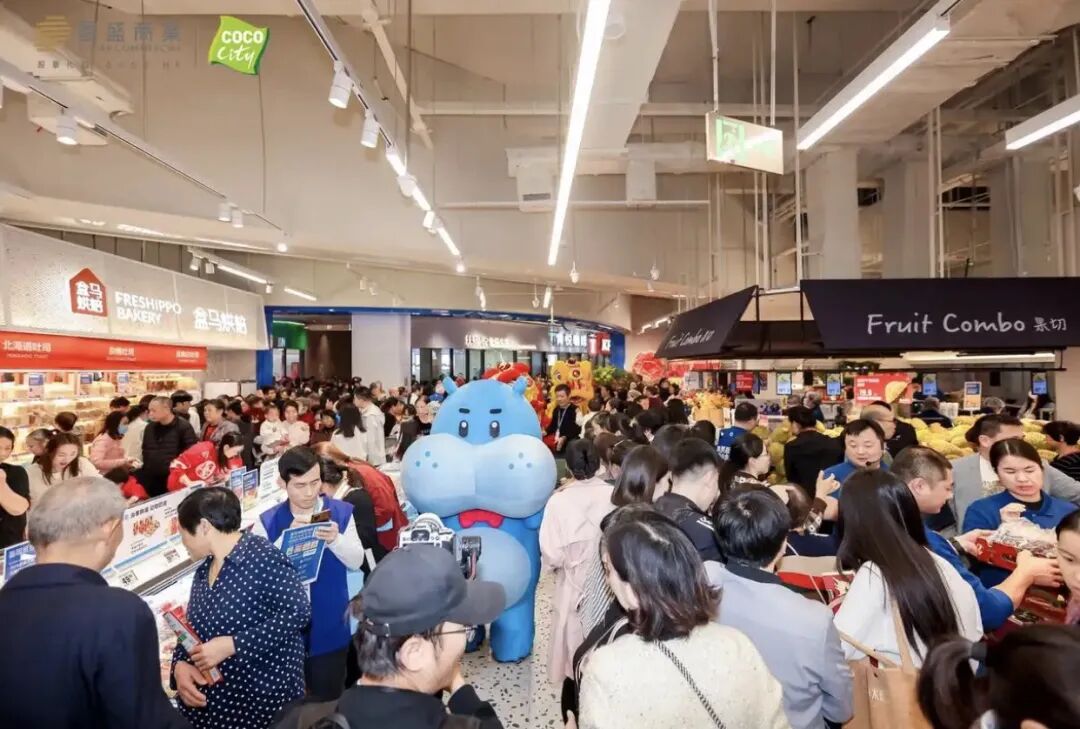
七鲜、小象、盒马鲜生新店同日开张,谁在重新定义“线下零售”
Sou Hu Cai Jing· 2025-12-23 05:18
Core Insights - The article discusses the shift of internet companies back to offline retail, emphasizing the importance of physical stores in the evolving retail landscape [5][6][31] - It highlights the different strategies employed by companies like JD's 7Fresh, Meituan's Xiaoxiang Supermarket, and Hema Fresh, each redefining the role of offline stores [24][31] Group 1: Reasons for Offline Return - Internet companies are returning to offline retail due to the limitations of online platforms in providing unique value, particularly in fresh produce and consumer trust [7][8] - The competition has shifted from efficiency to value, necessitating a physical presence to address issues of freshness, safety, and consumer experience [8][31] Group 2: Company Strategies - JD's 7Fresh aims to enhance user experience and supply chain authority by creating a tangible representation of its fresh standards [11][13] - Meituan's Xiaoxiang Supermarket focuses on establishing a physical touchpoint for high-value users and data collection, rather than merely selling products [15][18] - Hema Fresh is consolidating its network by filling gaps in instant delivery and stabilizing its high-end consumer base, moving towards a model of consistent output rather than extreme innovation [20][30] Group 3: Redefining Offline Retail - The article posits that offline stores are evolving from mere sales points to multi-functional nodes that facilitate fulfillment, trust, data collection, and lifestyle integration [24][31] - The new roles of offline stores include being a terminal for product sales, a fulfillment point for instant retail, a place for consumer trust, and a physical interface for data and branding [26][31] Group 4: Differentiation as a Survival Strategy - Traditional retailers must focus on differentiation rather than competing directly with online platforms, as the latter have advantages in scale, capital, and system efficiency [33][37] - The article emphasizes that successful offline models will likely center around fresh produce, processing, and private brands, which are challenging to replicate [40][41] - The essence of differentiation lies in long-term capabilities rather than short-term tactics, with a focus on what can be sustained over time [45]

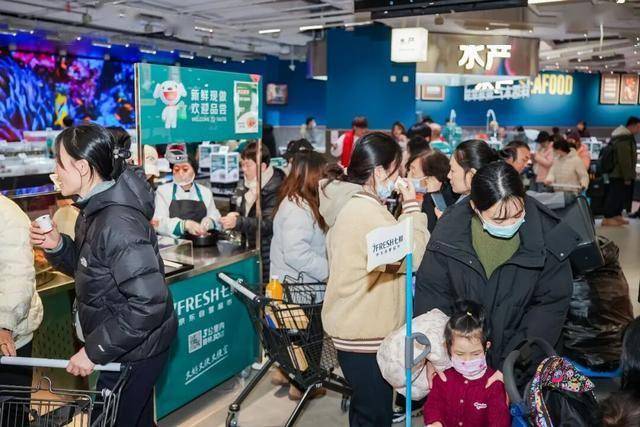
京东七鲜、美团小象、盒马鲜生新店同日开张,谁在重新定义“线下零售”
3 6 Ke· 2025-12-23 00:00
Core Insights - The article discusses the recent trend of internet companies returning to offline retail, particularly in the fresh food sector, highlighting the strategic shift from "disrupting offline" to "embracing offline" [3][5][26] Group 1: Reasons for the Shift to Offline - Internet companies are forming a "consensus" on the necessity of offline presence due to the limitations of online platforms in delivering unique value [3][4] - The competition in instant retail has intensified, prompting companies to explore new offline strategies as a means of upgrading their online systems [3][4] - The challenges of ensuring freshness, safety, and premium pricing in fresh food categories cannot be effectively addressed through online channels alone, making offline stores essential [4][18] Group 2: Company-Specific Strategies - JD's 7Fresh aims to address its "scene shortfall" and strengthen supply chain authority by enhancing user experience through physical stores [6][7] - Meituan's Little Elephant supermarket focuses on "occupying entry points," using offline stores as touchpoints for high-value users and data collection [6][12] - Hema Fresh is not aggressively expanding but rather stabilizing its network by filling gaps in instant delivery and maintaining a standard model for high-end family consumers [6][17] Group 3: Redefining Offline Retail - The article posits that fresh food is a common consensus among these companies, as it is the most challenging category for e-commerce and significantly impacts daily consumer presence [18][26] - Offline stores are evolving from mere sales points to multi-functional nodes that facilitate sales, fulfillment, trust, and data interaction [22][26] - The new roles of offline stores include being a terminal for product sales, a fulfillment node for instant retail, a place for consumer trust, and a physical interface for data and branding [22][26] Group 4: Differentiation and Survival - Traditional retail cannot compete directly with internet platforms; differentiation is essential for survival [27][30] - The focus should be on categories that are difficult to e-commerce, such as fresh food, processing, and private brands, which require long-term capabilities rather than quick tactics [33][34] - The essence of differentiation lies in the ability to excel in areas where e-commerce struggles, ensuring that offline stores remain relevant and valuable [39][40]