经常账户余额

Search documents
加纳2025年出口总额突破311亿美元,贸易顺差创136亿美元新高
Shang Wu Bu Wang Zhan· 2026-01-29 16:47
Core Insights - Ghana's total export revenue reached a historic high of $31.1 billion in 2025, a significant increase from $19.1 billion in 2024 [2] - The trade surplus expanded to a record $13.6 billion, driven by strong performance in gold and cocoa exports [2] Export Performance - Gold exports surged from $10.3 billion in 2023 to $20 billion in 2025 [2] - Cocoa exports doubled from $1.9 billion to $3.8 billion, despite a decline in international cocoa prices [2] - Oil exports decreased from $3.8 billion to $2.6 billion due to falling international oil prices [2] - Other categories contributed approximately $3.6 billion to total exports [2] Import Dynamics - Total import expenditure for 2025 was $17.4 billion, with oil imports rising from $4.6 billion in 2024 to $5.1 billion [2] - Non-oil imports increased from $10.7 billion to $12.3 billion during the same period [2] Economic Indicators - Ghana's international reserves reached a record $13.8 billion by the end of 2025 [2] - The current account balance exceeded $900 million, reflecting a robust economic position [2] - The total economic output of Ghana reached $1.4 trillion [2]
沈建光:人民币汇率形势与前景
Xin Lang Cai Jing· 2026-01-23 07:04
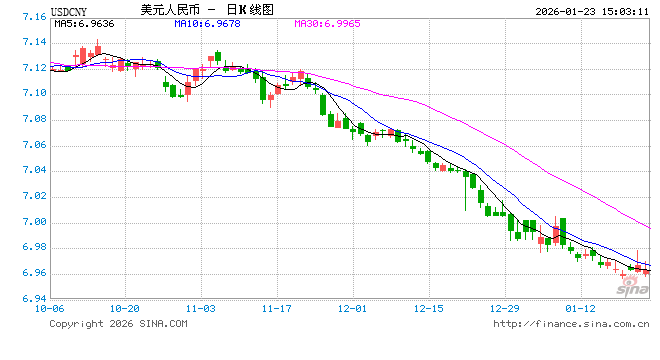
Core Viewpoint - The recent trends in the RMB exchange rate are influenced by multiple internal and external factors, and it is expected that the RMB will not experience significant appreciation in 2026 [2][9]. Group 1: Economic Indicators - The current account balance of China is expected to reach a historical high in 2025, with a trade surplus exceeding $1 trillion for the first time and a current account surplus of $492.8 billion in the first three quarters of 2025, a significant increase from $241.3 billion in the same period of 2024 [3][11]. - The Chinese government has implemented various measures to boost the economy, including allocating 500 billion yuan for local government financial support and investing another 500 billion yuan in new policy financial tools for project construction [3][11]. - The manufacturing PMI in December 2025 reached 50.1, exceeding market expectations, which has improved market confidence in the Chinese economy [3][11]. Group 2: Currency Dynamics - The recent depreciation of the US dollar has positively impacted the RMB exchange rate, with the dollar index declining since late November 2025 due to weak non-farm employment data and concerns over high valuations in the US stock market [3][11]. - The Balassa-Samuelson effect suggests that long-term factors do not support significant appreciation of the RMB, as the growth of labor productivity in China has slowed down in recent years [4][12]. - The average annual growth rate of overall labor productivity in China dropped from 9.5% (2005-2014) to 5.8% (2015-2024), indicating a change in the long-term trend of the RMB exchange rate [5][13]. Group 3: External Factors - Geopolitical changes have negatively impacted China's external demand, with the share of the US market in China's exports declining from 18.8% in 2017 to 11.8% in the first eleven months of 2025 [6][14]. - The importance of non-US markets has increased, with Latin America’s share in China's exports rising from 5.8% in 2017 to 7.9% in 2025 [6][14]. - Maintaining the price competitiveness of Chinese export products in international markets is crucial, as excessive appreciation of the RMB could hinder exports [6][14]. Group 4: Future Outlook - Overall, the RMB is not expected to appreciate significantly in 2026, with the central bank aiming to maintain the exchange rate at a reasonable and balanced level [7][14].