经济自主

Search documents
《出走的决心》:女性出走叙事的“第三条路”
Xin Lang Cai Jing· 2026-01-01 00:14
Core Perspective - The film "The Determination to Leave" directed by Yin Lichuan presents a third narrative for women seeking autonomy, contrasting with historical views of women’s economic powerlessness, emphasizing the journey of self-discovery and spatial autonomy [1] Group 1: Spatial Discipline - The film highlights the gendered division of space within the family, where the protagonist Li Hong is confined to the kitchen while her husband occupies central areas, illustrating the oppressive nature of domestic roles [2] - The use of oppressive cinematography reinforces this spatial division, with Li Hong's limited view symbolizing her restricted agency and the husband's commanding presence further emphasizing the power dynamics [2] - The generational transmission of female roles is depicted, with Li Hong caught between her mother's acceptance of domesticity and her daughter's struggle against it, representing a historical reflection of women's spatial dilemmas [2] Group 2: Economic Autonomy - Li Hong's journey towards spatial autonomy is rooted in economic independence, as the film critiques the hidden inequalities within the household's financial arrangements, particularly the husband's control over expenses [3] - The acquisition of a car symbolizes a pivotal shift for Li Hong, transforming her from a financial dependent to an autonomous decision-maker, enabling her to explore new spaces and opportunities [3] - The film illustrates how economic disempowerment can rapidly constrict women's spatial boundaries, as seen through the experiences of Li Hong's daughter, who faces job loss and a return to domestic confinement [3] Group 3: Temporal Reconstruction - The film employs a dual timeline to showcase Li Hong's evolution from dependency to agency, contrasting her past reliance on a partner with her present independence [4] - Sound design plays a crucial role in reflecting the transformation of space, with oppressive domestic sounds giving way to liberating natural sounds during Li Hong's journey, symbolizing her newfound freedom [5] - The narrative suggests that the journey of self-discovery is not a final destination but a dynamic process of balancing departure and return, emphasizing the complexity of women's liberation [5]
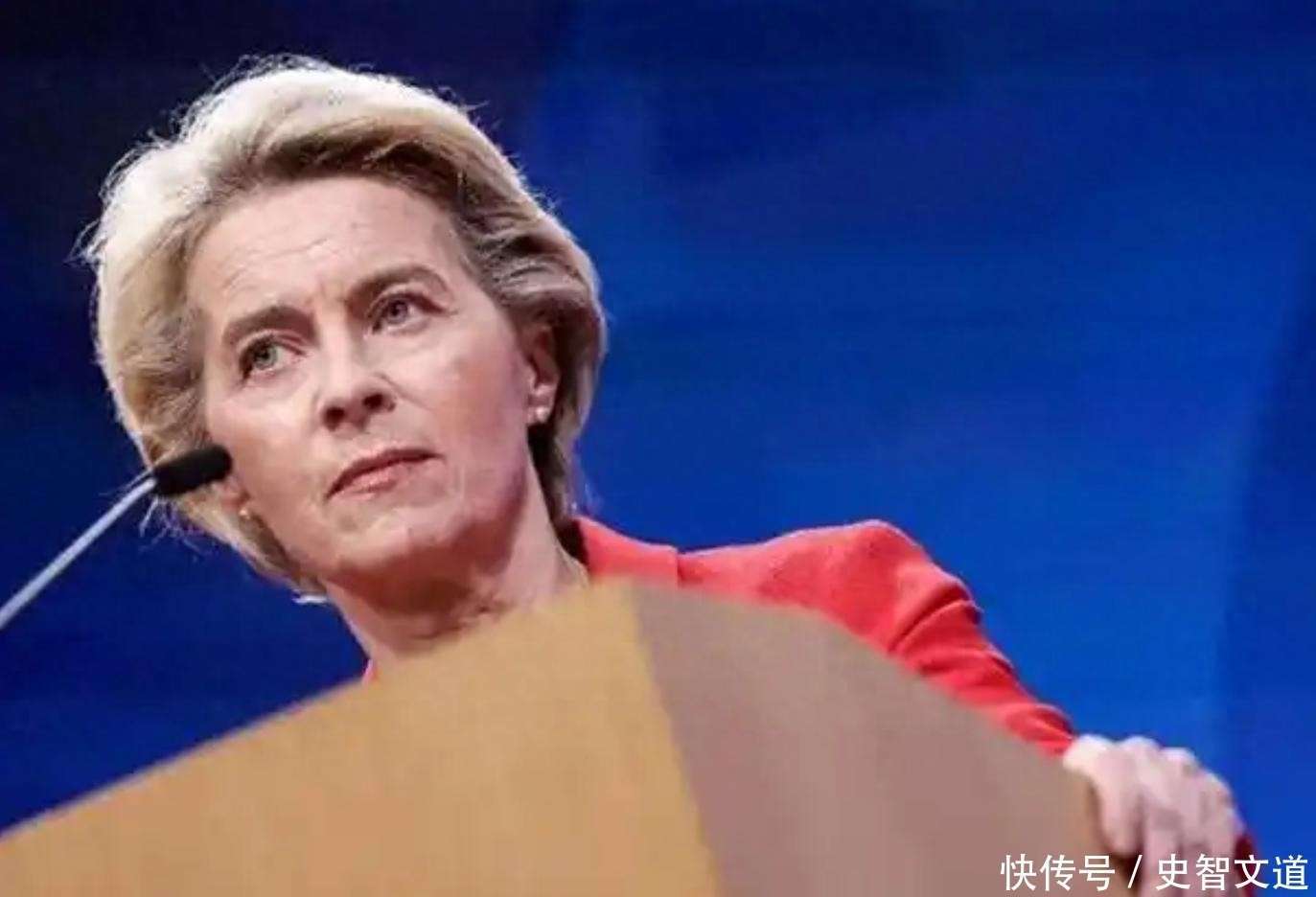
中方动真格了,几乎断供欧盟稀土,关键时刻,冯德莱恩拒绝特朗普要求
Sou Hu Cai Jing· 2025-09-28 11:06
Core Points - China has significantly increased its rare earth magnet exports to the EU while reducing exports to the US, highlighting the EU's dependency on Chinese supplies in critical industries [1][3] - The EU is facing production disruptions due to China's export controls, with multiple industries experiencing interruptions in August [3][6] - Ursula von der Leyen's refusal to impose tariffs on China and India as per Trump's demands indicates a strategic decision to protect EU economic interests [4][6] Group 1 - China's rare earth magnet exports to the EU reached 2,582 tons in August, a 21% increase from July, while exports to the US decreased by 5% to 590 tons [1] - The EU's reliance on Chinese rare earths spans various sectors, including automotive, wind energy, and electronics, making it vulnerable to supply shortages [1][3] - Von der Leyen's statement reflects the EU's intent to maintain economic autonomy and avoid being drawn into US geopolitical strategies [4][8] Group 2 - The EU has faced production interruptions due to China's export restrictions, with reports of seven production halts in August and expectations of more in September [3][6] - Von der Leyen emphasized that tariff policies must be decided independently by the EU, despite external pressures from the US [4][6] - The EU's economic ties with China are increasingly critical, particularly for Germany's automotive industry, which relies heavily on rare earths for electric vehicle components [6][8]


莫迪派团去美国谈判,背后暗战暗流涌
Sou Hu Cai Jing· 2025-09-23 01:57
Core Insights - The trade friction between India and the US is likened to a chess game, with underlying tensions despite a seemingly calm surface [1] - India's Minister of Commerce and Industry, Goyal, is set to visit Washington to address the long-stalled trade agreement, reflecting India's strategic positioning in economic sovereignty and international negotiations [1][3] - The recent increase in tariffs and visa fees by the US has significantly impacted India's exports and its information technology sector, prompting India to adopt a self-reliant approach [3][5] Trade Negotiations - The atmosphere during the recent negotiations between India's chief negotiator Agarwal and the US trade representative's team was described as "positive," indicating a strategic diplomatic approach [1] - The US has imposed a 25% tariff on Indian oil imports, doubling the overall tariff to 50%, which has led to a decline in India's exports to the US from $8.01 billion in July to $6.86 billion in August [1][3] - The US is pushing for India to open its agricultural and dairy markets, a contentious issue that has previously led to the cancellation of planned visits by US representatives [3][5] Economic Strategy - India's government is promoting domestic consumption and resilience in response to external pressures, indicating a shift towards a more self-sufficient economic model [3][5] - The increase in H-1B visa fees, targeting India's IT services sector, represents a direct challenge to India's economic interests, yet the government remains firm in its negotiation stance [3][5] - India's strategic autonomy is reflected in its flexible domestic economic policies, including tax reductions and support for local products, creating a dynamic balance between external pressures and internal market stability [5] Global Economic Dynamics - The ongoing trade negotiations highlight a broader shift in global economic power dynamics, with India asserting its position as a strategic player rather than a passive market [5][7] - Goyal's visit to the US is not just about advancing trade agreements but also serves as a platform for India to showcase its economic autonomy and resilience [5][7] - The interplay of tariffs, visa policies, and market access negotiations underscores India's control over its economic destiny and its response to global economic challenges [7]
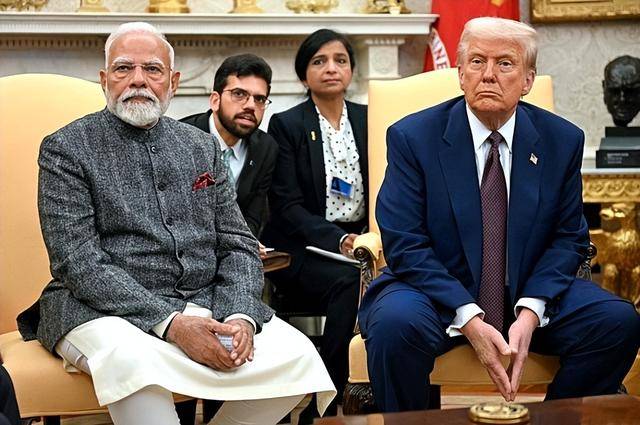
7500亿购买美国产品!还要拿6000亿美元投资?欧盟不死也脱层皮
Sou Hu Cai Jing· 2025-09-22 07:39
Group 1 - The EU is responding to pressure from the US by deepening trade relations with India and other emerging markets, aiming to reduce reliance on the US market [1][3][4] - EU Commission President Ursula von der Leyen has committed to completing negotiations for a free trade agreement with India within this year, indicating a proactive approach to trade expansion [3][4] - The EU is currently negotiating with South Africa, Malaysia, and the UAE, and has already signed agreements with Mexico, Switzerland, and the Southern Common Market of South America, showcasing a strategic shift towards diversifying trade partnerships [3][4] Group 2 - The EU is facing significant challenges in the ongoing trade dispute with the US, having made concessions that include accepting higher tariffs and committing to substantial purchases of US energy products and AI chips [4][7] - European businesses are experiencing a survival crisis, prompting calls from major economic organizations for reforms to simplify administrative processes, control energy prices, and ease burdens on small and medium-sized enterprises [4][5][7] - The effectiveness of the EU's new trade agreements in addressing core issues such as energy and talent shortages remains to be seen, with the business community emphasizing the need for tangible results rather than mere discussions [7][9] Group 3 - India stands to benefit significantly from the EU's trade expansion, gaining access to new markets while reducing its dependence on the US, which may alter the balance of economic influence [3][9] - The current situation reflects a decline in US hegemony, as the Trump administration's aggressive policies have alienated traditional allies, leading to a collective pushback against US dominance [9]