
绿色认证

Search documents
关注工业硅与多晶硅套利机会
Hua Lian Qi Huo· 2025-12-15 11:20
Report Industry Investment Rating - Not provided in the given content Core Viewpoints - In 2026, the supply - demand situation of industrial silicon will remain loose, with an expected supply growth rate of about 8% and a demand growth rate of about 5%, and the surplus is expected to further expand. For trading strategies, it is recommended to short SI2601 at high prices, buy put options, or adopt an arbitrage strategy of shorting industrial silicon and going long on polysilicon [9]. - In 2026, the supply and demand of polysilicon are expected to increase slightly, continue to improve, and basically reach a balanced state. The recommended strategy is to go long on PS2601 at low prices, buy call options, or adopt an arbitrage strategy of shorting industrial silicon and going long on polysilicon [10]. - The "Short SI2605 + Long PS2605" arbitrage strategy is recommended. When the PS2605 - 5SI2605 spread is in the range of 7500 - 8500, build a position at a ratio of 3 to 1. The reason is that the anti - involution policy is conducive to the spread expansion [43]. Summary by Directory Annual Viewpoint Industrial Silicon - In 2025, the spot and futures prices of industrial silicon showed a pattern of first decline, then rise, and then oscillation. The annual production capacity remained at a high level, with no substantial signs of capacity clearance. In 2026, the supply is expected to remain loose. The demand from polysilicon may decline, while organic silicon and aluminum alloy demand will grow steadily. The cost decreased in 2025, but most silicon plants had limited profit space. The futures inventory is low, while the spot inventory is high. In 2026, the supply is expected to increase by about 8%, and the demand by about 5%, with a continued loose supply - demand pattern [9]. Polysilicon - In 2025, the polysilicon price fluctuated greatly in a "V" shape. The production capacity increased in 2025, but the output decreased significantly due to losses and self - discipline production cuts. In 2026, if the supply - side reform progresses smoothly, the supply may increase slightly with demand. The domestic demand is weak, while the global demand will maintain a moderate growth. The cost decreased slightly in 2025, and the profit improved significantly. The inventory is high. In 2026, the supply and demand are expected to increase slightly and basically reach a balanced state [10]. Cost and Profit - In 2025, the power consumption of industrial silicon decreased, and the prices of raw materials such as silicon coal and electrodes declined, driving the production cost down. The full - cost of industrial silicon in the northwest region is mainly in the range of 7500 - 9000 yuan/ton, and in the southwest region, it is 8500 - 10000 yuan/ton during the wet season and 10000 - 11500 yuan/ton during the dry season, with an overall comprehensive cost of 8000 - 10000 yuan/ton [191]. Industry Chain Diagram - The industrial silicon industry chain involves raw materials such as petroleum coke, charcoal, and silicon ore. Industrial silicon can be processed into organic silicon, polysilicon, and aluminum alloy, which are further used in various fields such as electronics, construction, and photovoltaic [47]. Industry International Situation - In 2025, the global industrial silicon trade pattern was structurally adjusted. China is the largest producer and exporter, with stable export volume but a decline in the export structure. The overseas production cost is high, and the capacity expansion willingness is low. The green certification requirements of multinational enterprises are increasing, which promotes the industry's transformation to low - carbon production. However, the overall green transformation of the industry still faces challenges [50][52][54]. Industry Domestic Situation - In 2025, the industrial silicon production capacity in China shifted westward, with the northwest region becoming the core production area. The domestic photovoltaic demand showed phased fluctuations and structural differentiation. The environmental protection inspection promoted the industry's transformation to low - carbon and intensive development, accelerating the clearance of small and medium - sized production capacities [57][59][61]. Supply - From January to November 2025, the cumulative production of industrial silicon was 3.7 million tons, a year - on - year decrease of 15.39%. The supply pressure was relieved to some extent. In 2026, there is an expectation of supply recovery. The new production capacity in 2025 - 2026 is mainly concentrated in Xinjiang, Yunnan, and other regions, with a total of 1.88 million tons [73][82]. Demand - From January to October 2025, the cumulative actual consumption of industrial silicon was 2.6612 million tons, a year - on - year decrease of 18.26%. Polysilicon, organic silicon, and aluminum alloy are the main downstream consumers, accounting for 50%, 30%, and 16% respectively. In the future, the polysilicon demand may decline, the organic silicon demand is weak, and the aluminum alloy demand will grow steadily but with limited impact on the overall demand [117]. Inventory - The high inventory of industrial silicon has been the main factor suppressing the market. The inventory increased slightly in 2025, and it is expected to continue to increase slightly in 2026. The polysilicon inventory is also high, and the inventory - building situation continues [31][10]. Technical Analysis - In the 2025 market, using the fast - line crossing above the slow - line as a buying signal had an accuracy rate higher than 75%. The fast - line is generally defined as the 5 - day moving average, and the slow - line as the 20, 40, or 60 - day moving average [245].
四水映绿·豫见两山丨南湾出好鱼 一水养稻虾
He Nan Ri Bao· 2025-08-16 00:28
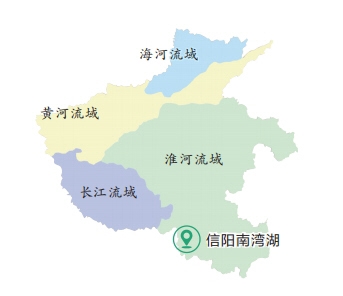
Core Viewpoint - The article highlights the successful environmental restoration and sustainable aquaculture practices at Nanwan Lake, which has transformed it into a vital drinking water source and a thriving fishery, benefiting both the local ecosystem and the economy [2][4][5]. Group 1: Environmental Restoration - Nanwan Lake's water quality has improved significantly over the years, achieving a Class II water standard, thanks to environmental remediation efforts that began around 2010 [2][4]. - The lake, built in 1955, serves as a crucial water reservoir for the local population, with a total capacity of 1.355 billion cubic meters and an area of 75 square kilometers [2]. Group 2: Aquaculture and Economic Impact - The lake supports over 20 fish species, with an annual fish production of approximately 200 million pounds and a market value of around 30 million yuan, making "Nanwan Fish" a sought-after product [4]. - The cooperative farming model in nearby villages has led to the production of 750,000 kilograms of rice and 300,000 kilograms of aquatic products annually, generating a total income of 27 million yuan [5][6]. Group 3: Ecological Benefits - The introduction of filter-feeding fish species, such as the white catfish, plays a crucial role in maintaining water quality by consuming nitrogen and phosphorus, thus enhancing the lake's ecological balance [4]. - The water quality at the drinking water source has consistently met the national standards, with significant improvements in the water quality of the main inflow rivers [6].

“反内卷”政策为有色行业破局注入新动能 产品向“高精尖”领域探索
Qi Huo Ri Bao· 2025-07-11 01:34
Group 1 - The core issue in the non-ferrous industry is a structural imbalance between resource supply and manufacturing, leading to a cycle of increasing production despite losses [1] - The "anti-involution" policy aims to break this cycle by promoting resource expansion and production, with companies like Wucai Capital exploring deep-sea mining [1] - The processing fees for copper concentrate have dropped to historical lows, prompting domestic smelters to reduce production, which intensifies the supply pressure [1] Group 2 - Positive signals of structural change on the demand side are emerging, with a 20% year-on-year increase in grid investment and an 18% month-on-month rise in copper usage for photovoltaics [2] - The "anti-involution" policy is expected to strengthen demand in high-end sectors like renewable energy and ultra-high voltage, shifting consumption from scale expansion to technology-driven models [2] - The pricing system for non-ferrous metals is being restructured to a mechanism that integrates resources and finance, focusing on resource independence, technological barriers, and green certification [2] Group 3 - Long-term optimization of the non-ferrous industry structure is anticipated, with accelerated expansion of high-end capacity and orderly elimination of low-end capacity [2][3] - Challenges in policy implementation may arise, as some companies might be reluctant to reduce production due to operational pressures or local government tax considerations [3] - A unified regulatory standard system is needed to promote high-quality, green development and encourage deep integration within the industry chain [3]
章源钨业(002378) - 002378章源钨业投资者关系管理信息20250515
2025-05-15 09:20
Group 1: Capacity Expansion and Market Strategy - The company is focused on upstream resource exploration and integration to ensure orderly replacement of mining resources, with plans for deep mining and infrastructure development to enhance resource reserves and extraction efficiency [1][7] - In the midstream, the company aims to optimize production processes and develop automated production workshops to meet diverse market demands [1][2] - The company’s subsidiary, Ganzhou Aoketai Tool Technology Co., Ltd., is committed to high-value hard alloy markets, particularly in aerospace and new energy sectors [2] Group 2: Environmental and Energy Management - The company has established an integrated management system and obtained ISO14001:2015 and ISO50001:2018 certifications for environmental and energy management [4] - Continuous technological innovation and process improvements are being implemented to optimize energy structure and promote energy-saving technologies [5] - The company emphasizes resource efficiency, clean production, and compliance with environmental regulations, actively promoting green practices among employees [5] Group 3: Financial Performance and Market Challenges - The company’s overseas revenue accounted for 18.71% of total revenue, with a year-on-year decrease of 5.2%, indicating challenges in international trade [5] - The company is focused on enhancing product quality and stability, expanding product categories, and increasing customer loyalty to penetrate overseas markets [5] - The gross margins for core products like tungsten powder and tungsten carbide powder are relatively low at 8.01% and 10.38%, respectively, prompting the company to seek measures to improve profitability [7] Group 4: Resource Management and Future Plans - The company owns six mining rights and ten exploration rights, with ongoing efforts to integrate mining resources and explore deeper mining opportunities [6][7] - New exploration rights are expected to enhance resource integration and expand tungsten concentrate production capacity [7] - The company is committed to maintaining a stable supply of raw materials and improving product competitiveness to mitigate the impact of raw material price fluctuations [7][9]
