缩减恐慌

Search documents
国信证券:资产走势趋同的终局思维
智通财经网· 2026-02-08 01:07
Core Viewpoint - In 2023, global asset correlation has surged again, driven by the end of the Kondratiev wave depression, geopolitical risks, and the AI narrative, leading to a strong "tech stocks + precious metals" combination, while the synchronization of the US and China monetary cycles increases the difficulty of risk diversification [1] Group 1: Global Asset Correlation - The correlation of global major assets has reached a new high in 2023, measured by the correlation of similar assets priced in China and overseas [1] - The logic behind the resonance of global major assets includes the end of the Kondratiev wave depression, the Ukraine crisis, global trade frictions, and the AI wave driving a dual combination of "tech stocks + precious metals" [1] - The correlation between commodities and stocks has also reached a new high, while the monetary cycles of the US and China are transitioning from divergence to synchronization [1] Group 2: Historical Context - In the past 20 years, global major assets have only reached similar high correlation levels twice: in mid-2013 and in the first quarter of 2020 [2] - The high correlation in mid-2013 was due to the taper tantrum, where the 10-year US Treasury yield rose sharply from 1.63% to around 3.0%, leading to a rare synchronous decline in gold, US Treasuries, and emerging market stocks and bonds [2] - The first quarter of 2020 saw extreme risk aversion and a dollar liquidity crisis, characterized by a spike in the VIX index to 85.47, with all assets forced to act as liquidity instruments [3]

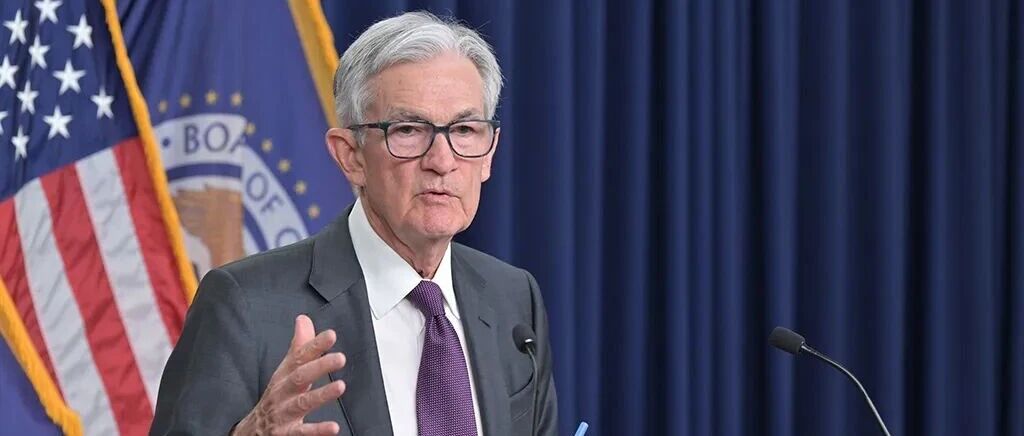
重磅!鲍威尔敞开降息大门:9月会议以来前景没多大变化,就业下行风险显著,或接近停止缩表(附讲稿)
美股IPO· 2025-10-15 00:26
Core Views - The labor market in the U.S. is showing signs of deterioration, with increased risks of job losses, despite some economic data suggesting slightly stronger growth than expected [1][3][25] - The Federal Reserve may consider pausing its balance sheet reduction in the coming months, as liquidity conditions appear to be tightening [6][21] - The Fed's ability to control interest rates could be compromised if it is unable to pay interest on reserves, leading to greater market disruption [8][23] Economic Outlook - Recent data indicates that the economic growth trajectory may be more robust than previously anticipated, with the unemployment rate remaining low but wage growth slowing significantly [3][25][26] - The core personal consumption expenditures (PCE) inflation rate was reported at 2.9% over the past 12 months, reflecting a slight increase due to rising core goods prices [26][27] Labor Market Dynamics - Job vacancies are declining, which may lead to an increase in the unemployment rate, highlighting the potential for further job losses [5][25] - The Fed's assessment of risks related to employment and inflation has shifted, prompting a more neutral policy stance in September [27] Monetary Policy Considerations - The Fed is closely monitoring liquidity indicators and may take cautious actions to avoid a repeat of the "taper tantrum" experienced in 2019 [6][21] - The current framework of ample reserves has proven effective in controlling policy rates and supporting financial stability [20][24] Balance Sheet Management - The Fed's balance sheet, which currently stands at approximately $6.5 trillion, is primarily composed of U.S. Treasury securities and mortgage-backed securities [14][15] - There is an ongoing discussion about adjusting the composition of the Fed's asset holdings, with a potential increase in short-term assets [9][22]