美国优先战略

Search documents
最后1 天!日本大选再生变,特朗普亲自下场,高市真要玩脱了
Sou Hu Cai Jing· 2026-02-08 06:07
Core Viewpoint - Trump's recent actions in supporting Japanese politician Kishi Nobuo are perceived as a significant miscalculation that could jeopardize both his credibility and Kishi's political future, revealing a deeper issue of U.S. interventionism in Japan's political landscape [1][3][7]. Group 1: Trump's Intervention - Trump's public endorsement of Kishi Nobuo is seen as an attempt to exert control rather than genuine support, likening it to a CEO dictating orders to a subordinate [3][5]. - The endorsement has sparked outrage among the Japanese public, with many perceiving it as an attempt to turn Japan into a puppet state of the U.S. [7][9]. - Trump's strategy is criticized for being a gamble that could backfire, as it exposes the true nature of U.S. foreign policy as one of domination rather than partnership [7][18]. Group 2: Political Context in Japan - The internal issues within Japan's ruling Liberal Democratic Party (LDP), including corruption and a lack of accountability, are highlighted as significant challenges that undermine public trust [11][14]. - Economic struggles, particularly rising inflation, have left ordinary citizens feeling disillusioned, contrasting sharply with the political elite's behavior [13][14]. - Kishi's economic policies are viewed as ineffective in addressing the real concerns of the populace, further complicating his political standing [14][15]. Group 3: Implications for U.S.-Japan Relations - Trump's demands for Japan to increase its defense spending to 3.5% of GDP are seen as a form of coercion that could lead to cuts in essential social services [16][18]. - The perception of the U.S. as a demanding ally may alienate Japan and other allies, potentially destabilizing the existing alliance framework [18][21]. - The situation raises questions about Japan's ability to assert its independence in international relations, especially in the context of rising regional tensions [20][21].

黄金和日元-都在交易什么
2026-01-28 03:01
Summary of Key Points from Conference Call Records Industry and Company Involvement - The discussion primarily revolves around the **gold market** and the **Japanese yen**, with implications for the **U.S. financial market** and **emerging markets**, particularly **China**. Core Insights and Arguments 1. **Gold Price Trends**: Since 2022, gold prices have been on the rise due to increased demand as a stable asset amid geopolitical risks and market volatility, making it an effective tool for reducing portfolio volatility [1][6] 2. **U.S. Financial Market Dynamics**: The Trump administration's personnel choices reflect a focus on financial markets, aiming to balance monetary easing with inflation pressures while promoting the "America First" strategy [1][7] 3. **Complex Global Economic Environment**: The global economy faces contradictions among fiscal, monetary policies, and inflation, with the Federal Reserve's policy adjustments being a focal point that could disrupt traditional macroeconomic frameworks, posing potential "gray rhino" risks [1][8] 4. **Emerging Markets Performance**: Emerging markets have shown relative strength, with Chinese assets benefiting from their independence and stability, allowing them to withstand external uncertainties [1][9][10] 5. **Impact of U.S. Midterm Elections**: The upcoming 2026 U.S. midterm elections may lead to pressure on the Federal Reserve to lower interest rates, although the effectiveness of such actions on real economic financing costs may be limited due to long-term Treasury yield dynamics [1][12] 6. **Japanese Yen's Economic Impact**: The appreciation of the yen could negatively affect the Japanese stock market, with the Bank of Japan and the U.S. potentially intervening to stabilize the currency around the 160 level [5] 7. **Gray Rhino Phenomenon**: The term "gray rhino" refers to obvious but ignored risks that could have severe consequences, particularly regarding the Federal Reserve's policy direction and its impact on global capital markets and commodity prices [1][8] 8. **Federal Reserve's Policy Expectations**: The market anticipates that the Federal Reserve will adopt a more accommodative monetary policy to stimulate global economic recovery, which is reflected in the pricing of industrial metals and chemicals [1][11] 9. **Challenges in U.S. Fiscal and Monetary Policy**: The Trump administration faces challenges in managing high government debt levels, with potential implications for future fiscal sustainability and interest rates [1][13][14] Other Important but Possibly Overlooked Content 1. **Market Outlook**: Short-term market movements may be characterized by sideways trading, but there is a long-term optimistic outlook for assets like the Chinese yuan, U.S. stocks, and copper due to improving consumption and interest rate dynamics [1][19] 2. **Trends in Fund Concentration**: New trends in fund concentration are emerging in sectors related to price increases, overseas machinery, brokerage firms, and industries expected to rebound [1][20] 3. **Stock Selection**: A pool of 30 potential stocks has been identified based on the discussed trends, available for further inquiry [1][21]
特朗普没想到,中国和加拿大签约不到5天,英法两国双双示好中国
Sou Hu Cai Jing· 2026-01-24 11:44
Core Viewpoint - The article discusses the shift in Western countries' attitudes towards China, highlighting how nations like Canada, the UK, and France are seeking closer ties with China in response to the pressures of Trump's "America First" strategy, indicating a potential realignment of international relations [1][3][15]. Group 1: Canada's Shift - Canada has unexpectedly reduced tariffs on Chinese electric vehicles from 100% to 6.1% and committed to importing 49,000 units annually after Prime Minister Carney's visit to China [3]. - Following Carney's return, China placed a significant order for 60,000 tons of canola seeds, revitalizing Canadian farmers' hopes [4]. - The shift in Canada's policy is attributed to the realization that aligning too closely with the U.S. could undermine its international standing [4]. Group 2: UK and France's Engagement - The UK has approved the long-delayed project for a new Chinese embassy in London, signaling a pragmatic approach to relations with China [6]. - French President Macron openly called for increased Chinese investment in Europe during the Davos forum, reflecting a desire for economic cooperation [4][6]. - Both countries' gestures are seen as responses to the pressures exerted by the U.S., particularly in light of Trump's aggressive trade policies [12][15]. Group 3: Underlying Motivations - The article suggests that the Western countries' overtures to China stem from fear of U.S. bullying rather than genuine ideological alignment with China [15]. - The dynamics of international relations are shifting, with countries recognizing that their true adversary may not be China but rather the U.S. itself [6][13]. - The ongoing trade tensions and tariffs imposed by the U.S. have prompted these nations to reconsider their alliances and seek alternative partnerships [10][13].
重磅协议签署,特朗普情绪激动:再也不怕了,以后稀土根本用不完
Sou Hu Cai Jing· 2025-10-24 13:01
Core Points - The agreement between the U.S. and Australia, valued at $8.5 billion, focuses on joint investment in rare earth resources, aiming to enhance supply chain security and reduce dependence on China [2][3][5] - The framework includes a $1 billion investment from each country for mining and processing projects, with over $3 billion to be invested in the next six months [2][3][8] - The agreement aims to establish minimum pricing for critical minerals, expedite permitting processes, and enhance geological resource mapping and mineral recovery cooperation [2][3][5] Industry Impact - The agreement is a strategic response to China's dominance in rare earth processing, which accounts for 90% of global supply, and aims to secure priority access to Australian resources [3][5][10] - Specific projects supported by the agreement include the Arafura Rare Earths project and Northern Minerals, with the U.S. Export-Import Bank providing over $2.2 billion in letters of intent [3][5] - The Pentagon plans to build a gallium refining facility in Western Australia with an annual capacity of 100 tons, indicating a significant investment in domestic supply chains [3][5][8] Market Reaction - Following the announcement, rare earth prices increased by 3% to 5%, and U.S. mining stocks like MP Materials rose by 2%, reflecting positive market sentiment [7] - The S&P 500 index rebounded by 0.5%, while the volatility index (VIX) decreased to 18.23, indicating a stabilization in market conditions [7] - Analysts expect additional funding and policy support from Congress for the critical minerals sector, highlighting a growing interest in domestic mining capabilities [8][10] Strategic Significance - The agreement is seen as a key component of the U.S. "America First" strategy, aimed at countering economic coercion from China and ensuring the security of technology and defense supply chains [5][10] - The collaboration is expected to expand U.S.-Australia mineral production capacity by 20%, facilitating a decoupling from reliance on Chinese resources [10] - The agreement also emphasizes the need for streamlined permitting processes for mining and processing operations, which could accelerate project timelines [8][10]
历史!美国解除对叙利亚近50年的全面制裁措施
制裁名单· 2025-05-26 01:09
Core Viewpoint - The U.S. government has initiated a significant policy shift by issuing General License GL25, which provides immediate sanctions relief for Syria, aligning with the "America First" strategy and aiming to support new investments and private sector activities in the country [1][2]. Group 1: Sanctions Relief and Economic Opportunities - GL25 allows for new investments and transactions in Syria that were previously prohibited under U.S. sanctions, including financial services and oil-related transactions [3]. - The U.S. aims to support a stable and unified Syria, with the condition that the new government does not provide shelter to terrorist organizations and ensures the safety of religious and ethnic minorities [2][6]. - The sanctions relief is seen as a strategic move to weaken the influence of Iran and Russia in the region while opening up opportunities for reconstruction and investment in Syria [6]. Group 2: Historical Context and Previous Sanctions - U.S. sanctions against Syria began in 1979, escalating significantly after the outbreak of the Syrian civil war in 2011, with measures including asset freezes and trade restrictions [4][5]. - Key sanctions included financial and trade restrictions, energy sanctions prohibiting oil imports, and secondary sanctions targeting third-party countries or companies engaging with the Syrian government [5]. Group 3: Economic Conditions and Challenges - Syria's economy has suffered drastically, with GDP shrinking to half of pre-war levels, 90% of the population living in poverty, and extreme currency devaluation [6]. - The humanitarian crisis is severe, with a collapsed healthcare system and millions facing food insecurity [6]. - Despite the potential for short-term economic recovery following sanctions relief, long-term reconstruction is estimated to require $250 billion, facing challenges such as corruption and geopolitical tensions [6].
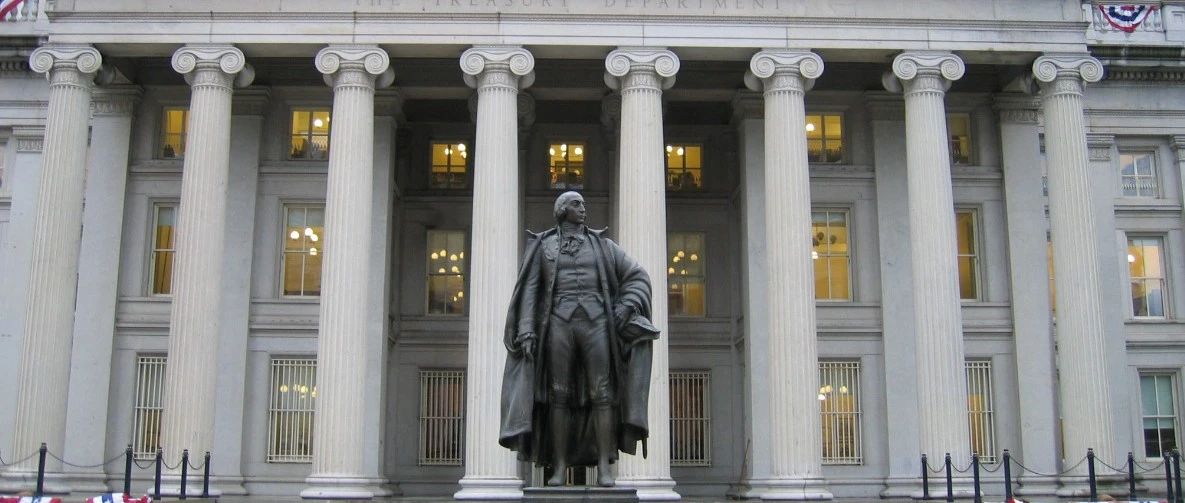
前大摩IPO大佬空降白宫!担任特朗普“招商军师”,曾助马斯克买下Twitter
Hua Er Jie Jian Wen· 2025-04-24 12:26
Group 1 - The core point of the article is the appointment of Michael Grimes, a prominent figure in the IPO space, as the head of the U.S. Investment Accelerator, which aims to attract large-scale investments exceeding $1 billion to the U.S. [1][3] - The U.S. Investment Accelerator is part of Trump's "America First" strategy, focusing on revitalizing manufacturing and reducing import dependency [1][3] - Grimes has a close relationship with Elon Musk, which played a significant role in his government appointment, and he previously assisted Musk in acquiring Twitter [1][5] Group 2 - The U.S. Investment Accelerator, conceived by Commerce Secretary Howard Lutnick, is designed to provide high-end services similar to investment banks to attract companies and streamline approval processes [3] - The agency is exclusively open to companies committing to invest over $1 billion in the U.S., with a focus on domestic projects exceeding $100 million [3] - Grimes' background as an IPO banker aligns with his new role, where he will leverage his experience in persuading investors and enhancing corporate presentations [4]