美日套息交易

Search documents
【申万宏源策略】长端日债利率上行归因与套息交易后续展望——全球资产配置热点聚焦系列之二十九
申万宏源研究· 2025-05-29 01:12
Core Viewpoint - The article discusses the significant rise in long-term Japanese government bond yields, attributing it to factors such as improving employment, rising wages, and inflationary pressures, alongside supply-demand imbalances in the bond market [2][8][15]. Group 1: Long-term Japanese Government Bond Yields - The auction of 1 trillion yen 20-year bonds on May 20, 2025, saw a bid-to-cover ratio drop to 2.5, the lowest since 2012, and a tail difference of 1.14, the highest since 1987, leading to a sharp increase in 30-year bond yields to 2.74% [1][6]. - The yield spread between 30-year and 10-year Japanese bonds increased significantly to 126 basis points, placing it in the 99.3 percentile since 2000, indicating a steepening of the yield curve [1][6]. Group 2: Economic Factors Influencing Yields - The Japanese labor market has shown consistent improvement since 2021, with a declining unemployment rate and rising labor participation, contributing to wage increases and inflation that have exceeded the Bank of Japan's target of 2% for two consecutive years [2][8][12]. - The Bank of Japan is expected to initiate a rate hike cycle in March 2024 to address rising inflation and normalize monetary policy, which has been extremely accommodative for 25 years [12][15]. Group 3: Supply-Demand Imbalances - The supply-demand imbalance in the long-term bond market is a primary driver of the recent yield increases, with the Bank of Japan reducing its bond purchases, leading to liquidity risks in the market [15][22]. - Major Japanese life insurance companies are facing significant unrealized losses on their bond holdings, prompting them to reconsider their long-term bond positions, further exacerbating liquidity issues [22][24]. Group 4: Future Outlook - Upcoming bond auctions from May 28 to June 5, 2025, for 40-year, 10-year, and 30-year bonds are expected to impact the overall bond market, with potential for continued upward pressure on yield spreads [3][24]. - The actions of the Bank of Japan and the Ministry of Finance in mid-June will be crucial in determining the trajectory of Japanese bond yields, as they seek to balance currency appreciation, economic recovery, and market normalization [3][24]. Group 5: Impact on Global Markets - The ongoing rise in Japanese bond yields may influence global bond markets, as the interconnectedness of developed economies means that changes in Japanese yields could lead to similar movements in other countries' long-term bond rates [5][41]. - A reversal in the carry trade, where investors borrow in yen to invest in higher-yielding dollar assets, could lead to capital outflows from U.S. equities, increasing volatility in those markets [5][41].


全球资产配置热点聚焦系列之二十九:长端日债利率上行归因与套息交易后续展望
Shenwan Hongyuan Securities· 2025-05-28 08:15
Group 1 - The core reason for the significant rise in long-term Japanese bond yields is attributed to the recovery of the Japanese labor market and the subsequent increase in wage growth, which has driven inflation upward. The unemployment rate in Japan has been declining rapidly, and the labor participation rate has been increasing, leading to a substantial rise in wage growth since 2023 [14][19][20] - The issuance of 1 trillion yen 20-year government bonds on May 20, 2025, saw a bid-to-cover ratio drop to 2.5 times, the lowest since 2012, and a tail difference that surged to 1.14, the highest since 1987. This resulted in a significant increase in the 30-year Japanese bond yield to 2.74%, causing the 30Y-10Y yield spread to rise sharply to 126 basis points, placing it in the 99.3 percentile since 2000 [3][8][14] Group 2 - The short-term outlook suggests that the upcoming auctions of 40-year, 10-year, and 30-year Japanese government bonds from May 28 to June 5 may lead to further increases in yield spreads due to heightened liquidity risks in the long-term bond market and sustained high inflation levels [30][31] - The Bank of Japan's actions in mid-June will be crucial for the trajectory of Japanese bond yields, as they aim to balance currency appreciation, economic recovery, and normalization of the bond market [31][32] Group 3 - The current state of carry trade is influenced by the ongoing dynamics between Japanese and U.S. bond markets. Despite the significant rise in Japanese bond yields, the 10Y U.S.-Japan yield spread has remained relatively stable, indicating that carry trade opportunities still exist [34][38] - If the 10Y Japanese bond yield rises faster than the 10Y U.S. bond yield, it could lead to increased volatility in global bond and equity markets, as the interconnectedness of developed market yields may trigger a broader rise in rates [48][50]
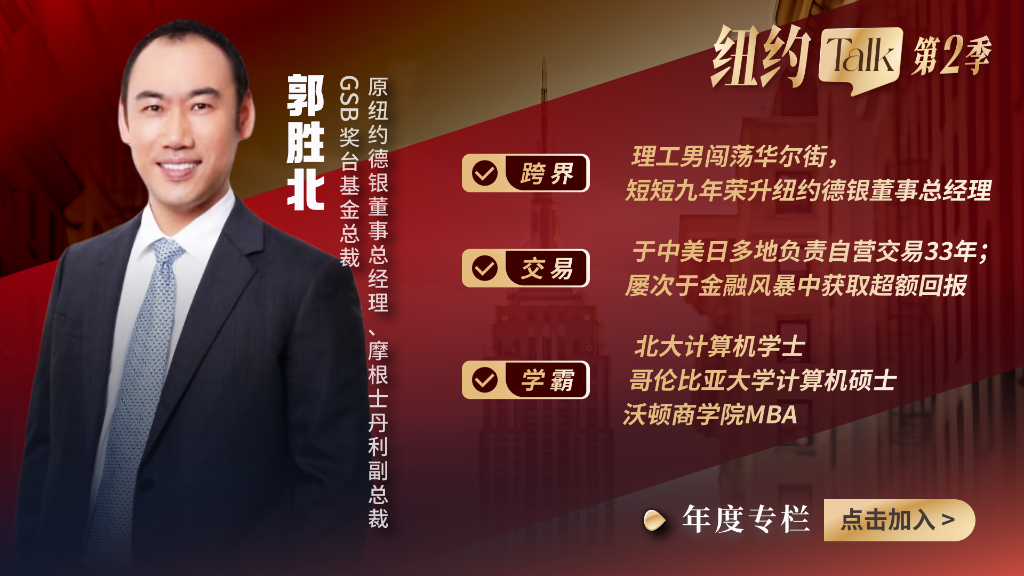
对话郭胜北:驰骋市场33年,华尔街顶级交易员如何炼成?
Hua Er Jie Jian Wen· 2025-05-08 02:17
Group 1 - The article discusses the impact of Trump's "reciprocal tariffs" on global markets and the responses from countries like Europe, Canada, and Japan [1] - It highlights the need for better understanding of U.S. policies from a global perspective, emphasizing the cultural and political differences that create an "information gap" [1] - The introduction of the "New York Talk" series aims to bridge this gap by providing insights into the financial world through expert analysis [1] Group 2 - Guo Shengbei, the founder of GSB Award Fund, has a background in computer science and has transitioned from a technical role to a prominent figure in finance [2][3] - His career began at Morgan Stanley in Tokyo during the early 1990s, where he capitalized on the market's volatility and gained significant experience [4][5] - Guo's tenure at Deutsche Bank from 1997 to 2009 was marked by consistent profitability and successful navigation through major financial crises [8][9] Group 3 - In 2010, Guo established his own hedge fund, focusing on quantitative trading strategies, which required him to adapt from a specialist to a more versatile role [10][11] - His insights into the Chinese market led to recognition from major institutions, resulting in leadership roles at Citic Securities and other firms [11][12] - Guo's return to New York in 2022 marks a new chapter in his career, as he aims to leverage his extensive experience in the hedge fund industry [13] Group 4 - The "New York Talk" series has received positive feedback for its unique teaching style and rigorous logical reasoning, fostering discussions among investors [25] - Guo's predictions regarding market trends, such as the impact of currency swaps on liquidity and the implications of Trump's tariffs, demonstrate his analytical prowess [18][22] - The upcoming second season of "New York Talk" will continue to provide insights into the U.S. economy and Wall Street trading logic [25]