
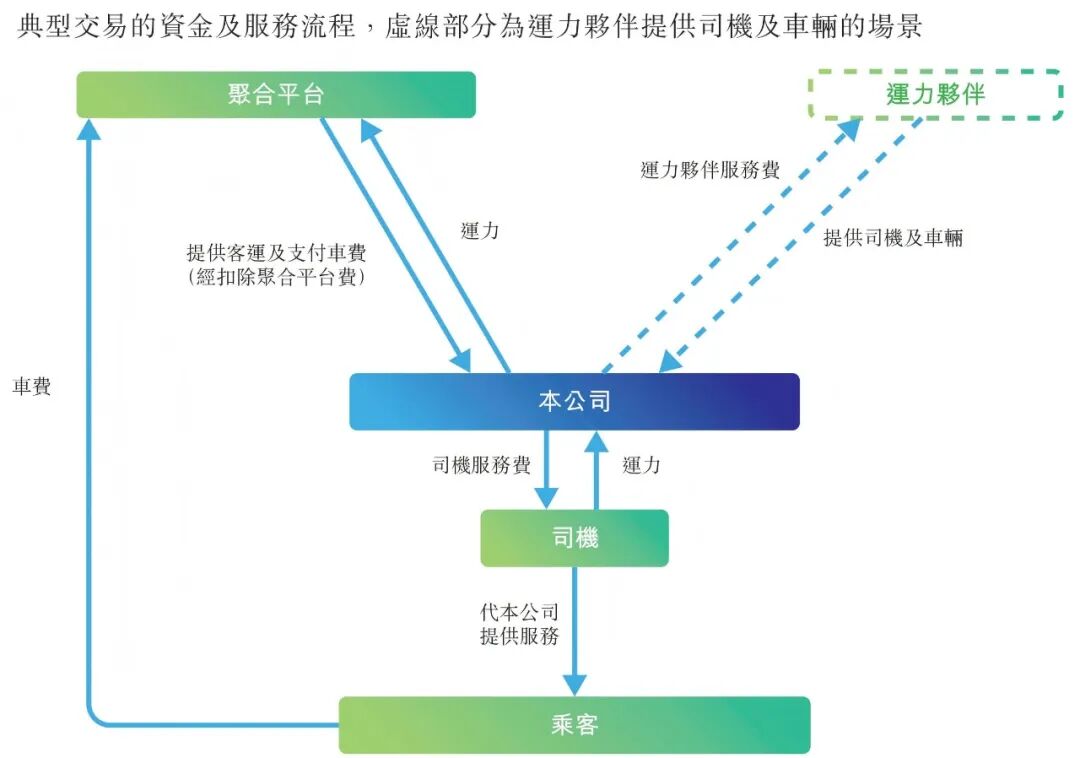
聚合平台

Search documents
10亿用户的高德,5天迎来三次约谈
Xin Lang Cai Jing· 2026-02-15 14:49
Core Viewpoint - Gaode has faced increasing regulatory pressure, being summoned three times in five days due to issues related to its ride-hailing business and other services, indicating a need for compliance changes and operational adjustments [20][21][22]. Regulatory Pressure - Gaode and five other ride-hailing platforms were summoned by financial regulators due to lending practices and commission structures [2]. - The company has been criticized for inadequate management of partner platforms, price suppression, and poor emergency response [20]. - As of December 2025, Gaode's order compliance rate was 69.4%, significantly lower than self-operated platforms like Didi and Cao Cao, which exceed 80% [16][19]. Business Model and Financials - Gaode operates a "light asset" model, acting as an intermediary without owning vehicles or managing drivers, which allows it to maintain lower operational costs [13]. - The average commission rate for Gaode's platform ranges from 10% to 20%, with a reported effective commission rate of 7.4% for a partner company, compared to Didi's average of 14% [7][9]. - Despite a large user base of 1 billion, the profitability of smaller ride-hailing platforms relying on Gaode's traffic is under pressure, with gross profit margins declining from 2.9% to -0.2% between 2022 and 2024 [12]. Market Dynamics - By the end of 2025, there were 395 ride-hailing platforms in China, with Gaode's platform contributing significantly to the order volume, processing 22 billion orders in 2024, which accounted for 67% of the total on aggregation platforms [22][23]. - The ride-hailing market is evolving, with some companies exploring Robotaxi services, which may disrupt the current aggregation model and reduce reliance on platforms like Gaode [30][31]. Strategic Adjustments - Gaode is reportedly seeking to adapt its business model in response to regulatory scrutiny and market changes, while still capitalizing on traffic benefits from its large user base [32].


10亿用户的高德 5天迎来三次约谈
2 1 Shi Ji Jing Ji Bao Dao· 2026-02-15 14:03
Core Viewpoint - Gaode has faced increasing regulatory pressure, being summoned three times in five days due to issues related to its ride-hailing business, including commission rates and compliance with regulations [1][23]. Group 1: Regulatory Pressure - Gaode and five other ride-hailing platforms were summoned by financial regulators on February 13 due to lending practices [1]. - The company has been under scrutiny for its commission practices and management of partner platforms, leading to a call for introspection and compliance improvements [22][23]. - As of December 2025, Gaode's order compliance rate was 69.4%, significantly lower than self-operated platforms like Didi and Cao Cao, which exceed 80% [18]. Group 2: Business Model and Financials - Gaode operates as an aggregator, facilitating transactions without owning a fleet or managing drivers, which allows it to maintain lower operational costs [13]. - The commission rates for aggregators range from 10% to 20%, with Gaode's effective rate calculated at 7.4% based on data from a partner company [4]. - In the first half of 2025, Gaode contributed to 94.5% of a partner's total transaction value, highlighting its significant role in the market [4]. Group 3: Market Dynamics - By the end of 2025, there were 395 ride-hailing platforms in China, with Gaode capturing a substantial share of the market [3]. - The number of ride-hailing orders processed by Gaode is projected to reach 2.92 billion by December 2025, accounting for 30% of the total market [25]. - The company has been quietly expanding its ride-hailing business while focusing on new initiatives, such as Robotaxi services, to adapt to market changes [28][36]. Group 4: Driver and User Experience - Drivers report dissatisfaction with transparency regarding commission structures, indicating a lack of clarity in earnings [2][7]. - The average passenger reward per order has fluctuated, with a notable decrease in recent periods, reflecting the pressure on driver incomes [9]. - The operational model of aggregators like Gaode has led to a "passing the buck" phenomenon, where service issues are often not adequately addressed, impacting user experience [16].
网约车竞争加剧,今年收入增长止步,享道出行靠啥冲上市?
Nan Fang Du Shi Bao· 2025-11-21 14:32
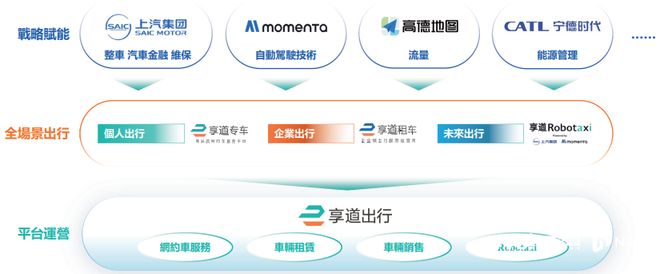
Core Viewpoint - Xiangdao Mobility is preparing for an IPO in Hong Kong to raise funds for autonomous driving research, Robotaxi operations, and expanding its user and driver base, amidst increasing competition in the ride-hailing market [1][2] Group 1: Company Overview - Xiangdao Mobility, a subsidiary of SAIC Group, was established in 2018 and offers various transportation services including ride-hailing, car rentals, and ride-sharing [2] - The company has raised multiple rounds of financing, achieving a valuation of $1 billion after its 2022 funding round [2] - As of June 30, 2025, Xiangdao Mobility's ride-hailing services are expected to cover 26 provinces and 85 cities in China, with over 2 million registered users and 106,200 drivers [2] Group 2: Financial Performance - The company has reported cumulative losses exceeding 1.9 billion yuan over the past three and a half years, with revenues primarily driven by ride-hailing services [5][6] - Revenue figures for 2022, 2023, and 2024 were 4.729 billion yuan, 5.718 billion yuan, and 6.395 billion yuan respectively, with losses of 781 million yuan, 604 million yuan, and 407 million yuan [6] - In the first half of 2025, revenue declined by 2.8% to 3.013 billion yuan, resulting in a loss of 115 million yuan due to increased competition and operational costs [6] Group 3: Market Dependency and Risks - Xiangdao Mobility's order volume is heavily reliant on aggregation platforms, with over 98% of orders sourced from platforms like Didi and Meituan, leading to increased commission costs [4][5] - The company paid commissions of 273 million yuan, 327 million yuan, and 442 million yuan in 2022, 2023, and 2024 respectively, with the proportion of sales expenses attributed to these commissions rising from 52% to 75.3% [5] Group 4: Robotaxi Strategy - The company views Robotaxi as a strategic core for future growth, aiming to establish a fleet of 200 L4-level Robotaxis by 2026 [9][11] - The global Robotaxi market is projected to grow significantly, reaching 2.1 billion yuan by 2025 and 25.3 trillion yuan by 2035, with the Chinese market expected to reach 11 billion yuan by 2025 [8][9] - Xiangdao Mobility is developing a comprehensive ecosystem for autonomous driving, integrating vehicles, technology, and platforms to enhance operational efficiency [9][11] Group 5: Industry Trends - The ride-hailing market is experiencing intense competition, with a shift from aggressive pricing strategies to a focus on optimizing unit economics [12] - The industry is moving towards a decentralized model, providing growth opportunities for emerging platforms as user traffic distribution becomes more fragmented [12]
【重磅深度/曹操出行】科技重塑共享出行,打造服务口碑最好品牌
东吴汽车黄细里团队· 2025-09-06 09:24
Core Viewpoint - The Chinese ride-hailing market is transitioning from "wild growth" to "compliance and intelligence," with the core conflict shifting from capital subsidies to the institutional reconstruction of automated driving and human-vehicle relationships. The market is expected to reach nearly 1 trillion yuan by 2030, with opportunities arising for second-tier platforms due to the rise of aggregation platforms and Robotaxi technology breakthroughs [2][5]. Group 1: Industry Overview - The ride-hailing market is experiencing internal flow decentralization, with aggregation platforms capturing approximately 25%-30% of order share, creating structural opportunities for second-tier platforms [2]. - The Robotaxi, leveraging L4 autonomous driving technology, is seen as a key breakthrough, significantly reducing accident rates compared to human drivers by over 80% [2]. - The market is projected to grow to nearly 1 trillion yuan by 2030, with a compound annual growth rate (CAGR) exceeding 20% [35]. Group 2: Company Performance - The company is actively expanding its market share through partnerships with aggregation platforms, achieving a 53.5% year-on-year increase in active drivers to 544,000 and a 57.4% increase in active users to 38 million in the first half of 2025 [3]. - The company’s revenue is expected to grow significantly, with projected revenues of 206.7 billion yuan in 2025, 262.4 billion yuan in 2026, and 323.7 billion yuan in 2027, reflecting a strong growth trajectory [5]. - The company has developed a fleet of 37,000 customized vehicles, leading the industry and enhancing the standardization of travel experiences [3][15]. Group 3: Technological Integration - The company is integrating vehicle manufacturing, operational services, and technology research and development into a unified Robotaxi platform, aiming to replicate the success of its ride-hailing business [4]. - The launch of "Cao Cao Smart Travel" and the introduction of customized vehicles are part of the strategy to enhance user experience and operational efficiency [4][15]. - The company is leveraging its parent group’s resources to enhance research and development efficiency, which is expected to accelerate the commercialization of L4 technology [4]. Group 4: Financial Projections - The company’s revenue for 2024 is projected to be 146.6 billion yuan, a 37.4% year-on-year increase, driven by a significant rise in order volume and average order value [24]. - The gross profit margin is expected to improve from -4.4% in 2022 to 8.4% in the first half of 2025, reflecting effective cost control and increased customer spending [29]. - The company’s operational revenue is primarily derived from ride-hailing services, which accounted for 90.9% of total revenue in the first half of 2025 [27].

曹操出行(02643):科技重塑共享出行,打造服务口碑最好品牌
Soochow Securities· 2025-09-05 05:11
Investment Rating - The report assigns a "Buy" rating for the company, marking its first coverage [1]. Core Viewpoints - The company is positioned as a leading shared mobility platform in China, leveraging technology to reshape the industry and enhance service reputation [12]. - The report highlights the significant growth potential in the ride-hailing market, driven by the integration of Robotaxi technology and the expansion of service areas [2][8]. - The company's revenue is expected to grow substantially, with projections indicating a rise from 20.67 billion CNY in 2025 to 32.37 billion CNY by 2027 [1]. Summary by Sections Company Overview - The company is the second-largest shared mobility platform in China, founded in 2015 as part of Geely's strategic investment in the "new energy vehicle sharing ecosystem" [12]. - It operates in 163 cities, with a monthly active driver count of 554,000 and a market share of 5.4% as of 2024 [12]. Market Dynamics - The ride-hailing market is transitioning from "barbaric growth" to "compliant intelligence," with a focus on automated driving and regulatory restructuring [8]. - The market is expected to reach nearly 1 trillion CNY by 2030, with significant growth opportunities for second-tier platforms [32]. Business Model and Growth Strategy - The company is expanding its customized vehicle fleet, which has reached 37,000 units, enhancing the standardization of service experiences [13]. - The integration of Robotaxi services is a key growth driver, with plans for mass production and deployment of autonomous vehicles [8][12]. Financial Performance - Revenue is projected to increase significantly, with 2024 revenue expected to reach 14.66 billion CNY, reflecting a year-on-year growth of 37.4% [1]. - The company is expected to narrow its losses, with net profit projections improving from -1.25 billion CNY in 2024 to a profit of 891.83 million CNY by 2027 [1]. Competitive Landscape - The report notes the competitive dynamics in the ride-hailing market, with major players like Didi holding over 70% market share, creating opportunities for other platforms [32]. - The rise of aggregation platforms is reshaping the market, allowing for better resource allocation and service integration [56].