股权风险溢价率

Search documents
2026年A股投资策略 - 破晓:从预期到盈利的切换
2025-12-10 01:57
Summary of Key Points from the Conference Call Industry and Company Overview - The conference call focuses on the A-share market in China, specifically projections for 2026 and the implications for various sectors and investment strategies. Core Insights and Arguments - **Economic Growth Projections**: The actual GDP growth rate for China in 2026 is expected to slow to 4.7%, while nominal GDP is projected to rise to 5.5%, driven by improved price data, which will enhance corporate profitability and benefit the stock market [1][7]. - **Investment Trends**: Manufacturing investment is anticipated to rebound to around 4%, infrastructure investment to slightly increase to about 3%, and real estate investment's decline is expected to narrow to -8% to -9% [1][6]. - **Export Growth**: Export growth is projected to align with global trade growth, approximately 3%, following a thaw in US-China relations [2][6]. - **Consumer Spending and Inflation**: Consumer growth is expected to remain stable at around 4%, with inflation projected to fluctuate between 0.9% and 1% [1][9]. - **Sector Recommendations**: The technology sector, particularly the AI industry chain, is prioritized for investment, including upstream computing power and supporting sectors, as well as downstream applications like robotics, gaming, and software [1][8][34]. Additional Important Insights - **Profit Growth Expectations**: Overall A-share profit growth is estimated at 10.3% for 2026, with the growth rate excluding financials at 7.7%. The ChiNext and Sci-Tech Innovation Board are expected to perform particularly well, with growth rates of 31.7% and 34.3%, respectively [1][21][24]. - **Market Style Outlook**: The market style for 2026 is expected to prioritize growth, followed by cyclical, consumer, and financial sectors, reflecting a focus on the new growth cycle in technology industries [40]. - **Valuation Levels**: As of late 2025, major market indices are at historically high valuation levels, with the Shanghai Composite Index at approximately 84% of its historical valuation percentile [25][26]. - **Investment Opportunities**: Key investment themes include the AI industry chain, price recovery sectors, and opportunities driven by external demand, such as engineering machinery and defense industries [1][8][39]. Conclusion - The 2026 A-share market is expected to transition from valuation-driven growth to profit-driven support, with significant opportunities in technology and related sectors. The overall economic environment suggests a cautious but optimistic outlook for corporate profitability and market performance.
股债跷跷板效应凸显,资产配置的底层逻辑
Mei Ri Jing Ji Xin Wen· 2025-12-03 01:52
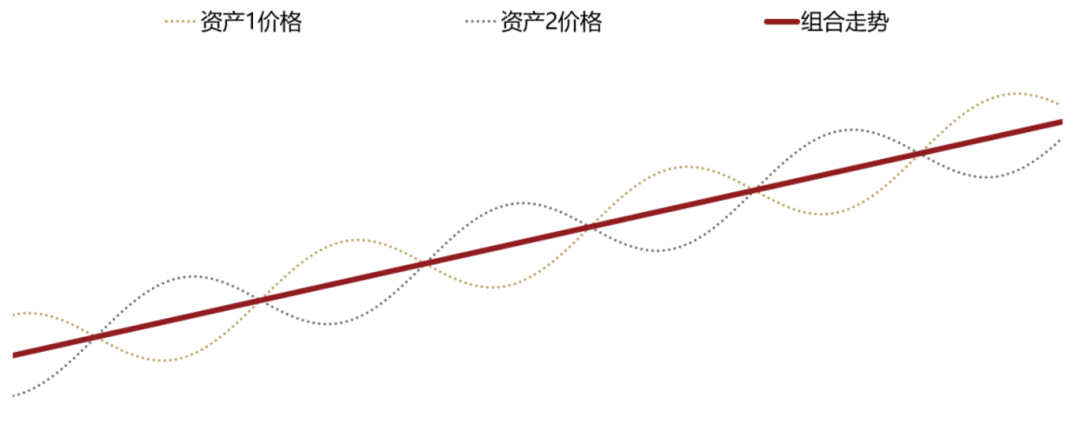
我们先通过一张示意图直观感受资产配置的重要性与意义。资产价格总会波动,无论是国内外资产,拉长到年度维度看,大多呈现震荡上行的特征。假设 我们有两类资产,走势不同且呈一定负相关,但长期均震荡上行,若两者收益率相近,单独选择任一资产都可行,但更优解是做资产配置——将资金各 50%分配给两类资产。在理想情况下,这两类资产长期收益率均上行,但受宏观因素、基本面、资金结构等影响,各自会出现阶段性回撤,而分散配置 后,虽长期收益率与单独持有相近,但资产回撤和波动会大幅降低,能显著改善投资持有体验。 在此背景下,十年国债ETF(511260)核心价值凸显。十年国债ETF(511260)是唯一跟踪上证十年期国债指数的产品,持仓透明无风格漂移,历史上每 年均实现正收益,具备低波动、稳健收益特征,且支持日内回转交易、质押加杠杆等功能,综合费率仅0.2%,操作便捷、成本优势显著。结合年底债券 配置的历史规律与明年宽松政策预期,十年国债ETF(511260)是震荡市中平衡组合风险、把握债市机会的优选工具,当前具备较高布局价值。 风险提示: 这张图生动揭示了资产配置的核心逻辑:寻找相关性较低的资产进行资金分散,也就是我们常说的"不要把 ...