能源即服务(EaaS)

Search documents
LG新能源加拿大首个电池厂竣工!
起点锂电· 2026-03-09 09:28
Core Viewpoint - The article discusses the recent developments and challenges faced by LG Energy Solution, particularly focusing on its operations in North America and the strategic adjustments made in response to market conditions [3][4][5]. Group 1: Company Developments - LG Energy Solution's NextStar Energy plant in Windsor, Canada, has officially opened, marking a significant milestone as the only large-scale battery manufacturing facility in the country [4]. - The plant, initially intended for electric vehicle battery production, has shifted focus to energy storage batteries due to a slowdown in the electric vehicle market [4]. - The CEO of LG Energy Solution expressed confidence in the plant's independent operation, emphasizing its role in driving Canada's electrification future and enhancing market influence in North America [4]. Group 2: Financial Performance - In Q2 2024, LG Energy Solution reported a loss of approximately 240 billion KRW (about 1.2 billion RMB), marking its first loss since 2022, with revenue declining by 30% to 6.16 trillion KRW (approximately 332 billion RMB) [5][6]. - The company faced further challenges in 2025, with Q1 revenue decreasing by 2.9% and Q2 revenue dropping by 11.2%, although Q3 showed a slight recovery with a 2.4% increase in revenue [6][7]. Group 3: Strategic Adjustments - LG Energy Solution has been forced to adapt its strategy, including the transformation of its Lansing plant into a production line for square energy storage batteries, primarily supplying Tesla [7]. - The company is also focusing on its Chinese operations, with the president of LG Energy Solution China highlighting Jiangsu as a solid foundation for its business in the region [7]. Group 4: Product Innovations - Despite operational challenges, LG Energy Solution is committed to maintaining its product development pace, showcasing new technologies at an upcoming event, including the lithium manganese (LMR) battery developed in collaboration with General Motors [8][9]. - The company plans to present a range of battery solutions across various sectors, including energy infrastructure, mobile transportation, and robotics, emphasizing its commitment to innovation and technology leadership [9][10].


【可持续发展】港华智慧能源发行第三期"类REIT" 规模达8.12亿人民币
Ge Long Hui· 2025-11-21 09:52
Core Insights - The company successfully issued the "Zero Carbon Smart Phase 3 Green Asset-Backed Special Plan (Carbon Neutral)" REIT on the Shenzhen Stock Exchange, with a scale of 812 million RMB [1][2] - This issuance marks the second REIT product launched by the company this year and is the third project within a 5 billion RMB shelf program, maintaining a priority security coupon rate of 2.3% [1][2] - The funds raised will be invested in photovoltaic and energy storage projects, enhancing the company's development in the renewable energy sector [1][2] Company Developments - By June 2025, the company's cumulative grid-connected photovoltaic project capacity is expected to reach 2.6 GW, with rapid growth in energy storage services expanding to eight provinces [2] - The company is advancing an "Energy as a Service" (EaaS) model, promoting integrated services in photovoltaic, energy storage, and electricity sales, while enhancing asset monitoring and electricity trading efficiency through a smart energy ecosystem platform [2] - The issuance of the third REIT will further expand the company's green financing channels, with plans to deepen collaboration with financial institutions to promote renewable energy development in line with national energy transition goals [2]
详解美国数据中心狂潮:45GW,2.5万亿美元投资,谁在建设,谁在掏钱?
华尔街见闻· 2025-11-03 11:01
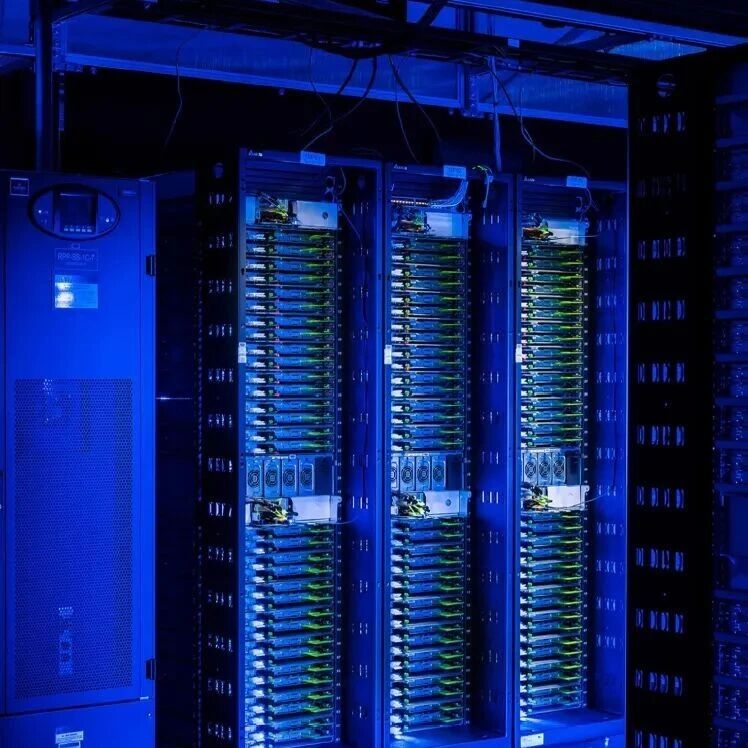
Core Insights - A significant infrastructure race driven by artificial intelligence is unfolding in the United States, with planned large data center projects exceeding 45 GW and attracting over $2.5 trillion in investments [1][3]. Group 1: Major Players and Projects - The expansion is primarily driven by major companies such as OpenAI, Amazon, Meta, Microsoft, and xAI, which are rapidly planning and constructing computing clusters to support increasingly complex AI models [1][3]. - Key projects include OpenAI's Stargate (1.2-1.6 GW), Frontier (1.4 GW), Lighthouse (1 GW), Project Jupiter (1.5 GW), and additional projects in Ohio and Texas, with Stargate alone representing a commitment of over $400 billion for 7 GW of capacity [4][5]. Group 2: Power Supply Challenges - The surge in power demand is creating unprecedented challenges for the U.S. electrical infrastructure, leading to a "power wall" scenario where existing grid capacity is insufficient [1][5]. - Companies are increasingly adopting a "Bring-Your-Own-Power" strategy, with many opting to build on-site power generation facilities to ensure reliable electricity supply and expedite project timelines [1][6]. Group 3: Investment and Financing Structures - The construction costs for data centers have escalated, with costs exceeding $1,700 million per MW, and OpenAI's Stargate project reflecting a staggering $5,700 million per MW when including IT equipment [4][8]. - Private equity firms and specialized infrastructure funds are playing a crucial role in financing these projects, exemplified by Blue Owl Capital's $15 billion joint venture with Crusoe for the Stargate 1 project [8]. Group 4: Energy as a Service (EaaS) Model - The rise of the "Energy as a Service" (EaaS) model is evident, with energy companies like Williams entering long-term power purchase agreements with data center operators, investing billions in dedicated power generation facilities [9]. Group 5: Supply Chain and Labor Challenges - The explosive demand is straining the power equipment supply chain, with heavy gas turbine prices rising by 50% in less than two years and extended delivery times [10][11]. - Equipment manufacturers are facing challenges related to component shortages and labor, prompting some companies to acquire second-hand or unused equipment to meet their needs [11].



巴克莱:详解美国数据中心狂潮,45GW,2.5万亿美元投资,谁在建设,谁在掏钱?
美股IPO· 2025-11-03 04:39
Core Insights - The article highlights a significant surge in data center projects in the U.S., with a total capacity exceeding 45 GW and projected investments surpassing $2.5 trillion, driven by major tech companies like OpenAI, Amazon, Meta, Microsoft, and xAI [4][14]. Group 1: Investment and Capacity - The current wave of data center construction is primarily fueled by the need for advanced AI model training and operation, leading to unprecedented demand for computational power [4][5]. - OpenAI's Stargate project aims for a capacity of 10 GW with an investment of $500 billion by the end of 2025, having already committed approximately 7 GW across various states [8][13]. - Amazon has added 3.8 GW of capacity globally in the past year and is expected to double its capacity by 2027, potentially increasing by about 13 GW in the U.S. alone during 2026-2027 [8][14]. Group 2: Power Infrastructure Challenges - The rapid increase in power demand from data centers is creating significant challenges for the existing U.S. electrical grid, leading to a phenomenon referred to as the "power wall" [4][12]. - Companies are increasingly adopting a "Bring-Your-Own-Power" strategy, opting to build on-site power generation facilities to ensure reliable electricity supply and expedite project timelines [12][14]. - For instance, the Stargate 1 project plans to deploy approximately 350 MW of on-site natural gas generation capacity despite having grid access approval for 1.2 GW [12][13]. Group 3: Financing and Cost Structures - The financing landscape for these massive investments is complex, involving not only the capital expenditures of tech giants but also significant contributions from private equity firms and specialized infrastructure funds [14]. - The construction cost for data centers has escalated, with reports indicating costs exceeding $17 million per MW, and OpenAI's Stargate project reflecting a staggering $5,700 million per MW when including IT equipment [11][14]. - The "Energy as a Service" (EaaS) model is emerging, with energy companies entering long-term power purchase agreements to support data center operations, exemplified by Williams' $2 billion investment in Meta's Prometheus project [14]. Group 4: Supply Chain and Labor Challenges - The explosive demand for power generation equipment is straining supply chains, with heavy gas turbine prices rising by 50% in less than two years and extended delivery times [15]. - Companies are facing challenges in sourcing components and labor, prompting some to acquire second-hand or unused equipment to mitigate long wait times [15].
撤回不是撤退正泰安能战略升维掘金综合能源服务新蓝海
Zhong Guo Jing Ji Wang· 2025-09-04 08:29
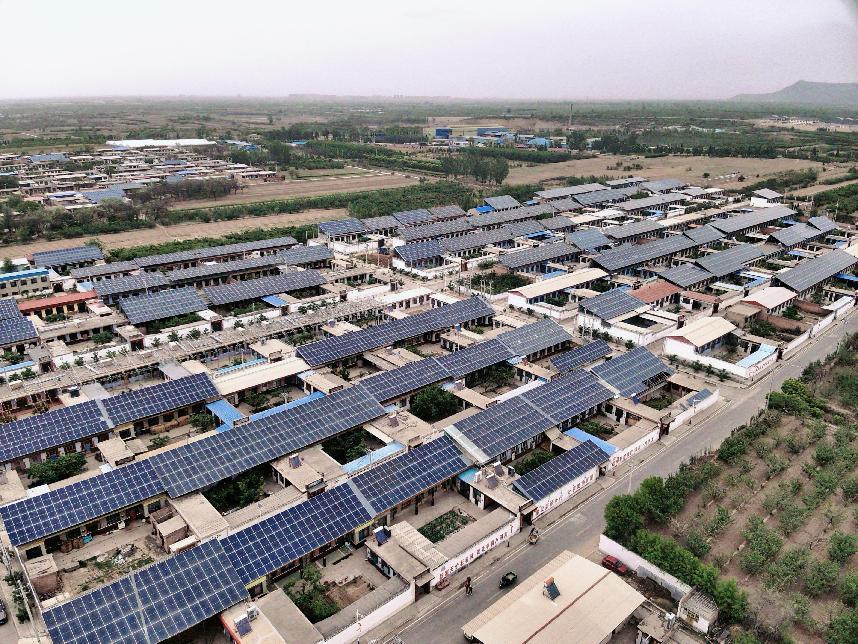
Company Decision - Chint Aneng has decided to withdraw its application for listing on the Shanghai Stock Exchange, primarily due to its strong business performance and growth rate [1] - The withdrawal will not have a significant adverse impact on the company's operations and financial status [1] - Market analysis suggests that this decision may be related to Chint Aneng's net profit nearing the regulatory limit for spin-offs [1] Industry Trends - China has established the world's largest and fastest-growing renewable energy system, with renewable energy generation capacity increasing from 40% to approximately 60% since the start of the 14th Five-Year Plan [3] - The installed capacity of wind and solar power has surged from 530 million kW in 2020 to 1.68 billion kW by July this year, reflecting an annual growth rate of 28% [3] - The majority of photovoltaic equipment manufacturers and over 60% of wind turbine manufacturers are private enterprises, highlighting their crucial role in the renewable energy sector [3] Distributed Photovoltaics - Distributed photovoltaics have become a key driver for improving livelihoods, with over 40 million kW of new installations since the start of the 14th Five-Year Plan, benefiting over 7 million households [4] - This sector is expected to play a significant role in ensuring equitable access to energy development outcomes as part of rural revitalization strategies [4] - The development of distributed photovoltaics is also enhancing the efficiency of power resource allocation by reducing reliance on long-distance transmission [4] Market Potential - The household photovoltaic market in China has over 1600 GW of development potential, with only about 10% market penetration [5] - The rapid growth of advanced manufacturing and digital industries is driving an increase in electricity demand, further expanding the development space for distributed photovoltaics [5] Strategic Positioning - Chint Aneng is positioning itself as a leader in comprehensive energy services, transitioning from a household photovoltaic leader to a global comprehensive energy service leader [6] - The company is focusing on a diversified business model, including innovative solutions for urban households and efficient microgrid solutions for rural and community applications [6][7] - The withdrawal of the IPO application is seen as a new starting point for the company to refocus and enhance its capabilities, aiming to contribute more to the dual carbon goals and global energy transition [8]