自动驾驶效应

Search documents
“5个月大涨32%的美股”碰上“恢复降息的美联储”,下周会发生什么?
美股IPO· 2025-09-14 11:00
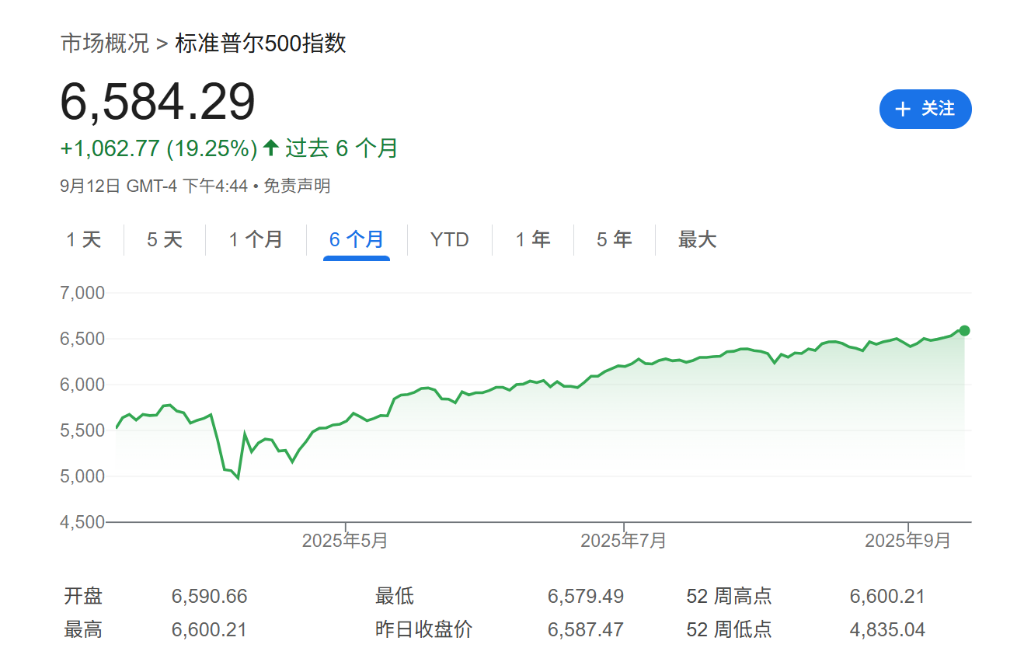
Core Viewpoint - The U.S. stock market, after a record surge of $14 trillion, is at a critical turning point as the Federal Reserve is expected to restart its rate-cutting cycle, creating a complex interplay between monetary policy expectations and economic slowdown concerns [1][3]. Market Dynamics - The S&P 500 index has surged 32% since its low in April, driven by expectations of multiple rate cuts by the Federal Reserve this year, with the market fully pricing in a 25 basis point cut next week [3][5]. - Historical data suggests that after the Fed pauses rate hikes for six months or more and then resumes cuts, the S&P 500 typically sees an average increase of 15% over the following year [5][6]. Economic Concerns - Despite strong economic growth and healthy corporate profits, rising unemployment rates have raised concerns about the potential for an economic "hard landing," leading to debates on the extent of necessary rate cuts by the Fed [6][10]. - The market's performance reflects a shift in risk appetite, with traditional monetary policy's influence being challenged by structural changes in investment flows [6][8]. ETF Influence - ETFs have attracted over $800 billion in funds this year, with $475 billion flowing into the stock market, indicating a significant structural force reshaping market logic [7][8]. - The "automatic driving effect" of ETFs, where retirement savings are regularly invested in passive index funds, provides stable support for risk assets regardless of economic data [7][8]. Investment Strategies - Historical patterns during rate-cutting cycles show that cyclical sectors like financials and industrials perform best when the economy is strong and the Fed makes only a few preventive cuts [9]. - Conversely, in periods requiring more substantial cuts due to economic weakness, defensive sectors such as healthcare and consumer staples tend to outperform [9][10]. - Investors are focusing on various strategies, with some favoring small-cap stocks sensitive to interest rates, while others continue to hold leading tech stocks like Nvidia and Amazon, betting on their resilience amid gradual economic slowdown [9][10].


“5个月大涨32%的美股”碰上“恢复降息的美联储”,下周会发生什么?
Hua Er Jie Jian Wen· 2025-09-14 02:25
Group 1 - The U.S. stock market, after a significant rise of $14 trillion, is approaching a critical turning point with expectations of a Federal Reserve interest rate cut next week [1] - The S&P 500 index has surged 32% since April, driven by expectations of multiple rate cuts by the Fed this year, with a 25 basis point cut anticipated next week [1][3] - Concerns about a potential "hard landing" for the economy have emerged, fueled by recent economic data, including a report showing the highest unemployment rate since 2021 [4] Group 2 - A structural shift in the market is occurring, with a trillion-dollar influx of funds driven by exchange-traded funds (ETFs), which is providing stable support for risk assets regardless of economic data [3][4] - ETFs have attracted over $800 billion in funds this year, with $475 billion flowing into the stock market, potentially setting a record for annual inflows exceeding $1 trillion [4][6] - The "automatic driving effect" of retirement savings being regularly invested into passive index funds is reshaping market dynamics and influencing the transmission of monetary policy [6] Group 3 - Historical data suggests that after the Fed pauses rate hikes for six months or more and then resumes cuts, the S&P 500 typically sees an average increase of 15% over the following year [3][7] - Investment strategies are being shaped by the anticipated speed and magnitude of Fed rate cuts, with cyclical sectors performing best during mild economic slowdowns and defensive sectors favored during deeper downturns [7][8] - Investors are focusing on different sectors, with some favoring small-cap stocks and others maintaining positions in leading companies like Nvidia, Amazon, and Alphabet, betting on their resilience amid economic slowdowns [8]