自然语言交互

Search documents
马斯克回应用户建议:特斯拉FSD语音提示功能“即将到来”
Sou Hu Cai Jing· 2026-02-21 07:25
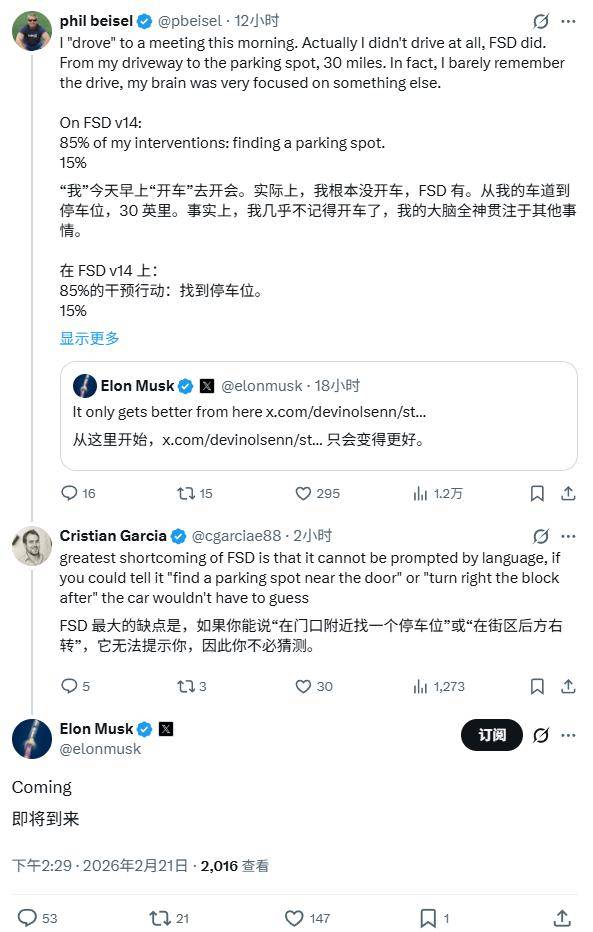
Core Insights - A Tesla owner shared their experience using the FSD (Full Self-Driving) system, indicating that the system managed a 30-mile (approximately 48.3 kilometers) journey with minimal driver intervention, leading to discussions about the interaction methods of the system [1] - The user reported that about 85% of interventions occurred during the parking phase, while 15% were due to preferences for different routes [1] - A comment highlighted a significant limitation of the current FSD system: the inability to accept natural language commands for navigation and parking instructions, which could enhance user experience if implemented [1] - Tesla CEO Elon Musk responded briefly, indicating that the company is working on developing a feature that would support natural language prompts for the FSD system [1][2] Group 1 - The FSD system primarily relies on onboard cameras, perception algorithms, and navigation data for path planning and decision-making [2] - Users typically interact with the system through the central control interface or by inputting destinations into the navigation system [2] - The potential addition of natural language capabilities could change the interaction dynamics of the vehicle during driving [2]


千问接入淘宝闪购:这场“降维”打击,真的来了
Xin Lang Cai Jing· 2026-01-15 14:14
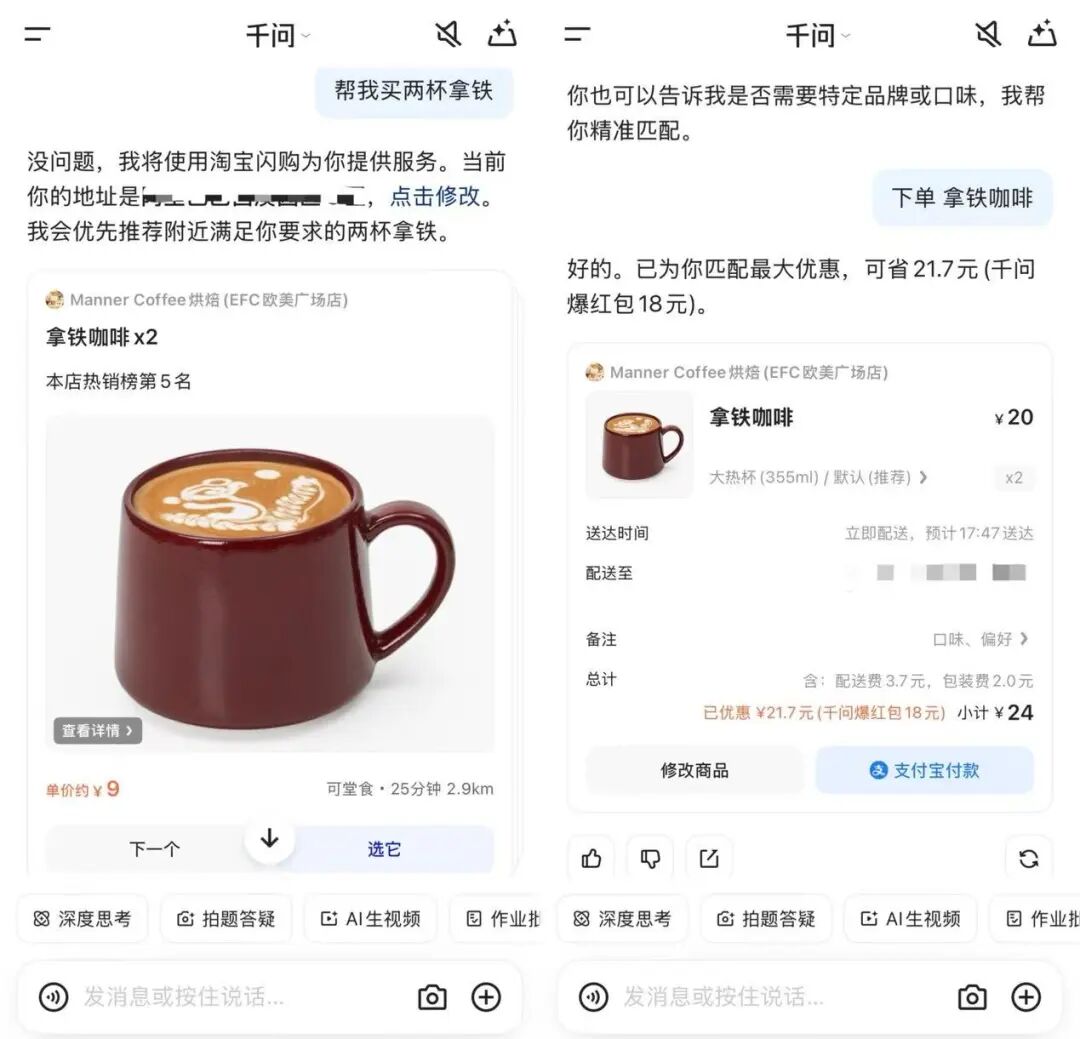
Core Insights - The emergence of AI-driven platforms like Taobao Flash Purchase signifies a paradigm shift in the food delivery industry, moving from a graphical interface to a language-based interaction model [1][2][4][5] Group 1: AI Integration and Competitive Landscape - Taobao Flash Purchase leverages the Qwen AI model, enabling it to understand user intent and execute complex orders seamlessly, positioning it ahead of competitors like Meituan, which lacks a comparable AI framework [5][7][8] - The integration of AI allows Taobao Flash Purchase to proactively anticipate user needs, contrasting with Meituan's reactive approach [8][9] Group 2: User Experience Transformation - Natural language processing eliminates the need for users to navigate complex app interfaces, making the ordering process more intuitive and accessible for all demographics, including the elderly and visually impaired [9][20] - The AI-driven service model transforms user interaction from a transactional experience to a personalized service, enhancing user loyalty and engagement [14][24] Group 3: Ecosystem Synergy - The Qwen AI model not only connects Taobao Flash Purchase but also integrates with other Alibaba services, creating a comprehensive local life operating system that addresses both spatial and temporal needs [10][12][23] - This interconnected ecosystem allows for smarter decision-making, as the AI can suggest dining options based on user preferences and real-time conditions [23][25] Group 4: Market Dynamics and Future Outlook - The shift towards AI-driven services marks a transition from subsidy-based competition to value creation, with Taobao Flash Purchase showing significant growth in non-food categories and improved unit economics [25] - If Meituan fails to develop a comparable AI capability quickly, it risks losing its competitive edge in the evolving market landscape [25]


ChatGPT负责人深度复盘:我们做错了什么?
虎嗅APP· 2025-08-21 00:20
Core Viewpoint - OpenAI's recent decision to replace GPT-4o with GPT-5 led to significant user backlash, highlighting the emotional attachment users have to specific models and the need for better communication regarding model transitions [5][6][10]. Group 1: User Feedback and Model Transition - The launch of GPT-5 resulted in widespread criticism from users on platforms like Reddit and X, who described GPT-5 as lacking warmth and personality compared to GPT-4o [5][6]. - OpenAI's response included the reintroduction of GPT-4o and a commitment to improve model transparency and user experience [5][6][10]. - Nick Turley acknowledged that not providing a transition period for GPT-4o was a mistake and emphasized the importance of understanding user sentiment towards different models [10][14]. Group 2: User Demographics and Product Philosophy - OpenAI identified a polarized user base, with casual users preferring simplicity and heavy users desiring customization options [6][10]. - The company's product philosophy focuses on efficiency and problem-solving rather than extending user engagement time, which has led to the recognition of emotional dependency on AI as a side effect rather than a goal [15][19]. - OpenAI aims to balance simplicity for the majority while providing advanced options for power users, ensuring that the product remains accessible [25][41]. Group 3: Growth Drivers and User Engagement - ChatGPT's growth is attributed to three main drivers: model capability improvements, integration of research and product innovation, and traditional growth strategies like removing login restrictions [8][41]. - Despite negative feedback, overall usage metrics have shown positive growth, with an increase in API usage and active users following the release of GPT-5 [22][24]. - OpenAI is exploring new business models, including potential partnerships for transaction commissions, while maintaining a focus on user experience [35][39]. Group 4: Future Product Vision and Development - OpenAI envisions a broader product strategy beyond the current chatbot format, aiming for a more integrated and versatile AI assistant capable of handling complex tasks [47][54]. - The company is actively working on enhancing the user interface and interaction methods, moving towards a more natural and intuitive user experience [54][62]. - OpenAI is also exploring collaborations with companies like Apple to integrate AI capabilities into various platforms, indicating a long-term vision for AI's role in everyday technology [60][62].

ChatGPT负责人Nick Turley:当有人递给你一张火箭飞船的票时,别纠结座位在哪儿
3 6 Ke· 2025-08-18 09:36
Core Insights - OpenAI has launched its flagship model GPT-5, which is expected to significantly enhance user experience in writing and programming, surpassing its predecessor GPT-4 [2][4] - Nick Turley, head of ChatGPT, discussed the innovative aspects and commercial design of GPT-5 during a podcast, emphasizing its human-like interaction capabilities [2][4] Group 1: GPT-5 Features and Innovations - GPT-5 represents a qualitative leap in AI capabilities, with improved writing and programming skills, faster response times, and a more intuitive understanding of user needs [4][7] - The model integrates various technologies and is the culmination of years of research, making it a sophisticated tool for users [6][7] Group 2: User Experience and Future Directions - OpenAI aims to evolve beyond the current chat-based interaction model, envisioning a product that understands user goals without needing detailed prompts [7][10] - The long-term vision includes creating a "super assistant" that seamlessly integrates into users' lives, understanding their needs and preferences over time [11][12] Group 3: Product Development and Iteration - The culture of rapid product iteration is crucial in AI, allowing teams to understand user needs through real-world application rather than theoretical predictions [8][12] - The initial launch of ChatGPT was a result of quick decision-making, with significant user feedback shaping its development [12][14] Group 4: Pricing Strategy and Market Impact - The pricing strategy for ChatGPT, set at $20/month, was developed under time constraints and has influenced the entire industry [14][15] - The enterprise version, priced at $200/month, was created in response to corporate demand, leading to a rapid increase in business users [14][15] Group 5: Product Philosophy and User Retention - OpenAI's product philosophy focuses on optimizing the core model, developing productized research, and enhancing user experience to improve retention rates [15] - The analogy of ChatGPT to early web browsers highlights its potential to revolutionize access to intelligence, similar to how the internet transformed communication [15]

AI数字人辅助小程序功能版块设计分析
Sou Hu Cai Jing· 2025-08-06 08:00
Core Concept - The article discusses the development of AI digital assistants that enhance human-computer interaction by simulating human communication, aiming to provide natural and efficient service support in daily scenarios [1] Natural Language Interaction System - The dialogue interface utilizes multi-turn conversation technology, enabling context semantic understanding and intent recognition. Users can input requests via text or voice, with the system automatically correcting and completing key information [2] - The response module is designed to express human-like responses, matching emojis and tone words to the conversation content to avoid mechanical replies [2] Task Management and Scheduling - The digital assistant can parse complex user requests and break them down into executable steps. For example, if a user inputs "prepare for a weekend family gathering," the system generates a shopping list, venue setup suggestions, and a schedule [4] - The scheduling module synchronizes with the user's mobile calendar, setting reminders and detecting conflicts, automatically suggesting adjustments when overlapping events are detected [4] Preference Model and Service Recommendations - Based on historical dialogue data, the digital assistant can proactively push relevant services. For instance, if a user frequently inquires about fitness plans, the system will regularly send workout tutorials and dietary suggestions [5] - Recommended content spans various categories, including lifestyle services, learning resources, and entertainment activities, with each recommendation accompanied by a brief description and action entry [5] Multimodal Interaction Expansion - In addition to basic text interaction, the digital assistant supports simple gesture recognition and emotional feedback. Users can express satisfaction through a thumbs-up gesture, which the system records to enhance similar recommendations [6] - The visual presentation adopts a 2.5D cartoon style to avoid discomfort from excessive realism, maintaining a consistent hairstyle and outfit for brand recognition while reducing cognitive load [6] Privacy Protection and Permission Management - Dialogue data is secured with end-to-end encryption, allowing users to choose data retention periods. The permission settings page offers detailed control options, such as allowing calendar access while prohibiting contact list access [7] - Sensitive operations require secondary verification, such as entering a preset password or biometric information to modify schedule arrangements [7] Visual Standards and Adaptation Optimization - The interface design adheres to brand color standards, primarily using a light blue color scheme to create a technological feel. Key operation buttons are sized no less than 44px to ensure accurate touch response across different devices [8] - Animation frame rates are maintained above 30fps to prevent lag during interactions. Testing shows that optimized versions have reduced the error rate by 40% among elderly users [8] - Through the collaborative operation of these functional modules, the AI digital assistant can establish a complete link of "demand understanding - task breakdown - service push," balancing technical advancement with emotional value to provide users with an efficient and warm digital assistance experience [8]


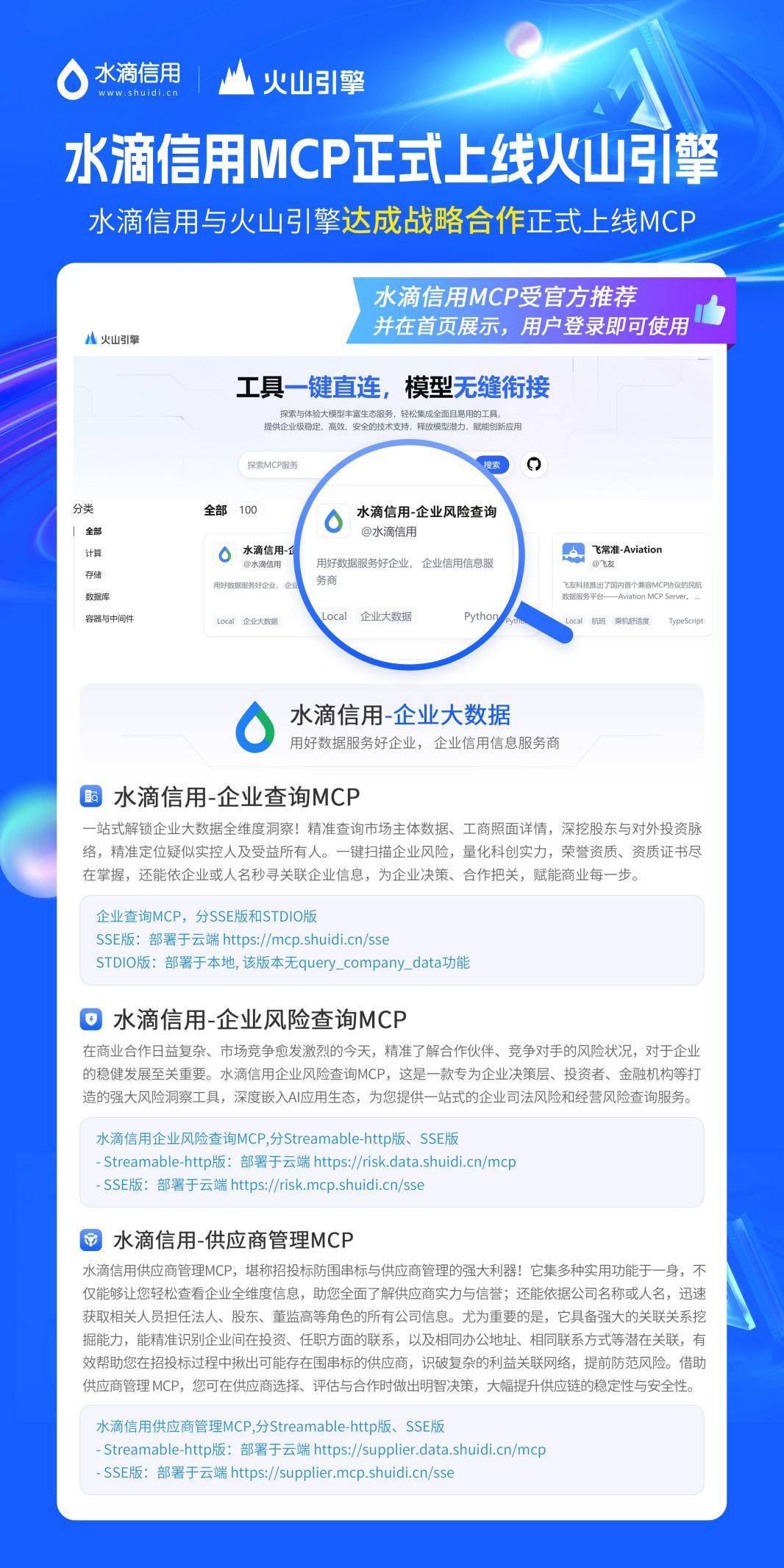
商查平台企业信息查询新范式:水滴信用企业查询MCP
Sou Hu Cai Jing· 2025-07-16 17:19
Core Insights - The traditional business inquiry platforms face significant challenges, including information silos, operational inefficiencies, high understanding thresholds, and a lack of deep insights, which hinder effective decision-making [1][2][6] Group 1: Traditional Business Inquiry Platform Challenges - Information fragmentation leads to users needing to navigate multiple platforms for data retrieval, resulting in time-consuming processes and potential oversight of critical information [1] - Operational inefficiencies arise from the cumbersome keyword search and filtering processes, which do not meet the demands for rapid responses [1] - High understanding thresholds exist due to the presentation of raw data without sufficient analysis, placing a heavy cognitive burden on users [1] - The lack of insightful analysis limits the ability to derive deeper insights, predict trends, or provide decision-making support, resulting in underutilization of data value [1] Group 2: Waterdrop Credit's MCP Solution - Waterdrop Credit introduces a multi-type enterprise information query MCP that leverages large model technology to transform the business inquiry experience [2][6] - The MCP allows for natural language interaction, enabling users to express queries in everyday language, which the system can accurately interpret and analyze [10] - The platform features a panoramic data architecture that integrates diverse data sources, breaking down information silos and enabling comprehensive enterprise profiling [12] - Dynamic intelligent reports can be generated based on user queries, enhancing efficiency from data retrieval to decision support [14] - The MCP represents a shift from traditional information repositories to intelligent hubs, facilitating proactive insights and decision-making support [16]