
自研AI大模型

Search documents
千万大奖落地!雷军最新回应
Zhong Guo Ji Jin Bao· 2026-01-08 07:21
Core Insights - Xiaomi's O1 team won the highest award at the annual technology awards, with a total of 154 projects competing for the prize [2] - Lei Jun announced a future R&D investment plan of 200 billion yuan over the next five years, emphasizing the importance of core technologies such as chips, operating systems, and AI [2][4] - The company has invested approximately 105 billion yuan in R&D over the past five years, exceeding its initial commitment of 100 billion yuan [2] R&D Investment - Xiaomi plans to invest 200 billion yuan in R&D over the next five years, focusing on core technologies to build a comprehensive ecosystem [2][4] - The company has a history of significant R&D investment, with over 7.5 million yuan awarded in total since the inception of the technology awards in 2019 [4][7] Technology Achievements - The O1 chip, developed by Xiaomi, features a GPU that reduces power consumption by 35% compared to Apple's chips and supports dynamic performance scheduling [4] - The O1 chip is manufactured using advanced 3nm technology, marking a significant milestone in Xiaomi's pursuit of core technology development [4] Awards and Recognition - The Xiaomi Technology Award has been upgraded to 10 million yuan, aimed at recognizing engineering teams that achieve industry-leading breakthroughs in core technologies [7] - The O1 team received the highest honor at the awards, with other notable projects also recognized, including the Xiaomi Super Steel and Xiaomi Smart Glasses [3][4]


雷军:小米将发布机器人业务的新进展
Sou Hu Cai Jing· 2026-01-08 04:17
Group 1 - Xiaomi's founder Lei Jun announced new developments in the company's robotics business expected in 2026, with further details to be shared later [1] - Xiaomi has been an early player in the development of robotic dogs and humanoid robots, launching "CyberDog" in 2021 and "CyberOne" in 2022, with the "CyberDog" team winning the highest award at the 2021 Xiaomi Annual Technology Awards [1] - Despite the recent surge in embodied intelligence, Xiaomi has not released an updated version of its humanoid robot and has ceased public demonstrations of previous models, although patent applications and job postings indicate ongoing research and development [1] Group 2 - Xiaomi's Beijing Xiaomi Robotics Technology Co., Ltd. registered a copyright for the "third-generation humanoid robot CyberOne" in October 2025, seen as evidence of the company's continued development in humanoid robotics [2] - Xiaomi has been investing in the robotics field for four to five years, with a focus on the potential of humanoid robots in industrial applications, although the practical implementation remains challenging [2] - In addition to robotics, Lei Jun revealed plans for Xiaomi to achieve a convergence of self-developed chips, operating systems, and AI models in a terminal product by 2026 [4] Group 3 - Xiaomi's self-developed 3nm smartphone SoC, released in May 2025, positions the company as the fourth globally to design such a chip, following Apple, Qualcomm, and MediaTek [4] - The team behind the 3nm chip received the highest award at the 2025 Xiaomi Annual Technology Awards, with further advancements expected in the future [4] - Xiaomi plans to invest 200 billion yuan in research and development over the next five years, focusing on core technologies such as chips, AI, and operating systems [4]


玄戒O1芯片获小米千万技术大奖
Guan Cha Zhe Wang· 2026-01-07 13:52
Group 1 - Xiaomi awarded its 2025 Technology Awards, with the top prize going to the "Xuanjie O1" chip, and the second and third prizes awarded to the 2200MPa Xiaomi Ultra-Strong Steel and Xiaomi Smart Glasses, respectively [1] - Xiaomi's chairman Lei Jun mentioned the potential for the company to achieve a convergence of self-developed chips, operating systems, and AI models in a single terminal product this year [1] - The "Xuanjie O1" chip, launched in May last year, features a die area of 109mm, utilizes second-generation 3nm process technology, and contains over 19 billion transistors [1][3] Group 2 - The "Xuanjie O1" chip includes a 16-core GPU with the latest Immortalis-G925 and employs dynamic performance adjustment technology for GPU operation based on running scenarios, achieving single-core and multi-core performance scores of 3008 and 9509, respectively [1] - Xiaomi denied market speculation that the "Xuanjie O1" is based on a customized Arm chip, asserting that it was entirely designed by the Xuanjie team over a four-year development period [3] - The 2200MPa Xiaomi Ultra-Strong Steel is the highest strength hot-formed steel currently in mass production, with a 40% increase in tensile strength and a 24% increase in yield strength compared to 1500MPa hot-formed steel [3] Group 3 - The Xiaomi Smart Glasses feature a dual-chip architecture that allows for ultra-low power consumption, automatically activating the Qualcomm AR1 flagship chip in complex scenarios while seamlessly switching to a low-power Bluetooth audio processor in low-load situations [5] - Since 2019, Xiaomi has held an annual technology awards ceremony for engineers, with Lei Jun attending each year; the 2025 award has been upgraded to a prize of ten million RMB [9]

一双1288元的AI鞋垫,真能取代滑雪教练吗?
3 6 Ke· 2025-12-31 04:58
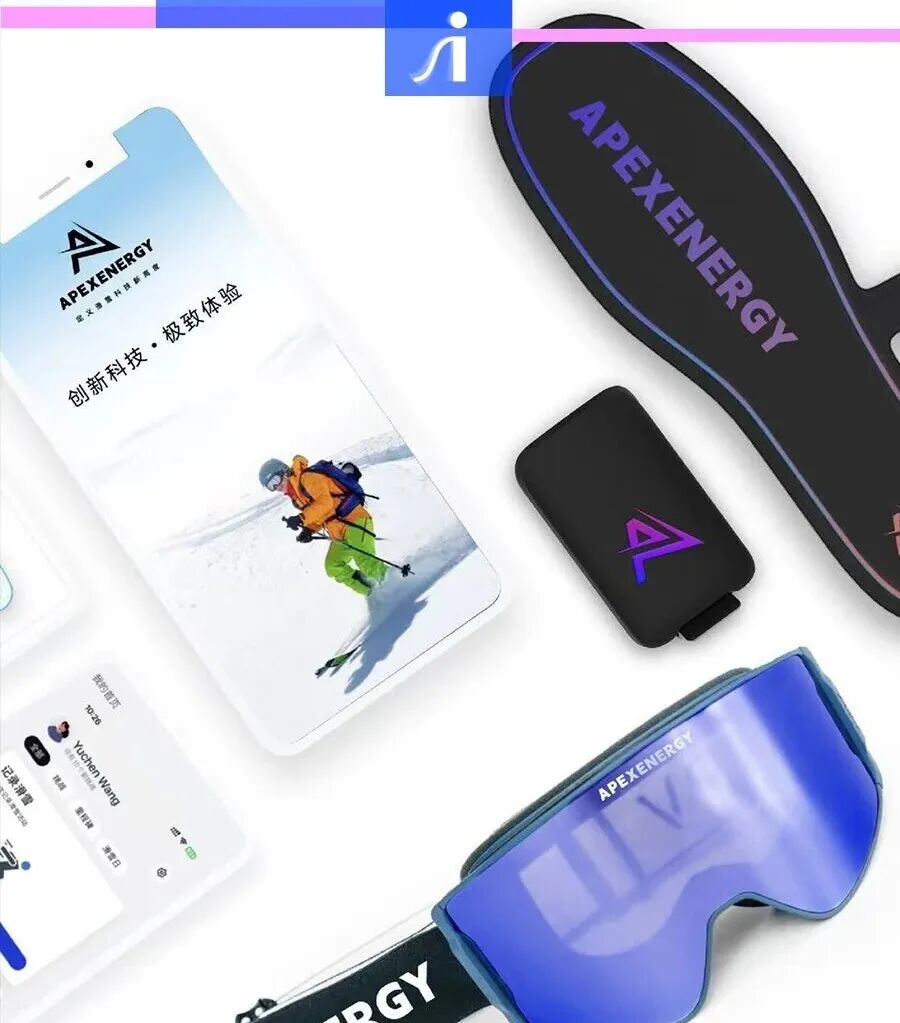
Core Viewpoint - The article discusses the development and market potential of an AI ski insole created by Li Haowen, which aims to serve as a personal coach for skiers by analyzing their movements and providing feedback to prevent injuries and improve performance [2][5]. Product Development - The AI ski insole, named APEXENERGY, features 84 sensors that collect data on foot movements and send it to a mobile app for analysis [2][5]. - The product was launched in October 2025 at a price of 1288 yuan, with over 400 pairs sold within two months [5][19]. - The company plans to expand its market focus to overseas regions such as Austria, Switzerland, Canada, and Japan, while emphasizing subscription services for domestic users [5][20]. Target Market - The primary target audience includes male skiers aged 35 to 70, who typically spend 100,000 to 200,000 yuan annually on outdoor sports [15]. - Younger users under 35 are also seen as potential customers, particularly those with higher education and awareness of technology [15]. Data Collection and Analysis - The insole collects data not only during skiing but also while walking, allowing for a comprehensive analysis of user behavior and movement patterns [13][20]. - A minimum of 20 hours of skiing data is required to provide a fully customized service, which can be achieved in just a few days of skiing for average users [13][14]. Competitive Advantage - The product aims to provide personalized injury prevention insights based on individual skiing styles and common mistakes, differentiating it from traditional coaching methods [9][10]. - The company collaborates with ski equipment manufacturers to offer data on user habits and equipment wear, enhancing customer engagement and potential for repeat purchases [16]. Future Plans - The company envisions expanding its technology to other sports after establishing a foothold in skiing, leveraging the complexity and growth of the skiing market [30]. - Future developments may include virtual coaching and AI goggles that integrate performance data, further enhancing user experience [34].
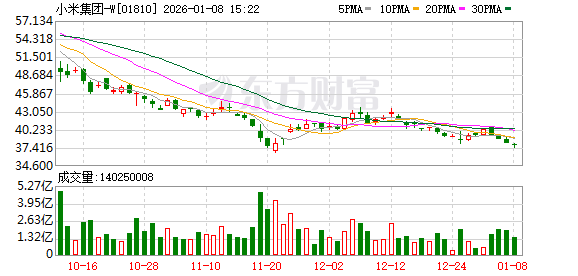
小米集团-W(01810):智能手机出货份额重回国内第一,单季营收、经调整净利润再创新高
EBSCN· 2025-05-29 06:44
Investment Rating - The report maintains a "Buy" rating for Xiaomi Group (1810.HK) [6] Core Insights - Xiaomi achieved a record high quarterly revenue of 111.3 billion RMB in Q1 2025, representing a year-on-year growth of 47.4% and marking the second consecutive quarter with revenue exceeding 100 billion RMB [1] - The Non-IFRS net profit reached 10.7 billion RMB, up 64.5% year-on-year, with a net profit margin improvement to 9.6% [1] - The company regained the top position in the domestic smartphone market with a market share of 18.8%, a 4.7 percentage point increase year-on-year, and a 40% growth in shipments in China, significantly outpacing the industry growth rate of 5% [2] - The average selling price (ASP) of Xiaomi smartphones increased to 1,211 RMB, reflecting a 5.8% year-on-year and 0.7% quarter-on-quarter growth, driven by higher ASP products in the domestic market [2] - The gross margin for the smartphone business improved to 12.4%, up from 12.0% in the previous quarter, benefiting from an improved product mix in overseas markets [2] Summary by Sections Smartphone Business - Xiaomi's global smartphone shipments reached 41.8 million units in Q1 2025, a 3% year-on-year increase, with a notable performance in the Chinese market [2] - The ASP of smartphones rose due to increased sales of high-end models and government subsidies [2] IoT and Internet Services - IoT revenue surged to 32.3 billion RMB, a 59% year-on-year increase, with significant growth in smart home appliances [3] - Internet services revenue grew by 13% to 9.1 billion RMB, driven by a 20% increase in advertising revenue [3] - The number of monthly active users (MAU) for Xiaomi's internet services reached 720 million globally and 180 million in mainland China, both hitting record highs [3] Automotive and AI Innovations - The newly integrated "Smart Electric Vehicles and AI Innovations" business generated 18.6 billion RMB in revenue with a gross margin of 23.2% [4] - The delivery volume of vehicles increased to 75,869 units, an 8.9% quarter-on-quarter rise, with the ASP of vehicles slightly increasing to 238,000 RMB [4] - The YU7 series, a luxury high-performance SUV, is set to launch in July 2025 [4] Financial Forecast and Valuation - The report raises the Non-IFRS net profit forecasts for 2025 and 2026 to 46.4 billion RMB and 65.6 billion RMB, respectively, with a new forecast for 2027 at 84.9 billion RMB [5] - The revenue projections for 2025 and beyond show significant growth, with a projected revenue of 492.9 billion RMB in 2025, reflecting a 34.7% growth rate [5]