舆论操控

Search documents
小米两度致歉KOL事件暴露行业畸形生态
Xin Lang Cai Jing· 2026-01-07 13:04
Core Viewpoint - The incident involving Xiaomi and a well-known KOL highlights the distorted ecosystem between companies and KOLs in the current market, where both parties can simultaneously benefit and harm each other, ultimately eroding market fairness and consumer trust [1][2]. Group 1: Industry Challenges - The rise of self-media has led to an influx of KOLs who, instead of providing objective evaluations, have increasingly engaged in unethical practices such as paid endorsements and misinformation, disrupting the healthy online ecosystem [1][2]. - Companies often view KOLs as tools for quickly building reputation and suppressing negative sentiment, leading to a "prisoner's dilemma" where they feel compelled to participate in manipulative practices despite knowing they are unethical [2][3]. - The phenomenon of "bad money driving out good" is becoming more pronounced, as professional and objective KOLs struggle to gain resources while sensationalist content prevails, misleading consumers and causing companies to lose their innovative direction [2][3]. Group 2: Regulatory and Ethical Considerations - Recent regulations, such as the "Network Information Content Ecology Governance Regulations" and revisions to the "Anti-Unfair Competition Law," aim to prohibit commercial defamation, false advertising, and manipulation of public opinion, but true industry improvement requires self-reflection and self-discipline from companies [3][4]. - The crisis faced by Xiaomi serves as a warning for the entire industry, emphasizing the need for companies to focus on product quality and technical strength, establish transparent communication mechanisms, and collaborate with credible media and evaluation institutions [3][4]. - A healthy business environment relies on a clean public opinion landscape, necessitating continuous regulatory efforts, platform accountability, and adherence to professional standards by media and KOLs, while companies must avoid being complicit in negative practices [4].


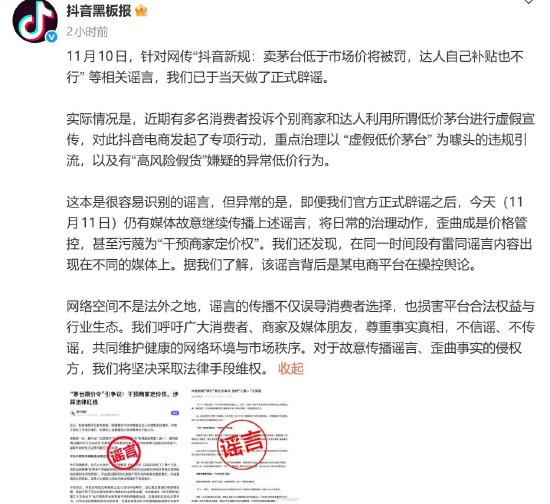
抖音辟谣“卖茅台低于市场价将被罚”相关谣言:背后是某电商平台在操控舆论
Yang Zi Wan Bao Wang· 2025-11-12 00:57
Core Points - Douyin has officially refuted rumors regarding new regulations that claim sellers of Moutai below market price will be penalized, stating that these are false claims [1][2] - The platform has initiated a special action to address complaints about merchants and influencers using misleading low-price Moutai promotions, focusing on illegal traffic generation and suspicious low-price behaviors [2] - Despite the official refutation, media outlets continued to spread these rumors, misrepresenting Douyin's actions as price control and interference with merchants' pricing rights [2] - Douyin's e-commerce safety and trust center reported that over the past three months, more than 2,000 violations and 690 non-compliant merchants have been addressed in their campaign against false marketing in alcoholic beverages [2]
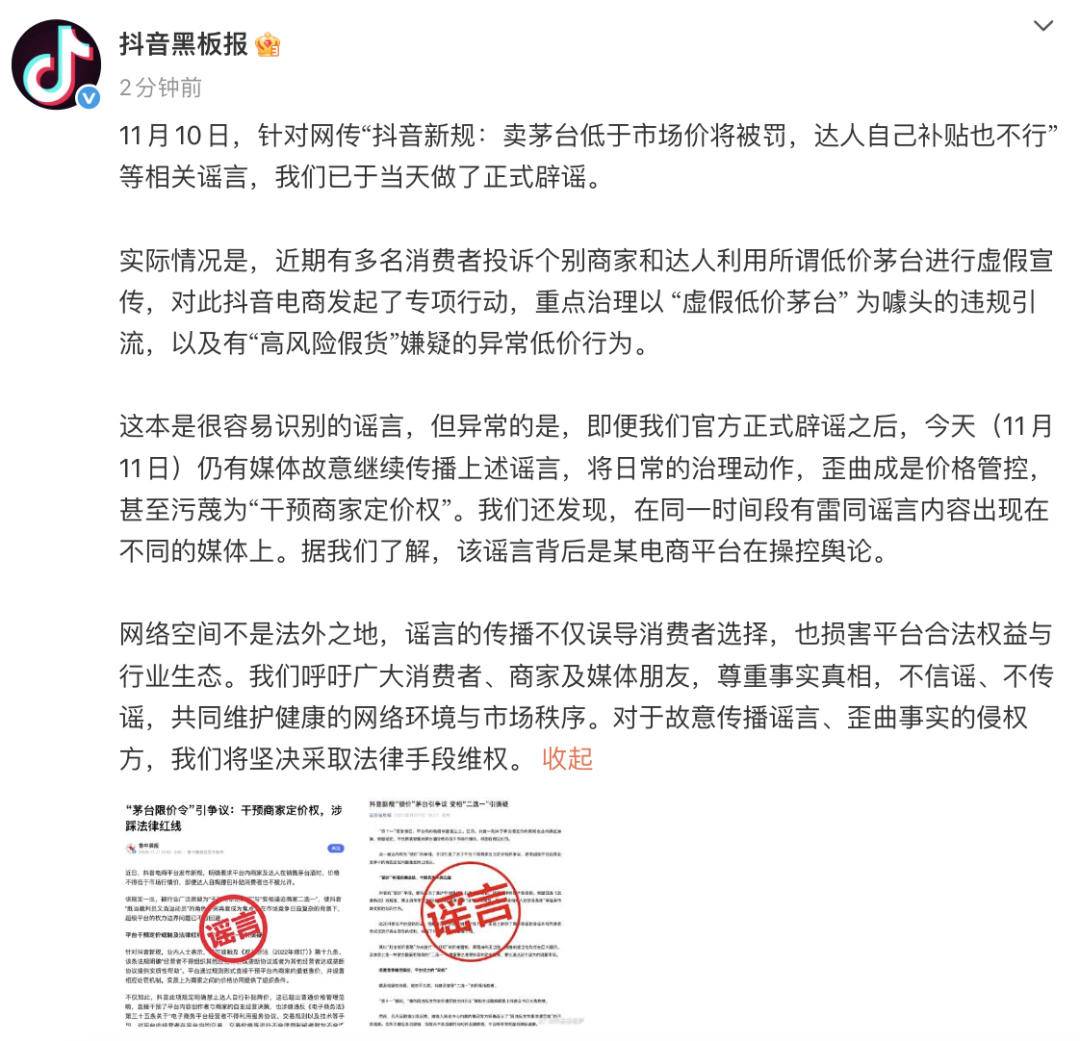
抖音电商再回应“卖茅台低于市场价将被罚”:谣言背后是某电商平台在操控舆论
Xin Lang Ke Ji· 2025-11-11 13:30
Core Viewpoint - Douyin's official account addressed rumors regarding penalties for selling Moutai below market price, emphasizing that these claims are false and part of a misinformation campaign [1] Group 1: Company Actions - Douyin e-commerce has initiated a special campaign to combat false advertising related to "fake low-priced Moutai" and to address suspiciously low prices that may indicate counterfeit products [1] - The company highlighted that despite official clarifications, media outlets continue to spread these rumors, misrepresenting their regulatory actions as price control and interference with merchants' pricing rights [1] Group 2: Industry Context - The rumors appear to be orchestrated by a competing e-commerce platform aiming to manipulate public opinion against Douyin [1]