融合感知方案

Search documents
Waymo前CEO炮轰特斯拉:纯视觉方案短板,远处物体或无法准确识别
Sou Hu Cai Jing· 2026-01-23 11:04
Core Viewpoint - Krafcik criticizes Tesla's reliance on a pure vision hardware approach for autonomous driving, highlighting its fundamental limitations in object recognition at a distance [1][5]. Group 1: Critique of Tesla's Vision System - Krafcik points out that Tesla's Full Self-Driving (FSD) system suffers from a "nearsighted" issue due to its use of 5 million pixel wide-angle cameras, which limits its ability to recognize distant objects [1][3]. - The effective vision level of Tesla's system is estimated to be around 20/60 to 20/70, meaning it requires objects to be brought within 20 feet to be recognized, which is below the minimum vision requirements for driving licenses in some U.S. states [1][3]. Group 2: Comparison of Sensor Technologies - The debate centers on whether autonomous driving should rely on software algorithms to simulate the world or on physical hardware to perceive it [3][5]. - Krafcik argues that Tesla's "compute-centric" approach, which depends solely on cameras and computational power, is flawed as cameras can fail under strong light, blurriness, or extreme weather conditions [3][5]. - In contrast, companies like Waymo utilize a sensor fusion approach that combines LiDAR and radar, providing a more reliable solution by actively detecting distance and speed, thus maintaining safety even when visual signals are compromised [3][5]. Group 3: Implications for Tesla's Future - The ongoing debate between "pure vision" and "sensor fusion" has significant implications for Tesla's Robotaxi ambitions, with Krafcik's previous predictions about Tesla's reliance on remote monitoring and safety drivers proving accurate [5][6]. - If the physical limitations of the pure vision approach are indeed insurmountable, Tesla vehicles equipped with Hardware 3 and 4 may remain at the L2+ level of driving assistance, failing to achieve the promised L4 autonomous driving through software updates [6][7].


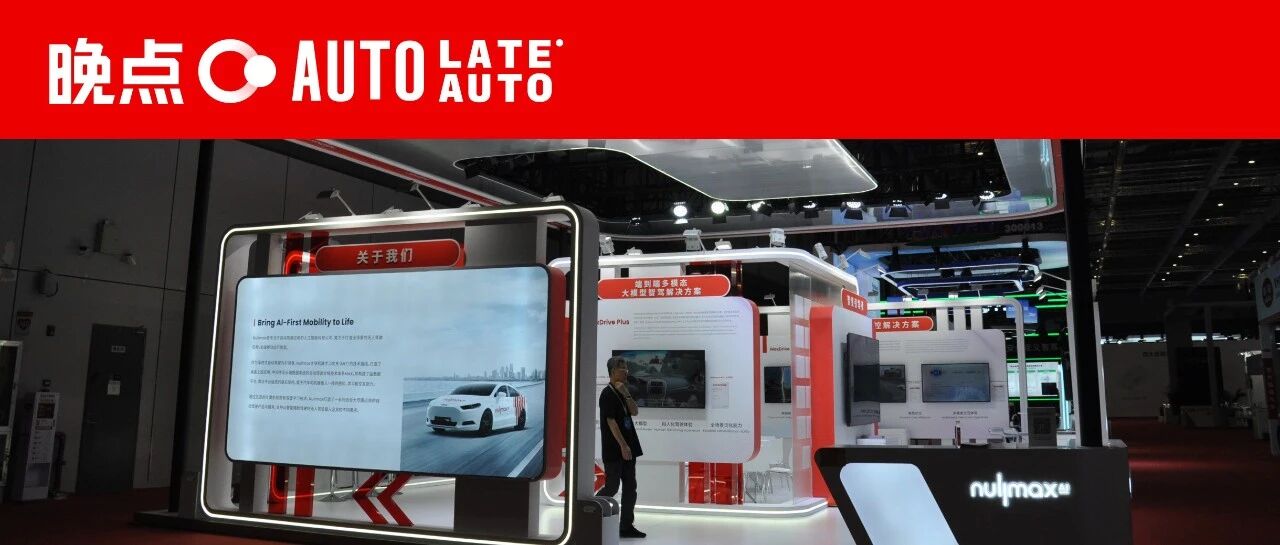
Nullmax 徐雷:视觉能力将决定智驾系统上限,反对把激光雷达当 “拐棍”
晚点LatePost· 2025-12-04 12:09
Core Viewpoint - The ongoing debate in the autonomous driving field revolves around the merits of pure vision systems versus sensor fusion approaches, with a strong emphasis on the superiority of camera-based systems in terms of information richness and processing frequency [5][6][11]. Group 1: Technical Insights - Cameras provide higher frequency and richer information compared to LiDAR, with frame rates reaching 30 frames per second for cameras versus 10 frames per second for LiDAR [7][11]. - The reliance on LiDAR in some fusion systems may indicate a deficiency in the visual processing capabilities of those systems [5][6]. - The performance ceiling of autonomous driving systems is significantly influenced by the choice of sensors, with pure vision systems having a higher potential if algorithms and computational power are sufficiently advanced [8][11]. Group 2: Industry Perspectives - The current trend shows that many domestic manufacturers are achieving around 10 frames per second, while Tesla's systems are reportedly exceeding 20 frames per second, highlighting a gap in visual processing capabilities [17]. - The use of LiDAR is often seen as a shortcut to quickly deploy systems, but it may limit the long-term performance and development of autonomous driving technologies [6][19]. - The integration of multiple sensor types, including cameras and LiDAR, is viewed as beneficial, but the primary focus should remain on enhancing visual capabilities [14][19]. Group 3: Future Considerations - The industry is moving towards data-driven systems that leverage AI to generate diverse driving scenarios, which can enhance the training of autonomous systems without the high costs associated with extensive data collection [19]. - The evolution of sensor technology, such as the increase in LiDAR line counts, aims to improve detection capabilities, but this also raises cost considerations [18]. - The debate over sensor reliance continues, with some manufacturers still favoring LiDAR due to perceived limitations in visual processing, indicating a need for further advancements in camera-based systems [17][19].

Nullmax 徐雷:视觉能力将决定智驾系统上限,反对把激光雷达当 “拐棍”
晚点Auto· 2025-12-02 13:28
Core Viewpoint - The ongoing debate in the autonomous driving field revolves around the merits of pure vision systems versus sensor fusion approaches, with a strong emphasis on the superiority of camera-based systems in terms of information richness and processing frequency [3][4][9]. Summary by Sections Technical Insights - Pure vision systems utilize cameras as the primary sensors, providing higher frequency and richer data compared to LiDAR systems, which have lower frame rates and less detailed point cloud information [4][9]. - The performance ceiling of autonomous driving systems is significantly influenced by the choice of sensors, with pure vision systems having a higher potential if algorithms and computational power are sufficiently advanced [5][9]. Sensor Performance - Cameras can capture images at 30 frames per second, while LiDAR typically operates at around 10 frames per second, leading to a disparity in the amount of information processed [4][9]. - The reliance on LiDAR in some fusion systems may indicate a lack of development in visual processing capabilities, which can hinder overall system performance in challenging scenarios [10][11]. Industry Perspectives - The CEO of Nullmax, Xu Lei, advocates for prioritizing visual capabilities in autonomous systems, suggesting that over-reliance on LiDAR may provide a short-term solution but limits long-term performance [4][10]. - Xu Lei emphasizes the importance of developing robust visual processing algorithms to fully leverage the data captured by cameras, as the information density is significantly higher than that of LiDAR [6][9]. Cost and Practical Considerations - The integration of multiple sensor types must consider cost and performance trade-offs, as adding LiDAR can increase system complexity and expense without necessarily enhancing performance [5][14]. - The industry is witnessing a trend where companies prioritize rapid deployment of systems, often opting for LiDAR to expedite the process, despite potential limitations in performance [11][16]. Future Directions - Xu Lei expresses an open-minded approach towards the use of various sensors, including future technologies, while maintaining that visual capabilities should remain the core focus of development [10][11]. - The evolution of sensor technologies, such as 4D millimeter-wave radar, is seen as complementary to camera systems, particularly in adverse weather conditions, although the necessity of LiDAR is debated [13][14].