讲故事能力

Search documents
马斯克或将获万亿美元奖励!世界级富豪是如何赚钱,颠覆穷人认知
Sou Hu Cai Jing· 2025-11-10 12:54
Core Insights - The article discusses the stark contrast between the wealth accumulation of the world's richest individuals and the average worker, highlighting the mechanisms through which billionaires, like Elon Musk, amass their fortunes [1][3][10] Group 1: Wealth Accumulation Mechanisms - Tesla shareholders approved a compensation plan potentially worth up to $1 trillion, which could increase Musk's stake in the company to 25%, translating to a valuation of $1 trillion [1] - Musk's wealth has surged from $200 billion to $500 billion, with the top 20 billionaires now all exceeding $100 billion in net worth [3] - The article emphasizes that Musk's wealth is not derived from business profits but rather from capital market dynamics, which amplify wealth through stock valuations [5][10] Group 2: Capital Market Dynamics - The capital market acts as a magnifying glass, allowing billionaires to exponentially increase their wealth, often independent of actual business performance [7][10] - The focus of the capital market is on storytelling and future expectations rather than current profitability, as illustrated by Musk's ambitious visions for Tesla and other ventures [9][10] - The article contrasts the wealth generation strategies of billionaires with those of average workers, who primarily rely on labor income and are constrained by societal norms and expectations [10]



人类的哪些能力可以弥补AI的不足?MIT这样说……
3 6 Ke· 2025-09-17 02:33
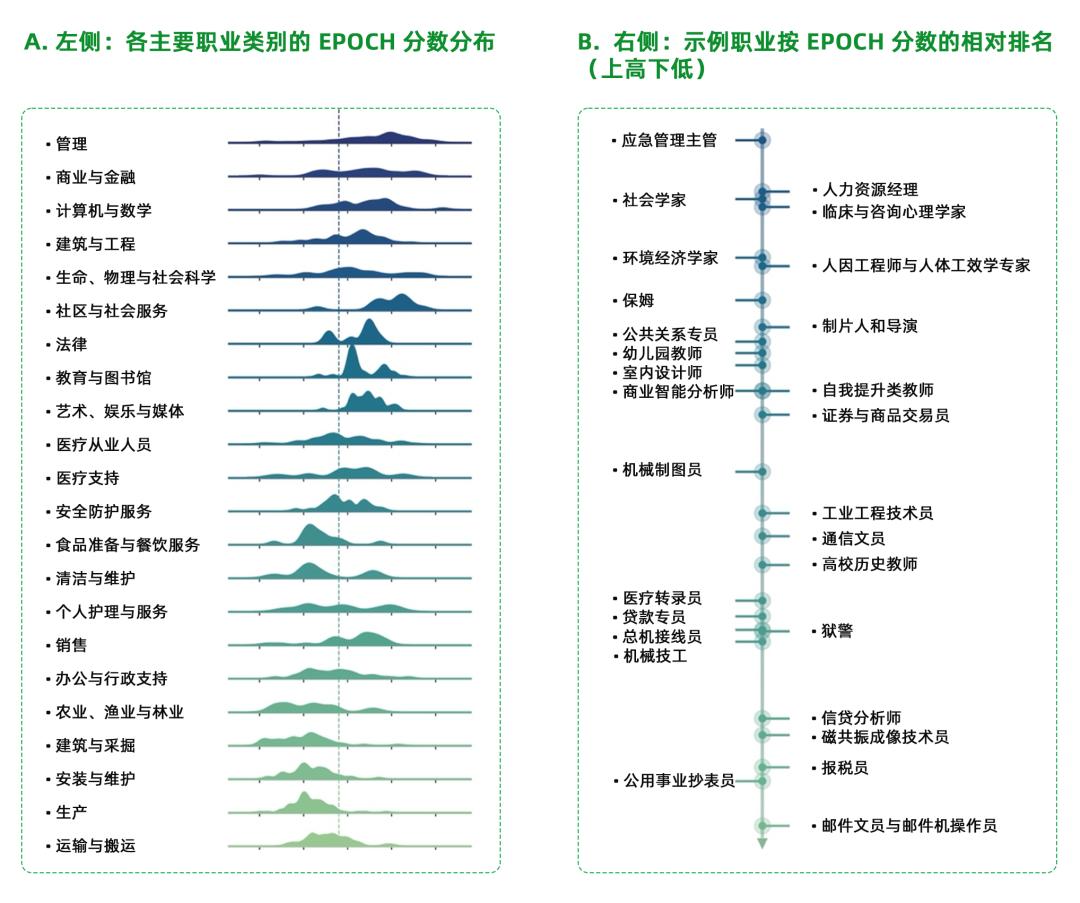
Core Insights - AI has deeply integrated into daily life, enhancing knowledge accessibility but raising concerns about its impact on human creativity and thinking [1] - The essence of AI and computers is as tools for human cognition rather than replacements, emphasizing the unique human ability to process and interpret information [1] AI Limitations - AI faces five significant challenges that highlight human unique value, including issues with data quality, extrapolation capabilities, and understanding complex human interactions [2][3][4][5][6][7] EPOCH Framework - The MIT research team developed the EPOCH framework, identifying five core human traits that AI cannot replicate: empathy, presence, judgment, creativity, and leadership [8][9] - The framework was used to analyze nearly 19,000 job tasks, revealing that tasks requiring EPOCH abilities are less likely to be automated and are associated with job growth [10][14] Storytelling as a Timeless Skill - Storytelling is highlighted as a crucial human skill that AI cannot replicate, as it involves personal experience and unique narrative construction [15][16] - The ability to connect through storytelling is rooted in human experience and is essential for establishing meaningful relationships and conveying insights [16][18]
人类的哪些能力可以弥补AI的不足?MIT这样说…… | 红杉汇内参
红杉汇· 2025-09-17 00:04
Core Viewpoint - The article discusses the integration of AI into daily life and emphasizes that while AI can process information and generate outputs, it cannot replicate the unique human abilities of creativity, emotional connection, and storytelling [3][19]. Group 1: AI's Limitations - AI faces a "small data" reasoning dilemma, where insufficient or biased data can lead to flawed logic, with 96% of companies struggling with data quality [6]. - The external extrapolation capability of AI is limited, making it unreliable for predictions beyond its training data, which affects its ability to replicate human convergent and divergent thinking [7]. - AI struggles with multi-solution challenges, often providing a single answer to complex problems, which can lead to biases in decision-making [8]. - AI lacks the ability to understand interpersonal relationships and empathy, which are crucial for meaningful human connections [9]. - AI cannot comprehend the influence of subjective beliefs on decision-making, which can lead to groundbreaking ideas that challenge mainstream thinking [10]. Group 2: Human Core Competencies - The MIT research team developed the "EPOCH capability framework," highlighting five human traits that AI cannot replicate: empathy, social presence, judgment, creativity, and leadership [11][12]. - Jobs requiring EPOCH capabilities are expected to grow, indicating that human traits will become increasingly valuable in the workforce [15]. - The ability to tell stories is emphasized as a timeless skill, representing human creativity and emotional intelligence, which AI cannot mimic [16][19]. Group 3: Implications for the Future - The findings suggest that AI strategies should focus on empowering workers by enhancing human traits that are often overlooked in training for an AI-driven future [15]. - The article concludes that while AI can generate information, it cannot create meaning or connections, which are the ultimate values of human experience [19].