
财务造假治理

Search documents
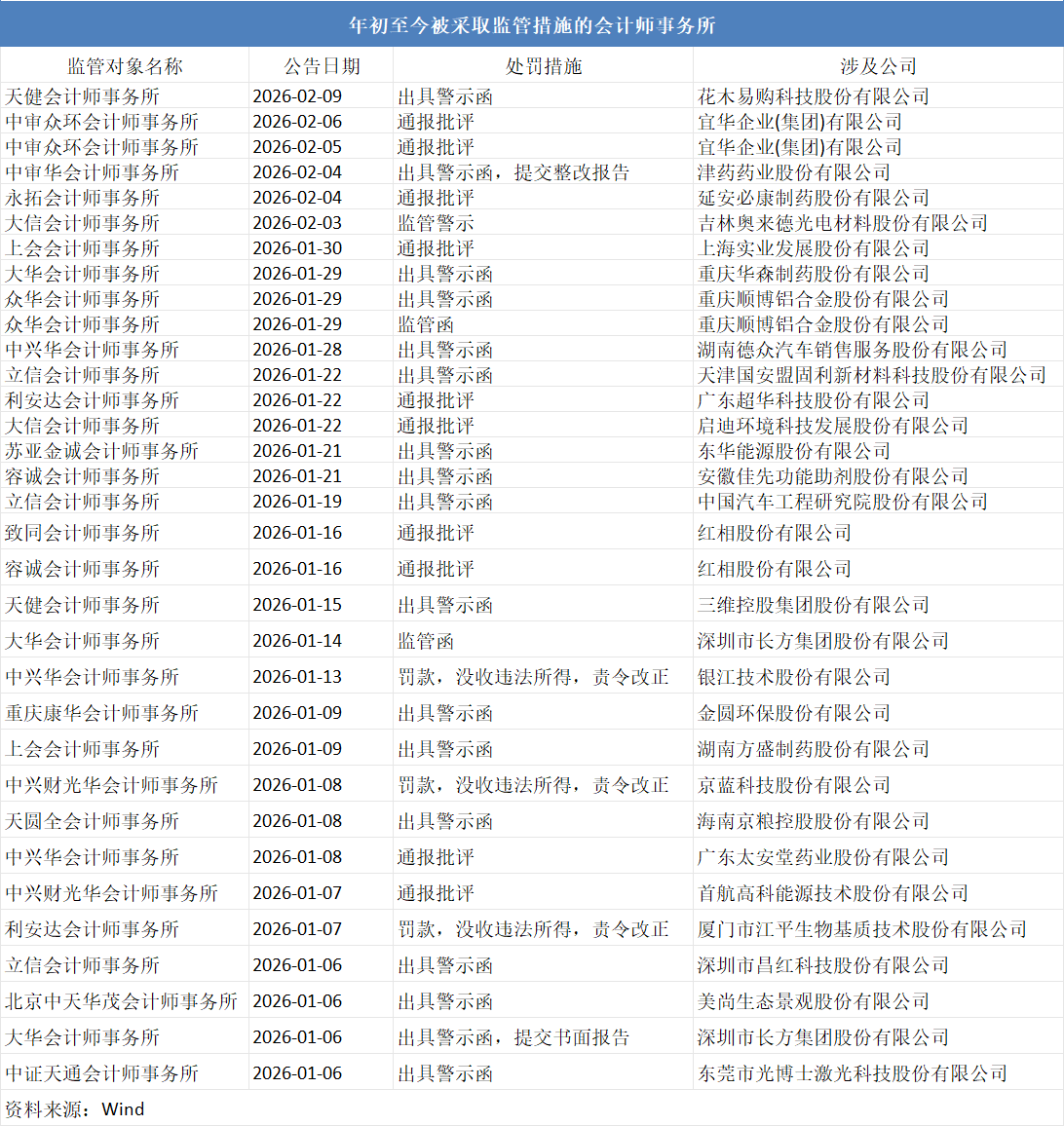
开年以来,19家会计所被罚33次
Di Yi Cai Jing Zi Xun· 2026-02-11 19:52
Group 1 - A total of 19 accounting firms have faced regulatory actions in 2026, with 33 instances of penalties reported so far [2][3] - Tianjian Accounting Firm and three registered accountants received a warning letter for inadequate audit procedures in the financial statements of Huamu Yigou Technology Co., Ltd [2] - Zhongshun Zhonghuan Accounting Firm was penalized by the Shanghai and Shenzhen Stock Exchanges for issuing false audit reports for Yihua Group [3] Group 2 - In January 2026 alone, five accounting firms were penalized, including Daxin Accounting Firm and Yongtuo Accounting Firm, for various violations in their audit processes [3][4] - Daxin Accounting Firm was previously penalized for failing to disclose administrative penalties related to similar business activities, leading to a retraction of a financing application by Aolaide [4] - Yongtuo Accounting Firm faced penalties for issuing false audit reports for Yan'an Bikon Pharmaceutical Co., Ltd, resulting in a three-year ban for one of its accountants [4] Group 3 - The penalties against accounting firms have led to a chain reaction, with clients terminating contracts with firms involved in financial fraud [6][10] - Zhongxing Financial Guanghua has seen a significant loss of clients after being investigated for long-term financial fraud, with companies like *ST Wanfang announcing a change in auditors [8][10] - Yongtuo Accounting Firm also experienced client losses after being banned from securities services due to its involvement in financial fraud with multiple A-share companies [10] Group 4 - Regulatory authorities are intensifying their crackdown on accounting firms that facilitate financial fraud, with a focus on enhancing legal frameworks and administrative measures [11][12] - The China Securities Regulatory Commission (CSRC) has emphasized a "zero tolerance" approach to financial fraud, aiming to improve the quality of listed companies by holding accounting firms accountable [12] - The regulatory strategy has shifted from reactive measures to proactive prevention and monitoring of financial misconduct [12]


开年以来,19家会计所被罚33次
第一财经· 2026-02-11 11:16
Core Viewpoint - The article highlights the increasing regulatory scrutiny and penalties faced by accounting firms in China, with 19 firms penalized 33 times since the beginning of 2026, indicating a crackdown on financial misconduct and the need for improved auditing practices [3][4][5]. Group 1: Regulatory Actions - In early 2026, 19 accounting firms have been subjected to regulatory measures, with notable firms like Tianjian and Zhongshun being warned for inadequate auditing procedures [3][4]. - Five accounting firms have been penalized in February alone, including Tianjian, Zhongshun, Daxin, Yongtuo, and Zhongshun Huasheng, for various violations related to financial audits [5][6]. - Zhongshun was criticized for issuing false audit reports for Yihua Group, leading to regulatory actions against both the firm and its auditors [5][6]. Group 2: Consequences of Penalties - Following penalties, several accounting firms have experienced client losses, with companies like *ST Lifan severing ties with Zhongshun Caiguanghua after being implicated in financial fraud [3][11]. - Yongtuo has faced similar issues, losing multiple A-share clients after being banned from securities services due to its involvement in financial misconduct [12][13]. - The article notes a trend where firms that are penalized for misconduct often see a rapid decline in their client base, as companies seek to distance themselves from potential reputational damage [11][12]. Group 3: Regulatory Environment - The regulatory environment is tightening, with the China Securities Regulatory Commission (CSRC) emphasizing a zero-tolerance approach towards financial fraud and the complicity of third parties [15][16]. - The CSRC is focusing on preemptive measures and real-time monitoring to prevent financial misconduct, shifting from reactive to proactive regulatory strategies [15][16]. - The article suggests that the intensified scrutiny of accounting firms is aimed at ensuring they fulfill their role as gatekeepers in the capital market, thereby enhancing the quality of information disclosure by listed companies [16].

开年以来19家会计所被罚33次,中兴财光华连遭客户流失
Di Yi Cai Jing· 2026-02-11 10:25
Core Viewpoint - The recent penalties imposed on accounting firms in China have led to a chain reaction, with numerous A-share companies severing ties with these firms due to issues related to financial misconduct and inadequate auditing practices [1][2][8]. Group 1: Penalties and Regulatory Actions - As of early 2026, 19 accounting firms have faced regulatory measures totaling 33 instances, with notable firms like Tianjian and Zhongshunzhong being penalized for inadequate auditing procedures [2][3]. - Zhongshunzhong was criticized for issuing false audit reports for Yihua Group, leading to penalties for both the firm and its registered accountants [3][4]. - Daxin and Yongtuo accounting firms have also been penalized this month for various violations, including issuing misleading audit reports for companies like Aolaide and Yan'an Bikon [3][4][6]. Group 2: Consequences of Penalties - Following penalties, several accounting firms have experienced significant client losses, with companies like ST Lifan and ST Wanfang announcing changes in their auditing firms after issues arose with Zhongxing Caiguanghua [10][11]. - Yongtuo has faced a similar fate, losing multiple A-share clients after being implicated in financial misconduct involving several companies [11]. Group 3: Regulatory Environment and Future Implications - The regulatory environment is tightening, with the China Securities Regulatory Commission (CSRC) emphasizing a "zero tolerance" approach towards financial fraud and the complicity of third-party firms [12][13]. - The CSRC aims to enhance the accountability of accounting firms, ensuring they fulfill their roles as gatekeepers in the capital market by improving audit quality and compliance [13].
开年以来十余家会计所被罚,多家卷入A股公司财务造假案
Di Yi Cai Jing· 2026-01-19 12:18
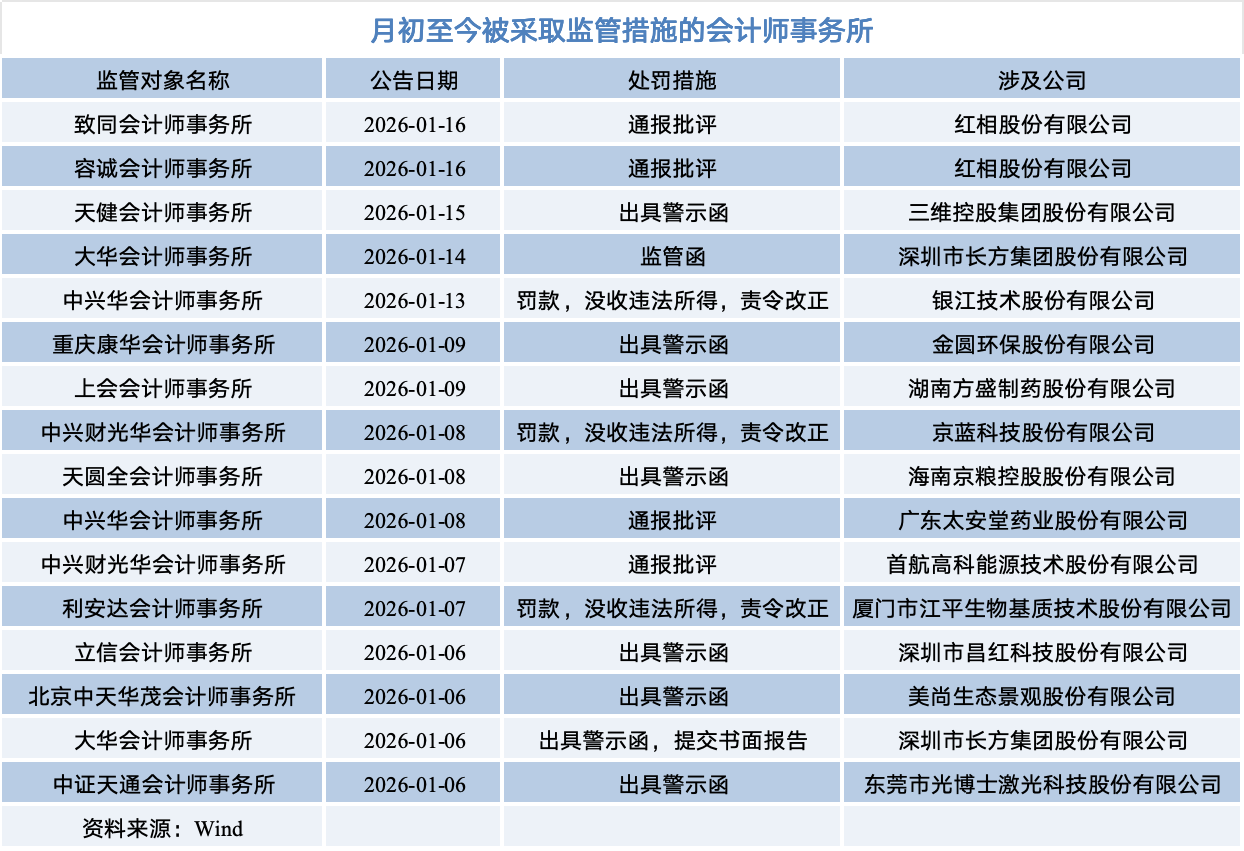
Core Viewpoint - The recent wave of penalties against accounting firms highlights a systemic issue of financial fraud in the Chinese capital market, with regulatory bodies shifting from reactive measures to proactive prevention and monitoring [2][16]. Group 1: Recent Penalties and Cases - Over 10 accounting firms have been penalized in January 2026, with notable cases including Rongcheng and Zhicheng accounting firms for their audits of Hongxiang Co., which was found to have inflated revenue by approximately 1 billion yuan over six years [1][4]. - Hongxiang Co. was investigated for financial fraud, leading to a total of 65.56 million yuan in fines for the company and its executives, including a lifetime market ban for its chairman [5][6]. - Other firms like Zhongxinghua and Liananda have also faced penalties for their involvement in financial fraud cases related to companies such as Taiantang and Jiangping Biological, with fines totaling 1.37 million yuan and 920,000 yuan respectively [8][9]. Group 2: Regulatory Changes and Implications - The recent enforcement actions are part of a broader regulatory initiative aimed at enhancing the integrity of financial reporting and deterring fraud, as outlined in the "Opinions on Further Improving Comprehensive Punishment and Prevention of Financial Fraud in the Capital Market" [2][16]. - Regulatory bodies are focusing on creating a multi-faceted accountability system that includes administrative, civil, and criminal penalties for both companies and their third-party collaborators involved in fraud [16][17]. - The emphasis is on ensuring that accounting firms return to their role as gatekeepers, with a call for improved quality control and a shift away from merely maintaining licenses [16][17].

全方位立体追责让造假者“痛到不敢犯”
Xin Lang Cai Jing· 2026-01-09 22:52
Core Viewpoint - The Chinese regulatory authorities are intensifying efforts to combat financial fraud in the capital market, signaling a shift from isolated actions to coordinated efforts among multiple departments [1][2] Group 1: Regulatory Actions - A high-level meeting involving 12 departments, including the China Securities Regulatory Commission, was convened to address financial fraud, indicating a strong commitment to stringent enforcement [1] - The meeting emphasized a "zero tolerance" approach towards financial fraud, focusing on cross-departmental collaboration to enhance enforcement efforts [2] Group 2: Impact on Capital Market - Financial fraud undermines the integrity of the market, misguiding investor decisions and disrupting capital market order, which is crucial for macroeconomic health [1][2] - The establishment of a comprehensive accountability system aims to increase the cost of violations and create a sustained deterrent effect against financial fraud [2] Group 3: Future Directions - The regulatory framework will integrate administrative enforcement, criminal penalties, civil compensation, and integrity constraints to ensure effective accountability [2] - The goal is to foster a market environment where fraudulent activities are deterred, promoting a culture of honesty and transparency in financial reporting [2]
上市公司将迎监管新规:管住关键少数,穿透造假链条
2 1 Shi Ji Jing Ji Bao Dao· 2025-12-08 12:12
Core Viewpoint - The China Securities Regulatory Commission (CSRC) has released a draft of the "Regulations on the Supervision and Administration of Listed Companies," which aims to enhance the regulatory framework for listed companies, focusing on preventing financial fraud and improving corporate governance. Group 1: Regulatory Innovations - The draft introduces measures to reverse the incentive structure of financial fraud, ensuring that board members must recover compensation and dividends based on false financial reports, thereby tightening economic accountability for insiders [1][4]. - It imposes severe penalties on third parties, such as clients and suppliers, who assist in falsifying documents or transactions, with fines ranging from one million to ten million yuan [6][8]. - The regulations enhance the role of the audit committee, granting it broad supervisory and investigative powers, transforming it into an internal "chief investigator" [3][5]. Group 2: Corporate Governance - The draft explicitly prohibits controlling shareholders and actual controllers from misappropriating company assets and outlines strict definitions for identifying "hidden actual controllers" [2][4]. - It mandates that any changes in the use of raised funds must pass through a high threshold of shareholder approval, reinforcing investor trust [2][9]. - The audit committee is empowered to conduct independent investigations when financial reports are suspected of being false, thus ensuring proactive oversight [3][5]. Group 3: Financial Advisor Responsibilities - The draft requires that financial advisors for mergers and acquisitions maintain independence and conduct thorough checks on compliance and accuracy of disclosures [7][8]. - Financial advisors face severe penalties, including fines and potential suspension from securities services, if their reports contain false information or significant omissions [8]. Group 4: Fund Utilization - The draft specifies four scenarios that constitute unauthorized changes in the use of raised funds, all requiring shareholder approval, thereby protecting investor interests [9]. - This regulation aims to ensure that raised funds are used as promised, preventing arbitrary investment decisions that could harm investor expectations [9][10].
上市公司治理再迎升级 我国将迎来首部专门的上市公司监管行政法规
Yang Guang Wang· 2025-12-07 04:51
Core Viewpoint - The China Securities Regulatory Commission (CSRC) has released the draft of the "Regulations on the Supervision and Administration of Listed Companies," marking the first specialized administrative regulation for listed company supervision in China's capital market, aimed at enhancing information disclosure regulation and protecting investor rights [1][2]. Group 1 - The draft regulation consists of eight chapters and seventy-four articles, focusing on improving corporate governance requirements and regulating the behavior of key stakeholders such as controlling shareholders, actual controllers, directors, and senior executives [1]. - The regulation aims to combat illegal activities and specifies penalties for behaviors such as asset occupation and collusion in financial fraud [1]. - The regulation emphasizes three key themes: risk prevention, strengthened regulation, and promotion of development, indicating a new phase of systematic and legal oversight for listed companies [1]. Group 2 - The draft explicitly prohibits listed companies from fabricating financial reports through fictitious transactions or abuse of accounting policies, introducing an innovative system for recovering profits from fraud [2]. - It states that related parties, customers, suppliers, and service institutions of listed companies are prohibited from assisting in the preparation of false financial reports, with fines ranging from 1 million to 10 million yuan for violations [2]. - For securities service institutions that fail to perform due diligence, fines can reach up to five times their business income, with a minimum fine of 500,000 to 2.5 million yuan for those with insufficient income, and severe cases may lead to suspension or prohibition from engaging in securities services [2].
新华解码丨会计“账本”谁应负责?会计信息如何提质?财政部发布新规
Xin Hua Wang· 2025-11-10 12:31
Core Viewpoint - The Ministry of Finance has issued new regulations to enhance accounting responsibility and improve the quality of accounting information, emphasizing the importance of a unified accounting system in China [1][2]. Group 1: Accounting Responsibility - The new regulations aim to clarify accounting responsibilities across various entities, enhancing legal awareness and accountability in accounting practices [2][3]. - The regulations categorize and integrate existing accounting responsibilities, emphasizing the need for units to ensure the authenticity and completeness of accounting data [2][4]. - Specific requirements include prohibiting units from using false economic transactions for accounting and ensuring the independence of accounting firms [3][4]. Group 2: Implementation and Oversight - The regulations outline the responsibilities of unit leaders, chief accountants, and accounting personnel, ensuring accountability at all levels of the accounting process [3][4]. - The Ministry of Finance plans to implement these regulations by December 2024, with feedback from various stakeholders already considered [4]. - The regulations are part of a broader effort to strengthen financial oversight and support high-quality economic development in China [4].
应强化对财务造假的事前预防和事中控制
Guo Ji Jin Rong Bao· 2025-10-13 06:01
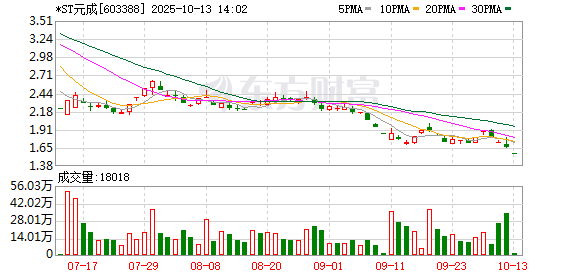
Core Viewpoint - *ST Yuancheng has received a notice of administrative penalty from the China Securities Regulatory Commission (CSRC) for suspected violations, including false records in annual reports from 2020 to 2022 and fabrication of significant false content in the 2022 non-public stock issuance documents [2] Group 1: Company Violations - The company and its actual controller are suspected of long-term financial fraud, with false records spanning three consecutive years [2] - The fraudulent activities are linked to refinancing efforts, with non-public issuance relying on falsified data [2] - If the company is found guilty of continuous financial fraud for three years, it may face delisting from the stock exchange [2] Group 2: Recommendations for Prevention and Control - Strengthening internal controls and external supervision is essential to prevent financial fraud, focusing on governance and oversight [3] - A dual defense system should be established, emphasizing the need for a robust internal control system that covers all critical business processes [3] - Auditors should enhance audit quality through "penetrating audits" to verify the authenticity of transactions and funds [3] Group 3: Dynamic Monitoring and Corrections - Implementing a "filing + tracking" system for major projects to ensure dynamic supervision and timely reporting to regulatory bodies [3] - Regulatory authorities should compare project progress reports with financial disclosures to identify discrepancies and initiate inquiries when necessary [3] Group 4: Information Disclosure and Correction Mechanism - Companies should regularly review the quality of financial information and promptly disclose corrections for any accounting errors [4] - Regulatory bodies need to focus on reviewing correction announcements and treat accounting errors as significant regulatory clues [5] Group 5: Financial Fraud Warning Mechanism - Utilizing big data and AI to create monitoring models for financial anomalies, automatically issuing alerts for companies with significant deviations in revenue and profit [5] - Encouraging public participation in supervision through a reward system for valid reports of financial misconduct [5]

财政部:过去两年,对4600多家会计师事务所等机构开展执业质量检查
Mei Ri Jing Ji Xin Wen· 2025-09-12 08:49
Core Viewpoint - The Chinese government is emphasizing the importance of financial integrity and has taken significant steps to combat financial fraud and maintain a fair market economy during the "14th Five-Year Plan" period [1] Group 1: Financial Oversight and Regulation - The Ministry of Finance has intensified efforts to combat financial fraud and maintain a healthy market economy [1] - Over the past two years, the Ministry has conducted quality inspections on more than 4,600 accounting firms and nearly 1,500 asset appraisal institutions [1] - The government is actively promoting the improvement of laws and regulations related to accounting and certified public accountants to foster a market environment that values legal compliance and integrity [1]